Photo: Dan Herrera / Pexels
The diets react (see scores below)
Common Ingredients
- rice flour
- coconut milk
- egg
- turmeric
- salt
- oil
Specific recipes may vary.
Incompatible with 7 of 11 diets
Diet Ratings
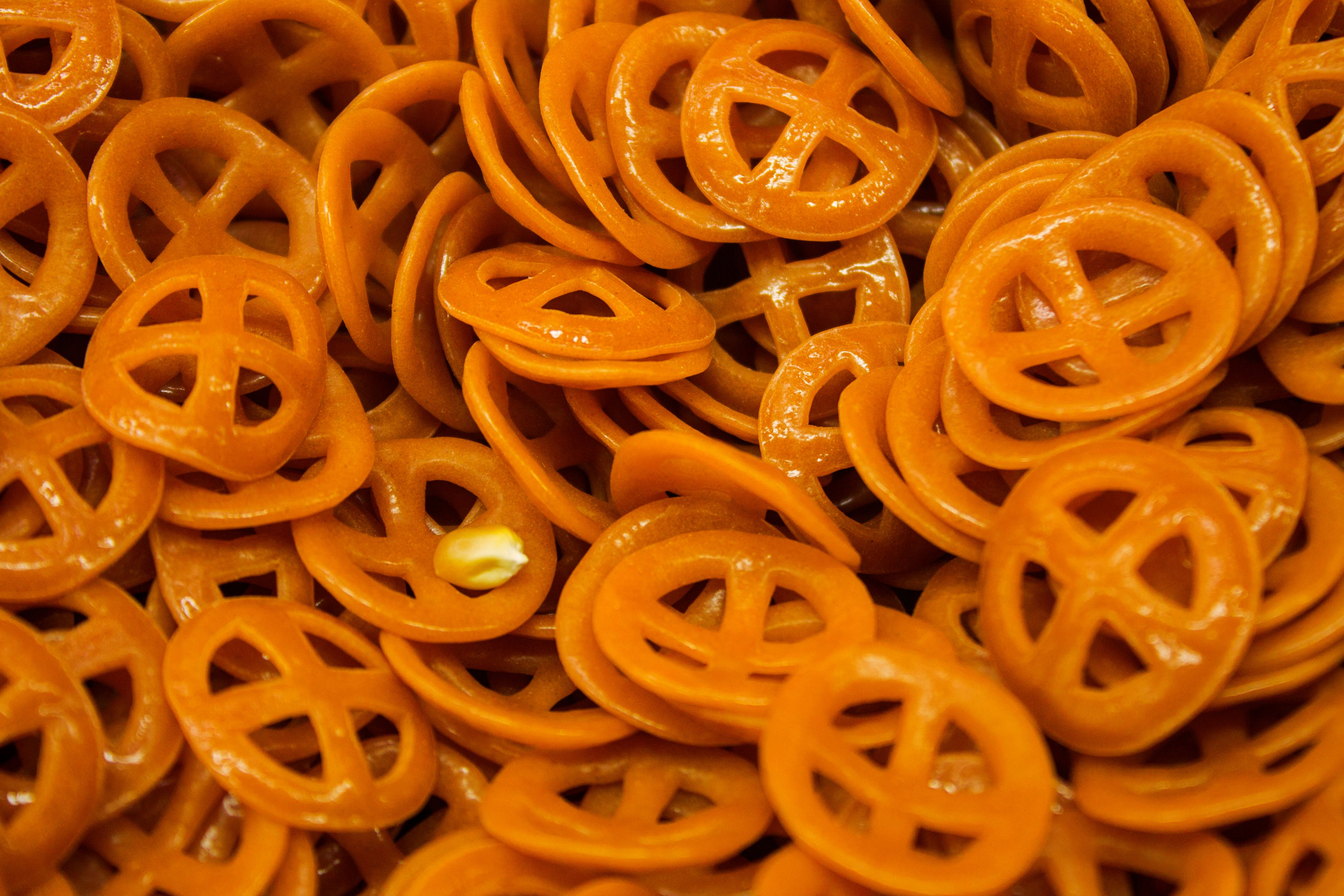
Kokis is a traditional Sri Lankan deep-fried snack made primarily from rice flour, which is a high-carbohydrate grain flour. Rice flour contains approximately 79g of net carbs per 100g, making it fundamentally incompatible with ketogenic dietary requirements. Even a small serving of kokis would likely consume or exceed the entire daily net carb allowance of 20-50g. While the dish does include keto-friendly ingredients such as coconut milk, egg, and oil, the rice flour base is the dominant macronutrient driver and cannot be offset by the other ingredients. The deep-frying in oil adds fat, but the carbohydrate load from the rice flour makes this dish a clear avoid for anyone maintaining ketosis.
Kokis contains egg as a listed ingredient, which is an animal product and therefore not compatible with a vegan diet. Egg is a core binding and structural component of traditional Kokis batter, making this dish clearly non-vegan. The other ingredients — rice flour, coconut milk, turmeric, salt, and oil — are all plant-based, but the presence of egg is disqualifying under any vegan framework.
Kokis is a deep-fried Sri Lankan snack whose base ingredient is rice flour — a grain-derived product that is explicitly excluded from the paleo diet. All grains, including rice and their flours, are avoided in paleo due to their anti-nutrient content (phytic acid, lectins) and incompatibility with Paleolithic eating patterns. Additionally, the dish contains added salt and is deep-fried in unspecified oil, which is likely a seed or vegetable oil (canola, sunflower, etc.) — another paleo exclusion. The remaining ingredients (coconut milk, egg, turmeric) are paleo-approved, but the disqualifying ingredients are foundational to the dish and cannot be removed without fundamentally changing it.
Kokis is a Sri Lankan deep-fried snack made from rice flour and coconut milk. While it contains some acceptable ingredients (egg, turmeric, rice flour as a gluten-free grain), several factors place it in caution territory. Rice flour is a refined grain offering little fiber compared to whole grains preferred in the Mediterranean diet. Coconut milk is high in saturated fat, which is not aligned with the Mediterranean emphasis on unsaturated fats from olive oil. The deep-frying method adds significant oil — and likely not extra virgin olive oil — making it a processed snack rather than a whole food. Turmeric and egg are neutral-to-positive elements. Overall, this is an occasional treat at best, not a Mediterranean staple.
Some modern Mediterranean diet interpretations are more permissive about plant-based saturated fats like coconut milk, viewing them as preferable to animal-based saturated fats. From this perspective, and given the egg and turmeric content, kokis could be seen as a borderline acceptable occasional snack rather than something to actively avoid.
Kokis is a Sri Lankan deep-fried snack made primarily from rice flour and coconut milk — both plant-derived ingredients that are entirely incompatible with the carnivore diet. Rice flour is a grain product, directly excluded under carnivore rules. Coconut milk is a plant-based fat/liquid, also excluded. Turmeric is a plant spice, and the frying oil is almost certainly a plant-based oil (such as coconut or vegetable oil). While the recipe does include one egg, it is a minor binding ingredient in an otherwise wholly plant-based dish. There is no meaningful animal protein present. This dish fails carnivore criteria on nearly every ingredient.
Kokis is a traditional Sri Lankan fried snack made by deep-frying a batter of rice flour, coconut milk, egg, turmeric, salt, and oil using a mold. While most individual ingredients (coconut milk, egg, turmeric, salt, oil) are Whole30-compliant, rice flour is derived from rice, which is a grain explicitly excluded from the Whole30 program. Beyond the grain issue, Kokis falls squarely into the 'no recreating baked goods/junk food' rule — it is a fried, crispy snack/treat analogous to crackers or chips, a category explicitly prohibited even when made with otherwise compliant ingredients. Both violations independently disqualify this dish.
Kokis is a traditional Sri Lankan fried snack made by deep-frying a batter of rice flour, coconut milk, egg, turmeric, and salt in a mold. All core ingredients are low-FODMAP at standard serving sizes: rice flour is a gluten-free grain and well-established as low-FODMAP; eggs are low-FODMAP; turmeric and salt are low-FODMAP seasonings; and frying oil is fat-based and FODMAP-free. The main consideration is coconut milk — Monash rates canned coconut milk as low-FODMAP at 1/2 cup (125ml) per serving, with higher amounts becoming high-FODMAP due to polyols (sorbitol). In Kokis batter, coconut milk is distributed across many individual pieces, so the per-piece amount is well within the safe threshold. There are no high-FODMAP ingredients such as wheat, garlic, onion, or high-lactose dairy present. This dish is naturally gluten-free and suitable during the elimination phase at a typical serving of 3-5 pieces.
Monash University has not specifically tested Kokis as a dish, so confidence is medium. The coconut milk quantity should be monitored — if eaten in very large quantities or with a particularly coconut-milk-heavy recipe, cumulative polyol intake could approach the threshold, though this is unlikely at a standard snack serving.
Kokis is a deep-fried Sri Lankan snack made by frying a batter of rice flour, coconut milk, egg, turmeric, and salt in hot oil using a mold. Multiple DASH-unfavorable factors converge here: (1) Coconut milk is high in saturated fat, which DASH explicitly limits — tropical oils and high-saturated-fat ingredients are discouraged. (2) Deep frying significantly increases total fat content and introduces the possibility of trans fats or oxidized fats depending on oil type and reuse. (3) Salt is added, contributing to sodium load. (4) Rice flour is a refined carbohydrate with minimal fiber, unlike the whole grains DASH emphasizes. (5) As a fried snack, it offers little to no potassium, calcium, magnesium, or dietary fiber — the key micronutrients DASH is designed to deliver. While the egg and turmeric are nutritionally neutral to mildly positive, they do not offset the overall profile. This food sits firmly outside DASH dietary patterns as a regular food choice.
NIH DASH guidelines explicitly limit saturated fat and deep-fried foods; however, some updated clinical interpretations note that occasional consumption of traditional cultural foods in small portions may be acceptable within an otherwise DASH-compliant diet, and the egg content provides some protein value. The coconut milk concern is debated — some practitioners note that moderate coconut consumption may not be as harmful as once thought, though the AHA and DASH framework still recommend against it.
Kokis is a deep-fried Sri Lankan snack made primarily from rice flour and coconut milk, shaped using a mold and fried in oil. From a Zone Diet perspective, this dish presents multiple challenges. The primary macronutrient is carbohydrate from rice flour, which is relatively high-glycemic — similar to white rice, which Dr. Sears explicitly categorizes as an 'unfavorable' carb. Coconut milk adds saturated fat rather than the preferred monounsaturated fat (olive oil, avocado, almonds). The cooking method is deep-frying, which substantially increases the fat content and introduces likely omega-6-heavy seed oils. There is no meaningful lean protein source to complete a Zone block ratio. The 40/30/30 balance would be extremely difficult to achieve with this food as a standalone snack — it skews heavily toward carbohydrate and saturated/omega-6 fat with negligible protein. While technically a small portion could be incorporated alongside a lean protein and low-GI vegetables to approximate Zone ratios, the food itself offers little structural Zone value. It scores a 3 rather than 1-2 because it is a real food (not pure sugar or candy) with some egg content and turmeric (a polyphenol), but it is a poor Zone building block.
Kokis is a traditional Sri Lankan deep-fried snack made by pressing batter through a mold into hot oil. The ingredient list has both positive and neutral-to-negative elements. On the positive side, coconut milk provides medium-chain triglycerides (MCTs) and lauric acid with some evidence of anti-inflammatory activity, and turmeric contributes curcumin, a well-established anti-inflammatory compound. Egg provides choline and selenium. Rice flour is gluten-free and relatively neutral, though it is a refined carbohydrate with a moderate-to-high glycemic index, which can be mildly pro-inflammatory when consumed in volume. The main concern is deep-frying: kokis is traditionally deep-fried in coconut oil or other oils, which concentrates saturated fat and, depending on the oil used, may introduce omega-6 concerns or oxidized lipids from high-heat cooking. If fried in seed oils (sunflower, corn, etc.), the inflammatory burden increases. If fried in coconut oil, the saturated fat content rises significantly, which is debated in anti-inflammatory contexts. The snack is also energy-dense and typically consumed in multiples, amplifying glycemic and fat load. Overall, the beneficial spice and coconut milk components are outweighed by the deep-frying method and refined carbohydrate base, placing this firmly in the 'caution' category — acceptable occasionally but not a regular anti-inflammatory staple.
Coconut-forward foods like kokis are viewed more favorably in some anti-inflammatory and ancestral health frameworks (e.g., Paleo-adjacent protocols) that consider coconut oil's lauric acid and MCTs to be metabolically beneficial and non-inflammatory. Mainstream anti-inflammatory guidance (Dr. Weil, AHA-aligned approaches) generally limits saturated fat and treats deep-fried foods with caution regardless of the frying medium.
Kokis is a traditional Sri Lankan deep-fried snack made by submerging a mold in hot oil and frying a batter of rice flour, coconut milk, egg, turmeric, and salt. Despite containing egg and coconut milk, the dominant nutritional profile is shaped by deep-frying: the snack is high in fat, low in protein per serving, low in fiber, and calorie-dense relative to its nutritional value. Deep-frying is one of the clearest avoid signals for GLP-1 patients — it worsens nausea, bloating, and reflux by slowing gastric emptying further on top of the medication's existing effect. Coconut milk adds saturated fat, compounding the concern. Rice flour provides refined carbohydrates with negligible fiber. The egg contribution is minimal given the small quantity relative to the large oil content. This is effectively an empty-calorie, high-fat fried snack with no meaningful protein or fiber payoff — the worst combination for GLP-1 patients.
*See how scores were generated at our methodology page.
Nutritional profile
Six traits that cut across every diet.
Fiber & Plants
How much whole-plant food and fiber it delivers.
Healthy Fats
The quality of its fats (unsaturated, omega-3).
Whole / Unprocessed
How close it is to its natural, unprocessed form.
Gut Gentle
How easy it is on digestion (low FODMAP, few irritants).
Low Glycemic
How little it spikes your blood sugar.
Protein Density
How much protein it packs per calorie.
Controversy Index
Higher controversy = more disagreement between diets.
Diet-Specific Tips
 Mediterranean — 4/10
View tips
- Rice flour is a refined grain, lower in fiber than whole grains preferred by the Mediterranean diet
- Coconut milk is high in saturated fat, contrasting with the olive oil-centered fat profile of the Mediterranean diet
- Deep-frying method adds excess fat and moves this away from minimally processed whole foods
- Egg contributes moderate nutritional value and is acceptable in moderation
- Turmeric is a beneficial anti-inflammatory spice
- No vegetables, legumes, or whole grains — not plant-forward in the Mediterranean sense
- Functions as a processed snack rather than a core Mediterranean food
 Low-FODMAP — 7/10
View tips
- Rice flour is gluten-free and low-FODMAP — safe grain base
- Eggs are completely FODMAP-free
- Coconut milk is low-FODMAP at ≤1/2 cup; distributed across many pieces keeps per-serving amount safe
- Turmeric, salt, and frying oil contribute no FODMAPs
- No high-FODMAP ingredients (wheat, garlic, onion, lactose) present
- Naturally gluten-free snack suitable for elimination phase
 Zone — 5/10
View tips
- Rice flour is a high-glycemic, 'unfavorable' carbohydrate in Zone terminology — similar to white rice
- Deep-fried preparation adds significant saturated and likely omega-6 fat, contrary to Zone's monounsaturated fat preference
- Coconut milk contributes saturated fat rather than Zone-preferred monounsaturated fat
- No meaningful lean protein source — egg is present in small quantity but insufficient to balance macros
- 40/30/30 ratio would require very small portions paired with substantial lean protein and low-GI vegetables
- Turmeric provides polyphenols, a minor positive in Zone's anti-inflammatory framework
- As a standalone snack it is carbohydrate- and fat-dominant with negligible protein — structurally incompatible with Zone block system
 Anti-Inflammatory — 5/10
View tips
- Deep-frying method is a significant concern — introduces oxidized lipids and high saturated or omega-6 fat depending on oil used
- Rice flour is a refined carbohydrate with moderate-to-high glycemic index, mildly pro-inflammatory in quantity
- Turmeric (curcumin) is a well-established anti-inflammatory ingredient, though present in small cooking quantities
- Coconut milk contributes MCTs and lauric acid — viewed positively in some frameworks, cautiously in others due to saturated fat
- Egg is nutritionally moderate with anti-inflammatory micronutrients (choline, selenium)
- Snack format typically means multiple pieces consumed at once, amplifying glycemic and fat load
- No omega-3 sources, fiber, or significant antioxidant-rich vegetables to offset inflammatory factors