Photo: Dushmantha Deshapriya / Pexels
Sri-Lankan
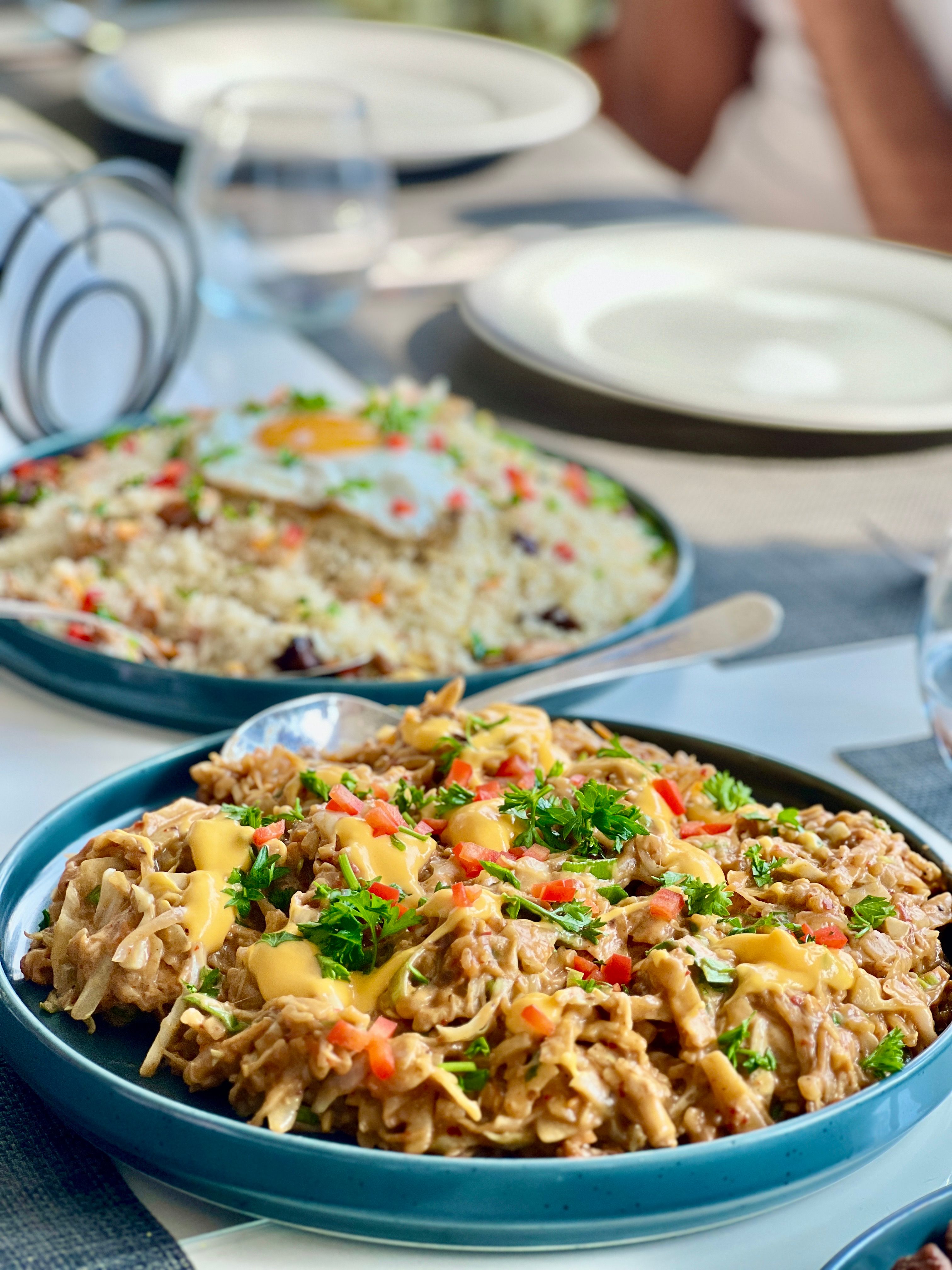
Kottu Roti
The diets react (see scores below)
Common Ingredients
- godamba roti
- egg
- onion
- carrot
- leeks
- green chili
- curry leaves
- soy sauce
- curry powder
Specific recipes may vary.
Incompatible with 6 of 11 diets
Diet Ratings
Kottu Roti is fundamentally built on godamba roti, a refined wheat flour flatbread that is the primary and dominant ingredient. This alone makes the dish entirely incompatible with ketogenic eating, as a standard serving would deliver well over 50g of net carbs just from the roti component. The dish is essentially a stir-fry of shredded flatbread, making carbohydrate reduction impossible without completely reconstructing the recipe. The remaining ingredients — carrot (moderate carbs), onion (moderate carbs), and soy sauce (often contains wheat) — add further carb load. There is no meaningful fat content to offset the carbohydrate density. No portion size makes this keto-compatible; the entire dish concept is carb-centric.
Kottu Roti as listed contains egg, which is a direct animal product and a clear disqualifier under vegan dietary rules. Eggs are excluded from all mainstream vegan standards without exception. While the majority of the other ingredients (godamba roti, onion, carrot, leeks, green chili, curry leaves, soy sauce, curry powder) are plant-based, the inclusion of egg makes this dish non-vegan. It is worth noting that godamba roti itself is typically made with refined flour, oil, salt, and water — making it plant-based — but this does not offset the egg. A vegan version of Kottu Roti is easily achievable by simply omitting the egg, or substituting with tofu or a chickpea-flour scramble, and is common in vegan Sri Lankan cooking.
Kottu Roti is fundamentally incompatible with the Paleo diet. The dish's base ingredient — godamba roti — is a flatbread made from refined wheat flour, a grain explicitly excluded from Paleo eating. Soy sauce contains both soy (a legume) and wheat (a grain), adding two more disqualifying ingredients. While several components are Paleo-friendly (egg, onion, carrot, leeks, green chili, curry leaves, curry powder), the foundational grain-based roti and the soy sauce make this dish a clear avoid. There is no meaningful modification that would preserve the dish's identity while making it Paleo-compliant.
Kottu Roti is a Sri Lankan street food made by stir-frying chopped flatbread (godamba roti) with egg and vegetables. The vegetable content (onion, carrot, leeks, green chili, curry leaves) aligns well with Mediterranean principles, and egg is an acceptable moderate protein source. However, godamba roti is a refined white flour flatbread, which falls short of the whole grain preference in Mediterranean guidelines. Soy sauce is a processed condiment not found in traditional Mediterranean cooking, though it is used in small amounts. The dish is not cooked in olive oil (typically made with coconut oil or vegetable oil in Sri Lankan tradition), and the refined roti base is a notable concern. Overall, the dish is vegetable-forward and egg-based but relies on refined grains and non-Mediterranean cooking fats and condiments, placing it in the caution zone.
Some modern Mediterranean diet interpreters may view this dish more favorably given its abundance of vegetables and moderate egg content, arguing that the spirit of plant-forward eating is upheld. Traditional Mediterranean diets do include refined flatbreads in some regions (e.g., Lebanese pita, Greek pita), so the roti base is not entirely without parallel.
Kottu Roti is fundamentally incompatible with the carnivore diet. The dish is built almost entirely on plant-based and processed ingredients. Godamba roti is a wheat flour flatbread — a grain product that is explicitly excluded. The remaining ingredients include multiple vegetables (onion, carrot, leeks, green chili, curry leaves), soy sauce (a fermented soy/grain product), and curry powder (a plant-based spice blend). The only carnivore-compatible ingredient is the egg, which is a minor component. There is no meaningful animal protein base, and the overwhelming majority of this dish violates every tier of carnivore eating, including the most lenient interpretations.
Kottu Roti contains two major Whole30-excluded ingredients. First, godamba roti is a flatbread made from wheat flour — a grain that is explicitly excluded from the Whole30 program. Second, soy sauce contains soy (a legume) and typically wheat (a grain), both of which are banned. Even if coconut aminos were substituted for soy sauce, the wheat-based roti alone would disqualify this dish entirely. Additionally, godamba roti is itself a grain-based bread product that falls under the rule 4 prohibition against recreating bread/wrap-style foods. There is no compliant version of traditional Kottu Roti possible without fundamentally changing the dish's identity.
Kottu Roti contains multiple high-FODMAP ingredients that make it unsuitable during the elimination phase. Godamba roti is a wheat-flour flatbread, making it high in fructans — the primary FODMAP concern. Onion is one of the highest-FODMAP foods tested by Monash, rich in fructans, and is a core ingredient rather than a trace addition. Leeks in standard serving quantities are also high in fructans. Together, these three ingredients alone make this dish clearly high-FODMAP at any reasonable serving. The remaining ingredients (egg, carrot, green chili, curry leaves, curry powder) are generally low-FODMAP, and soy sauce is low-FODMAP at small amounts, but they cannot offset the major FODMAP load from wheat roti, onion, and leeks.
Kottu Roti is a mixed dish with both DASH-friendly and problematic elements. On the positive side, it includes vegetables (onion, carrot, leeks, green chili, curry leaves) and egg for protein, which align with DASH principles. However, godamba roti is typically made from refined white flour (not a whole grain), which DASH de-emphasizes in favor of whole grains. The most significant concern is soy sauce, which is extremely high in sodium — even one tablespoon can contain 800–1,000mg, putting this dish at risk of exceeding DASH sodium thresholds in a single serving. Curry powder is generally fine. As a street food typically prepared with oil and full portions of refined flatbread, the overall sodium and refined carbohydrate load makes this a caution-level food. A modified version using low-sodium soy sauce or coconut aminos, whole wheat roti, and minimal added salt could score higher (6–7).
NIH DASH guidelines emphasize whole grains and low sodium categorically. However, some updated DASH-aligned clinical dietitians note that when soy sauce is used in small amounts and the dish is vegetable-forward, the overall nutrient profile (potassium from vegetables, protein from egg) may be acceptable in the context of an otherwise well-managed DASH day — particularly for non-hypertensive individuals on the standard 2,300mg sodium limit.
Kottu Roti is a Sri Lankan street dish built around godamba roti (a refined white flour flatbread similar to paratha), which is the primary Zone concern. Godamba roti is a high-glycemic, refined carbohydrate that Sears would classify as 'unfavorable' — comparable to white bread or tortillas. It provides the bulk of the calories and drives the glycemic load up significantly. The egg adds some lean protein and helps the macro ratio, and the vegetables (onion, carrot, leeks, green chili, curry leaves) are genuinely Zone-favorable low-glycemic carbs. Soy sauce and curry powder are negligible macronutrient contributors. However, the dish as typically prepared is carbohydrate-dominant without enough lean protein or fat to achieve the 40/30/30 Zone balance. The ratio skews heavily toward carbs — likely 60-70% carb calories depending on preparation. To make it Zone-compatible, one would need to reduce the roti portion significantly, add more egg or a lean protein source, and add a monounsaturated fat source. As a snack, the portion could theoretically be controlled more tightly, but the refined roti remains an unfavorable carb foundation. It is not an 'avoid' because the egg and vegetables provide redeeming nutritional value, and Zone is ratio-based — a very small portion with protein additions could technically fit.
Some Zone practitioners argue that a small portion of kottu roti — heavy on egg and vegetables, light on the roti itself — can function as a reasonable unfavorable-carb meal component, similar to how Sears allows limited servings of whole grains. The vegetables and egg whites are genuinely favorable Zone foods, and the dish's spice profile (anti-inflammatory turmeric in curry powder, green chili) aligns with Sears' later anti-inflammatory dietary emphasis. The classification thus depends heavily on roti-to-vegetable-to-egg ratio in the specific preparation.
Kottu Roti presents a mixed anti-inflammatory profile. On the positive side, the dish contains several beneficial ingredients: eggs provide choline and selenium; onion, leeks, and green chili are rich in quercetin and other flavonoids; carrots supply beta-carotene (a carotenoid antioxidant); curry leaves and curry powder deliver anti-inflammatory compounds including curcumin and other polyphenols; and the aromatic spice blend is consistent with anti-inflammatory principles. However, the base — godamba roti — is a refined white flour flatbread (similar to paratha), which is a refined carbohydrate with a high glycemic load, contributing to blood sugar spikes and downstream inflammatory signaling. Soy sauce typically contains high sodium and often additives, though the amount used as a seasoning is modest. The overall dish is not inherently pro-inflammatory but is held back significantly by its refined carbohydrate foundation, which is a central concern in anti-inflammatory eating. Prepared at home with whole wheat or alternative flour roti, more vegetables, and reduced sodium soy sauce, this dish could score meaningfully higher. As typically prepared (refined white flour base), it lands in the caution zone.
Some anti-inflammatory nutritionists would rate this more favorably, emphasizing the dense array of anti-inflammatory aromatics — curry powder (turmeric, coriander), green chili (capsaicin), curry leaves, and alliums — arguing that the spice profile and vegetable content meaningfully offset the refined flour. Others adhering more strictly to glycemic and grain-quality principles (e.g., Dr. David Ludwig's work on refined carbohydrates and inflammation) would push this closer to an avoid, particularly for metabolically sensitive individuals.
Kottu roti is a stir-fried Sri Lankan street dish made by chopping godamba roti (a refined white flour flatbread) with egg, vegetables, and spices on a hot griddle. The egg provides modest protein (roughly 6-12g depending on quantity), and the vegetables — carrot, leeks, onion — contribute some fiber and micronutrients. However, godamba roti is made from refined white flour, offering low fiber and low nutrient density per calorie, which conflicts directly with the priority of nutrient density on a reduced-appetite GLP-1 diet. The dish is also typically cooked with a meaningful amount of oil on the griddle, adding fat that can worsen nausea and bloating. Green chili and curry powder may trigger reflux or GI discomfort in GLP-1 patients who are sensitive to spice, especially given slowed gastric emptying. Soy sauce is high in sodium, which is a minor concern. The category listing is 'snack,' but a standard kottu roti portion is a full meal-sized serving, making portion control challenging. On the positive side, the vegetable content supports some fiber and hydration, and the egg contributes real protein. If made with a smaller portion, extra egg, and minimal oil, it becomes more acceptable — but the standard preparation scores only moderately for GLP-1 compatibility.
Some GLP-1-focused dietitians may view kottu roti more favorably when egg quantity is generous, noting that the combination of protein, vegetables, and moderate carbohydrate can support satiety in small portions. Others flag the refined flour base and spice load as meaningful concerns for patients already managing nausea and blood sugar variability, and would recommend substituting a higher-fiber roti or cauliflower base.
*See how scores were generated at our methodology page.
Nutritional profile
Six traits that cut across every diet.
Fiber & Plants
How much whole-plant food and fiber it delivers.
Healthy Fats
The quality of its fats (unsaturated, omega-3).
Whole / Unprocessed
How close it is to its natural, unprocessed form.
Gut Gentle
How easy it is on digestion (low FODMAP, few irritants).
Low Glycemic
How little it spikes your blood sugar.
Protein Density
How much protein it packs per calorie.
Controversy Index
Higher controversy = more disagreement between diets.
Diet-Specific Tips
 Mediterranean — 5/10
View tips
- Godamba roti is a refined white flour flatbread — not a whole grain
- Good variety of vegetables (onion, carrot, leeks, chili, curry leaves) aligns with Mediterranean principles
- Egg is an acceptable moderate food in Mediterranean diet
- Soy sauce is a processed condiment not native to Mediterranean cooking
- Typically cooked in non-olive oil fats (coconut or vegetable oil)
- No red meat or added sugars; overall moderate compatibility
 DASH — 4/10
View tips
- Soy sauce is very high in sodium, potentially 800–1,000mg per tablespoon, a major DASH concern
- Godamba roti is made from refined white flour, not a whole grain as DASH recommends
- Vegetables (carrot, leeks, onion, green chili, curry leaves) add potassium, fiber, and micronutrients aligned with DASH
- Egg provides lean protein consistent with DASH guidelines
- Curry powder and spices are DASH-friendly flavor enhancers without sodium concerns
- Low-sodium soy sauce or coconut aminos and whole wheat roti substitutions would significantly improve the DASH score
 Zone — 4/10
View tips
- Godamba roti is refined white flour — a high-glycemic 'unfavorable' carb in Zone terminology
- Dish is carbohydrate-dominant, likely 60-70% carb calories, far exceeding the Zone's 40% target
- Egg provides lean protein but insufficient to balance the macro ratio at typical serving sizes
- Vegetables (carrot, leeks, onion, green chili) are Zone-favorable low-glycemic carbs and help the polyphenol profile
- Curry powder contains turmeric, which aligns with Sears' anti-inflammatory focus
- No lean protein listed as primary — egg alone is insufficient for a proper Zone protein block
- No monounsaturated fat source present; fat profile depends on cooking oil used
- Portion control could theoretically rescue the ratio, but street-food serving sizes make this difficult in practice
 Anti-Inflammatory — 5/10
View tips
- Godamba roti is a refined white flour flatbread — a significant pro-inflammatory factor due to high glycemic load
- Curry powder contains turmeric and other anti-inflammatory spices — a positive contributor
- Onion, leeks, and green chili are rich in quercetin and flavonoids — anti-inflammatory
- Carrots provide beta-carotene (carotenoid antioxidant) — beneficial
- Curry leaves contain alkaloids, flavonoids, and antioxidants — anti-inflammatory
- Eggs are a moderate, mixed ingredient — some beneficial nutrients but contain arachidonic acid
- Soy sauce adds sodium and potential additives — minor concern at typical serving quantities
- No omega-3 sources, healthy fats, or whole grains present — missed opportunities for stronger anti-inflammatory scoring
 GLP-1 Friendly — 4/10
View tips
- Godamba roti is refined white flour — low fiber, low nutrient density per calorie
- Egg provides useful protein but quantity is unspecified and likely modest
- Green chili and curry powder may worsen GLP-1-related reflux and nausea
- Typically cooked with significant oil, increasing fat load per serving
- Vegetable mix (carrot, leeks, onion) adds some fiber and micronutrients
- High-sodium soy sauce is a minor concern
- Standard portion size is large — poor fit for small-meal GLP-1 eating pattern
- No primary protein listed — dish is carbohydrate-dominant in its base