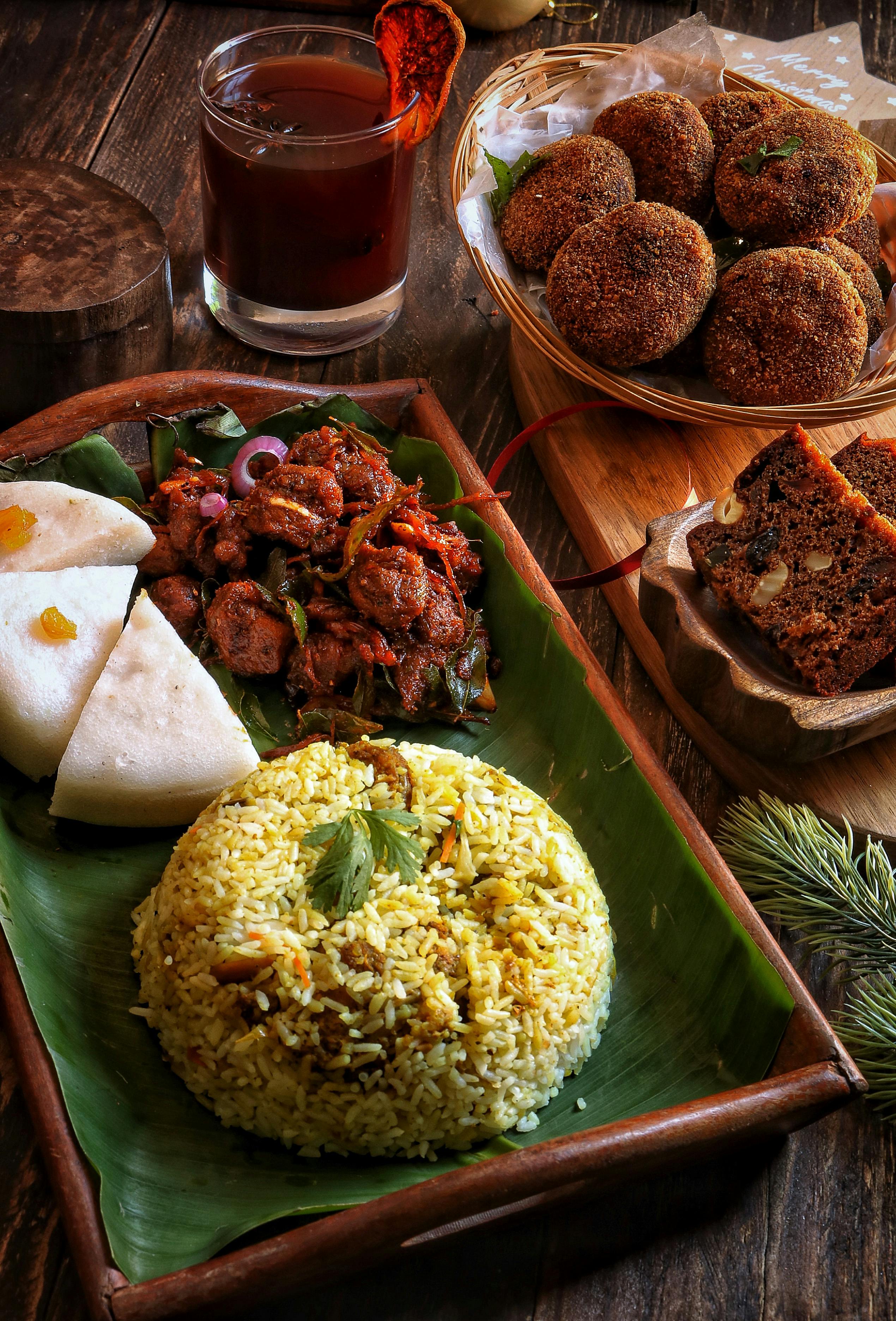
Photo: Saveurs Secretes / Pexels
The diets react (see scores below)
Common Ingredients
- rice
- chicken
- frikkadel
- eggplant
- coconut sambol
- banana leaf
- cardamom
- cinnamon
- curry leaves
Specific recipes may vary.
Incompatible with 6 of 11 diets
Diet Ratings
Lamprais is a Sri Lankan dish built around rice as its primary carbohydrate base, which is a high-glycemic grain that is fundamentally incompatible with ketogenic eating. A standard serving of rice alone can contain 40-50g of net carbs, instantly exceeding or maxing out the entire daily keto carb budget. The dish is specifically designed as a rice-centric meal, so there is no realistic way to consume it in a ketogenic context without fundamentally altering the recipe. While some individual components—chicken, eggplant, coconut sambol, spices like cardamom and cinnamon, and curry leaves—are keto-friendly or benign, frikkadels (meatballs) may also contain breadcrumbs as a binder, adding further grain-based carbs. The banana leaf used for wrapping is not consumed and is neutral. The overall dish is disqualifying due to its rice foundation.
Lamprais is a Sri Lankan dish (of Dutch Burgher origin) that contains multiple animal-derived ingredients. Chicken is a direct animal product, and frikkadel are meatballs traditionally made with ground meat (beef or pork) and eggs — both non-vegan. These are clear disqualifying ingredients under any vegan standard. The remaining ingredients (rice, eggplant, coconut sambol, banana leaf, cardamom, cinnamon, curry leaves) are plant-based, but the dish as a whole cannot be considered vegan due to the presence of poultry and meat-based components.
Lamprais is fundamentally incompatible with the paleo diet. The dish is built around rice, a grain that is explicitly excluded from paleo eating. Frikkadel (Dutch-influenced meatballs) typically contain breadcrumbs or oats as a binder — both grain-based and non-paleo. These two ingredients alone disqualify the dish. The remaining components — chicken, eggplant, coconut sambol, banana leaf (as a wrapper), cardamom, cinnamon, and curry leaves — are all paleo-approved. However, the core structural components (rice and frikkadel) make this dish a clear avoid.
Lamprais is a Sri Lankan dish of Dutch-Burgher origin featuring rice baked in banana leaf with chicken, frikkadel (meatballs, typically made from mixed meats including beef/pork), eggplant, and coconut sambol. From a Mediterranean diet perspective, this dish presents a mixed profile. The chicken, eggplant, and aromatic spices (cardamom, cinnamon, curry leaves) are acceptable or even beneficial. However, the rice is likely white (refined grain), which is discouraged in favor of whole grains. More significantly, frikkadel traditionally contains red or mixed ground meat, which the Mediterranean diet limits to a few times per month. Coconut sambol introduces coconut, which is high in saturated fat and not part of traditional Mediterranean eating. The dish lacks olive oil and is not plant-forward. The overall combination — white rice, coconut-based condiment, and red meat frikkadel — pushes this toward caution rather than approval, though the chicken and vegetables provide some redeeming value.
Some modern Mediterranean diet interpretations are more flexible about occasional white rice (as seen in traditional Greek and Turkish cuisines) and focus primarily on overall dietary patterns rather than individual dishes. If the frikkadel were made exclusively from poultry and portion sizes were modest, the dish could be viewed more favorably as an occasional meal within a broader plant-forward diet.
Lamprais is a Sri Lankan dish that is fundamentally incompatible with the carnivore diet. It is built around rice (a grain) as its primary base, and includes multiple plant-derived ingredients: eggplant, coconut sambol (coconut is a plant food), banana leaf (used for wrapping/cooking), cardamom, cinnamon, and curry leaves (plant-based spices and aromatics). Even the animal-derived component (chicken and frikkadel/meatballs) is cooked alongside and infused with these plant ingredients, making separation impractical. The dish is essentially a plant-heavy, spiced rice packet with some meat — the opposite of a carnivore-compliant meal.
Lamprais contains rice, which is explicitly excluded on Whole30 as a grain. Additionally, frikkadel (Dutch-Indonesian meatballs) typically contain breadcrumbs or other grain-based binders, adding a second source of excluded grains. Rice is a foundational component of this dish — it is cooked and served wrapped in banana leaf with all other components — making it impossible to simply remove without fundamentally changing the dish. The remaining ingredients (chicken, eggplant, coconut sambol, banana leaf, cardamom, cinnamon, curry leaves) are generally Whole30-compatible, but the presence of rice alone is disqualifying.
Lamprais is a complex Sri Lankan dish with several high-FODMAP problem areas. The most significant concern is frikkadel (Dutch-influenced meatballs), which traditionally contain breadcrumbs (wheat/fructans), onion, and garlic — all high-FODMAP ingredients. Coconut sambol typically includes onion and sometimes garlic, both major fructan sources. Curry leaves in small amounts are generally considered low-FODMAP, but the dish as a whole is prepared as a combined package, making portion control of individual high-FODMAP components virtually impossible. Rice is low-FODMAP, and chicken plain is low-FODMAP. Eggplant is low-FODMAP at standard servings (75g per Monash). Cardamom and cinnamon are low-FODMAP spices. However, the frikkadel and coconut sambol components almost certainly contain onion and garlic at levels that make this dish unsuitable during the elimination phase. Even if modifications were possible, the dish is served as an integrated parcel, making ingredient separation impractical.
A home-prepared version could theoretically be adapted by substituting gluten-free breadcrumbs in frikkadels, omitting onion and garlic, and using asafoetida and garlic-infused oil instead — some FODMAP practitioners note that Sri Lankan dishes can be modified this way. However, as traditionally prepared and served in restaurants, this dish is nearly certain to contain high-FODMAP ingredients that cannot be removed.
Lamprais is a Sri Lankan dish of Dutch-Burgher origin consisting of rice cooked in stock, chicken curry, frikkadels (Dutch-style meatballs typically made with beef/pork and breadcrumbs), eggplant, and coconut sambol, all wrapped in banana leaf and baked. Several DASH concerns arise: (1) Coconut sambol is made with desiccated coconut, which is high in saturated fat from a tropical oil source — DASH explicitly limits tropical oils and coconut products. (2) Frikkadels are typically made with red or mixed meat (beef/pork), breadcrumbs, and seasoning — this introduces saturated fat and sodium, both DASH-limited. (3) The overall dish is sodium-dense due to multiple curried components, stock-cooked rice, and seasoned sides. (4) Portion size is substantial as a bundled meal. On the positive side: chicken as a primary protein is DASH-friendly, eggplant is a DASH-approved vegetable, spices like cardamom, cinnamon, and curry leaves add flavor without sodium, and rice provides energy without being inherently problematic. The dish is not categorically prohibited but requires significant modification (reduce coconut sambol, substitute frikkadel with a leaner protein, use low-sodium stock) to align more closely with DASH principles.
NIH DASH guidelines explicitly limit coconut-based products and red meat due to saturated fat content, placing coconut sambol and beef frikkadels in the 'avoid' category. However, some updated clinical interpretations note that coconut used in small condiment quantities (as in sambol) may not meaningfully impact cardiovascular risk when the overall dietary pattern is otherwise DASH-adherent, and that mixed dishes with lean protein and vegetables can fit within a flexible DASH framework.
Lamprais is a Sri Lankan dish of Dutch-Burgher origin featuring rice cooked in stock, baked in a banana leaf with chicken curry, frikkadel (spiced meatballs), eggplant curry, and coconut sambol. From a Zone perspective, the dish has a fundamentally imbalanced macronutrient structure. White rice is the dominant carbohydrate and is high-glycemic and 'unfavorable' in Zone terminology, making it difficult to achieve the 40/30/30 ratio without significant portion manipulation. The coconut sambol introduces saturated fat from coconut, which Zone traditionally cautions against in large amounts, though Sears' later writings have softened somewhat on coconut. On the positive side, chicken provides lean protein, eggplant is a favorable low-glycemic vegetable, and the aromatic spices (cardamom, cinnamon, curry leaves) are anti-inflammatory and Zone-friendly. Frikkadel (typically made with ground beef, bread, and egg) adds moderate protein but also saturated fat and additional high-glycemic breadcrumb carbs. As a traditional dish, Lamprais is rice-centric by design, making Zone compliance very difficult without altering the fundamental character of the meal. A Zone practitioner could consume a very small portion alongside additional non-starchy vegetables to help rebalance the macro ratio, but this would be atypical of how the dish is served.
Some Zone practitioners following Sears' later anti-inflammatory framework (Toxic Fat, The Mediterranean Zone) might view coconut fat more favorably as it contains medium-chain triglycerides. Additionally, if the rice portion is kept to one small Zone carb block (~9g net carbs) and supplemented with generous eggplant, the meal could theoretically be constructed closer to Zone ratios — though this requires significant departure from traditional lamprais portioning. The chicken and frikkadel together could provide adequate protein blocks if portioned carefully.
Lamprais is a Dutch-influenced Sri Lankan dish traditionally consisting of rice baked in banana leaf with an assortment of accompaniments. The ingredient profile is mixed from an anti-inflammatory standpoint. On the positive side, the dish features several strongly anti-inflammatory elements: cardamom and cinnamon are well-supported anti-inflammatory spices; curry leaves contain antioxidant alkaloids and flavonoids with demonstrated anti-inflammatory activity; eggplant provides nasunin and chlorogenic acid, both potent antioxidants; and banana leaf cooking is a clean, additive-free preparation method. The chicken (primary protein) is a lean, moderate-tier protein acceptable in anti-inflammatory eating. Rice (typically white in lamprais) is a refined carbohydrate that is neutral to mildly inflammatory at moderate portions. The coconut sambol introduces coconut flesh, which contains medium-chain triglycerides — a debated ingredient, as coconut's saturated fat content is flagged by some authorities while others consider it benign or beneficial. The most concerning element is the frikkadel (a Dutch-Burgher meatball), which typically contains ground beef or pork, bread crumbs (refined carbs), and is sometimes pan-fried — adding saturated fat, refined carbohydrates, and possible pro-inflammatory omega-6 cooking oils. The overall dish is a culturally rich, predominantly whole-ingredient preparation with genuine anti-inflammatory spices, but the frikkadel and white rice temper the score, making this a moderate caution-range food rather than a clear approve.
Some anti-inflammatory practitioners following AIP or strict protocols would flag the eggplant (a nightshade) as potentially problematic for individuals with autoimmune conditions, and would also raise concerns about coconut sambol's saturated fat from coconut. However, mainstream anti-inflammatory guidance including Dr. Weil's framework considers nightshade vegetables beneficial for the general population due to their antioxidant content, and views coconut more permissively than animal-derived saturated fats.
Lamprais is a Sri Lankan dish of Dutch-Burgher origin featuring rice cooked in stock, a mixed meat curry (here chicken), frikkadels (spiced meatballs, typically fried or pan-cooked with some fat), a briani-style eggplant preparation, and coconut sambol, all wrapped and baked in banana leaf. The chicken provides meaningful protein, and eggplant adds fiber and micronutrients. The aromatic spices (cardamom, cinnamon, curry leaves) are GLP-1 neutral or mildly beneficial. However, several components create concern: the rice base is a refined starch delivering significant carbohydrate load with modest fiber; coconut sambol is made with desiccated coconut and contains appreciable saturated fat; frikkadels are typically made with ground meat and breadcrumbs and are pan-fried, adding fat and processed carbs; and the overall dish is calorie-dense with moderate-to-high fat content across multiple components. The banana leaf wrapping and baking method reduce some of the worst preparation concerns, but the composite nature of the dish means a standard serving delivers high calories, moderate-to-high fat, and relatively low protein-to-calorie ratio compared to GLP-1 ideal meals. Portion sensitivity is high — a full traditional serving is too large for most GLP-1 patients. A small portion focusing on the chicken curry component over a half-portion of rice, minimizing the frikkadel and coconut sambol, could make it more acceptable.
Some GLP-1-focused dietitians would score this lower (toward avoid) primarily due to the fried frikkadel component and high saturated fat from coconut sambol, arguing that the multi-fat-source combination risks worsening nausea and delayed gastric emptying symptoms. Others would note that the chicken curry base with aromatic spices is genuinely protein- and micronutrient-rich, and that cultural dietary adherence is clinically important — pushing patients away from traditional foods can undermine long-term compliance, so a modified smaller portion may be preferable to avoidance.
*See how scores were generated at our methodology page.
Nutritional profile
Six traits that cut across every diet.
Fiber & Plants
How much whole-plant food and fiber it delivers.
Healthy Fats
The quality of its fats (unsaturated, omega-3).
Whole / Unprocessed
How close it is to its natural, unprocessed form.
Gut Gentle
How easy it is on digestion (low FODMAP, few irritants).
Low Glycemic
How little it spikes your blood sugar.
Protein Density
How much protein it packs per calorie.
Controversy Index
Higher controversy = more disagreement between diets.
Diet-Specific Tips
 Mediterranean — 4/10
View tips
- White rice is a refined grain, not aligned with whole grain preference
- Frikkadel typically contains red or mixed ground meat, limited in Mediterranean diet
- Coconut sambol introduces saturated fat from coconut, not a Mediterranean staple
- Chicken is an acceptable moderate protein source
- Eggplant and aromatic spices are Mediterranean-friendly ingredients
- No olive oil present; cooking fat source is non-traditional
- Dish is not plant-forward overall
 DASH — 4/10
View tips
- Coconut sambol is high in saturated fat from coconut — a tropical oil DASH explicitly limits
- Frikkadels typically contain red/mixed meat and added sodium, conflicting with DASH red meat limits
- Multiple components combined increase overall sodium load significantly
- Chicken is a DASH-approved lean protein
- Eggplant is a DASH-friendly vegetable contributing fiber and potassium
- Aromatic spices (cardamom, cinnamon, curry leaves) add flavor without sodium — DASH-positive
- Rice is acceptable but white rice lacks the fiber of DASH-preferred whole grains
- Large, bundled portion size makes calorie and sodium control difficult
 Zone — 4/10
View tips
- White rice is the dominant ingredient and is classified as an 'unfavorable' high-glycemic carbohydrate in Zone methodology
- Coconut sambol introduces saturated fat from coconut, traditionally cautioned against in Zone but less so in Sears' later writings
- Chicken provides lean, Zone-favorable protein
- Eggplant is a favorable low-glycemic Zone vegetable
- Frikkadel (meatballs with breadcrumbs) adds additional high-glycemic carbs and saturated fat
- Aromatic spices (cardamom, cinnamon, curry leaves) are anti-inflammatory and align with Zone principles
- The dish's rice-centric structure makes achieving 40/30/30 ratio very difficult without radical portion reduction of rice
- Traditional serving size would result in carbohydrate calories far exceeding the 40% Zone target
 Anti-Inflammatory — 5/10
View tips
- Anti-inflammatory spices: cardamom, cinnamon, and curry leaves are strong positives
- Eggplant provides antioxidants (nasunin, chlorogenic acid) — beneficial for most people
- Frikkadel (ground meat meatball with breadcrumbs) adds saturated fat and refined carbs — most inflammatory component
- White rice is a refined carbohydrate — neutral to mildly inflammatory at portion-appropriate amounts
- Coconut sambol introduces saturated fat from coconut — debated but generally considered moderate
- Chicken is an acceptable lean protein within anti-inflammatory guidelines
- Banana leaf preparation is clean and additive-free — no concern
- Dish is whole-ingredient and minimally processed overall, aside from frikkadel
 GLP-1 Friendly — 5/10
View tips
- Chicken provides meaningful protein but total protein-to-calorie ratio of full dish is suboptimal
- Rice base is predominantly refined starch with low fiber contribution
- Coconut sambol contributes significant saturated fat per serving
- Frikkadels are typically pan-fried, adding fat and breadcrumb-based refined carbs
- Banana leaf baking is a relatively gentle cooking method, a mild positive
- Aromatic spices (cardamom, cinnamon, curry leaves) are GLP-1 neutral to mildly beneficial
- High portion sensitivity — full traditional serving is too calorie- and fat-dense for GLP-1 patients
- Cultural dish: modified smaller portion centered on chicken curry may be preferable to full avoidance