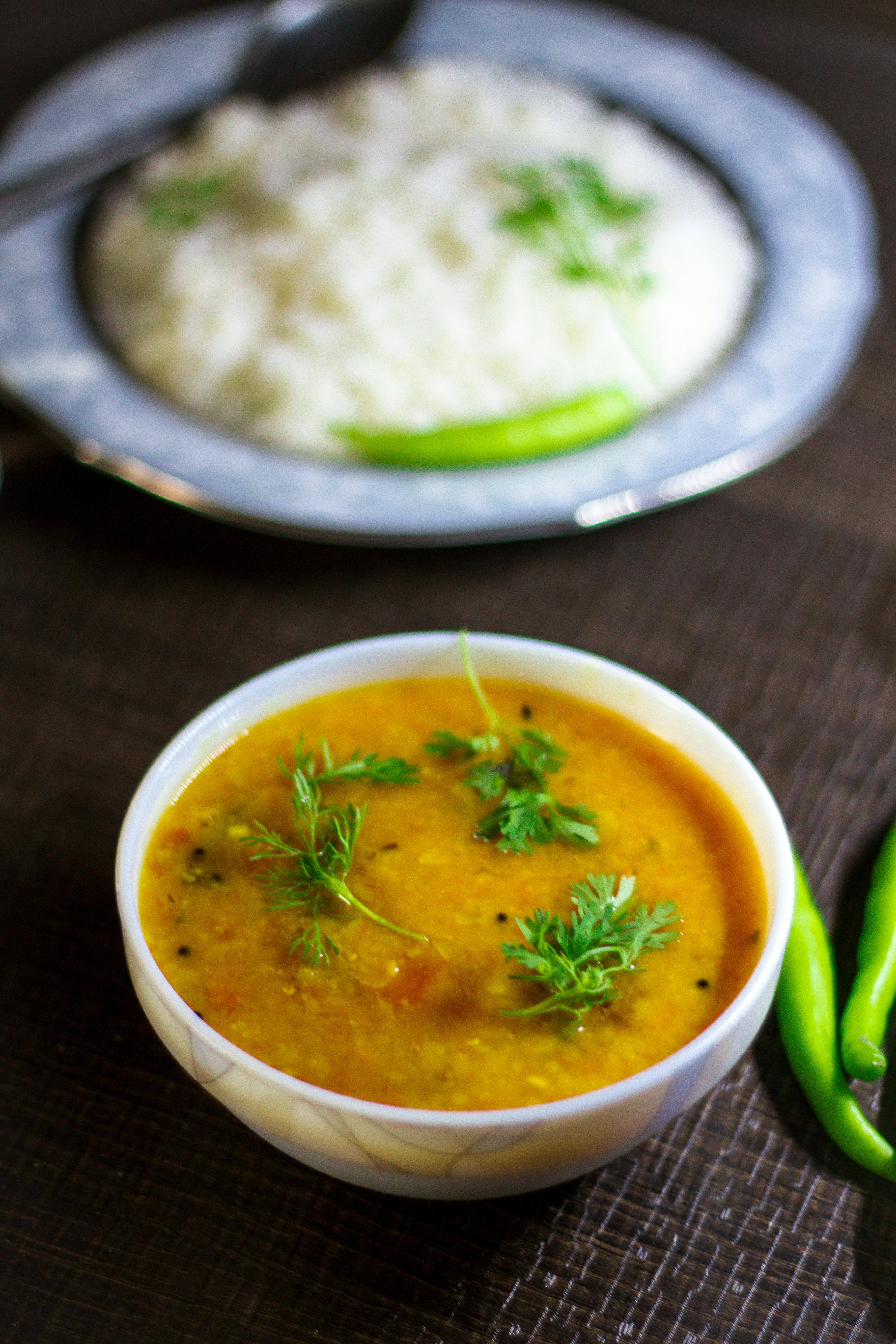
Photo: Shiva Kumar / Pexels
Sri-Lankan
Parippu
The diets react (see scores below)
Common Ingredients
- red lentils
- coconut milk
- onion
- garlic
- turmeric
- curry leaves
- pandan
- mustard seeds
- green chili
Specific recipes may vary.
Incompatible with 5 of 11 diets
Diet Ratings
Parippu is a Sri Lankan red lentil dal that is fundamentally incompatible with ketogenic eating. Red lentils are a high-carbohydrate legume: a standard serving (approximately 100g cooked) contains roughly 20g net carbs, and a typical main-dish portion (200-250g) would deliver 40-50g net carbs — effectively consuming or exceeding an entire day's keto carb budget in a single dish. While the coconut milk base adds beneficial fats and the aromatics (garlic, onion, curry leaves, turmeric, mustard seeds, green chili) are used in small quantities, they cannot offset the fundamental carb load from the lentils. Lentils are a starchy legume with no place in standard ketogenic macros. There is no practical portion size of a lentil-based main dish that would fit within ketosis.
Parippu is a traditional Sri Lankan red lentil dal made entirely from whole plant foods. Every ingredient — red lentils, coconut milk, onion, garlic, turmeric, curry leaves, pandan leaves, mustard seeds, and green chili — is unambiguously plant-derived. The dish is nutrient-dense, high in protein and fiber from lentils, and uses minimally processed ingredients. Coconut milk is a whole-food plant product. This is an exemplary whole-food plant-based meal with no animal products or contested ingredients.
Parippu is a Sri Lankan lentil dal whose primary protein source is red lentils — a legume that is explicitly excluded from the paleo diet. Lentils contain lectins, phytates, and antinutrients that paleo authorities consistently flag as harmful or anti-nutritional. While the remaining ingredients (coconut milk, onion, garlic, turmeric, curry leaves, pandan, mustard seeds, green chili) are all paleo-compatible or approved, the foundational ingredient — red lentils — is a hard exclusion with near-universal consensus across all major paleo frameworks including Cordain, Sisson, and Wolf. No amount of compliant supporting ingredients can redeem a dish built around a disqualifying primary ingredient.
Parippu is a Sri Lankan lentil dal that aligns strongly with Mediterranean diet principles at its core. Red lentils are an excellent plant-based protein and staple legume, enthusiastically endorsed by Mediterranean dietary guidelines. The dish is whole-food, plant-forward, and minimally processed. The supporting aromatics — onion, garlic, turmeric, curry leaves, green chili, mustard seeds — are all vegetables and spices that add nutritional value. The main point of nuance is coconut milk: it is a plant-based fat but is high in saturated fat, which differs from the Mediterranean emphasis on unsaturated fats from olive oil. However, coconut milk is used in a supporting role here rather than as a dominant fat, and the overall dish remains legume-centric and nutritionally dense. The absence of red meat, refined grains, added sugars, or heavily processed ingredients means this dish poses no fundamental conflict with Mediterranean principles.
Some strict Mediterranean diet authorities and clinical programs (e.g., Oldways Preservation Trust guidelines) would flag coconut milk's high saturated fat content as inconsistent with the diet's core lipid profile, preferring olive oil as the sole primary fat. Traditional Mediterranean cuisines have no coconut milk tradition, so purists might rate this more cautiously despite the otherwise exemplary legume base.
Parippu is a traditional Sri Lankan lentil dal that is entirely plant-based. Every single ingredient — red lentils, coconut milk, onion, garlic, turmeric, curry leaves, pandan, mustard seeds, and green chili — is derived from plants. There are zero animal products in this dish. Lentils are legumes, which are among the most explicitly excluded foods on the carnivore diet due to their high carbohydrate content, antinutrients (lectins, phytates, oxalates), and complete absence of animal origin. This dish is incompatible with the carnivore diet at every level.
Parippu is a Sri Lankan red lentil dal. Red lentils are legumes, and legumes are explicitly excluded on the Whole30 program. Unlike green beans, sugar snap peas, and snow peas — which are specifically excepted despite being legumes — lentils have no such exception and are firmly on the excluded list. All other ingredients (coconut milk, onion, garlic, turmeric, curry leaves, pandan, mustard seeds, green chili) are fully Whole30-compliant, but the primary protein and structural base of the dish is a prohibited ingredient, making the dish non-compliant as a whole.
Parippu contains multiple high-FODMAP ingredients that make it unsuitable during the elimination phase. Onion and garlic are among the highest-FODMAP foods tested by Monash University, both rich in fructans, and are avoid-level at any culinary quantity. Red lentils are high in GOS (galacto-oligosaccharides) and are high-FODMAP at a standard serving (~1/4 cup dried), though canned/well-rinsed lentils have lower but still significant GOS levels. Coconut milk is low-FODMAP at 1/2 cup but can become moderate at larger servings. The remaining ingredients — turmeric, curry leaves, pandan, mustard seeds, and green chili — are generally low-FODMAP. However, the combination of onion, garlic, and red lentils as core structural ingredients makes this dish high-FODMAP regardless of the safe individual components. There is no realistic way to prepare traditional Parippu and keep it low-FODMAP without fundamentally altering the recipe by omitting onion and garlic (or substituting garlic-infused oil and the green tops of spring onions) and replacing red lentils with a lower-FODMAP protein source.
Parippu (Sri Lankan dal curry) is built on red lentils, which are an excellent DASH food — high in fiber, plant protein, potassium, and magnesium with no sodium. The aromatics (onion, garlic, turmeric, curry leaves, mustard seeds, green chili, pandan) are all DASH-compatible and add nutritional benefit. The primary concern is coconut milk, a tropical oil-derived ingredient that DASH guidelines explicitly limit due to its high saturated fat content. Full-fat coconut milk can contain 12–17g saturated fat per half-cup serving, which conflicts with DASH's emphasis on limiting saturated fat. The dish is otherwise low in sodium and nutritionally dense, making it a borderline case — the lentil base strongly supports DASH principles, but the coconut milk component is a meaningful qualifier.
NIH DASH guidelines restrict coconut milk as a tropical oil-derived, high-saturated-fat ingredient. However, some updated clinical interpretations note that the medium-chain triglycerides (MCTs) in coconut fat may behave differently metabolically than long-chain saturated fats, and that using a modest amount of coconut milk in a predominantly legume-based dish may be acceptable within overall dietary fat limits — particularly if light or reduced-fat coconut milk is substituted.
Parippu is a Sri Lankan red lentil curry that presents a mixed Zone Diet profile. Red lentils are the primary protein source, but they are a dual macro food — providing both carbohydrates and protein simultaneously, which complicates Zone block construction. Per Dr. Sears' framework, vegetarian proteins like lentils require larger fat blocks (3g per fat block rather than 1.5g) to maintain the 40/30/30 ratio. The main concern is the carbohydrate density of red lentils: they have a moderate-to-high glycemic index when cooked (GI ~21-30 for boiled red lentils, though glycemic load depends on portion), and their net carb content is significant (~20g net carbs per 100g cooked). Coconut milk adds saturated fat, which Zone (especially early Sears writings) flags as unfavorable — it is not monounsaturated and lacks anti-inflammatory omega-3 profile. However, coconut milk is not trans fat, and Sears' later anti-inflammatory work is less dogmatic about saturated fat. The aromatics (onion, garlic, turmeric, curry leaves, green chili) are Zone-positive: turmeric is a polyphenol powerhouse directly aligned with Sears' anti-inflammatory emphasis, and the other spices/aromatics add negligible glycemic load with beneficial phytonutrients. Overall, parippu can be incorporated into a Zone meal with careful portioning — smaller lentil servings as a side rather than a large main, paired with a lean protein source to balance the block ratios. As a standalone main dish, the lentil-to-fat ratio skewed toward saturated coconut fat and the carbohydrate density make it a cautious fit.
Some Zone practitioners, particularly those following Sears' later writings in 'The Zone Diet' and his anti-inflammatory work, may rate this more favorably. Lentils are listed as an acceptable Zone protein/carb source, and their fiber content meaningfully reduces net carbs and glycemic impact. Turmeric and polyphenol-rich spices align perfectly with Sears' Phase 2 anti-inflammatory protocol. A moderate portion of parippu (~half cup cooked lentils) with reduced coconut milk could fit reasonably within a Zone meal as both a carb and partial protein block, earning a score closer to 6. The coconut milk concern is also less relevant in Sears' post-2010 writings where medium-chain triglycerides in coconut are viewed more neutrally.
Parippu (Sri Lankan dal curry) is built on a strong anti-inflammatory foundation. Red lentils are an excellent source of plant protein, fiber, and polyphenols that support gut health and reduce inflammatory markers like CRP. Turmeric contributes curcumin, one of the most researched anti-inflammatory compounds in nutritional science. Garlic, mustard seeds, green chili, curry leaves, and pandan all bring additional bioactive compounds — allicin, isothiocyanates, capsaicin, and various antioxidants — that collectively support an anti-inflammatory profile. Onion adds quercetin. The primary concern is coconut milk: full-fat coconut milk is high in saturated fat (lauric acid), which is flagged under anti-inflammatory guidelines as a food to limit. However, coconut milk in a dal context is used as a flavor and texture component rather than the primary ingredient, and some researchers distinguish lauric acid's metabolic effects from other saturated fats. The overall dish remains plant-based, fiber-rich, spice-forward, and legume-centered — all hallmarks of an anti-inflammatory dietary pattern.
Dr. Weil's Anti-Inflammatory Pyramid limits saturated fat including coconut products, and mainstream anti-inflammatory protocols flag full-fat coconut milk as a concern due to its high saturated fat content. However, a meaningful minority of researchers — including those citing lauric acid's distinct lipid metabolism and MCT composition — argue that coconut milk in moderate culinary quantities does not meaningfully drive inflammation, and paleo/AIP frameworks (which emphasize anti-inflammatory eating for autoimmune conditions) often include it freely.
Parippu (Sri Lankan dal curry) has genuine nutritional strengths for GLP-1 patients — red lentils provide meaningful plant protein (~18g per cup cooked) and excellent fiber (~16g per cup), supporting both the #1 and #2 priorities. The aromatics (turmeric, curry leaves, garlic, onion, mustard seeds) are anti-inflammatory and digestively supportive. However, the inclusion of coconut milk introduces significant saturated fat, which conflicts with rule #3 (low fat per serving) and can worsen GLP-1 side effects including nausea, bloating, and reflux. The green chili is a mild concern — in typical Sri Lankan quantities it may irritate GI mucosa in sensitive patients, though it is far less problematic than hot sauce or habanero. The dish also falls short as a standalone main for GLP-1 patients because red lentils alone do not provide complete protein and the protein-per-calorie ratio is moderate rather than high. Served as a side or in a small portion alongside a lean protein (e.g., grilled fish or chicken), it scores significantly better. The coconut milk quantity is the primary swing factor — a light coconut milk or reduced-quantity version would push this toward approve.
Some GLP-1-focused RDs accept coconut milk in small amounts given that the fat in this dish is diluted across a serving and the fiber and micronutrient profile is strong; others flag any significant saturated fat source as a consistent trigger for delayed gastric emptying symptoms and recommend substituting light coconut milk or omitting it entirely. Individual GI tolerance on GLP-1 medications varies considerably, making this a portion- and preparation-dependent call.
*See how scores were generated at our methodology page.
Nutritional profile
Six traits that cut across every diet.
Fiber & Plants
How much whole-plant food and fiber it delivers.
Healthy Fats
The quality of its fats (unsaturated, omega-3).
Whole / Unprocessed
How close it is to its natural, unprocessed form.
Gut Gentle
How easy it is on digestion (low FODMAP, few irritants).
Low Glycemic
How little it spikes your blood sugar.
Protein Density
How much protein it packs per calorie.
Controversy Index
Higher controversy = more disagreement between diets.
Diet-Specific Tips
 Vegan — 9/10
View tips
- Red lentils provide complete plant-based protein and are unambiguously vegan
- Coconut milk is a whole-food plant-derived ingredient with no animal components
- All aromatics and spices (onion, garlic, turmeric, curry leaves, pandan, mustard seeds, green chili) are fully plant-based
- No animal products, animal-derived additives, or ethically contested ingredients present
- Whole-food preparation typical of traditional Sri Lankan cooking — no processed substitutes involved
- Scores 9/10 as a nutrient-rich, minimally processed, entirely plant-based main dish
 Mediterranean — 8/10
View tips
- Red lentils are a core Mediterranean legume — strongly approved
- All vegetables and spices used are whole, unprocessed, and nutritionally beneficial
- Coconut milk introduces saturated fat, atypical of Mediterranean fat sources
- No red meat, added sugars, or refined grains
- Entirely plant-based dish supports Mediterranean dietary pattern
- Non-Mediterranean cuisine but ingredient profile largely compatible
 DASH — 5/10
View tips
- Red lentils are a core DASH legume: high fiber, potassium, magnesium, plant protein
- Coconut milk is high in saturated fat (~13g per 100ml), a DASH-limited tropical oil
- No added sodium in the ingredient list — dish is naturally very low in sodium
- Garlic, onion, turmeric, and curry spices are DASH-positive anti-inflammatory additions
- Substituting light coconut milk or a small quantity would raise the score to approve range
- As a main dish, portion size and coconut milk quantity significantly affect overall DASH compatibility
 Zone — 5/10
View tips
- Red lentils are a dual carb/protein food — complicate Zone block math, but usable as vegetarian protein source
- Coconut milk contributes saturated fat, which is 'unfavorable' in Zone — not monounsaturated
- Lentils have moderate glycemic index but high fiber reduces net carbs and glycemic load
- Turmeric and polyphenol-rich spices (curry leaves, garlic, green chili) are strongly pro-Zone anti-inflammatory
- As a standalone main, protein-to-carb ratio is skewed — best portioned as a side or supplemented with lean protein
- Vegetarian protein source requires larger fat blocks per Zone rules, and coconut milk partially satisfies this but with saturated fat
 Anti-Inflammatory — 8/10
View tips
- Red lentils: high in fiber, plant protein, and polyphenols — strongly anti-inflammatory
- Turmeric: curcumin is one of the most researched anti-inflammatory phytonutrients
- Garlic: allicin shown to reduce inflammatory markers
- Green chili: capsaicin has documented anti-inflammatory and antioxidant effects
- Mustard seeds and curry leaves: contain antioxidants and anti-inflammatory phytochemicals
- Coconut milk: high in saturated fat (lauric acid) — flagged as a food to limit under anti-inflammatory guidelines
- Overall dish is plant-based, legume-centered, and spice-rich — consistent with anti-inflammatory dietary principles
 GLP-1 Friendly — 5/10
View tips
- Red lentils provide good plant-based protein (~18g/cup cooked) and high fiber (~16g/cup) — strongly supports GLP-1 dietary priorities #1 and #2
- Coconut milk introduces saturated fat, conflicting with priority #3 and potentially worsening nausea, bloating, and reflux
- Turmeric and aromatic spices are anti-inflammatory and digestively neutral to beneficial
- Green chili is a mild GI irritation risk depending on quantity used
- Incomplete protein source — benefits from pairing with a lean animal or complementary plant protein
- Works better as a side dish or small-portion accompaniment than a standalone main on a GLP-1 regimen
- Light coconut milk substitution would meaningfully improve the rating