Photo: Luis Quintero / Pexels
Sri-Lankan
Watalappan
The diets react (see scores below)
Common Ingredients
- coconut milk
- kithul jaggery
- eggs
- cardamom
- nutmeg
- cloves
- cashews
Specific recipes may vary.
Incompatible with 7 of 11 diets
Diet Ratings
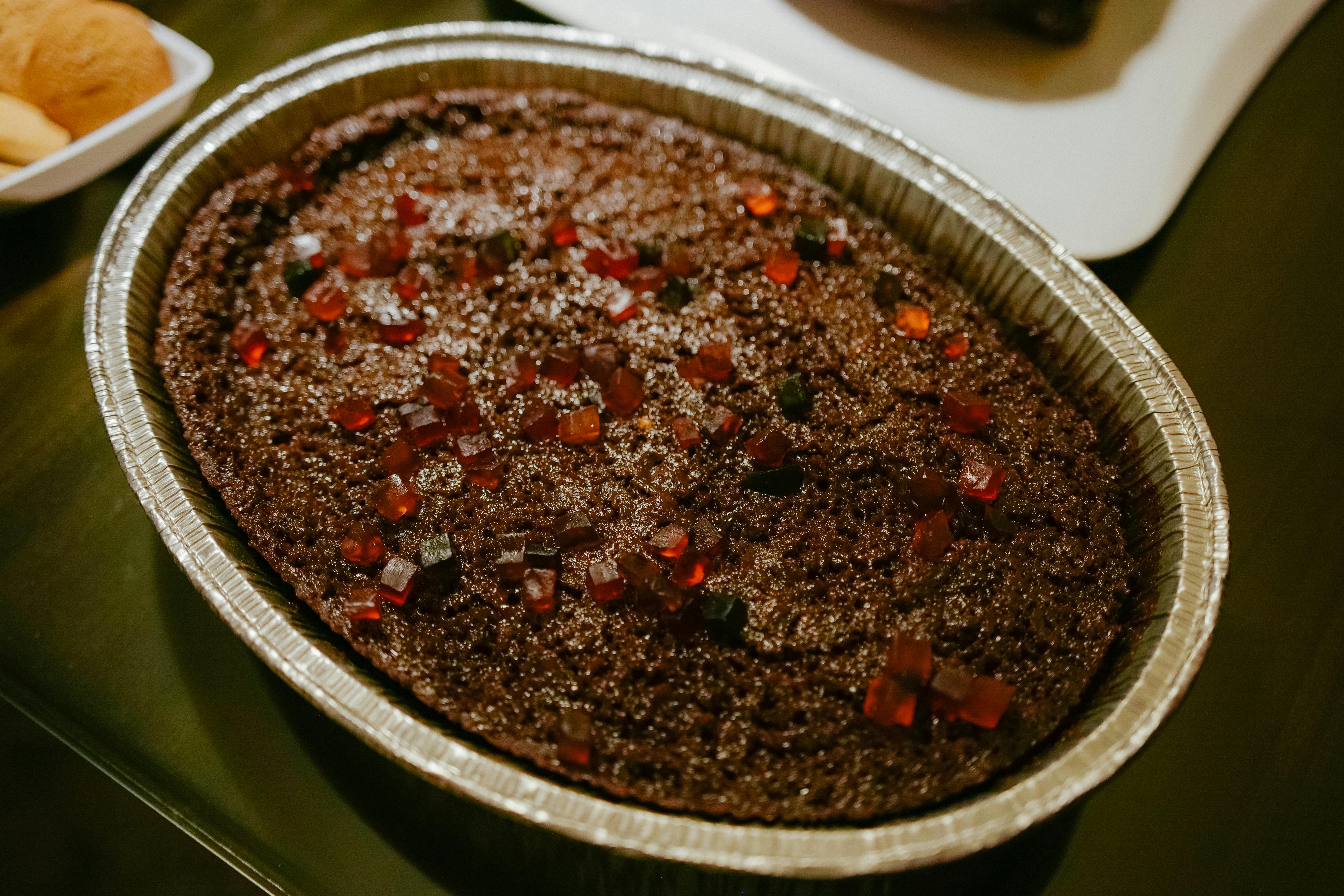
Watalappan is a Sri Lankan steamed coconut custard pudding whose defining ingredient is kithul jaggery, a concentrated palm sugar with an extremely high glycemic load and virtually no fiber. A standard serving contains a very large amount of sugar-derived carbohydrates — easily 30–50g+ of net carbs per portion — which would single-handedly blow past the daily keto carb ceiling. While the base components of coconut milk and eggs are inherently keto-friendly, the substantial quantity of jaggery required to make this dish authentic renders it fundamentally incompatible with ketosis. The cashews also add a moderate carb load. There is no meaningful keto-compatible substitution that would still produce Watalappan as traditionally understood.
Watalappan is a traditional Sri Lankan steamed custard pudding. Its primary protein is eggs, and eggs are a core structural ingredient — the dish cannot be made without them. Eggs are unambiguously animal products excluded from all vegan diets. The remaining ingredients (coconut milk, kithul jaggery, cardamom, nutmeg, cloves, cashews) are all plant-based, but the presence of eggs makes the dish incompatible with a vegan diet regardless.
Watalappan is a Sri Lankan steamed custard made from ingredients that are largely paleo-compatible, but the use of kithul jaggery places it in caution territory. Coconut milk, eggs, cardamom, nutmeg, cloves, and cashews are all approved paleo foods. Kithul jaggery is an unrefined natural sweetener derived from the sap of the kithul palm — analogous to coconut sugar or maple syrup — which most paleo frameworks treat as a gray-area sweetener acceptable in moderation rather than a strict avoid. It is not refined white sugar and retains some minerals, but it is still a concentrated sugar source. The dish as a whole is grain-free, dairy-free, legume-free, and uses no seed oils or artificial additives, making it far more paleo-aligned than most desserts/snacks. However, the sweetener and the fact that it is a processed/cooked preparation intended as an indulgent sweet dish temper the score.
Strict Cordain-school paleo would flag any added sweetener, including unrefined palm jaggery, as outside the ancestral eating pattern, arguing that concentrated sugars — regardless of their source — were not a dietary staple for Paleolithic humans and drive insulin spikes inconsistent with paleo principles.
Watalappan is a Sri Lankan steamed custard made from eggs, coconut milk, and kithul jaggery (palm sugar), spiced with cardamom, nutmeg, and cloves, and topped with cashews. From a Mediterranean diet perspective, this dish presents a mixed profile. Eggs are an accepted moderate-consumption food in the Mediterranean framework. Cashews and spices are welcomed as nuts and plant-based flavoring agents. However, two ingredients raise concern: coconut milk is high in saturated fat and is not a traditional Mediterranean fat source (olive oil is canonical), and kithul jaggery, while less refined than white sugar, is still an added sugar that the Mediterranean diet minimizes. The combination of coconut milk and jaggery makes this a high-saturated-fat, high-sugar dessert/snack, which contradicts core Mediterranean principles even if individual ingredients like eggs and cashews are acceptable. It is not a food that would be encouraged regularly but could be consumed occasionally.
Some modern Mediterranean diet interpreters take a more flexible stance on unrefined sweeteners like jaggery versus white sugar, and a small number of integrative nutrition practitioners consider coconut milk a permissible plant-based fat in moderation. From this lens, the dish's use of whole spices, eggs, nuts, and a minimally processed sweetener could push it toward the higher end of the caution range.
Watalappan is a Sri Lankan coconut custard pudding that is fundamentally incompatible with the carnivore diet. While eggs are the only carnivore-approved ingredient, every other component is plant-derived or excluded: coconut milk is a plant-based liquid, kithul jaggery is a plant-derived sugar/sweetener, cardamom, nutmeg, and cloves are plant spices, and cashews are nuts. The dish is also sweetened and dessert-oriented, which conflicts with the zero-sugar, zero-plant-food principles of carnivore eating. There is no version of this dish that could be adapted to carnivore without completely deconstructing it — only the eggs would remain.
Watalappan is a Sri Lankan steamed custard pudding whose defining ingredient is kithul jaggery — an unrefined palm sugar used as a sweetener. Added sugar in any form (including jaggery, palm sugar, coconut sugar, and similar unrefined sweeteners) is explicitly excluded on the Whole30. All other ingredients — coconut milk, eggs, cardamom, nutmeg, cloves, and cashews — are individually compliant, but the jaggery alone disqualifies the dish as traditionally prepared. Additionally, watalappan is a dessert/sweet custard that would likely fall under the 'no recreating sweets' spirit of the program even if a sweetener substitution were attempted.
Watalappan is a Sri Lankan steamed coconut custard with several FODMAP considerations. Eggs are low-FODMAP and safe. Coconut milk is low-FODMAP at small servings (Monash: 1/2 cup / 125ml) but becomes high-FODMAP at larger amounts due to polyols (sorbitol). Spices — cardamom, nutmeg, and cloves — are low-FODMAP at culinary quantities. The two most problematic ingredients are kithul jaggery and cashews. Kithul jaggery (palm sugar/treacle) has not been specifically tested by Monash; palm sugar derivatives can contain varying levels of fructose and fructans depending on processing — this introduces meaningful uncertainty. Cashews are high-FODMAP at standard snack-sized portions (Monash: only 10 cashews / ~15g is considered low-FODMAP; typical garnish amounts on Watalappan may exceed this). The cumulative FODMAP load from coconut milk in a full dessert serving, uncertain jaggery status, and cashew topping makes this dish risky during the strict elimination phase.
Monash University has not specifically tested kithul jaggery/palm treacle, creating uncertainty — some FODMAP practitioners consider small amounts of unrefined palm sugars tolerable due to lower fructose concentration compared to honey or HFCS, while others advise avoiding untested sweeteners entirely during elimination. Additionally, if cashews are omitted or strictly limited to ≤10 nuts and coconut milk is portioned conservatively, some practitioners would consider a small serving acceptable.
Watalappan is a Sri Lankan steamed coconut custard dessert made primarily with coconut milk and kithul jaggery (palm sugar). It presents multiple DASH diet conflicts. Coconut milk is high in saturated fat from a tropical oil source, which DASH explicitly limits. Kithul jaggery is a significant source of added sugar, which DASH discourages. Together, these two ingredients make watalappan high in both saturated fat and added sugar — two of DASH's primary targets for limitation. While the eggs provide protein and the spices (cardamom, nutmeg, cloves) are DASH-neutral or beneficial, and cashews offer some magnesium and healthy fats, the core composition of this dish is incompatible with DASH principles. The dish is also typically consumed as a dessert/sweet snack, a category DASH limits to 5 or fewer servings per week of small portions. Sodium is low, which is the one DASH-positive attribute, but it is insufficient to offset the saturated fat and sugar load.
NIH DASH guidelines explicitly limit saturated fat from tropical oils like coconut milk and restrict added sugars, making watalappan a poor fit. However, some updated clinical interpretations note that the saturated fat in coconut milk contains medium-chain triglycerides (MCTs) with potentially different metabolic effects than long-chain saturated fats, and that unrefined jaggery has a lower glycemic index and trace mineral content compared to refined sugar — a small occasional portion might be acceptable within a broader DASH-compliant dietary pattern according to more flexible practitioners.
Watalappan is a Sri Lankan steamed coconut custard dessert made primarily from coconut milk, kithul jaggery (palm sugar), and eggs. From a Zone perspective, this dish presents a problematic macronutrient profile. The eggs provide moderate lean protein, but the dominant macronutrients skew heavily toward fat (coconut milk is high in saturated fat) and high-glycemic carbohydrates (kithul jaggery is essentially unrefined sugar with a significant glycemic load). The ratio is far from the Zone's 40/30/30 target — carbs from jaggery are high-GI, fat from coconut milk is predominantly saturated rather than monounsaturated, and protein from eggs is the only Zone-favorable component. The cashews add some monounsaturated fat, which is positive, but they are a minor component. Spices (cardamom, nutmeg, cloves) are polyphenol-rich and anti-inflammatory, which Sears would appreciate. As a dessert/snack, very small portions could technically be worked into a Zone day, but it is an 'unfavorable' food that disrupts Zone ratios significantly. It is not categorically unavoidable, hence 'caution' rather than 'avoid,' but it requires strict portion limitation and careful balancing with lean protein and low-GI carbs in the same meal context.
Some Zone practitioners note that kithul jaggery, while high in sugar, has a lower glycemic index than refined white sugar and contains trace minerals, making it marginally more acceptable than pure sucrose. Additionally, later Sears anti-inflammatory writings (The Anti-Inflammation Zone) acknowledge coconut's medium-chain triglycerides as metabolically distinct from other saturated fats, softening the strict anti-coconut stance of earlier Zone books. A generous interpretation could nudge the score slightly higher if consumed in very small portions as an occasional treat.
Watalappan is a Sri Lankan steamed custard with a genuinely mixed anti-inflammatory profile. On the positive side, it features several anti-inflammatory spices — cardamom, cloves (one of the highest ORAC-rated spices due to eugenol), and nutmeg — all of which have demonstrated antioxidant and anti-inflammatory properties in research. Kithul jaggery (palm treacle) is an unrefined sweetener that retains trace minerals and has a lower glycemic impact than refined sugar, making it meaningfully better than HFCS or white sugar, though it is still a significant source of added sugar. Cashews contribute healthy monounsaturated fats, some magnesium, and modest anti-inflammatory benefit. Eggs occupy a mixed position in anti-inflammatory frameworks — they contain choline and selenium but also arachidonic acid. The most problematic ingredient is full-fat coconut milk, which is high in saturated fat (predominantly medium-chain triglycerides like lauric acid); mainstream anti-inflammatory guidance limits saturated fat, though MCTs are debated. As a dessert/snack context, the sugar load from jaggery is the primary concern — it is still a sugar-dense food. The saving grace is the absence of refined carbohydrates, trans fats, seed oils, or artificial additives, and the presence of genuinely potent anti-inflammatory spices. Overall, this is acceptable in moderation but not a dish to consume frequently.
Some anti-inflammatory practitioners, particularly those influenced by Dr. Weil's more permissive framework, might rate this more favorably given the unrefined sweetener, spice-forward profile, and absence of processed ingredients — jaggery and coconut milk have traditional-food defenders who argue their nutrient retention and food matrix matter. Conversely, stricter anti-inflammatory protocols (e.g., AIP or blood sugar-focused frameworks) would rate this lower due to the sugar content and saturated fat from coconut milk, and would flag arachidonic acid in eggs.
Watalappan is a Sri Lankan steamed custard dessert made primarily from full-fat coconut milk and kithul jaggery (a concentrated sugar), with eggs as the structural base. While eggs provide modest protein, the overall nutritional profile is problematic for GLP-1 patients. Full-fat coconut milk is very high in saturated fat, which worsens GLP-1 side effects including nausea, bloating, and reflux — especially given slowed gastric emptying. Kithul jaggery is a high-sugar ingredient that delivers empty calories and causes blood sugar spikes, directly counterproductive to GLP-1 therapy goals. Cashews add additional fat load. The protein contribution from eggs is diluted by the high volume of fat and sugar in the dish, making the protein-per-calorie ratio poor. As a snack category item, it offers very little satiety value from protein or fiber while delivering a high caloric hit from fat and sugar — exactly what GLP-1 patients should minimize in their limited caloric budget.
*See how scores were generated at our methodology page.
Nutritional profile
Six traits that cut across every diet.
Fiber & Plants
How much whole-plant food and fiber it delivers.
Healthy Fats
The quality of its fats (unsaturated, omega-3).
Whole / Unprocessed
How close it is to its natural, unprocessed form.
Gut Gentle
How easy it is on digestion (low FODMAP, few irritants).
Low Glycemic
How little it spikes your blood sugar.
Protein Density
How much protein it packs per calorie.
Controversy Index
Higher controversy = more disagreement between diets.
Diet-Specific Tips
 Mediterranean — 4/10
View tips
- Coconut milk is high in saturated fat and not a traditional Mediterranean fat source
- Kithul jaggery is an added sugar, discouraged even in unrefined form
- Eggs are an accepted moderate-consumption protein in the Mediterranean diet
- Cashews contribute beneficial plant-based fats and protein
- Aromatic spices (cardamom, nutmeg, cloves) are neutral to positive
- Overall dish is a sweetened, high-fat dessert not aligned with Mediterranean dietary patterns
- No olive oil, whole grains, vegetables, or legumes present
 Low-FODMAP — 4/10
View tips
- Cashews are high-FODMAP above ~15g (10 nuts); typical garnish on Watalappan may exceed this threshold
- Coconut milk is low-FODMAP only at ≤125ml per serve; full dessert portions likely contain more
- Kithul jaggery (palm treacle) has not been tested by Monash University — FODMAP status uncertain
- Eggs, cardamom, nutmeg, and cloves are all low-FODMAP at culinary quantities
- Cumulative FODMAP load from multiple borderline ingredients increases overall risk
- Dish may be modifiable (omit/reduce cashews, use small portion, substitute tested sweetener) to reduce FODMAP load
 Zone — 4/10
View tips
- Kithul jaggery is a high-glycemic sugar source — a primary Zone 'unfavorable' carbohydrate
- Coconut milk is high in saturated fat, not the monounsaturated fat preferred by Zone
- Eggs provide lean protein, the only strongly Zone-favorable macronutrient in this dish
- Macronutrient ratio skews heavily toward fat and high-GI carbs, far from 40/30/30
- Cashews contribute some monounsaturated fat, partially mitigating the fat quality concern
- Spices (cardamom, nutmeg, cloves) are polyphenol-rich and align with Sears' anti-inflammatory focus
- As a dessert/snack, portion size is inherently small, which limits but does not eliminate Zone disruption
 Anti-Inflammatory — 5/10
View tips
- Cloves and cardamom are potent anti-inflammatory spices (eugenol, antioxidants)
- Kithul jaggery is unrefined but still a significant source of added sugar — a key limiting factor
- Full-fat coconut milk contributes saturated fat; MCT content is debated in anti-inflammatory research
- Eggs are mixed — choline and selenium vs. arachidonic acid
- Cashews provide monounsaturated fats and minerals with modest anti-inflammatory benefit
- No refined carbohydrates, trans fats, seed oils, or artificial additives — a meaningful positive
- Best consumed occasionally rather than regularly due to sugar and saturated fat load