Photo: Angelica Britto / Pexels
American
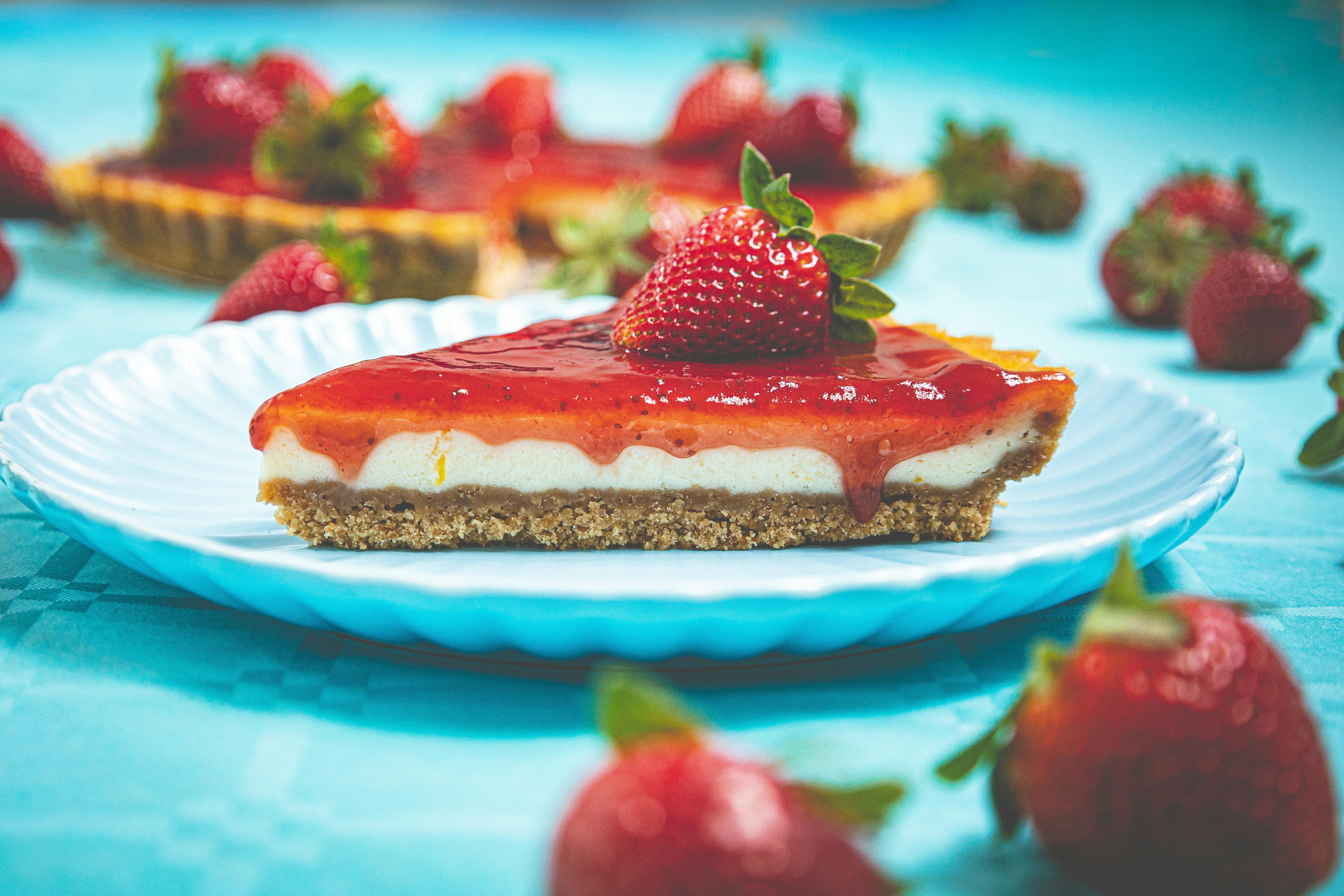
Strawberry Cheesecake
The diets react (see scores below)
Common Ingredients
- cream cheese
- sugar
- eggs
- graham cracker crumbs
- butter
- strawberries
- vanilla extract
- sour cream
Specific recipes may vary.
Incompatible with 11 of 11 diets
Diet Ratings
Strawberry Cheesecake is fundamentally incompatible with ketogenic diet principles. The recipe contains multiple high-carb, sugar-laden ingredients that would easily blow the daily net carb limit in a single serving. Sugar is a direct keto disqualifier with zero nutritional benefit for ketosis. Graham cracker crumbs are grain-based and high in net carbs. Strawberries, while lower in sugar than many fruits, still contribute meaningful carbs. Combined with added sugar, a standard serving of this cheesecake could contain 40-60g of net carbs — exceeding or maxing out the entire daily keto allowance at once. While cream cheese, eggs, butter, and sour cream are individually keto-friendly ingredients, the overall dish as prepared is not compatible with ketosis.
Strawberry Cheesecake contains multiple animal-derived ingredients that are entirely incompatible with a vegan diet. Cream cheese and sour cream are dairy products (derived from cow's milk), eggs are an animal product, and butter is a dairy fat. These are not trace contaminants or processing aids — they are core, load-bearing ingredients in the dish. There is no ambiguity here: this dish is thoroughly non-vegan. Vegan versions of cheesecake do exist using cashew cream, coconut cream, or commercial vegan cream cheese, with flax eggs or aquafaba as binders and plant-based butter, but the dish as described is not one of them.
Strawberry Cheesecake is fundamentally incompatible with the Paleo diet. The dish contains multiple strictly excluded ingredients: cream cheese and sour cream are dairy products explicitly prohibited under Paleo guidelines; sugar is refined and excluded; graham cracker crumbs are made from wheat flour, a grain that is categorically off-limits; and butter, while debated in some circles, is used here alongside multiple other disqualifying ingredients. The only Paleo-compliant components in the entire dish are eggs, strawberries, and vanilla extract. With the majority of ingredients — including the primary protein source (dairy) and the structural base (grains) — firmly in the 'avoid' category, this dish cannot be salvaged as Paleo even through partial substitutions. It would require a complete reformulation (e.g., nut-based crust, coconut cream filling) to approach Paleo compatibility.
Strawberry cheesecake is a highly processed American dessert that contradicts core Mediterranean diet principles on multiple fronts. The primary base is cream cheese and sour cream — high-fat dairy products consumed in large quantities rather than the moderate, incidental dairy typical of the Mediterranean pattern. Added sugar is a central ingredient, directly opposing the diet's emphasis on minimal added sugars. The crust combines refined grain (graham cracker crumbs) and butter, neither of which aligns with whole grain or olive oil principles. While strawberries and eggs are individually acceptable in Mediterranean eating, they are minor components here overwhelmed by problematic ingredients. This dish is calorie-dense, sugar-laden, saturated-fat-heavy, and firmly in the 'Western dessert' category the Mediterranean diet is designed to replace.
Strawberry Cheesecake is fundamentally incompatible with the carnivore diet. While it contains a few animal-derived ingredients (cream cheese, eggs, butter, sour cream), the dish is dominated by plant-based and processed ingredients that are strictly excluded: graham cracker crumbs (grain-based), sugar (processed sweetener), strawberries (fruit), and vanilla extract (plant-derived). Even setting aside the plant ingredients, sugar alone is a hard disqualifier on any tier of carnivore eating. This is a dessert built around a grain crust and sweetened fruit topping — essentially the opposite of a carnivore-compatible food. No meaningful adaptation is possible while retaining the identity of the dish.
Strawberry Cheesecake contains multiple excluded ingredients that make it clearly non-compliant with Whole30. Cream cheese and sour cream are dairy products, which are excluded. Sugar is an added sweetener, which is excluded. Graham cracker crumbs are grain-based (wheat), which are excluded. Regular butter is excluded (only ghee/clarified butter is allowed). Beyond the individual ingredient violations, cheesecake itself is exactly the type of dessert/baked good that Whole30 explicitly prohibits — even if one attempted to recreate it with compliant ingredients, it would fall under the 'no recreating baked goods or junk food' rule.
Strawberry cheesecake contains multiple high-FODMAP ingredients that make it unsafe during the elimination phase. Cream cheese is high in lactose at typical serving sizes used in cheesecake recipes. Sour cream is also high in lactose. Graham cracker crumbs are made from wheat, which is high in fructans. While strawberries are low-FODMAP at moderate servings (up to 10 medium strawberries), the other ingredients dominate the FODMAP load. Sugar, eggs, butter, and vanilla extract are low-FODMAP and not problematic. However, the combination of lactose-heavy dairy (cream cheese + sour cream) and fructan-containing wheat (graham crackers) means a standard slice of cheesecake would deliver significant FODMAPs across at least two categories simultaneously, making this dish clearly inappropriate for the elimination phase.
Strawberry cheesecake is incompatible with the DASH diet. The primary ingredients — cream cheese, butter, sour cream, and sugar — represent exactly what DASH limits: full-fat dairy high in saturated fat, added sugars, and calorie-dense fats. Cream cheese is a full-fat dairy product explicitly outside DASH guidelines, which call for fat-free or low-fat dairy. Butter adds saturated fat. The graham cracker crust adds refined carbohydrates and more butter/saturated fat. Sugar is the dominant sweetener, contributing significant added sugar that DASH limits to ≤5 servings per week (sweets category). While strawberries are a DASH-friendly ingredient, they represent a minor nutritional contribution relative to the overall dish profile. A typical slice delivers 300–450 calories, 15–25g saturated fat, and 25–35g added sugar — all far exceeding DASH portion tolerances. This is a classic dessert that falls squarely in the 'limit' category under DASH guidelines.
Strawberry cheesecake is a poor fit for the Zone Diet across virtually every macro dimension. The dominant ingredients — cream cheese, sugar, graham cracker crumbs, and butter — create a nutritional profile that is high in saturated fat, high-glycemic carbohydrates (refined sugar and processed crackers), and provides very little lean protein relative to its calorie load. Sugar is explicitly one of the worst Zone carbohydrates, driving rapid insulin spikes with no fiber to slow absorption. Graham cracker crumbs are a refined, high-glycemic carb with negligible Zone value. Cream cheese and sour cream are high in saturated fat, not the monounsaturated fats Zone favors. Butter compounds the saturated fat problem further. The only redeeming ingredient is strawberries, which are a favorable Zone fruit with a modest glycemic load and some polyphenol content, but they appear in a small supporting role. Eggs contribute some lean protein, but the overall protein-to-calorie ratio of cheesecake is far too low to anchor a Zone block. Even in a small portion, the sugar and saturated fat content make it nearly impossible to incorporate into a balanced 40/30/30 Zone meal without completely distorting the macronutrient ratios. This is not a food Zone practitioners could realistically portion-control into a compliant snack — it is essentially a vehicle for refined sugar and saturated fat.
Strawberry cheesecake is dominated by pro-inflammatory ingredients. Cream cheese and sour cream are full-fat dairy products high in saturated fat, which is associated with elevated inflammatory markers like CRP and IL-6. Butter adds additional saturated fat. Added sugar is a primary ingredient both in the filling and implied in the graham cracker crust, and refined sugar is one of the most consistently pro-inflammatory dietary components across anti-inflammatory frameworks. Graham cracker crumbs represent refined carbohydrates with minimal fiber. The only redemptive elements are strawberries, which contain antioxidants, vitamin C, and polyphenols (anthocyanins) with genuine anti-inflammatory properties, and eggs, which are nutritionally mixed. Vanilla extract contributes negligible benefit at culinary doses. However, the strawberries are a minor component overwhelmed by the inflammatory load of the full-fat dairy, added sugar, and refined carbohydrates that define this dessert. This dish hits multiple 'limit' and 'avoid' categories simultaneously: full-fat dairy, added sugar, and refined carbs. It is not a food that fits within any interpretation of anti-inflammatory eating as a regular item.
Strawberry cheesecake is a poor fit for GLP-1 patients across nearly every key criterion. The dominant ingredients — cream cheese, butter, sour cream, and sugar — combine to create a dessert that is high in saturated fat, high in refined sugar, and low in protein and fiber relative to its calorie load. A standard slice (approximately 400–500 calories) delivers roughly 4–6g of protein and minimal fiber, making it nutritionally hollow on a per-calorie basis. The high fat content directly worsens GLP-1 side effects: saturated fat slows gastric emptying further beyond the medication's effect, increasing the likelihood of nausea, bloating, and reflux. The sugar load is a concern both for blood glucose stability and because GLP-1 patients eating fewer total calories cannot afford empty-calorie foods. Graham cracker crumbs and butter add refined carbohydrates and additional saturated fat with no compensating nutritional benefit. The only partial redemptions are the eggs (modest protein) and strawberries (fiber, micronutrients, water content), but these are overwhelmed by the overall nutritional profile of the dish. This is not a portion-sensitivity case where a small serving rescues the rating — even a small portion delivers a concentrated hit of fat and sugar with negligible protein or fiber return.
*See how scores were generated at our methodology page.
Nutritional profile
Six traits that cut across every diet.
Fiber & Plants
How much whole-plant food and fiber it delivers.
Healthy Fats
The quality of its fats (unsaturated, omega-3).
Whole / Unprocessed
How close it is to its natural, unprocessed form.
Gut Gentle
How easy it is on digestion (low FODMAP, few irritants).
Low Glycemic
How little it spikes your blood sugar.
Protein Density
How much protein it packs per calorie.
Controversy Index
Higher controversy = more disagreement between diets.