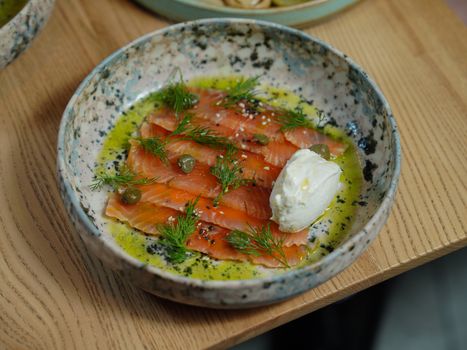
The diets react (see scores below)
Common Ingredients
- salmon
- salt
- sugar
- fresh dill
- white pepper
- mustard
- vinegar
Specific recipes may vary.
Incompatible with 4 of 11 diets
Diet Ratings
Gravlax is cured salmon, which is inherently keto-friendly as a fatty fish high in omega-3s and protein. However, the traditional recipe includes sugar as a key curing ingredient, which is used to balance the salt and draw out moisture. The amount of sugar that actually penetrates the flesh is debated — much stays in the cure and is rinsed off — but measurable residual sugar remains in the final product. The accompanying mustard-vinegar sauce (hovmästarsås) typically adds additional sugar. Strict keto practitioners would flag the added sugar as a disqualifier, while lazy/moderate keto followers often accept gravlax given the small residual carb load per serving. A small portion (2-3 slices, ~50g) likely contributes only 1-2g net carbs from the curing sugar, making it manageable with portion control.
Strict keto and carnivore-adjacent protocols reject any food cured or prepared with added sugar on principle, arguing that the practice normalizes sugar use and that trace amounts still trigger an insulin response. Some keto practitioners also flag the mustard and vinegar sauce as a hidden carb source that pushes the dish firmly out of compliance.
Gravlax is a Scandinavian cured salmon dish. Salmon is a fish — an animal product — and is explicitly excluded under vegan dietary rules. There is no ambiguity here; fish is unequivocally non-vegan regardless of preparation method. The remaining ingredients (salt, sugar, dill, white pepper, mustard, vinegar) are all plant-derived and would be vegan on their own, but the primary ingredient and defining component of this dish is salmon, making it entirely incompatible with a vegan diet.
Gravlax is a traditionally cured salmon dish that, while based on an excellent paleo protein (salmon), is prepared with added salt and refined sugar as core curing ingredients — both of which are explicitly excluded from the paleo diet. Salt is a processed additive not consumed in meaningful quantities by Paleolithic humans, and refined sugar is a clear paleo violation. The mustard and vinegar may also contain additives or non-paleo ingredients depending on preparation. Fresh dill and white pepper are paleo-approved herbs/spices, and salmon itself is an ideal paleo food, but the curing process disqualifies this dish in its traditional form.
Gravlax is cured salmon, which aligns well with the Mediterranean diet's strong emphasis on fish and seafood. Salmon is an excellent source of omega-3 fatty acids and is highly encouraged. However, gravlax is a cured preparation with added salt and sugar, which introduces concerns: the sodium content is high due to the curing process, and sugar is used in the cure. These factors distance it from the ideal whole-food fish preparation favored in the Mediterranean diet (e.g., grilled or baked fish with olive oil and herbs). The mustard, dill, vinegar, and pepper are fine condiment-level additions. The absence of olive oil as the fat medium and the processed/cured nature with added sugar keep this from a full approval, though it remains a reasonable fish-forward option in moderation.
Some Mediterranean diet practitioners would view any high-quality fatty fish preparation favorably regardless of curing method, arguing that the omega-3 benefits of salmon outweigh the modest sugar and salt used in gravlax. Traditional coastal Mediterranean communities did preserve fish with salt (e.g., salt cod, anchovies), suggesting cured fish is not categorically out of step with the diet's broader principles.
Gravlax is a cured salmon dish that contains multiple non-carnivore ingredients. While the salmon base is carnivore-approved, the traditional recipe includes sugar (a processed carbohydrate), fresh dill (a plant herb), white pepper (a plant spice), mustard (plant-derived condiment), and vinegar (plant-derived or fermented plant product). The combination of these plant-based additives and sugar make this dish incompatible with the carnivore diet. A stripped-down version using only salmon and salt would be carnivore-compliant, but traditional gravlax as prepared cannot be approved.
Gravlax contains sugar as a core curing ingredient, which is explicitly excluded on the Whole30 program. Added sugar — whether real or artificial — is banned for the full 30 days, and sugar is not a trace or incidental ingredient here; it is a fundamental component of the cure that penetrates the salmon throughout. The remaining ingredients (salmon, salt, fresh dill, white pepper, mustard, vinegar) are generally Whole30-compatible, but the sugar alone disqualifies the dish as traditionally prepared.
Gravlax is primarily cured salmon, which is inherently low-FODMAP as plain fish contains no FODMAPs. The curing ingredients — salt, sugar, and fresh dill — are all low-FODMAP at the quantities used in this preparation. White pepper is low-FODMAP in typical culinary amounts. Mustard (plain prepared mustard) is generally considered low-FODMAP at standard serving sizes (~1 tsp). Vinegar (most types — white, rice, apple cider) is low-FODMAP. The dish is served in thin slices as a snack, so typical portion sizes are modest. No significant FODMAP contributors (fructans, GOS, lactose, excess fructose, or polyols) are present in standard gravlax. The main scoring caveat is that mustard can sometimes contain garlic or onion powder as added ingredients, and the type of vinegar and mustard used matters.
Monash University has not specifically tested gravlax as a composite dish. Clinical FODMAP practitioners may flag prepared mustard as a potential hidden FODMAP source if it contains garlic or onion powder additives — checking mustard ingredient labels is advised during strict elimination phase.
Gravlax features salmon as its base, which is an excellent DASH-friendly protein — rich in omega-3 fatty acids, potassium, and lean protein, all well-aligned with DASH principles. However, the curing process uses substantial amounts of salt (and sugar), which is the primary concern. Traditional gravlax recipes typically use 2–4 tablespoons of salt per pound of salmon, resulting in a finished product with roughly 500–900mg sodium per 3oz serving — a significant portion of the DASH daily sodium budget (1,500–2,300mg). The mustard-dill sauce often served alongside can add further sodium. The salmon itself is DASH-approved, and the herbs (dill) and white pepper are fine, but the high-sodium curing method moves this dish into 'caution' territory. It is acceptable in small portions for those not on the stricter 1,500mg sodium DASH variant, but portion control is essential. Unlike smoked salmon (which often has even higher sodium), gravlax's sodium level is somewhat variable depending on preparation and how thoroughly the cure is rinsed.
NIH DASH guidelines emphasize limiting sodium and would flag the heavy salt cure used in gravlax as a concern. However, some DASH-oriented clinicians note that salmon's exceptional omega-3, potassium, and protein profile can justify moderate inclusion of gravlax when portion sizes are small (1–2oz) and overall daily sodium intake is managed carefully — particularly for non-hypertensive individuals following standard rather than low-sodium DASH.
Gravlax is cured salmon — a protein source that sits well within Zone principles, as salmon is a fatty fish rich in omega-3s, which aligns perfectly with Dr. Sears' anti-inflammatory emphasis. However, the curing process introduces sugar and salt in meaningful quantities. The sugar used in the cure is absorbed into the fish, adding a small but real glycemic load and empty carbohydrate blocks. As a snack category item, gravlax can work well in Zone if portioned correctly (approximately 1-2 protein blocks worth of salmon) and paired with low-glycemic vegetables or a small amount of whole grain crispbread to complete the 40/30/30 ratio. The mustard-dill sauce traditionally served alongside may also contain added sugar and vinegar, which are negligible in small amounts but worth noting. The primary fat profile of salmon — omega-3 fatty acids (EPA and DHA) — is ideal for Zone's anti-inflammatory goals. The curing sugar is the main zone concern, though it is dispersed across many servings and amounts to only a modest carbohydrate addition per portion.
Some Zone practitioners would rate gravlax higher (approve, 7-8) because the actual sugar content per serving is quite small after curing — most sugar is rinsed away — and the omega-3 fatty acid profile of salmon is among the most favorable foods in Sears' anti-inflammatory framework. Later Sears writings (The Zone Diet and Inflammation) especially prioritize omega-3 rich fatty fish, which could elevate gravlax to a solid approve with appropriate pairing.
Gravlax is a Scandinavian cured salmon dish with a genuinely mixed anti-inflammatory profile. On the positive side, salmon is one of the most strongly anti-inflammatory foods available, rich in long-chain omega-3 fatty acids (EPA and DHA) that directly reduce inflammatory markers like CRP and IL-6. Fresh dill contributes flavonoids and antioxidants, and mustard contains anti-inflammatory glucosinolates. White pepper provides modest anti-inflammatory phytochemicals. However, the curing process introduces meaningful concerns: gravlax is prepared with a significant amount of salt, which at high intake levels is associated with endothelial inflammation and hypertension. The added sugar in the cure, while used in relatively small quantities per serving, still contributes refined sugar that anti-inflammatory frameworks consistently flag. The vinegar (typically in the mustard sauce served alongside) is largely neutral to mildly beneficial. Overall, the dish is not a processed food in the industrial sense — it is a whole-food preparation — but the salt and sugar content during curing temper what would otherwise be a strongly anti-inflammatory protein source. In moderate portions, gravlax retains significant anti-inflammatory value from its salmon base, but regular heavy consumption would be moderated by the sodium and sugar load.
Some anti-inflammatory nutrition practitioners (including those following Dr. Weil's framework) would rate this closer to 'approve' since the salmon's omega-3 content is dominant and the curing agents are used in small per-serving amounts — the fish's benefits arguably outweigh the minimal sugar and salt. Others with stricter anti-inflammatory protocols, particularly those focused on sodium's role in vascular inflammation, would keep it firmly in 'caution' territory and recommend limiting intake or choosing lower-sodium preparations.
Gravlax is cold-cured salmon seasoned with salt, sugar, dill, and white pepper, typically served with a mustard-dill sauce (mustard, vinegar, sugar). As a salmon-based dish, it delivers excellent omega-3 fatty acids and a solid protein contribution (~20g per 3oz serving), making it nutritionally meaningful for GLP-1 patients. Salmon's fat content is predominantly unsaturated and omega-3-rich, which is preferred over saturated fat. However, gravlax carries a few cautions: (1) the curing process uses significant salt, raising sodium content substantially — relevant for patients who may already be prone to dehydration on GLP-1s; (2) the cure and mustard sauce contain added sugar, contributing modest but unnecessary empty calories; (3) the natural fat content of salmon, while healthy in type, is moderate-to-high per calorie, which can contribute to nausea or GI discomfort in GLP-1 patients sensitive to fat; (4) gravlax is typically served in small portions on rye bread or crackers — the accompaniment matters significantly, as refined crackers add low-nutrient carbs while rye or whole grain options improve the fiber profile. Eaten alone or on a fiber-rich base in a small portion, gravlax is a reasonable GLP-1-compatible snack. The sodium load and added sugar in the preparation are the primary drawbacks preventing a full approval.
Some GLP-1-focused dietitians embrace fatty fish like gravlax without reservation given its omega-3 and protein density, arguing the fat type outweighs the fat quantity concern; others are more cautious about any moderate-fat fish preparation in patients experiencing active nausea or gastroparesis-like symptoms from slowed gastric emptying, preferring leaner white fish in those cases.
*See how scores were generated at our methodology page.
Nutritional profile
Six traits that cut across every diet.
Fiber & Plants
How much whole-plant food and fiber it delivers.
Healthy Fats
The quality of its fats (unsaturated, omega-3).
Whole / Unprocessed
How close it is to its natural, unprocessed form.
Gut Gentle
How easy it is on digestion (low FODMAP, few irritants).
Low Glycemic
How little it spikes your blood sugar.
Protein Density
How much protein it packs per calorie.
Controversy Index
Higher controversy = more disagreement between diets.
Diet-Specific Tips
 Keto — 5/10
View tips
- Salmon is an excellent keto protein/fat source — high in omega-3 fatty acids
- Sugar is a listed curing ingredient, a direct keto concern
- Residual sugar in cured flesh is likely low per serving (~1-2g net carbs) but not zero
- Mustard-vinegar dipping sauce adds additional carb risk
- Portion size is critical — small servings are more manageable
- No grains or starchy vegetables present
- Whole, minimally processed fish base is keto-aligned
 Mediterranean — 6/10
View tips
- Salmon is a high-omega-3 fatty fish strongly encouraged by Mediterranean diet guidelines
- Curing process adds significant sodium, which conflicts with Mediterranean diet's low-processed-food principle
- Added sugar in the cure introduces refined sugar, a limited ingredient in the Mediterranean diet
- No olive oil used as the primary fat medium
- Dill, mustard, vinegar, and pepper are acceptable Mediterranean-compatible flavor components
- Cured/preserved fish has some precedent in traditional Mediterranean food culture (salt cod, anchovies)
 Low-FODMAP — 8/10
View tips
- Salmon (plain fish) is zero-FODMAP — primary ingredient is fully safe
- Salt, sugar, and fresh dill are low-FODMAP at culinary quantities
- Plain mustard is generally low-FODMAP at ~1 tsp but may contain garlic/onion powder — label check required
- Vinegar is low-FODMAP across common varieties (white, apple cider, etc.)
- White pepper is low-FODMAP in small amounts
- Small snack-sized portions reduce any cumulative FODMAP risk
- No high-FODMAP ingredients identified when mustard is garlic/onion-free
 DASH — 5/10
View tips
- Salmon is a DASH-approved lean protein rich in omega-3 fatty acids and potassium
- High-sodium salt cure significantly raises per-serving sodium content (est. 500–900mg per 3oz)
- Added sugar in the cure contributes minor but notable refined sugar content
- Mustard in accompanying sauce adds additional sodium
- Fresh dill and white pepper are DASH-neutral herbs/spices
- Portion size is critical — small servings (1–2oz) are more compatible with DASH
- Low-sodium preparation (reduced salt cure) would improve DASH compatibility considerably
 Zone — 6/10
View tips
- Salmon is an excellent source of omega-3 fatty acids (EPA/DHA), strongly aligned with Zone anti-inflammatory principles
- Curing process uses sugar, adding a small unfavorable carbohydrate component
- High sodium content from salt curing may be a concern for some individuals
- Lean protein source approximately matching Zone protein block targets per serving
- Mustard-dill sauce may contain additional sugar depending on preparation
- Needs pairing with low-glycemic carbohydrates and monounsaturated fat to complete a Zone-balanced snack
- Processed/cured nature is slightly at odds with Zone's preference for minimally processed foods
 Anti-Inflammatory — 6/10
View tips
- Salmon is a top-tier anti-inflammatory food rich in EPA and DHA omega-3 fatty acids
- Curing salt is high — elevated sodium intake is associated with vascular inflammation at population level
- Added sugar in the cure is a mild pro-inflammatory concern per anti-inflammatory diet principles
- Fresh dill contributes flavonoids and antioxidants
- Mustard contains beneficial glucosinolates
- Whole-food preparation with no industrial processing, artificial additives, or trans fats
- Moderate portion sizes largely preserve the anti-inflammatory benefit of the salmon base
 GLP-1 Friendly — 6/10
View tips
- High-quality omega-3 fatty acids from salmon — preferred fat type for GLP-1 patients
- Good protein source (~18-22g per 3oz serving) supporting muscle preservation
- Elevated sodium from curing process — dehydration risk on GLP-1 medications
- Added sugar in cure and mustard sauce — minor but unnecessary empty calories
- Moderate fat content may worsen nausea in GLP-1-sensitive patients
- Portion size is naturally small — aligns well with reduced appetite
- Accompaniment choice (crackers vs. whole grain/rye) significantly affects overall nutritional quality
- Easy to digest when eaten without heavy accompaniments