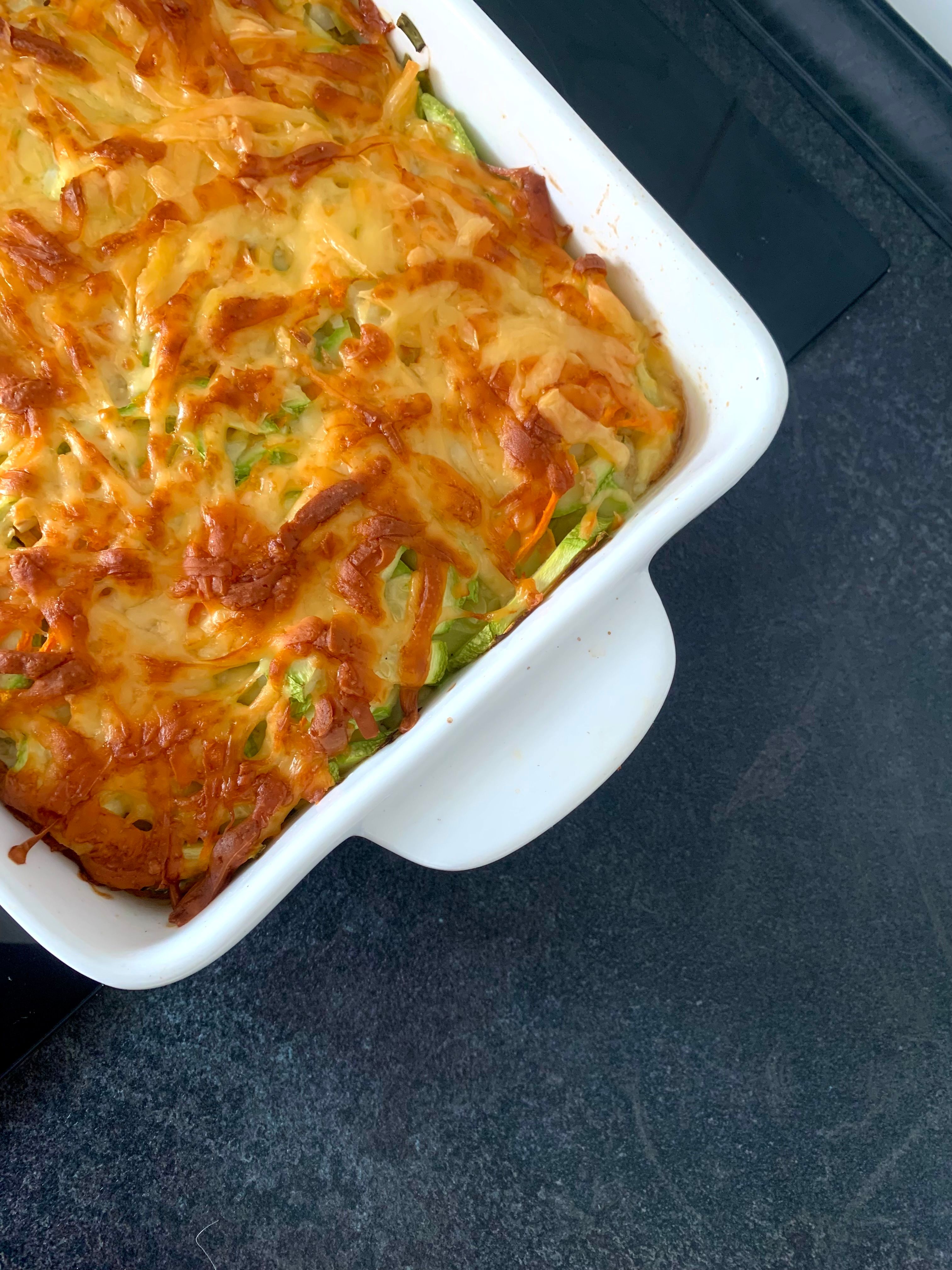
Photo: Helen Brudna / Pexels
Swedish
Janssons Frestelse
The diets react (see scores below)
Common Ingredients
- potatoes
- pickled sprats
- onion
- cream
- butter
- breadcrumbs
- white pepper
Specific recipes may vary.
Incompatible with 10 of 11 diets
Diet Ratings
Janssons Frestelse is fundamentally incompatible with ketogenic eating. The dish is built on a base of potatoes, which are extremely high in net carbs (roughly 15-17g net carbs per 100g) and represent the primary bulk of the recipe. Breadcrumbs add additional starch and grain-derived carbohydrates on top. A standard serving of this traditional Swedish gratin would easily deliver 30-50g of net carbs on its own — potentially consuming an entire day's keto carb budget or exceeding it in one side dish. While some ingredients are keto-friendly (cream, butter, pickled sprats/anchovies, onion in small amounts), the foundational potato-and-breadcrumb structure cannot be modified away without fundamentally changing the dish into something else entirely. This is not a borderline or portion-control case; the dish is structurally keto-incompatible.
Janssons Frestelse is a traditional Swedish potato gratin that is fundamentally incompatible with a vegan diet. It contains multiple animal-derived ingredients: pickled sprats (fish), cream (dairy), and butter (dairy). These are not incidental or trace ingredients — they are core structural and flavoring components of the dish. There is no version of authentic Janssons Frestelse that can be considered vegan without wholesale replacement of its defining ingredients.
Janssons Frestelse is fundamentally incompatible with the paleo diet. The dish contains multiple non-paleo ingredients: cream and butter are dairy products excluded under paleo rules, breadcrumbs are a grain-based ingredient firmly on the avoid list, and pickled sprats are a processed food typically containing added salt and vinegar. White potatoes are themselves debated in the paleo community. With the majority of the dish's defining ingredients being non-paleo, this casserole cannot be rescued by ingredient swaps — it would cease to be Janssons Frestelse. The fish (sprats) would be the only potentially paleo-friendly component in their unprocessed form, but in this dish they are pickled and salted.
Janssons Frestelse is a Swedish gratin centered on potatoes, cream, and butter with pickled sprats. While sprats (small oily fish) are a Mediterranean-friendly protein source, the dish's preparation is deeply at odds with Mediterranean principles. Heavy cream and butter are the primary fat sources rather than olive oil, contributing significant saturated fat. Breadcrumbs suggest refined grains. The cream-heavy gratin format is a Northern European cooking tradition foreign to Mediterranean dietary patterns. The fish component is a positive, but it is overwhelmed by the problematic fat profile and cooking method. This dish would need substantial reformulation to fit Mediterranean eating.
Some Mediterranean diet interpreters note that small oily fish like sprats are highly valued and that potatoes appear in traditional Mediterranean cuisines (e.g., Spanish and Greek cooking). A lenient reading might rate this as borderline caution, acknowledging the fish and vegetable base while noting the dairy fats are used in moderation as a side dish. However, the dominant role of cream and butter, absent olive oil, keeps it outside mainstream Mediterranean guidance.
Janssons Frestelse is fundamentally incompatible with the carnivore diet. While it contains pickled sprats (fish) and cream/butter (dairy), the dish is overwhelmingly plant-based in its structure. Potatoes are a starchy carbohydrate plant food, onions are a plant allium, breadcrumbs are a grain-based processed ingredient, and white pepper is a plant spice — all explicitly excluded on carnivore. The dish is essentially a potato gratin with a small fish component, making it a plant-dominant dish that violates core carnivore principles. No amount of the fish or dairy components can redeem a dish whose primary bulk and structure is potatoes and breadcrumbs.
Janssons Frestelse contains multiple Whole30-excluded ingredients. Dairy cream and regular butter are both excluded (only ghee/clarified butter is permitted). Breadcrumbs are a grain product, which is entirely excluded from Whole30. These three violations independently disqualify the dish, making it a clear 'avoid' regardless of the other ingredients (potatoes, onion, white pepper, and the pickled sprats) which might otherwise be acceptable with label verification.
Janssons Frestelse contains multiple high-FODMAP ingredients that make it unsuitable during the elimination phase. Onion is one of the highest-FODMAP foods known, rich in fructans, and is a primary ingredient used in significant quantities in this dish — it cannot be reduced to a safe threshold without fundamentally changing the recipe. Cream is high in lactose at typical serving sizes used in a baked gratin dish. Breadcrumbs made from wheat are high in fructans. Potatoes are low-FODMAP, pickled sprats (fish) are low-FODMAP, butter is low-FODMAP, and white pepper in typical quantities is low-FODMAP — but the combination of onion, cream, and wheat breadcrumbs makes this dish clearly high-FODMAP with no practical way to consume it safely during elimination.
Janssons Frestelse is a traditional Swedish potato gratin that conflicts with DASH principles on multiple fronts. The dish is built around pickled/brined sprats (anchovies), which are extremely high in sodium — a single serving can contribute 800–1,200mg of sodium, approaching or exceeding the entire daily sodium allowance for the low-sodium DASH protocol. Heavy cream and butter are significant sources of saturated fat, directly contradicting DASH guidance to limit saturated fat and use low-fat or fat-free dairy. While potatoes and onion are DASH-friendly vegetables, they are overwhelmed in this preparation by the high-sodium, high-saturated-fat components. Breadcrumbs add refined carbohydrates with negligible nutritional benefit. This dish is fundamentally incompatible with the DASH eating pattern as formulated by NIH/NHLBI.
Janssons Frestelse is a traditional Swedish potato gratin that is deeply problematic from a Zone Diet perspective. The dish is fundamentally built around potatoes — one of the most explicitly 'unfavorable' high-glycemic carbohydrates in Dr. Sears' framework, which he specifically warns against. Potatoes spike blood sugar and insulin dramatically, directly opposing the Zone's core goal of hormonal control. Beyond the potatoes, the fat profile is heavily weighted toward saturated fat (cream and butter), which Sears consistently flags as pro-inflammatory in his published materials. Breadcrumbs add additional high-glycemic refined carbs. While pickled sprats provide some lean protein and omega-3 fatty acids (a genuine Zone positive), they are present in a relatively small quantity compared to the dominant potato-cream-butter base. The macro ratio of this dish skews heavily toward high-GI carbohydrates and saturated fats, with inadequate lean protein, making it nearly impossible to incorporate into a Zone-balanced meal without fundamentally reconstructing the dish. Even as a side dish, it would catastrophically unbalance any Zone plate.
Janssons Frestelse is a classic Swedish gratin that presents a genuinely mixed anti-inflammatory profile. On the positive side, the pickled sprats (small oily fish, typically Baltic sprats or anchovies) are a meaningful source of omega-3 fatty acids (EPA/DHA), which are cornerstone anti-inflammatory nutrients. Onions contribute quercetin and other flavonoids with anti-inflammatory properties, and white pepper provides minor anti-inflammatory phytochemicals. However, the dish is anchored in heavy cream and butter — significant sources of saturated fat that anti-inflammatory guidelines consistently recommend limiting, as they can elevate pro-inflammatory markers like arachidonic acid and promote LDL-related inflammation at regular consumption. Potatoes are a starchy, moderate-glycemic carbohydrate — acceptable but not beneficial from an anti-inflammatory standpoint. Breadcrumbs add refined carbohydrates. The pickled preparation of the sprats also introduces high sodium, which is not itself pro-inflammatory but raises other concerns. The omega-3 contribution from the sprats partially offsets the pro-inflammatory burden of the cream and butter, but the overall ratio does not favor an anti-inflammatory assessment. This dish is acceptable as an occasional indulgence rather than a regular feature of an anti-inflammatory eating pattern.
Some anti-inflammatory practitioners — particularly those following Nordic or traditional food frameworks — would note that the small oily fish (sprats/anchovies) deliver meaningful omega-3s and that full-fat dairy in traditional dietary contexts is not clearly linked to elevated inflammatory markers in recent meta-analyses (e.g., Astrup et al., 2019 in EJCN). Dr. Weil's pyramid treats dairy as moderate rather than strictly limited. Conversely, strict anti-inflammatory protocols like the Wahls Protocol or AIP would flag both the refined breadcrumbs and heavy cream more harshly.
Janssons Frestelse is a traditional Swedish casserole built on a foundation of heavy cream, butter, and starchy potatoes — a combination that is fundamentally incompatible with GLP-1 dietary priorities. The primary protein source, pickled sprats, contributes meaningful omega-3 fats and some protein, but the quantity used is small relative to the dish's total volume, and the dominant macronutrient profile is fat and refined starch. As a side dish, it delivers very little protein per serving (likely under 8g), high saturated fat from cream and butter, and low fiber from peeled potatoes. The high fat content is a significant concern for GLP-1 patients specifically because fat slows gastric emptying further — compounding the medication's own effect — and is strongly associated with worsening nausea, bloating, and reflux. The cream and butter together create a calorie-dense, nutritionally thin serving that conflicts with the nutrient-density-per-calorie requirement. Refined breadcrumbs add minimal nutritional value. The pickled/brined sprats also contribute a high sodium load, which can worsen water retention. This dish fails on nearly every GLP-1 rating criterion: low protein density, low fiber, high saturated fat, poor digestibility, and low nutrient density per calorie.
*See how scores were generated at our methodology page.
Nutritional profile
Six traits that cut across every diet.
Fiber & Plants
How much whole-plant food and fiber it delivers.
Healthy Fats
The quality of its fats (unsaturated, omega-3).
Whole / Unprocessed
How close it is to its natural, unprocessed form.
Gut Gentle
How easy it is on digestion (low FODMAP, few irritants).
Low Glycemic
How little it spikes your blood sugar.
Protein Density
How much protein it packs per calorie.
Controversy Index
Higher controversy = more disagreement between diets.
Diet-Specific Tips
 Anti-Inflammatory — 4/10
View tips
- Pickled sprats provide omega-3 fatty acids (EPA/DHA) — a core anti-inflammatory nutrient
- Heavy cream and butter are significant sources of saturated fat — limited by anti-inflammatory guidelines
- Onions contribute quercetin and flavonoids with anti-inflammatory properties
- Potatoes and breadcrumbs add refined/high-glycemic carbohydrates with limited anti-inflammatory value
- High sodium from pickled fish — not directly pro-inflammatory but a dietary concern
- Dish is cream-heavy by design; substitution with lower-fat alternatives would improve the profile
- Best regarded as an occasional dish rather than a regular anti-inflammatory meal