Swedish
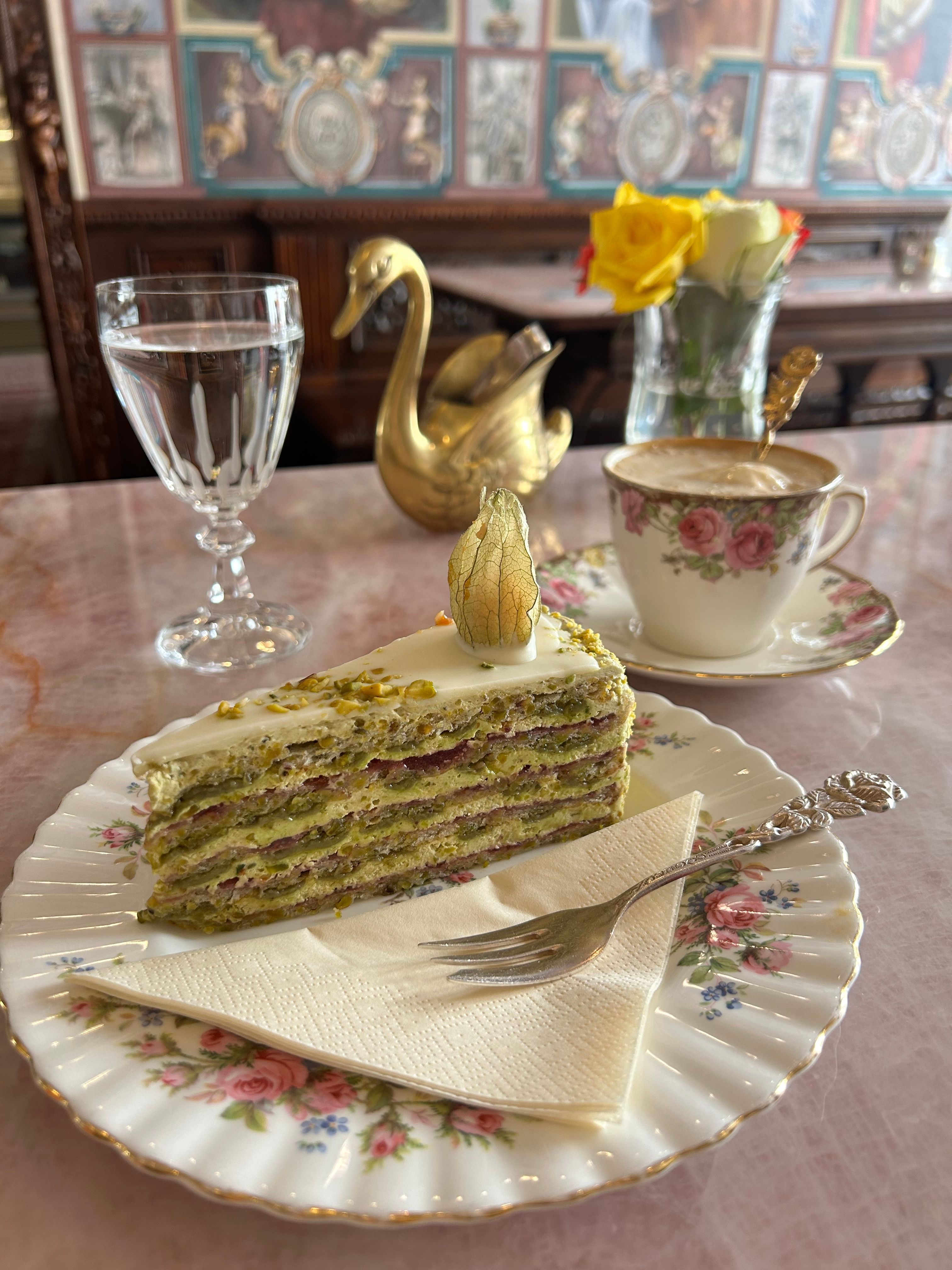
Prinsesstarta
The diets react (see scores below)
Common Ingredients
- sponge cake
- whipped cream
- raspberry jam
- vanilla custard
- marzipan
- sugar
- eggs
Specific recipes may vary.
Incompatible with 11 of 11 diets
Diet Ratings
Prinsesstårta is one of the most keto-incompatible desserts imaginable. It combines multiple high-carb ingredients: sponge cake (wheat flour + sugar), raspberry jam (pure sugar), marzipan (almond paste + large amounts of sugar), vanilla custard (sugar + starch), and added sugar throughout. A single slice would deliver well over 50-70g of net carbs, instantly breaking ketosis. There is no meaningful way to consume this dessert within a ketogenic framework — it is essentially a sugar-delivery vehicle layered with refined carbohydrates.
Prinsesstårta contains multiple animal-derived ingredients that are clearly incompatible with a vegan diet. Eggs are used in the sponge cake and vanilla custard, whipped cream is a dairy product, and vanilla custard typically contains both eggs and dairy. These are unambiguous animal products with no debate in the vegan community. Marzipan is plant-based (almonds and sugar), and raspberry jam is vegan-friendly, but the presence of eggs and dairy makes this dish entirely non-vegan as traditionally prepared. Vegan versions could theoretically be made using plant-based cream, egg replacers, and plant-based custard, but the listed ingredients confirm this is the traditional, non-vegan formulation.
Prinsesstårta is a Swedish celebration cake that is fundamentally incompatible with the paleo diet. It contains multiple non-paleo ingredients at its core: sponge cake is made from wheat flour (a grain), refined sugar is a central component, whipped cream is dairy, and marzipan is made from almonds and sugar — often with added glucose syrup. Virtually every structural element of this dessert violates paleo principles. The only paleo-compliant ingredients are eggs and the raspberry jam (if unsweetened), but they are minor components surrounded by disqualifying ones. This is a highly processed, grain- and dairy-laden confection with no reasonable paleo interpretation.
Prinsesstarta is a Swedish celebration cake that fundamentally contradicts Mediterranean diet principles. It is built almost entirely from foods the Mediterranean diet minimizes or avoids: refined sponge cake (refined grain), large amounts of added sugar, heavy whipped cream (high saturated fat dairy), and marzipan (almond paste with substantial added sugar). While eggs and almonds (in marzipan) have some nutritional merit, they are overwhelmed by the sugar-dense, processed character of the dish. There are no vegetables, legumes, whole grains, or olive oil. This is a classic Western-style dessert with high sugar content, refined carbohydrates, and saturated fat — exactly what the Mediterranean diet discourages.
Prinsesstårta is a Swedish celebration cake that is almost entirely plant-based and sugar-laden, making it completely incompatible with the carnivore diet. The base is sponge cake (wheat flour, sugar), layered with raspberry jam (fruit and sugar), vanilla custard (partially plant-derived with sugar), whipped cream (the only marginally acceptable component, being dairy), and encased in marzipan (almond paste and sugar). The dominant macronutrient profile is carbohydrates and sugar. There is no meaningful animal protein source. Even the eggs present are a minor component in a cake structure built around grains, sugar, and plant-derived ingredients. This dish fundamentally contradicts every principle of the carnivore diet.
Prinsesstarta is a classic Swedish layer cake that violates Whole30 on multiple fronts. The sponge cake contains wheat flour (a grain, excluded), and added sugar appears throughout the recipe. Marzipan is made from almonds and sugar. Raspberry jam typically contains added sugar. The dish is also a recreated baked good (a cake), which is explicitly prohibited under the Whole30 'no recreating baked goods' rule even if compliant ingredients could theoretically be sourced. This is unambiguously non-compliant.
Prinsesstårta contains multiple high-FODMAP ingredients that make it unsuitable during the elimination phase. The sponge cake is made with wheat flour, which is high in fructans. Marzipan is made from almond paste — while almonds are low-FODMAP at small servings (~10 almonds), the concentrated almond meal in marzipan combined with high sugar content and the typical portion size creates FODMAP concern, and many marzipan products also contain glucose syrup or honey. The vanilla custard typically contains milk (lactose), which is high-FODMAP. Whipped cream is borderline — it is low-FODMAP at small amounts (~2 tablespoons) because it's low in lactose, but the generous amounts used in Prinsesstårta push it into higher-risk territory. Raspberry jam at small servings can be low-FODMAP, but the cumulative FODMAP load across all these ingredients makes this dessert clearly high-FODMAP overall. A single standard slice would exceed safe thresholds for fructans (wheat), lactose (custard), and potentially polyols (almond-based marzipan).
Prinsesstarta is a Swedish layered dessert cake featuring sponge cake, whipped cream, raspberry jam, vanilla custard, marzipan, and sugar — a combination that is fundamentally incompatible with DASH diet principles. It is high in added sugars (marzipan, jam, sugar, sponge cake), high in saturated fat (whipped cream, custard), and provides negligible amounts of the nutrients DASH emphasizes — potassium, magnesium, calcium from low-fat sources, and dietary fiber. Sweets and sugary foods are explicitly in the 'limit' category on the DASH eating plan, with a recommended maximum of 5 or fewer servings per week of added sweets, and only in very small portions. A typical slice of Prinsesstarta would likely exceed that weekly allowance in a single serving. There is no meaningful lean protein, no whole grains, no vegetables or fruits in meaningful quantities, and no low-fat dairy. This dish falls squarely in the 'avoid' category as an occasional indulgence that does not align with DASH dietary patterns.
Prinsesstarta is a classic Swedish celebration cake that is fundamentally incompatible with Zone Diet principles. The dish is composed almost entirely of high-glycemic, high-sugar, high-saturated-fat components: sponge cake (refined flour and sugar), whipped cream (saturated fat, minimal protein), raspberry jam (concentrated sugar), vanilla custard (sugar, eggs provide some protein but overwhelmed by carbs), marzipan (almond paste with high sugar content), and additional sugar throughout. There is no meaningful lean protein source, the carbohydrate load is extreme and entirely high-glycemic, and the fat profile is dominated by saturated fat from whipped cream rather than monounsaturated fat. The macronutrient ratio is wildly skewed — likely 60-70% calories from carbohydrates (predominantly sugar), 20-25% from fat (saturated), and minimal protein — essentially the inverse of what Zone requires. Even a small portion would flood the system with glucose, spike insulin, and provide no Zone-balancing elements. There is no practical way to portion this into a Zone-compatible snack without reducing it to a trivially small amount that offers no satiety or nutritional value.
Prinsesstarta is a classic Swedish celebration cake with a strongly pro-inflammatory nutritional profile. The dish is built around refined white flour sponge cake, heavily sweetened whipped cream, raspberry jam (high in added sugar), and a thick marzipan shell (almond paste with high sugar content). Every major component conflicts with anti-inflammatory principles: refined carbohydrates spike blood glucose and promote glycation-related inflammation; added sugars (present in the jam, marzipan, custard, and sponge) are among the most consistently pro-inflammatory dietary factors, elevating CRP and IL-6 in research; and the whipped cream contributes saturated fat. The eggs and almonds (in marzipan) are minor redeeming factors — eggs provide choline and selenium, and almonds contain vitamin E and monounsaturated fats — but these benefits are entirely overshadowed by the sugar and refined grain load. Vanilla custard adds more sugar and, if made with full-fat dairy, additional saturated fat. There are no meaningful anti-inflammatory components present in this dish: no omega-3s, no significant antioxidants or polyphenols, no fiber-rich whole foods, and no beneficial herbs or spices. This is a dessert food designed for occasional celebration and has virtually no place in a regular anti-inflammatory dietary pattern.
Prinsesstarta is a classic Swedish celebration cake composed almost entirely of high-sugar, high-fat, low-protein, low-fiber ingredients. The primary components — sponge cake, whipped cream, raspberry jam, vanilla custard, and marzipan — are calorie-dense with negligible protein and fiber. A standard slice delivers a large sugar load, significant saturated fat from whipped cream, and refined carbohydrates from the sponge and marzipan. This profile directly conflicts with nearly every GLP-1 dietary priority: it offers no meaningful protein to protect muscle mass, no fiber to aid digestion or blood sugar stability, and its high fat content is likely to worsen GLP-1 side effects such as nausea, bloating, and reflux due to slowed gastric emptying. The sugar spike is also counterproductive for patients seeking metabolic benefit from GLP-1 therapy. As a snack category item, it is an especially poor choice since snacks on GLP-1 regimens should prioritize protein and nutrient density given reduced overall caloric intake. There is no realistic portion adjustment that rehabilitates this food for regular consumption on a GLP-1 diet.
*See how scores were generated at our methodology page.
Nutritional profile
Six traits that cut across every diet.
Fiber & Plants
How much whole-plant food and fiber it delivers.
Healthy Fats
The quality of its fats (unsaturated, omega-3).
Whole / Unprocessed
How close it is to its natural, unprocessed form.
Gut Gentle
How easy it is on digestion (low FODMAP, few irritants).
Low Glycemic
How little it spikes your blood sugar.
Protein Density
How much protein it packs per calorie.
Controversy Index
Higher controversy = more disagreement between diets.