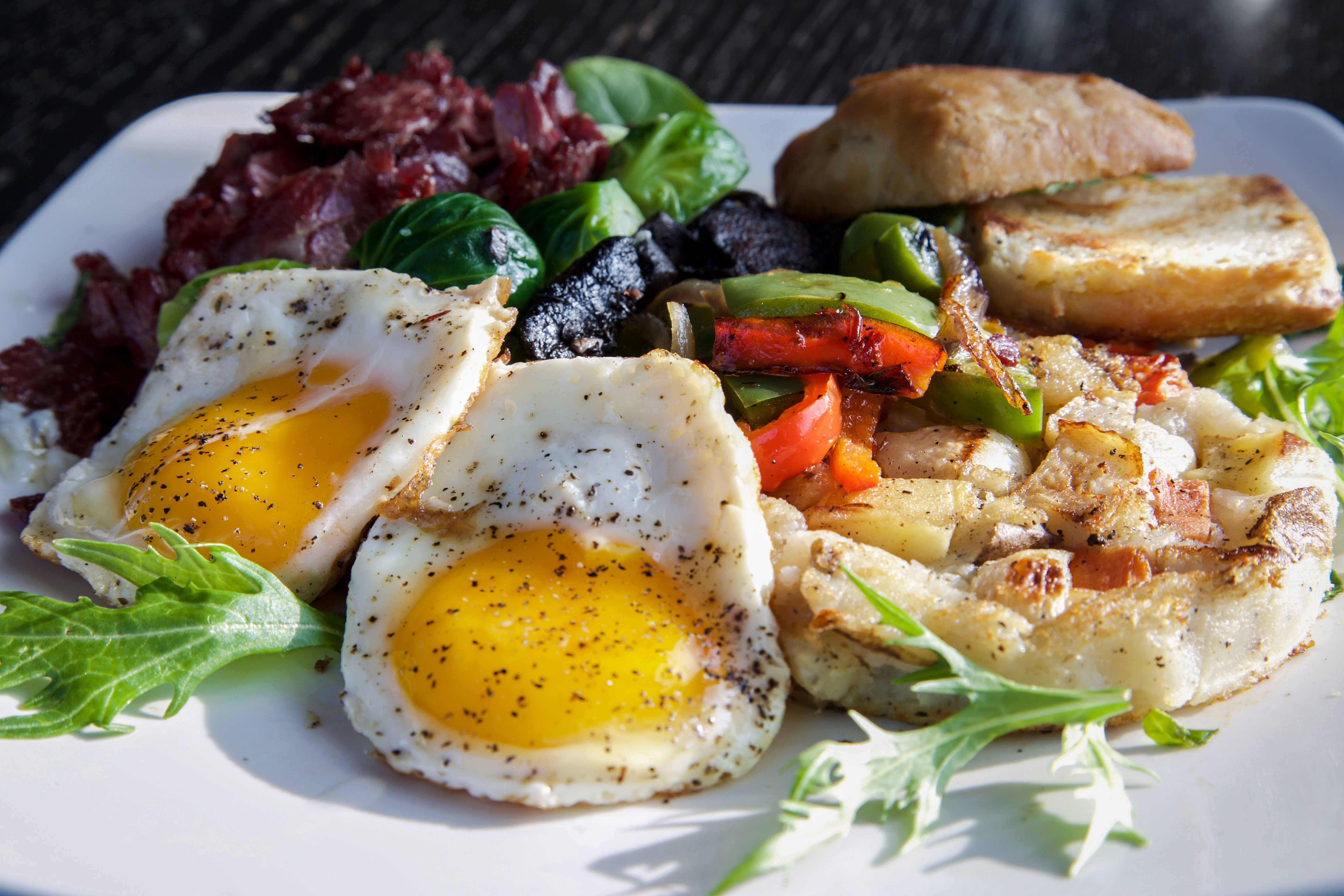
Photo: Stephen Leonardi / Pexels
The diets react (see scores below)
Common Ingredients
- potatoes
- onion
- beef
- sausage
- butter
- eggs
- pickled beets
Specific recipes may vary.
Incompatible with 10 of 11 diets
Diet Ratings
Pyttipanna is fundamentally incompatible with a ketogenic diet. The dish is built around diced potatoes as its primary bulk ingredient — a high-starch vegetable that alone can contain 30-40g of net carbs per serving, easily exceeding the entire daily keto limit. Pickled beets add additional sugar and carbohydrates. While several ingredients (beef, sausage, butter, eggs) are keto-friendly, the potato and beet components are structurally central to the dish, not optional garnishes. A standard serving would push well past 50g net carbs, making ketosis impossible to maintain.
Pyttipanna contains multiple animal products that are strictly excluded from a vegan diet. Beef and sausage are direct animal flesh, butter is a dairy product, and eggs are an animal product. Even the plant-based ingredients (potatoes, onion, pickled beets) cannot redeem a dish so thoroughly built around animal-derived components. This is unambiguously non-vegan.
Pyttipanna is a Swedish hash dish that contains several problematic ingredients from a paleo perspective. Butter is a dairy product excluded under strict paleo guidelines. Sausage is typically a processed meat containing additives, preservatives, fillers, and added salt — all non-paleo. Pickled beets almost certainly contain added sugar, vinegar with additives, and salt, making them a processed food. White potatoes are debated in the paleo community. Even the beef and eggs, which are paleo-approved on their own, are undermined by the surrounding ingredients. The dish as traditionally prepared cannot be considered paleo-compatible without significant substitutions.
A lenient modern paleo interpretation (à la Mark Sisson's Primal Blueprint) might permit butter or ghee, and could allow white potatoes, reducing the number of problematic ingredients. If one sourced a clean, additive-free sausage and made the pickled beets with only paleo-compliant vinegar and no added sugar, a modified version could approach caution territory — but the traditional dish as served does not meet this standard.
Pyttipanna is a traditional Swedish hash that fundamentally contradicts Mediterranean diet principles across multiple dimensions. The dish centers on red meat (beef) and processed sausage as primary proteins, uses butter as the cooking fat instead of olive oil, and relies heavily on refined or starchy components. Processed sausage is particularly problematic, representing the kind of highly processed, sodium- and preservative-laden food the Mediterranean diet explicitly discourages. The combination of red meat plus processed meat in a single dish compounds the concern. While potatoes, onion, and eggs are individually acceptable in moderation, they cannot offset the core issues. The pickled beets offer a minor redeeming element as a vegetable, but the overall dish profile is firmly misaligned with Mediterranean dietary patterns.
Pyttipanna is fundamentally incompatible with the carnivore diet. The dish is built around potatoes and onion as primary bulk ingredients — both strictly excluded plant foods. Pickled beets add further plant matter and typically contain sugar from the pickling process. While the dish does contain carnivore-approved components (beef, eggs, and butter), these are minor elements within a plant-heavy base. The sausage may also contain fillers, starch, or sugar depending on the variety. The overall dish cannot be adapted or excused — it is a starchy, plant-forward hash where animal products play a supporting role rather than being the foundation.
Pyttipanna contains multiple non-compliant ingredients. Butter is excluded on Whole30 (only ghee/clarified butter is allowed as the dairy exception). Sausage as commonly prepared typically contains sugar, grains, or other non-compliant additives. Pickled beets are commonly made with added sugar and often sulfites (though sulfites are now allowed per 2024 rules, added sugar remains excluded). The dish fails primarily on butter and the high likelihood of non-compliant sausage and pickled beets.
Pyttipanna contains two significant high-FODMAP ingredients that make it unsuitable during the elimination phase. Onion is one of the highest-fructan foods tested by Monash University and is high-FODMAP at any culinary serving size — even small amounts cooked into a dish are problematic. Sausage frequently contains garlic and/or onion powder as seasoning, adding another fructan source. While potatoes, beef, butter, and eggs are all low-FODMAP, and pickled beets are low-FODMAP at a small serve (around 2 slices per Monash), the onion alone is sufficient to classify this dish as avoid. The combination of onion plus likely-seasoned sausage makes this a clear high-FODMAP dish in its traditional preparation.
Pyttipanna is a Swedish hash that combines several DASH-unfriendly ingredients in a single dish. Sausage is a processed meat with high sodium and saturated fat — a clear DASH concern. Butter adds saturated fat. The dish is typically cooked with pan-drippings and seasoned heavily with salt. Pickled beets, while containing beneficial nutrients, are typically high in added sodium from the pickling brine. The combination of processed sausage, butter, and high-sodium pickling liquid pushes this dish firmly into 'avoid' territory. While potatoes and onions are DASH-friendly, and eggs are acceptable in moderation, the dominant problematic ingredients (processed sausage, butter, pickled beets) create a high-sodium, moderate-to-high saturated fat profile that conflicts with core DASH principles. This dish as traditionally prepared would easily exceed a significant portion of the 2,300mg daily sodium limit in a single serving.
Pyttipanna is a Swedish hash that presents significant challenges for Zone compliance. The dish is potato-dominated, and potatoes are explicitly listed as a high-glycemic, unfavorable carbohydrate in Zone methodology — comparable to white bread in glycemic impact. The protein sources (beef and sausage) are fatty rather than lean, contributing excess saturated fat that disrupts the 30% fat target with the wrong fat profile. Butter adds further saturated fat. Pickled beets add a modest glycemic load. The fried egg is the most Zone-friendly element (lean protein, good fat profile). The 40/30/30 macro ratio would be extremely difficult to achieve here: the dish skews heavily toward carbohydrates (potatoes dominate by volume) and saturated fat, with insufficient lean protein relative to the fat load. A Zone practitioner would need to dramatically reduce potato portions, swap sausage for a leaner protein, replace butter with olive oil, and add low-glycemic vegetables — at which point the dish is essentially no longer Pyttipanna. It falls at the low end of 'caution' rather than 'avoid' because eggs provide some lean protein and the dish is not purely nutritionally empty, but it is very hard to make Zone-compliant without fundamental restructuring.
Some Zone practitioners argue that a small portion of Pyttipanna could be incorporated if potatoes are minimized and served as a side dish rather than the base — treating it as an 'unfavorable' carb block used sparingly. Dr. Sears' later writings acknowledge that context and total meal balance matter; if portion size is strictly controlled (very small potato quantity, egg-forward preparation, sausage replaced with lean beef), the dish could theoretically fit within unfavorable-but-usable Zone territory, pushing the score toward a 4-5.
Pyttipanna is a Swedish hash dish that combines several ingredients with pro-inflammatory profiles. The dish is centered on red meat (beef) and processed sausage, both of which are flagged as limit-to-avoid items in anti-inflammatory frameworks due to saturated fat content, heme iron, and in the case of sausage, likely additives, nitrates, and preservatives. Butter is the cooking fat, a saturated fat source that anti-inflammatory guidelines recommend limiting. Eggs contribute some nutritional value (choline, selenium) but are debated. Potatoes and onion are neutral-to-mildly beneficial (onion contains quercetin, potatoes offer potassium and resistant starch), and pickled beets add a modest antioxidant contribution from betalains, though commercial pickling may include added sugar. The overall dish profile is dominated by its pro-inflammatory components: processed meat, red meat, and saturated fat from butter, with no omega-3 sources, no significant anti-inflammatory spices, no leafy greens or colorful vegetables beyond beets, and no whole grains or legumes. This is a calorie-dense, saturated-fat-heavy dish typical of traditional Nordic comfort food, but it does not align well with anti-inflammatory dietary principles.
Some anti-inflammatory practitioners note that eggs from pasture-raised hens and modest amounts of red meat from grass-fed sources carry a more favorable omega-3 to omega-6 ratio and are less categorically pro-inflammatory than conventional versions; occasional consumption in an otherwise high-quality anti-inflammatory diet may be acceptable. Additionally, onion and beets do provide meaningful polyphenol content, and some researchers argue the inflammatory burden of a single meal is less significant than overall dietary pattern.
Pyttipanna is a Swedish hash made by pan-frying diced potatoes, onion, beef, and sausage in butter, typically topped with a fried egg and served with pickled beets. While it contains some protein from beef and eggs, the overall profile is poorly suited for GLP-1 patients. The dish is cooked in butter (saturated fat), includes processed sausage (high fat, high sodium), and is dominated by starchy potatoes — making it calorie-dense with low protein density per calorie. The frying process and high fat content are likely to worsen GLP-1 side effects such as nausea, bloating, and reflux. Sausage adds further concern as a fatty, ultra-processed meat. Protein yield per serving is moderate at best, far below the 15–30g per meal target in a portion a GLP-1 patient would realistically eat. Pickled beets add minor fiber and micronutrients but do not offset the overall profile. The dish scores poorly on fat content, digestibility, and protein density — three of the top three GLP-1 dietary priorities.
Some GLP-1-focused dietitians may note that a modified version — using lean beef only, minimal butter or a non-stick spray, and a smaller potato-to-protein ratio — could shift this into 'caution' territory, as eggs and lean beef do contribute meaningful protein. However, as traditionally prepared, the sausage and butter-frying method make this a consistent avoid recommendation across most GLP-1 nutrition guidance.
*See how scores were generated at our methodology page.
Nutritional profile
Six traits that cut across every diet.
Fiber & Plants
How much whole-plant food and fiber it delivers.
Healthy Fats
The quality of its fats (unsaturated, omega-3).
Whole / Unprocessed
How close it is to its natural, unprocessed form.
Gut Gentle
How easy it is on digestion (low FODMAP, few irritants).
Low Glycemic
How little it spikes your blood sugar.
Protein Density
How much protein it packs per calorie.
Controversy Index
Higher controversy = more disagreement between diets.
Diet-Specific Tips
 Zone — 5/10
View tips
- Potatoes are explicitly 'unfavorable' high-glycemic carbohydrates in Zone methodology
- Sausage and fatty beef provide excess saturated fat, wrong fat profile for Zone
- Butter adds additional saturated fat rather than preferred monounsaturated fats
- Fried egg is the most Zone-friendly element — lean protein with good fat
- Pickled beets add additional glycemic load
- 40/30/30 ratio extremely difficult to achieve without fundamentally altering the dish
- Dish skews heavily carbohydrate and saturated fat with insufficient lean protein
- No low-glycemic vegetables present to anchor the carbohydrate portion