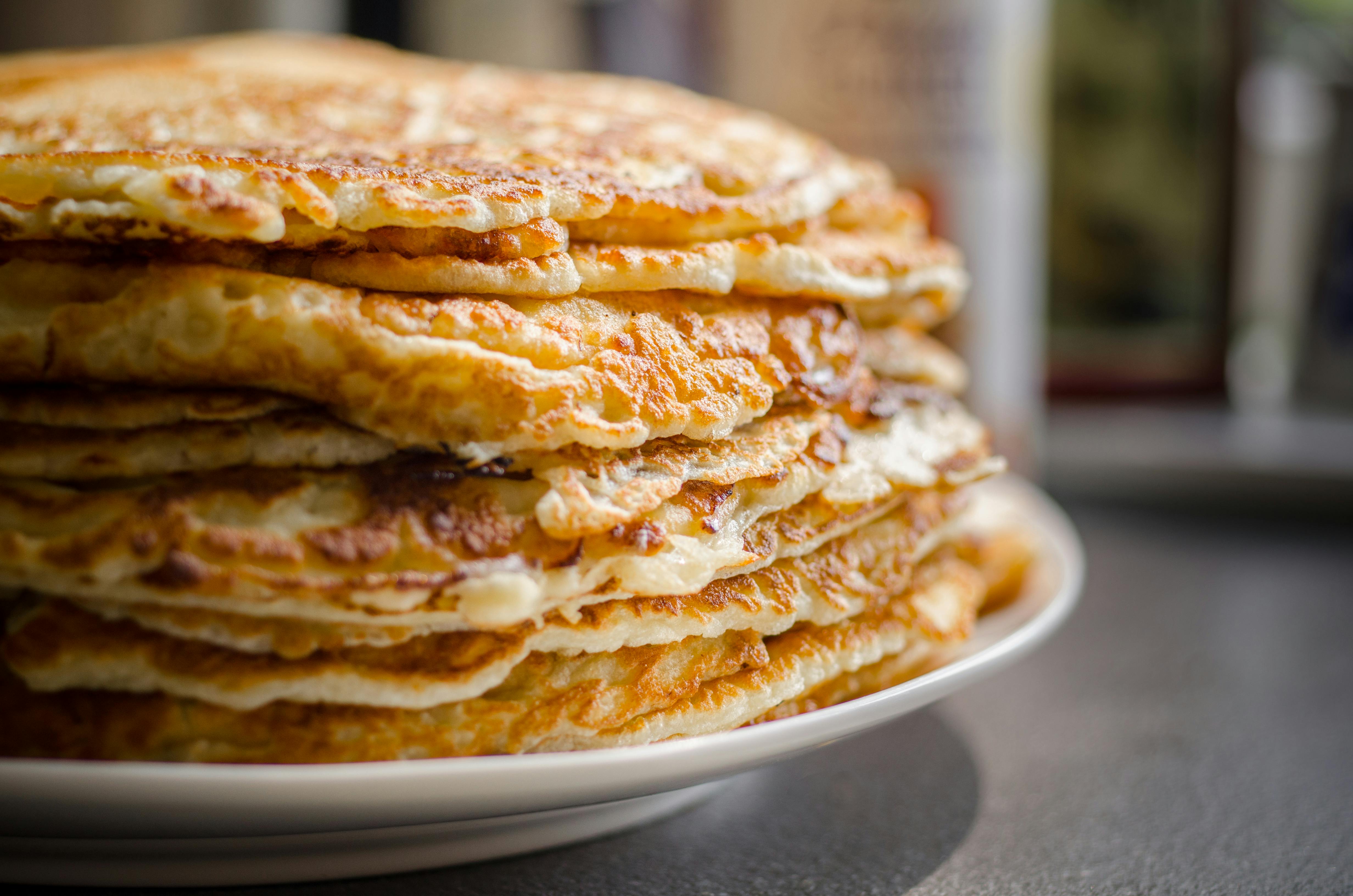
Photo: ClickerHappy / Pexels
The diets react (see scores below)
Common Ingredients
- potatoes
- flour
- milk
- eggs
- salt pork
- butter
- lingonberries
Specific recipes may vary.
Incompatible with 9 of 11 diets
Diet Ratings
Raggmunk is a Swedish potato pancake that is fundamentally incompatible with a ketogenic diet. The dish is built on a batter of potatoes, flour, and milk — three high-carbohydrate ingredients. Potatoes alone contain roughly 15-17g net carbs per 100g, and a standard serving of raggmunk uses a substantial quantity. Wheat flour adds additional starch and net carbs, while milk contributes lactose sugars. Lingonberries, though lower in sugar than many fruits, are served in a sweetened preparation that adds further carbs. The salt pork and butter are keto-friendly, but they represent a small fraction of the dish's caloric and macronutrient profile. A single serving of raggmunk would almost certainly exceed an entire day's net carb allowance on a ketogenic diet, making this dish entirely incompatible with maintaining ketosis.
Raggmunk is a Swedish potato pancake dish that contains multiple animal-derived ingredients, making it entirely incompatible with a vegan diet. The batter contains milk and eggs, the pancakes are fried in butter, and the dish is traditionally served with salt pork (fläsk). Every core component of this dish — aside from the potatoes, flour, and lingonberries — is an animal product. There is no ambiguity here.
Raggmunk is a Swedish potato pancake that contains multiple non-paleo ingredients. Flour (wheat) is a grain and is strictly excluded from the paleo diet. Milk is a dairy product, also excluded. Butter is a dairy derivative that is debated but generally discouraged in strict paleo. Salt pork is a processed, heavily salted meat that falls outside paleo guidelines due to added salt and processing. While eggs, potatoes (debated), and lingonberries are the only ingredients with any paleo standing, the dish as a whole is fundamentally built on grain and dairy, making it clearly non-compliant.
Raggmunk is a Swedish potato pancake that conflicts with Mediterranean diet principles on multiple fronts. The primary protein is salt pork, a cured/processed red meat that the Mediterranean diet restricts to only a few times per month. Butter replaces olive oil as the cooking fat, which is discouraged. The dish uses refined flour and milk-based batter. While potatoes are a whole food, they are a starchy base with limited nutritional density compared to Mediterranean staples. Lingonberries offer some fruit-based benefit, but they do not offset the core issues of processed pork and saturated animal fats dominating the dish. This is fundamentally a Northern European comfort dish with no alignment to Mediterranean dietary patterns.
Raggmunk is a Swedish potato pancake that is fundamentally incompatible with the carnivore diet. The dish is built on a plant-based batter of potatoes, flour, and milk, with eggs added. While salt pork and butter are carnivore-friendly animal products, they are minor components of a dish whose entire structural base is plant-derived. Lingonberries, served as a traditional accompaniment, are a plant fruit and strictly excluded. The primary ingredients — potatoes (starchy tuber), flour (grain), and lingonberries (fruit) — are all categorically prohibited on carnivore. Even the most lenient carnivore practitioners who include dairy and eggs would reject this dish due to its grain and vegetable starch foundation.
Raggmunk is a Swedish potato pancake that contains multiple Whole30-excluded ingredients. Flour (a grain product) and milk (dairy) are both explicitly excluded from the Whole30 program. Butter is also excluded dairy (only ghee/clarified butter is permitted). Additionally, Raggmunk is structurally a pancake — a battered, pan-fried cake — which falls squarely under the Whole30 rule prohibiting recreating baked goods and junk food analogues (pancakes are explicitly named as off-limits even with compliant ingredients). The dish fails on multiple independent grounds.
Raggmunk is a Swedish potato pancake that contains several high-FODMAP ingredients in typical serving quantities. The primary concerns are: (1) wheat flour — a significant fructan source, used in meaningful quantity to bind the batter; (2) milk — contains lactose, and a standard batter uses enough milk to exceed the low-FODMAP threshold (~30ml lactose-free or regular milk at small amounts); and (3) lingonberries — while not extensively tested by Monash, they are a berry with polyol concerns and limited safety data at typical serving sizes. Potatoes are low-FODMAP, eggs are low-FODMAP, salt pork/bacon and butter are low-FODMAP. However, the combination of wheat flour and regular milk in a standard pancake batter makes this dish high-FODMAP during the elimination phase. A modified version using gluten-free flour and lactose-free milk could potentially be made low-FODMAP, but the traditional recipe as described cannot be approved.
Monash University rates small amounts of wheat flour as potentially tolerable (fructan load depends on total quantity used), and some FODMAP practitioners argue that the flour quantity per pancake serving may be low enough to be borderline — however, most elimination phase protocols advise avoiding all wheat-containing dishes to minimize fructan exposure. Lingonberries lack robust Monash testing, creating additional uncertainty about their FODMAP status at typical serving sizes.
Raggmunk is a Swedish potato pancake dish that conflicts with DASH diet principles on multiple fronts. Salt pork is a heavily cured, high-sodium meat — one of the foods most explicitly discouraged by DASH guidelines due to its sodium content and saturated fat load. Butter adds saturated fat, and the dish is pan-fried, further increasing the fat content. While potatoes, milk, eggs, and lingonberries have DASH-compatible elements, the dominant protein and cooking fat (salt pork and butter) make this dish problematic. Lingonberries are a positive element (fruit, rich in antioxidants), and potatoes contribute potassium, but these benefits are overwhelmed by the cured pork and saturated fat. As commonly prepared, this is a high-sodium, high-saturated-fat dish that NIH/NHLBI DASH guidelines would categorize as one to avoid. A modified version using lean turkey or chicken instead of salt pork, olive oil instead of butter, and reduced or no added salt could shift this toward 'caution.'
Raggmunk is a Swedish potato pancake that presents significant Zone Diet challenges. The primary carbohydrate source is potatoes, which Dr. Sears explicitly lists as a high-glycemic 'unfavorable' carbohydrate to be avoided or strictly minimized. Combined with refined flour and milk, the carbohydrate load is high-glycemic and glycemically dense, making the 40% carb ratio difficult to balance without spiking insulin. The protein source is salt pork — a fatty, processed meat — which is far from the lean protein ideal (7g protein blocks from lean sources). Salt pork is high in saturated fat and sodium, conflicting with Zone's lean protein guidelines. Butter adds saturated fat rather than the preferred monounsaturated fats (olive oil, avocado, almonds). Lingonberries are the one Zone-friendly element, being a low-sugar, polyphenol-rich berry that Sears would approve of. However, lingonberries are typically served sweetened in this dish, adding sugar. Overall, raggmunk's macro profile — high-GI starchy carbs, fatty processed pork, saturated cooking fat — makes it very difficult to fit into a Zone-balanced meal even with careful portioning. It scores at the low end of 'caution' rather than 'avoid' only because the dish is not nutritionally empty and theoretically a very small portion alongside lean protein and vegetables could be accommodated.
Raggmunk is a traditional Swedish potato pancake fried in butter and served with salt pork and lingonberries. The dish has a mixed inflammatory profile. On the pro-inflammatory side: salt pork is a processed, high-sodium, high-saturated-fat red meat — exactly the type of food anti-inflammatory frameworks advise limiting or avoiding; butter is a saturated fat that anti-inflammatory guidelines recommend limiting; the refined flour adds refined carbohydrates with minimal fiber or nutrient density; milk and eggs are moderate foods that contribute saturated fat. On the anti-inflammatory side: potatoes themselves are neutral-to-modestly-beneficial (resistant starch, potassium, vitamin C), and lingonberries are a genuine bright spot — rich in anthocyanins, quercetin, and resveratrol, they are well-studied for anti-inflammatory and antioxidant properties and are one of the most polyphenol-dense Scandinavian berries. Eggs provide choline and some selenium. Overall, however, the dish is dominated by saturated fat from butter, processed pork fat from salt pork, and refined carbohydrates — a combination that anti-inflammatory nutrition consistently flags. The lingonberries are an insufficient counterweight to elevate this above 'caution.' It is not an 'avoid' because the portions of lingonberries add meaningful antioxidant value, the dish lacks trans fats or artificial additives, and the inflammatory load — while real — is not extreme. Occasional consumption is acceptable; regular inclusion would be inconsistent with an anti-inflammatory dietary pattern.
Raggmunk is a Swedish potato pancake fried in butter and served with salt pork (fläsk) and lingonberries. The dish is fundamentally misaligned with GLP-1 dietary priorities across nearly every dimension. The base is refined starch (potatoes and flour) with minimal protein density. The cooking method — pan-frying in butter — adds substantial saturated fat, which is known to worsen GLP-1 side effects including nausea, bloating, and reflux due to slowed gastric emptying. Salt pork contributes saturated fat and sodium rather than lean protein. The lingonberry component adds some micronutrients but is typically sweetened, contributing sugar with minimal fiber benefit at serving size. Butter as a primary cooking fat is a saturated fat with no nutritional upside for GLP-1 patients. The combination of high fat, high refined carbohydrate, low protein density, and pan-fried preparation makes this a poor choice for patients on GLP-1 medications, likely to cause significant GI distress and offering little nutritional return per calorie consumed.
*See how scores were generated at our methodology page.
Nutritional profile
Six traits that cut across every diet.
Fiber & Plants
How much whole-plant food and fiber it delivers.
Healthy Fats
The quality of its fats (unsaturated, omega-3).
Whole / Unprocessed
How close it is to its natural, unprocessed form.
Gut Gentle
How easy it is on digestion (low FODMAP, few irritants).
Low Glycemic
How little it spikes your blood sugar.
Protein Density
How much protein it packs per calorie.
Controversy Index
Higher controversy = more disagreement between diets.
Diet-Specific Tips
 Zone — 5/10
View tips
- Potatoes are explicitly listed as a high-glycemic 'unfavorable' carbohydrate in Dr. Sears' Zone framework
- Refined flour adds additional high-GI carbohydrate load, worsening the glycemic profile
- Salt pork is a fatty, processed protein source — contrary to Zone's lean protein principle
- Butter as the cooking fat provides saturated fat rather than preferred monounsaturated fat
- Lingonberries are the only Zone-favorable ingredient, offering low-glycemic, polyphenol-rich carbs
- The dish's macronutrient ratio skews heavily toward high-GI carbs with excess saturated fat and inadequate lean protein
- Achieving a 40/30/30 Zone balance with this dish would require extreme portion reduction and significant side additions
 Anti-Inflammatory — 4/10
View tips
- Salt pork: processed, high-saturated-fat, high-sodium red meat — anti-inflammatory frameworks recommend limiting or avoiding
- Butter: saturated fat, to be limited on anti-inflammatory diets
- Refined white flour: low fiber, refined carbohydrate
- Lingonberries: significant anti-inflammatory asset — high in anthocyanins, quercetin, and resveratrol
- Potatoes: neutral whole food, modest resistant starch and micronutrients
- Eggs and milk: moderate foods, acceptable in limited quantities
- No trans fats or artificial additives present
- Overall saturated fat load from combined butter + pork fat is a primary concern