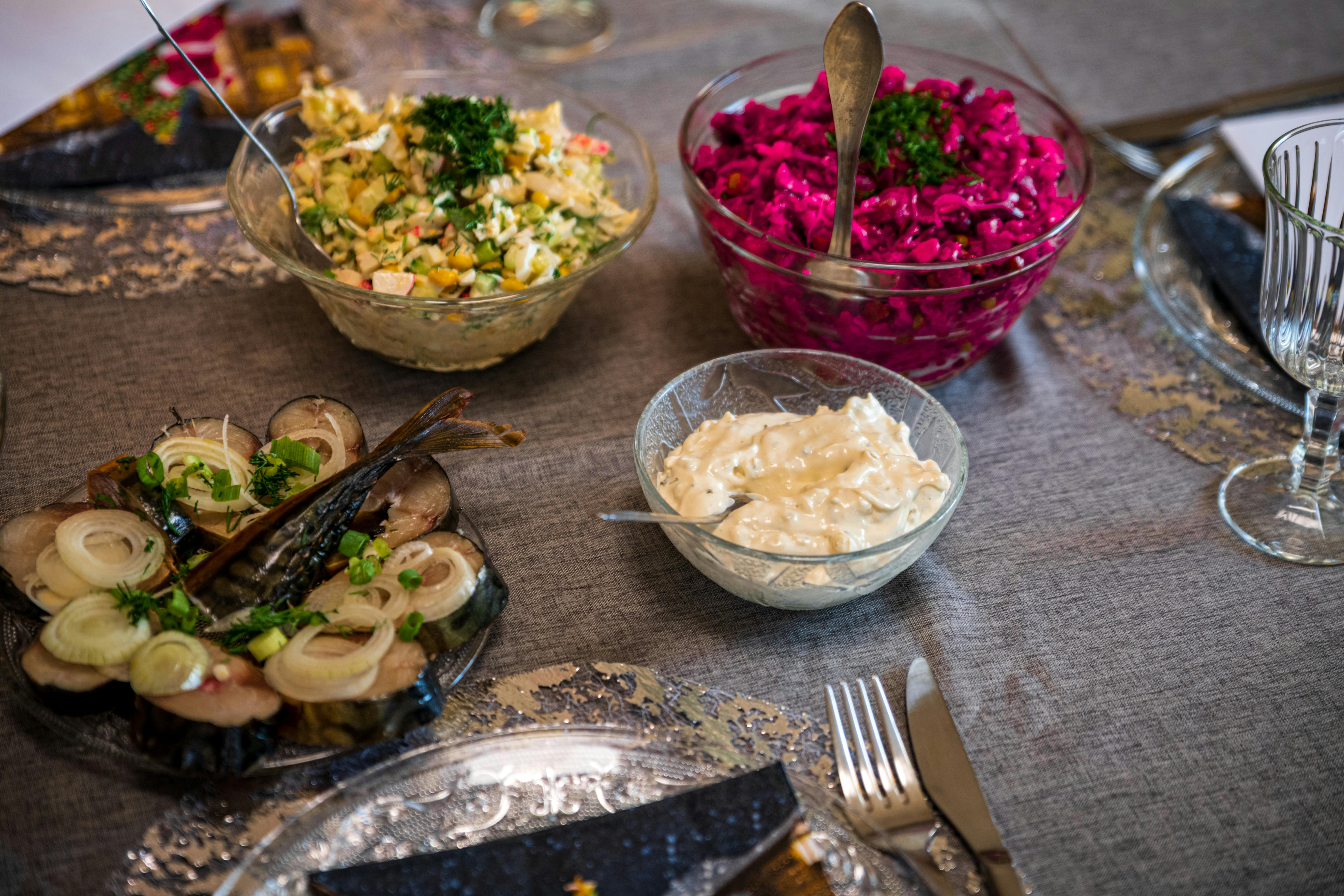
Photo: Sergej ***** / Pexels
The diets react (see scores below)
Common Ingredients
- pickled herring
- beets
- potatoes
- apple
- onion
- sour cream
- vinegar
Specific recipes may vary.
Incompatible with 6 of 11 diets
Diet Ratings
Sillsallad is fundamentally incompatible with ketogenic eating. While pickled herring itself can be keto-friendly, the dish is dominated by high-carb ingredients: beets (~7-8g net carbs per 100g), potatoes (~15-17g net carbs per 100g), and apple (~11-12g net carbs per 100g). A standard serving would easily contain 30-50g of net carbs from these three ingredients alone, instantly pushing most individuals out of ketosis. The onion and any sugar in the pickling brine add further carbs. The sour cream is the only genuinely keto-compatible ingredient. There is no realistic portion size that makes this dish compatible with a ketogenic diet without fundamentally altering its character.
Sillsallad contains multiple animal-derived ingredients that are clearly incompatible with a vegan diet. Pickled herring is fish, a direct animal product, and sour cream is a dairy product derived from cow's milk. These two ingredients alone disqualify this dish entirely from any vegan classification. There is no meaningful debate within the vegan community about fish or dairy — both are unambiguously excluded.
Sillsallad contains multiple non-paleo ingredients that disqualify it outright. Pickled herring is a processed food typically containing added salt, sugar, and preservatives — not a simple whole fish. Sour cream is a dairy product, excluded from paleo. Potatoes are debated even in their whole form, but here they appear alongside already-disqualifying ingredients. Vinegar in pickling brines is often paired with added sugar and salt. Beets, apple, and onion are paleo-approved, but the overall dish is built on a foundation of dairy, processed fish, and preserved/pickled components that contradict core paleo principles. Even if individual ingredients like potatoes had nuanced standing, the combination of dairy and processed pickled fish renders this dish a clear avoid.
Sillsallad features pickled herring as its primary protein, which aligns well with the Mediterranean diet's emphasis on fish and seafood. Herring is an oily fish rich in omega-3 fatty acids, strongly encouraged in Mediterranean eating. The vegetables (beets, onion) and apple are plant-forward components that fit well. However, sour cream replaces olive oil as the fat/dressing base, introducing saturated dairy fat rather than the preferred extra virgin olive oil. Potatoes are acceptable but starchy and not as nutrient-dense as leafy greens or legumes. The pickled preparation and vinegar are acceptable. Overall, the dish has a solid Mediterranean-compatible protein and good vegetable content, but the sour cream dressing and absence of olive oil keep it from a full approval.
Some Mediterranean diet practitioners would note that dairy in moderation is acceptable, and traditional Greek and Turkish cuisines do use yogurt-based dressings in fish preparations, making the sour cream component less objectionable. However, mainstream Mediterranean diet guidelines (as articulated by Willett et al. and the PREDIMED framework) emphasize olive oil as the primary fat, which this dish lacks entirely.
Sillsallad is fundamentally incompatible with the carnivore diet. While pickled herring is an animal product, the dish is dominated by plant-based ingredients: beets, potatoes, apple, and onion are all strictly excluded plant foods. Vinegar (plant-derived) and sour cream (debated dairy) add further complications, but the core issue is the overwhelming presence of vegetables, starchy root vegetables, and fruit. Even if one were to remove the herring and sour cream, the remaining dish is essentially a plant salad. There is no meaningful carnivore adaptation possible here — this dish cannot be modified to compliance without completely reconstructing it.
Sillsallad contains two clearly excluded ingredients: sour cream (dairy) and pickled herring (which commercially almost always contains added sugar and/or sulfites in the pickling brine). Sour cream is explicitly listed as an excluded dairy product on Whole30. Pickled herring in its standard form uses a sweetened brine, making it non-compliant. The remaining ingredients — beets, potatoes, apple, onion, and vinegar — are individually Whole30-compatible, but the dish as traditionally prepared cannot be made compliant without substantial modification.
Sillsallad (Swedish herring salad) contains multiple high-FODMAP ingredients that make it unsuitable during the elimination phase. Onion is one of the highest FODMAP foods tested by Monash University, rich in fructans, and is a primary ingredient in this dish — there is no safe serving size. Apple is high in excess fructose and polyols (sorbitol) and is listed as high-FODMAP by Monash at standard serving sizes. Sour cream contains lactose and is rated moderate-to-high FODMAP at typical serving sizes used in a creamy dressing. Beets (beetroot) are high in FODMAPs (oligosaccharides/GOS) at servings above approximately 75g, and a salad portion would easily exceed this. Pickled herring itself is generally low-FODMAP as a protein source, and potatoes and vinegar are low-FODMAP. However, with onion, apple, sour cream, and beets all present as core structural ingredients at standard serving sizes, this dish cannot be made safe during elimination without fundamentally altering the recipe.
Sillsallad contains several DASH-friendly ingredients (beets, potatoes, apple, onion) that are rich in potassium, fiber, and antioxidants. However, pickled herring is the primary concern: it is heavily brined and typically contributes very high sodium — often 500–900mg per serving — which conflicts with DASH sodium targets of <2,300mg/day (and especially the stricter <1,500mg/day variant). Sour cream adds saturated fat, which DASH limits. The vinegar and pickling process further elevate sodium. The vegetable and fruit components are genuinely DASH-positive, and herring itself is an excellent source of omega-3 fatty acids and lean protein, but the pickled preparation undermines its DASH compatibility significantly. Overall, this dish is acceptable in small portions for standard DASH but problematic for low-sodium DASH adherents.
NIH DASH guidelines broadly limit high-sodium foods like pickled/cured fish without distinction for preparation method. However, some updated clinical interpretations note that the omega-3 content and overall vegetable-rich profile of dishes like sillsallad may offer cardiovascular benefit, and suggest that rinsing pickled herring before use or using reduced-sodium pickled herring can bring this dish much closer to DASH compliance — a nuance not captured in strict guideline application.
Sillsallad (Swedish herring salad) presents a mixed Zone Diet profile. On the positive side, pickled herring is an excellent lean protein source rich in omega-3 fatty acids, which aligns perfectly with Sears' anti-inflammatory emphasis. Onion and apple provide some low-glycemic carbohydrate value and polyphenols. However, the dish is dominated by two Zone 'unfavorable' carbohydrate sources: beets (moderate-to-high glycemic index) and especially potatoes (high glycemic index), which Sears explicitly flags as unfavorable in Enter the Zone. These starchy, high-glycemic carbs would spike insulin and throw off the 40/30/30 ratio significantly. Sour cream adds saturated fat rather than preferred monounsaturated fat. The overall macro balance skews heavily toward high-glycemic carbohydrates with relatively little protein per serving, making the ratios difficult to balance without substantial recipe modification. To bring this dish into Zone compliance, potatoes would need to be eliminated entirely and beets dramatically reduced, with additional lean protein added. As a traditional dish consumed as-is, it falls firmly in the caution category.
Some Zone practitioners might rate this slightly higher given the herring's exceptional omega-3 content and anti-inflammatory properties, which Sears increasingly emphasized in later works like The OmegaRx Zone. A small portion of Sillsallad alongside additional protein could theoretically fit within a Zone meal framework, and vinegar has been noted in some nutritional literature to modestly blunt glycemic response. The dish is not without redeeming Zone qualities.
Sillsallad (Swedish herring salad) presents a mixed anti-inflammatory profile. On the positive side, pickled herring is an oily fish rich in omega-3 fatty acids (EPA and DHA), which are among the most potent anti-inflammatory nutrients. Beets are high in betalains and nitrates with documented anti-inflammatory and antioxidant properties. Apples provide quercetin and polyphenols. Onion contributes quercetin and other flavonoids. Vinegar (likely white or apple cider) is generally neutral to mildly beneficial. However, sour cream introduces full-fat dairy, which is classified as 'limit' under anti-inflammatory principles due to saturated fat content. Potatoes are a starchy, high-glycemic ingredient that are neutral at best. The pickling process for the herring introduces high sodium content, and commercial pickled herring often contains added sugar and preservatives. The dish lacks strong anti-inflammatory amplifiers like olive oil, leafy greens, or spices such as turmeric or ginger. Overall, the omega-3-rich herring and vegetable components provide genuine anti-inflammatory benefit, but the full-fat dairy and high sodium from pickling, along with the refined starch load from potatoes, moderate its overall score.
Some anti-inflammatory practitioners would rate this more favorably, citing the herring's omega-3 content as a dominant factor — Dr. Weil's pyramid strongly emphasizes oily fish, and fermented/pickled foods are sometimes credited with probiotic-adjacent gut benefits. Others following stricter anti-inflammatory or autoimmune protocols would rate it lower, flagging full-fat dairy (sour cream) as pro-inflammatory and noting that pickled products with added sugar and sodium are not equivalent to fresh fish in anti-inflammatory value.
Sillsallad (Swedish herring salad) has a mixed nutritional profile for GLP-1 patients. On the positive side, pickled herring provides omega-3 fatty acids and meaningful protein, and beets and apple contribute fiber and micronutrients. The vinegar base supports digestion. However, the dish has several drawbacks: potatoes add starchy refined carbohydrates with moderate glycemic impact and low protein density; sour cream adds saturated fat, which can worsen GLP-1 GI side effects like nausea and bloating; and the overall protein density per serving is relatively low for a GLP-1 patient's needs (likely 10-15g per typical serving rather than the 20-30g target). The pickled nature of the herring also means high sodium content, which may affect hydration. The combination of high-fat dairy (sour cream) and starchy ingredients in a small-appetite context makes this a portion-sensitive dish that competes with higher-priority nutrient-dense options. Acceptable occasionally in a small portion, but not a strong GLP-1 meal choice on its own without a higher-protein accompaniment.
Some GLP-1-focused dietitians would rate this more favorably, citing the omega-3s and fermented/pickled components as beneficial for gut health and inflammation, and noting that the fat content from sour cream is moderate rather than extreme. Others would rate it lower, emphasizing that the starchy potato base and saturated fat from sour cream make it a poor fit when appetite is limited and every calorie must maximize protein and fiber returns.
*See how scores were generated at our methodology page.
Nutritional profile
Six traits that cut across every diet.
Fiber & Plants
How much whole-plant food and fiber it delivers.
Healthy Fats
The quality of its fats (unsaturated, omega-3).
Whole / Unprocessed
How close it is to its natural, unprocessed form.
Gut Gentle
How easy it is on digestion (low FODMAP, few irritants).
Low Glycemic
How little it spikes your blood sugar.
Protein Density
How much protein it packs per calorie.
Controversy Index
Higher controversy = more disagreement between diets.
Diet-Specific Tips
 Mediterranean — 5/10
View tips
- Herring is an oily, omega-3-rich fish strongly endorsed by Mediterranean diet principles
- Sour cream replaces olive oil as the primary fat, adding saturated fat and departing from core Mediterranean principles
- Beets, onion, and apple provide beneficial plant-based components
- Pickled preparation is acceptable but adds sodium
- Potatoes are a starchy filler rather than a nutrient-dense vegetable
- No olive oil present in the dish
 DASH — 4/10
View tips
- Pickled herring is very high in sodium due to brining, conflicting with DASH sodium limits
- Beets, potatoes, apple, and onion are DASH-approved vegetables and fruits rich in potassium and fiber
- Sour cream contributes saturated fat, which DASH limits — plain low-fat yogurt would be a DASH-friendlier substitute
- Herring is an excellent lean protein and omega-3 source, but pickling negates much of its DASH benefit
- Low-sodium or rinsed pickled herring versions would score higher
- Portion size is critical — a small serving as a side dish is more compatible than a main-course portion
 Zone — 4/10
View tips
- Pickled herring is an excellent omega-3-rich lean protein — strongly Zone-favorable
- Potatoes are explicitly listed as a Zone 'unfavorable' high-glycemic carbohydrate to avoid
- Beets are moderate-to-high glycemic and considered unfavorable in Zone terminology
- Sour cream contributes saturated fat rather than preferred monounsaturated fat
- Apple and onion are acceptable Zone carbohydrate sources
- Overall macro ratio skews too carbohydrate-heavy and high-glycemic for Zone compliance
- Vinegar may modestly reduce glycemic impact but insufficient to offset potato and beet load
 Anti-Inflammatory — 5/10
View tips
- Pickled herring is rich in omega-3 fatty acids (EPA/DHA) — a strong anti-inflammatory asset
- Beets provide betalains and nitrates with antioxidant and anti-inflammatory properties
- Apple and onion contribute quercetin and polyphenols
- Sour cream (full-fat dairy) is in the 'limit' category due to saturated fat
- Potatoes are high-glycemic and add starch load without meaningful anti-inflammatory benefit
- Pickling process introduces high sodium and potentially added sugar, reducing nutritional quality of the herring vs. fresh
- Dish lacks key anti-inflammatory enhancers (olive oil, leafy greens, turmeric, ginger)
 GLP-1 Friendly — 5/10
View tips
- Pickled herring provides omega-3 fatty acids and some protein, a positive for GLP-1 patients
- Sour cream adds saturated fat, which can worsen GLP-1 side effects including nausea and bloating
- Potatoes are a starchy, low-protein-density ingredient that competes with calorie budget
- Overall protein density per serving is likely insufficient (est. 10-15g) to meet GLP-1 meal targets of 20-30g
- High sodium from pickling may counteract hydration support
- Beets and apple contribute fiber and micronutrients, a moderate positive
- Portion-sensitive: small servings reduce GI risk but further limit already-low protein yield
- Works better as a side dish paired with a higher-protein main rather than as a standalone meal