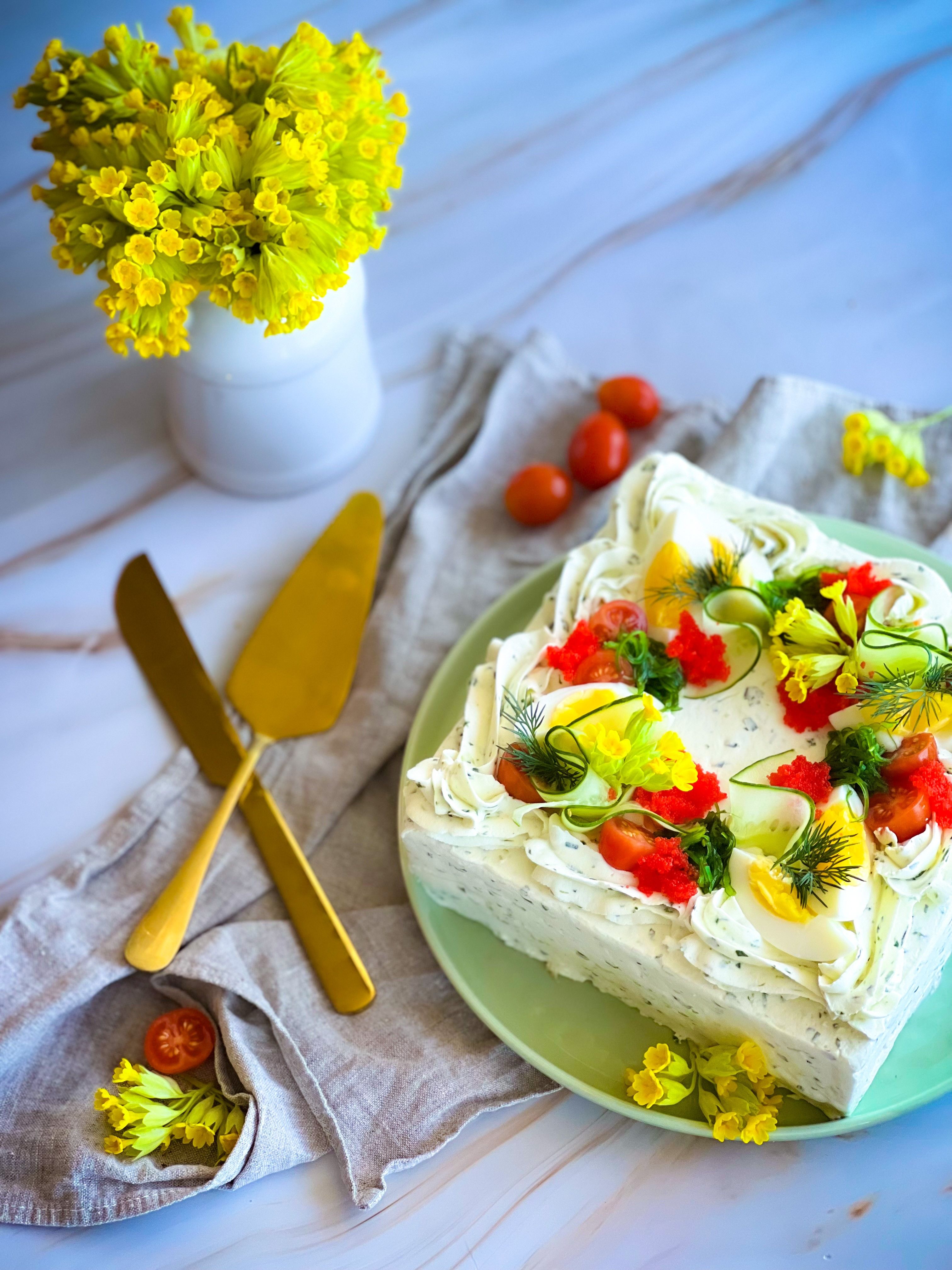
Photo: Karina Kungla / Pexels
Swedish
Smorgastarta
The diets react (see scores below)
Common Ingredients
- bread
- cream cheese
- smoked salmon
- shrimp
- mayonnaise
- eggs
- cucumber
- dill
Specific recipes may vary.
Incompatible with 7 of 11 diets
Diet Ratings
Smörgåstårta is a Swedish 'sandwich cake' built on a foundation of bread, which is a grain-based, high-carb ingredient that immediately disqualifies it from keto compatibility. The bread layers contribute the vast majority of carbs — a typical serving can easily deliver 30–50g of net carbs from bread alone, far exceeding keto thresholds in a single dish. While many of the toppings and fillings (smoked salmon, shrimp, cream cheese, mayonnaise, eggs, cucumber, dill) are individually keto-friendly or low-carb, they cannot redeem the dish because the bread is structural and non-optional — it is the defining element of the recipe. There is no meaningful portion size of Smörgåstårta that keeps net carbs within keto limits without fundamentally deconstructing the dish.
Smörgåstårta contains multiple animal-derived ingredients that are strictly excluded from a vegan diet. Smoked salmon and shrimp are fish and seafood respectively, cream cheese and mayonnaise are dairy and egg-based products, and eggs are a direct animal product. This dish is fundamentally built on animal proteins and animal-derived condiments, making it entirely incompatible with veganism. There is no ambiguity here — every primary protein and most condiment components violate vegan principles.
Smörgåstårta is fundamentally incompatible with the paleo diet. The dish is built on a bread base — a grain product that is strictly excluded from paleo. Cream cheese is a dairy product, also excluded. Mayonnaise, as typically prepared, contains seed oils (canola or soybean) and is therefore non-paleo. While smoked salmon, shrimp, eggs, cucumber, and dill are individually paleo-approved ingredients, the foundational components — bread, cream cheese, and commercial mayonnaise — are core violations. Multiple non-paleo ingredients make this dish impossible to rate above 'avoid.'
Smörgåstårta contains several Mediterranean-compatible ingredients—smoked salmon and shrimp are excellent protein sources encouraged 2-3 times weekly, cucumber and dill are plant-forward additions, and eggs are acceptable in moderation. However, the dish diverges from Mediterranean principles in key ways: the bread base is likely refined white bread rather than whole grain, cream cheese and mayonnaise are not traditional Mediterranean fats (olive oil is the canonical fat source), and the overall dish is heavily dairy/fat-forward rather than plant-forward. The combination of cream cheese, mayonnaise, and eggs creates a high saturated fat and calorie-dense profile that doesn't align with the Mediterranean pattern. The fish components are a genuine strength, but the vehicle and condiments pull it toward caution territory.
Some Mediterranean diet practitioners would score the fish components more favorably, arguing that smoked salmon and shrimp as primary proteins strongly support the diet's seafood emphasis, and that substituting whole-grain bread and Greek yogurt for cream cheese/mayo could make this dish broadly compatible. Traditional Levantine and Greek cuisine also use dairy-based spreads in moderation, suggesting the cream cheese is not categorically excluded.
Smörgåstårta is fundamentally incompatible with the carnivore diet. The dish is built on a bread base, which is a grain product and strictly excluded. It also contains cucumber (plant), dill (herb/plant), and mayonnaise (typically made with plant-based oils like soybean or canola oil). While some ingredients are carnivore-friendly — smoked salmon, shrimp, eggs, and cream cheese are all animal-derived — they cannot redeem a dish whose foundational structure relies on plant foods and processed ingredients. The bread alone is an automatic disqualifier, and the presence of multiple plant-derived components makes this a clear avoid with high confidence.
Smörgåstårta contains multiple excluded ingredients that disqualify it from Whole30 compliance. Bread (a grain product) is the structural foundation of this Swedish sandwich cake and is explicitly excluded under the grain elimination rule. Cream cheese is a dairy product, also explicitly excluded. These two ingredients alone make this dish incompatible with Whole30, regardless of the other components. The remaining ingredients — smoked salmon, shrimp, mayonnaise (if compliant), eggs, cucumber, and dill — could individually be Whole30-compatible, but the dish as a whole cannot be made compliant without fundamentally changing its nature. Even if one attempted to substitute the bread with a grain-free base, the dish would likely fall under the 'no recreating baked goods/junk food' spirit rule as a sandwich-style construction.
Smörgåstårta contains multiple high-FODMAP ingredients that make it problematic during the elimination phase. The primary concern is bread — traditional Swedish smörgåstårta is made with wheat bread, which is high in fructans and a clear avoid during elimination. Cream cheese is moderate to high in lactose depending on the amount used (though in small quantities it may be tolerated). Shrimp, smoked salmon, eggs, mayonnaise, cucumber, and dill are all low-FODMAP and pose no concern. However, the wheat bread alone is sufficient to classify this dish as high-FODMAP, and cream cheese in the quantities typically used as a binding layer adds additional lactose load. The combination makes this dish a strong avoid during the elimination phase.
If the dish were reconstructed with gluten-free bread and lactose-free cream cheese, most remaining ingredients (smoked salmon, shrimp, eggs, mayo, cucumber, dill) are low-FODMAP and a modified version could be approved. Some clinical FODMAP practitioners note that Monash has found certain sourdough breads low-FODMAP at small servings due to fermentation reducing fructans, but standard wheat bread used in smörgåstårta would not qualify, and portion control for a sandwich cake is unrealistic.
Smörgåstårta is a Swedish 'sandwich cake' that, while containing some DASH-friendly ingredients (cucumber, dill, eggs, shrimp), is dominated by high-sodium and high-fat components that conflict sharply with DASH principles. Smoked salmon is very high in sodium (typically 600–1,000mg per 3oz serving), cream cheese is a full-fat dairy product high in saturated fat, and mayonnaise adds significant saturated fat and additional sodium. The bread is typically white or refined, not whole grain. Together, a single serving of Smörgåstårta can easily exceed 1,000–1,500mg sodium and deliver substantial saturated fat — potentially consuming the entire daily DASH sodium budget in one dish. The combination of smoked fish, cream cheese, and mayonnaise as structural components makes this dish fundamentally incompatible with DASH guidelines as typically prepared, not merely a borderline case requiring portion control.
NIH DASH guidelines flag smoked salmon and cream cheese categorically due to high sodium and saturated fat content. However, some DASH-oriented clinicians note that the dish does contain omega-3-rich fish protein, vegetables, and eggs with beneficial nutrients — a modified version using low-sodium canned salmon, reduced-fat cream cheese, light mayo, and whole-grain bread could be reengineered into a cautious DASH option, though the traditional preparation remains problematic.
Smörgåstårta is a Swedish 'sandwich cake' that contains a mix of Zone-friendly and Zone-challenging ingredients. On the positive side, smoked salmon and shrimp are excellent lean protein sources with beneficial omega-3 fatty acids, eggs add quality protein and fat, cucumber is a favorable low-glycemic vegetable, and dill is a polyphenol-rich herb. However, the dish is built on a bread base — typically white or light bread — which is a high-glycemic, unfavorable Zone carbohydrate that spikes insulin. Cream cheese is high in saturated fat, and mayonnaise (depending on the oil used) is often omega-6-heavy seed oil-based, both of which conflict with Zone's monounsaturated and anti-inflammatory fat emphasis. The macronutrient ratio of the dish as traditionally prepared skews high in carbs (from bread) and saturated/omega-6 fat, with the protein component being relatively sound. With careful portioning — a small slice focusing on the protein-rich toppings over a thin bread layer — it can be worked into a Zone meal, but the traditional preparation makes it difficult to hit the 40/30/30 target without significant modification.
Some Zone practitioners would argue that in small, controlled portions, the bread component can be treated as the single carbohydrate block for the meal, particularly if the slice is thin and the protein-to-bread ratio is high. Dr. Sears' later writings also softened somewhat on saturated fat in the context of an overall anti-inflammatory diet, meaning the cream cheese is less damning than early Zone literature would suggest. A Zone-adapted version with whole grain rye bread (lower GI), olive-oil-based mayo, and generous smoked salmon and shrimp toppings could achieve a reasonable block balance.
Smörgåstårta is a Swedish 'sandwich cake' with a genuinely mixed anti-inflammatory profile. On the positive side, smoked salmon and shrimp are excellent sources of omega-3 fatty acids (EPA and DHA), which are foundational to the anti-inflammatory diet. Dill is a beneficial herb with antioxidant properties, and cucumber adds hydration and mild anti-inflammatory phytonutrients. Eggs contribute choline and selenium with mixed but generally acceptable standing in anti-inflammatory frameworks. However, several ingredients pull the dish in the wrong direction: cream cheese is a full-fat dairy product high in saturated fat, which anti-inflammatory guidelines recommend limiting; mayonnaise typically contains refined seed oils (soybean or canola) that are debated but generally discouraged in anti-inflammatory protocols due to omega-6 load; and the bread base — typically white bread — introduces refined carbohydrates with a high glycemic load that can promote inflammatory signaling. The overall dish is heavy, calorically dense, and rich in saturated fat and refined carbs relative to its omega-3 benefits. If the bread were whole grain and the cream cheese and mayo were minimized or substituted (e.g., with avocado or Greek yogurt), the profile would improve substantially. As traditionally prepared, this dish lands in the 'caution' zone — not overtly inflammatory, but not a dish that supports an anti-inflammatory eating pattern as a regular meal.
Some anti-inflammatory practitioners would rate this more favorably, emphasizing the high omega-3 content from salmon and shrimp as the dominant nutritional signal — particularly those following Dr. Weil's broader principle that seafood-centered meals are net anti-inflammatory regardless of accompaniments. Others following stricter protocols (such as AIP or functional medicine practitioners who flag refined carbs and seed-oil-based mayonnaise) might push this toward 'avoid' territory.
Smörgåstårta is a Swedish 'sandwich cake' built on a base of white bread and filled/frosted with cream cheese and mayonnaise, then topped with smoked salmon, shrimp, eggs, cucumber, and dill. It does offer genuine protein from multiple quality sources — smoked salmon provides omega-3 fatty acids and lean protein, shrimp is one of the highest protein-to-calorie seafood options, and eggs add complete protein — and cucumber contributes hydration and easy digestibility. However, the dish has significant drawbacks for GLP-1 patients. Cream cheese and mayonnaise together create a high-fat, high-calorie binding layer with low nutritional return per calorie — exactly the fat load that worsens nausea, bloating, and reflux due to slowed gastric emptying. White bread is a refined grain with minimal fiber, spiking blood sugar and offering little nutritional density. Smoked salmon also carries a high sodium load, which can exacerbate the dehydration risk GLP-1 patients already face from reduced thirst sensation. Portion sensitivity is a real issue: this dish is typically served in substantial slices where the cream cheese and mayo volume is difficult to moderate. A small, carefully portioned serving that emphasizes the salmon, shrimp, and egg components while minimizing the cream cheese and bread could be passable, but as typically served, the fat-to-protein ratio and refined carbohydrate base work against GLP-1 dietary priorities.
Some GLP-1-focused dietitians may view smörgåstårta more favorably given its multiple high-quality protein sources (salmon, shrimp, eggs) and argue that the omega-3 content and easy digestibility of the fish components outweigh the fat concerns, particularly for patients not currently experiencing significant GI side effects. Others would flag the cream cheese and mayonnaise combination as a meaningful nausea and reflux trigger and recommend avoiding it entirely during active dose escalation phases when GI sensitivity is highest.
*See how scores were generated at our methodology page.
Nutritional profile
Six traits that cut across every diet.
Fiber & Plants
How much whole-plant food and fiber it delivers.
Healthy Fats
The quality of its fats (unsaturated, omega-3).
Whole / Unprocessed
How close it is to its natural, unprocessed form.
Gut Gentle
How easy it is on digestion (low FODMAP, few irritants).
Low Glycemic
How little it spikes your blood sugar.
Protein Density
How much protein it packs per calorie.
Controversy Index
Higher controversy = more disagreement between diets.
Diet-Specific Tips
 Mediterranean — 5/10
View tips
- Smoked salmon and shrimp are positive—seafood is strongly encouraged 2-3 times weekly
- Cream cheese and mayonnaise replace olive oil as primary fats, contradicting Mediterranean fat principles
- Bread base is likely refined white bread, not a whole grain
- Eggs are acceptable but contribute to an already dairy/fat-heavy profile
- Cucumber and dill are positive plant-based additions
- Overall dish is calorie-dense and fat-heavy rather than plant-forward
- Not a traditional Mediterranean dish—Swedish cuisine with limited alignment to Mediterranean patterns
 Zone — 5/10
View tips
- Bread base is typically white/light bread — an unfavorable high-glycemic Zone carbohydrate that raises insulin
- Smoked salmon and shrimp are excellent lean Zone protein sources with beneficial omega-3 fatty acids
- Cream cheese is high in saturated fat, conflicting with Zone's monounsaturated fat preference
- Mayonnaise is typically omega-6 seed oil-based, worsening the omega-3/omega-6 ratio — counter to Zone anti-inflammatory principles
- Eggs contribute quality protein and fat but add to the saturated fat load
- Cucumber and dill are favorable Zone ingredients (low-glycemic, polyphenol-rich)
- Macronutrient ratio in traditional preparation skews toward carbs and saturated/omega-6 fat rather than 40/30/30
- Portion control and ingredient substitutions (rye bread, olive-oil mayo) could make this more Zone-compatible
 Anti-Inflammatory — 5/10
View tips
- Smoked salmon and shrimp provide significant omega-3 fatty acids (EPA/DHA) — a major anti-inflammatory positive
- Cream cheese (full-fat dairy) is high in saturated fat, which anti-inflammatory guidelines recommend limiting
- Mayonnaise typically contains refined seed oils (soybean/canola) with high omega-6 content, a concern in anti-inflammatory frameworks
- Bread base (typically white bread) contributes refined carbohydrates and high glycemic load, promoting inflammatory signaling
- Dill is a beneficial anti-inflammatory herb; cucumber adds mild antioxidant phytonutrients
- Eggs are acceptable in moderation under most anti-inflammatory frameworks
- Smoked salmon contains sodium and preservatives that may be a secondary concern for some individuals
- Whole-grain bread substitution would meaningfully improve the anti-inflammatory profile
 GLP-1 Friendly — 4/10
View tips
- High-fat filling: cream cheese and mayonnaise combination significantly increases fat per serving, worsening GLP-1 GI side effects
- Quality protein sources present: smoked salmon (omega-3s), shrimp (high protein density), and eggs (complete protein) are all GLP-1-friendly ingredients individually
- Refined white bread base: low fiber, low nutrient density, raises blood sugar — does not support GLP-1 dietary priorities
- High sodium from smoked salmon: compounds dehydration risk given GLP-1-reduced thirst sensation
- Cucumber contributes hydration support and easy digestibility
- Portion-sensitive: fat and refined carb load scales with serving size, making moderation difficult in a dish typically served in generous slices
- No significant fiber: neither the bread nor the filling/toppings contribute meaningful fiber toward the 25-30g daily target