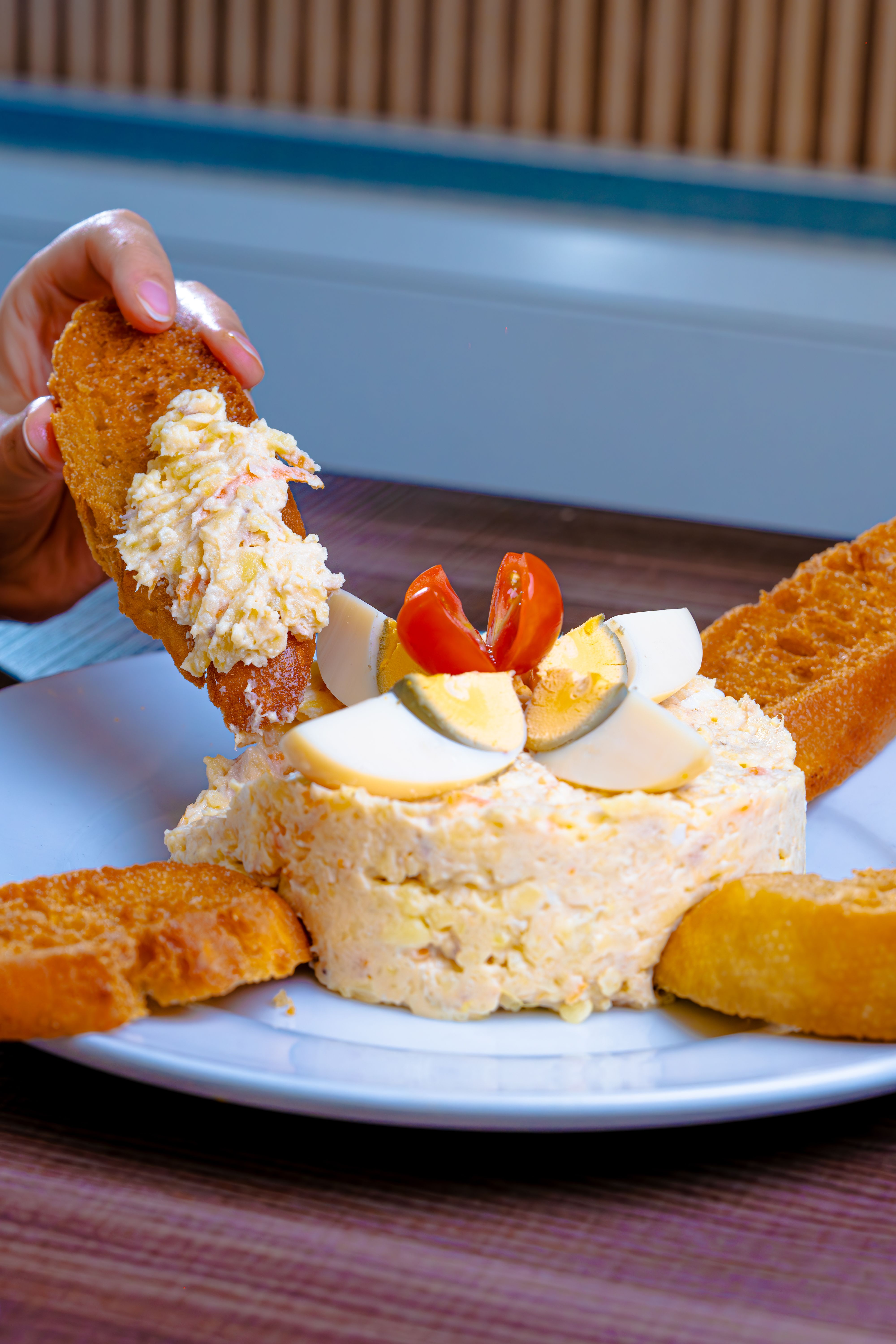
Photo: Nano Erdozain / Pexels
Swedish
Toast Skagen
The diets react (see scores below)
Common Ingredients
- shrimp
- mayonnaise
- dill
- lemon
- bread
- butter
- whitefish roe
Specific recipes may vary.
Incompatible with 6 of 11 diets
Diet Ratings
Toast Skagen is fundamentally incompatible with keto due to the bread (toast) base, which is a grain-based, high-carb ingredient. A single slice of toast typically contributes 12-15g of net carbs, easily pushing past keto thresholds. The remaining ingredients — shrimp, mayonnaise, dill, lemon, butter, and whitefish roe — are largely keto-friendly on their own, but the bread is a hard disqualifier. The dish cannot be evaluated without its defining component.
Toast Skagen contains multiple animal products that are entirely incompatible with a vegan diet. Shrimp is seafood (animal product), whitefish roe is fish eggs (animal product), mayonnaise is typically made with eggs (animal product), and butter is a dairy product (animal product). Every primary component of this dish violates vegan principles. There is no meaningful debate within the vegan community about any of these ingredients.
Toast Skagen is fundamentally incompatible with the paleo diet. The dish is built on toast (bread), which is a grain-based product — one of the clearest exclusions in paleo eating. Commercial mayonnaise typically contains seed oils (soybean or canola oil), another strict paleo exclusion. While shrimp, dill, lemon, and whitefish roe are all excellent paleo foods, the two foundational components of this dish (bread and mayo) disqualify it entirely. Butter is debated in paleo circles, but it's secondary to the more serious violations here.
Toast Skagen features shrimp and whitefish roe, which are excellent Mediterranean-compatible seafood proteins eaten multiple times weekly. However, the dish is problematic in several ways: mayonnaise (typically made with refined vegetable oils, not olive oil) replaces the canonical olive oil fat source; butter is used for the toast rather than olive oil; and white bread is a refined grain. The overall dish leans heavily on saturated and omega-6 fats from mayo and butter rather than the preferred extra virgin olive oil. The seafood components are strong positives, but the delivery vehicle and condiments contradict core Mediterranean principles.
Some Mediterranean diet interpreters would note that small open-faced portions of seafood on bread resemble traditional Spanish 'pintxos' or Italian bruschetta traditions, and if the mayonnaise were replaced with olive oil or the dish consumed occasionally, the seafood and dill components could fit a broadly defined Mediterranean-style eating pattern. The roe in particular is nutrient-dense and valued in some Mediterranean coastal cuisines.
Toast Skagen is fundamentally incompatible with the carnivore diet. While it does contain carnivore-approved animal products — shrimp and whitefish roe are excellent seafood choices — the dish is defined by multiple plant-based and processed ingredients that disqualify it entirely. Bread is a grain-based food, explicitly excluded from all tiers of carnivore eating. Dill is a plant herb, lemon is a fruit, and mayonnaise (unless homemade with compliant ingredients) typically contains plant-derived oils such as soybean or canola oil. Even if the shrimp and roe were consumed alone, the structural base of this dish (toast) and its classic preparation make it a non-carnivore food. There is no meaningful modification that preserves this dish's identity while making it carnivore-compliant.
Toast Skagen contains two clearly excluded ingredients: bread (a grain product) and butter (dairy, not ghee). The dish is also served on toast, which falls under the 'no recreating baked goods/junk food' spirit of Whole30 — toast is literally a bread-based vehicle. The shrimp, dill, lemon, and whitefish roe are compliant. Mayonnaise can be compliant if made with compliant oils (no soy or canola with additives), but the bread and butter alone are disqualifying. This dish cannot be made Whole30-compatible in its traditional form without fundamentally changing its identity.
Toast Skagen is a classic Swedish appetizer. Most ingredients are low-FODMAP: shrimp is protein with no FODMAPs, mayonnaise (egg and oil-based) is low-FODMAP in standard servings, dill is a low-FODMAP herb, lemon juice is low-FODMAP, butter is low-FODMAP (fat, negligible lactose), and whitefish roe has no significant FODMAP content. The critical problem is the bread (toast). Traditional Toast Skagen uses wheat bread, which is high-FODMAP due to fructans at any standard serving size. A single slice of regular wheat toast is enough to push this dish into high-FODMAP territory. The dish can be made low-FODMAP by substituting gluten-free or sourdough spelt bread, but as traditionally prepared it warrants a caution-to-avoid rating. Scoring at 4 to reflect that the topping itself is fine but the delivery vehicle is the core issue during elimination.
Monash University rates wheat bread as high-FODMAP due to fructans even at one slice, making this a clear avoid in strict elimination. However, some FODMAP practitioners allow spelt sourdough bread (long fermentation reduces fructans) in small serves — if Toast Skagen were made on certified low-FODMAP or sourdough spelt bread, the dish could be approved, which creates practical ambiguity depending on preparation.
Toast Skagen contains several ingredients that conflict with DASH principles, but also has some redeeming qualities. Shrimp is a lean protein source compatible with DASH, and dill and lemon add flavor without sodium. However, the dish is problematic in several ways: (1) full-fat mayonnaise is high in fat and often sodium; (2) butter adds saturated fat, which DASH limits; (3) whitefish roe (fish eggs/caviar) is notoriously high in sodium, often 500-1000mg+ per small serving; (4) white bread is typically refined grain rather than the whole grain DASH emphasizes. The combination of mayo, butter, and roe creates a high-sodium, high-saturated-fat profile despite the lean shrimp base. As a Swedish snack it is typically served in portions that could be manageable, but the sodium load from the roe and mayo is a significant concern. Substitutions (light mayo, whole grain toast, reduced roe portion) would improve compatibility.
NIH DASH guidelines explicitly limit high-sodium condiments and roe/caviar-type foods, as well as saturated fats from butter and full-fat mayo. However, some updated DASH-oriented clinical dietitians note that shrimp and fish roe provide beneficial omega-3 fatty acids and that occasional small portions of this dish, with sodium managed elsewhere in the day, can fit within a broader DASH-compatible eating pattern.
Toast Skagen presents a mixed Zone Diet profile. The shrimp is an excellent lean protein source — a classic Zone-favorable choice — and whitefish roe adds additional lean protein with beneficial omega-3 fatty acids. Dill and lemon are Zone-neutral and even contribute polyphenols. However, the dish has several structural challenges for Zone compliance. The bread (typically white toast in traditional Skagen) is a high-glycemic carbohydrate that Zone methodology classifies as 'unfavorable' — it spikes insulin without providing the nutrient density of vegetables or low-GI fruits. Mayonnaise introduces significant fat, typically from omega-6-heavy soybean or canola oil, which conflicts with Zone's anti-inflammatory emphasis on monounsaturated fats. Butter adds saturated fat on top of the mayo fat load, making the fat profile doubly problematic — both in type and in creating a fat-heavy imbalance relative to the protein portion. The 40/30/30 ratio is difficult to achieve: the dish skews toward fat (mayo + butter) and unfavorable carbs (white bread), while shrimp protein may be undersized relative to the fat load. With substitutions — whole grain or rye bread, avocado-based or olive oil mayo, and eliminating butter — this could move toward a 5-6 score. As traditionally prepared, it requires meaningful modification to fit Zone blocks.
Some Zone practitioners, particularly those following Sears' later work emphasizing anti-inflammatory eating over strict block counting, might rate the shrimp and roe components more favorably. Whitefish roe is rich in omega-3s and EPA/DHA, which Sears increasingly emphasized in his OmegaRx writings. If served on a small portion of rye crispbread (lower GI than white toast) with olive oil-based mayo, some practitioners would consider this a reasonable Zone snack with careful portioning — perhaps raising the score to 5-6.
Toast Skagen presents a mixed anti-inflammatory profile. On the positive side, shrimp provides lean protein and some omega-3 fatty acids, though in smaller amounts than fatty fish. Whitefish roe is a notable anti-inflammatory highlight — fish roe is rich in omega-3 DHA/EPA, phospholipids, and astaxanthin, making it genuinely beneficial. Dill is an anti-inflammatory herb with flavonoids and antioxidants, and lemon juice adds vitamin C and polyphenols. These components push the dish toward the approve direction. However, the dish is anchored by mayonnaise (typically made from refined soybean or canola oil, high in omega-6) and butter (saturated fat), both of which are cautionary or limited ingredients in anti-inflammatory frameworks. The bread base adds refined carbohydrates, particularly if made from white bread, which is standard in traditional Toast Skagen. The overall fat profile is dominated by saturated fat and omega-6-heavy mayo rather than anti-inflammatory olive oil or omega-3 sources. The dish is not egregiously pro-inflammatory — it lacks trans fats, added sugars, or heavy processing — but its core binding and cooking fats undermine the otherwise solid seafood and herb components. It would score considerably higher if made with avocado-based or olive oil mayonnaise and served on whole-grain bread.
Some anti-inflammatory practitioners would rate the roe and shrimp components more favorably, arguing that the omega-3 content of fish roe is substantial enough to partially offset the mayonnaise's omega-6 load — particularly if homemade mayo with olive or avocado oil is used. Conversely, strict anti-inflammatory protocols (such as those influenced by Dr. Mark Hyman's work) would flag the refined-carb bread base and commercial mayo more harshly, potentially pushing this toward an avoid verdict.
Toast Skagen is a classic Swedish open-faced shrimp toast. Shrimp is an excellent lean protein source and whitefish roe adds additional protein and omega-3s — both are GLP-1 friendly ingredients. However, the dish is heavily dependent on mayonnaise as a binder, which is high in fat (primarily from refined oils) and calorie-dense with minimal nutritional value per calorie. Butter-fried or buttered toast adds further saturated fat. The bread base is typically white bread or brioche — refined carbohydrates with low fiber content. The overall fat load from mayonnaise plus butter on a small serving significantly undermines the lean protein benefit of the shrimp. Portion size matters: a small open-faced serving keeps fat somewhat contained, but traditional preparations use a generous mayonnaise mix. The dish scores low on fiber and has moderate digestibility concerns due to fat content, which can worsen GLP-1 side effects like nausea and bloating.
Some GLP-1-focused dietitians may view this more favorably if prepared with a light or reduced-fat mayonnaise and served on whole grain rye bread, which would substantially improve the fiber content and reduce the fat burden — a common Scandinavian modification. Others maintain that even a modified version remains too fat-dense per small serving to be reliably well-tolerated, particularly in patients in early GLP-1 titration phases experiencing peak GI sensitivity.
*See how scores were generated at our methodology page.
Nutritional profile
Six traits that cut across every diet.
Fiber & Plants
How much whole-plant food and fiber it delivers.
Healthy Fats
The quality of its fats (unsaturated, omega-3).
Whole / Unprocessed
How close it is to its natural, unprocessed form.
Gut Gentle
How easy it is on digestion (low FODMAP, few irritants).
Low Glycemic
How little it spikes your blood sugar.
Protein Density
How much protein it packs per calorie.
Controversy Index
Higher controversy = more disagreement between diets.
Diet-Specific Tips
 Mediterranean — 4/10
View tips
- Shrimp and whitefish roe are excellent seafood proteins aligned with Mediterranean principles
- Mayonnaise as primary condiment is not Mediterranean — replaces preferred extra virgin olive oil
- Butter used for toasting bread rather than olive oil
- White bread is a refined grain, contradicting whole grain preference
- Dill and lemon are herb/citrus additions that are neutral to positive
- Dish is not Mediterranean in origin or tradition, reducing alignment by design
- Portion size and frequency of consumption would significantly affect overall rating
 DASH — 4/10
View tips
- Whitefish roe is very high in sodium, conflicting with DASH sodium limits
- Full-fat mayonnaise adds saturated fat and sodium
- Butter increases saturated fat content
- Shrimp is a lean protein, which is DASH-approved
- White bread is a refined grain; whole grain bread would be preferred
- Dill and lemon are DASH-friendly flavor enhancers
- Dish is typically served as a rich, indulgent snack rather than a portion-controlled meal
 Zone — 4/10
View tips
- Shrimp is a Zone-favorable lean protein with minimal saturated fat
- Whitefish roe provides omega-3 fatty acids aligned with Zone anti-inflammatory goals
- Traditional white toast bread is a high-glycemic 'unfavorable' carbohydrate in Zone methodology
- Mayonnaise typically contains omega-6-heavy seed oils, conflicting with Zone's fat quality emphasis
- Butter adds saturated fat, compounding an already fat-heavy profile
- Combined mayo and butter create significant fat excess relative to the 30% fat target
- 40/30/30 ratio is difficult to achieve without significant ingredient substitutions
- Dish can be modified toward Zone compliance with whole grain/rye bread and olive oil-based mayo
 Anti-Inflammatory — 5/10
View tips
- Whitefish roe is rich in omega-3 DHA/EPA and anti-inflammatory phospholipids — a genuine positive
- Shrimp provides lean protein with modest omega-3 content
- Dill and lemon are anti-inflammatory herbs/citrus with polyphenols and antioxidants
- Mayonnaise typically uses refined omega-6-rich seed oils, undermining the dish's fat profile
- Butter adds saturated fat, which is a limited ingredient in anti-inflammatory frameworks
- White bread base contributes refined carbohydrates with minimal fiber or nutrients
- No trans fats, added sugars, or artificial additives — dish is whole-food based
- Dish improves significantly with whole-grain bread and olive oil or avocado mayo substitutions
 GLP-1 Friendly — 4/10
View tips
- Shrimp is a high-quality lean protein — a GLP-1 positive
- Whitefish roe provides additional protein and beneficial omega-3 fatty acids
- Mayonnaise is high in fat and calorie-dense with low nutritional value per calorie
- Butter adds saturated fat, compounding the fat load
- Traditional white bread base is low fiber and low nutrient density
- High combined fat content risks worsening nausea, bloating, and reflux
- Dish is portion-sensitive — smaller servings with mayo reduction improve the profile
- Substituting whole grain rye bread and light mayo would improve the rating significantly