Photo: Rachel Claire / Pexels
Swiss
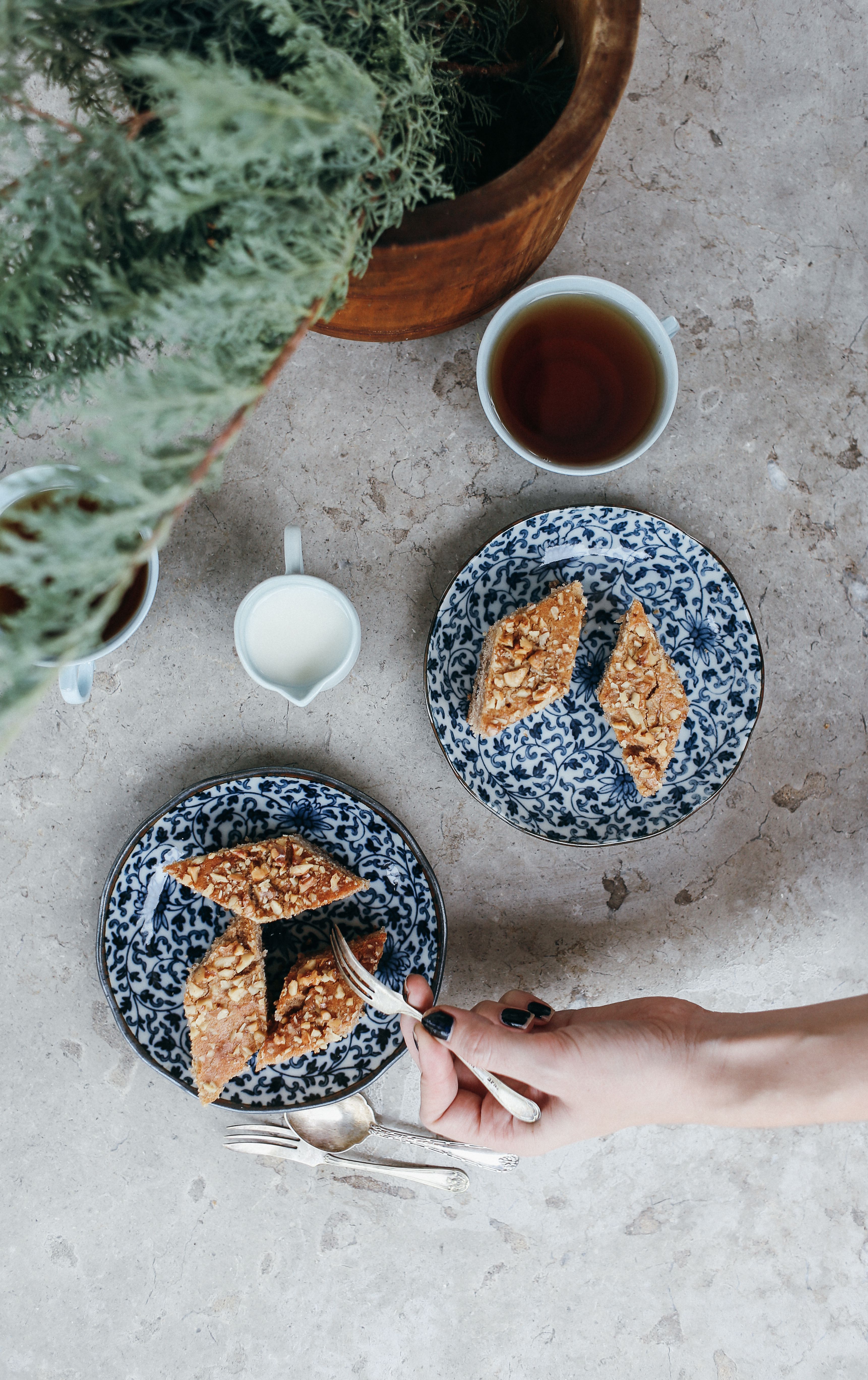
Basler Leckerli
The diets react (see scores below)
Common Ingredients
- honey
- flour
- sugar
- almonds
- candied peel
- cinnamon
- cloves
- kirsch
Specific recipes may vary.
Incompatible with 10 of 11 diets
Diet Ratings
Basler Leckerli is a traditional Swiss spiced honey-almond cookie that is entirely incompatible with a ketogenic diet. Its primary ingredients — honey, wheat flour, and sugar — are among the most keto-incompatible substances possible. A single piece contains a massive dose of net carbs from multiple high-glycemic sources simultaneously. Honey alone is nearly pure sugar (fructose and glucose), flour provides dense starch-based carbohydrates, and added sugar compounds the problem further. Candied peel also contains significant added sugar. The small amounts of almonds and spices provide negligible benefit in this context. A typical serving could easily contain 30-50g of net carbs, potentially exceeding an entire day's keto carb budget in one bite. There is no realistic portion modification that would make this food keto-compatible.
Basler Leckerli is a traditional Swiss spiced honey cake, and honey is the defining ingredient here — it is listed first and is structurally central to the recipe. The Vegan Society, PETA, and most mainstream vegan organizations classify honey as a non-vegan animal product, as it is produced by bees (insects) and its harvesting is considered exploitative of animals. The remaining ingredients — flour, sugar, almonds, candied peel, cinnamon, cloves, and kirsch — are all plant-based. However, the presence of honey as a core, non-incidental ingredient is sufficient to classify this dish as non-vegan by the standard definition. A vegan version could theoretically be made by substituting agave syrup or maple syrup for the honey, but the traditional recipe as described does not qualify.
A minority of plant-based eaters, sometimes called 'beegan' or 'plant-based' (rather than strictly vegan), argue that honey from ethically managed hives is acceptable since bees are not slaughtered in its production. Under this view, Basler Leckerli's other ingredients are fully plant-based, making it compatible with a lenient plant-based approach — though this position is rejected by the Vegan Society and most organized vegan advocacy groups.
Basler Leckerli is a traditional Swiss spiced honey cake that is fundamentally incompatible with the paleo diet. The dish contains multiple hard-line paleo exclusions: flour (wheat grain), refined sugar, and candied peel (which involves added sugar and processing). While honey, almonds, cinnamon, cloves, and kirsch (alcohol) have some paleo grounding or are debated, the grain-based flour and refined sugar are unambiguous violations with clear consensus across all major paleo authorities. There is no paleo-compliant version of this dish in its traditional form — the structure itself depends on wheat flour and sugar.
Basler Leckerli is a Swiss spiced honey-gingerbread cookie that is primarily a confection built around refined flour, added sugar, and honey as a sweetener. While it contains some positive elements like almonds, spices (cinnamon, cloves), and honey, the dish is fundamentally a high-sugar, refined-grain treat. The Mediterranean diet explicitly minimizes added sugars and refined grains, and even honey — though more natural than refined sugar — is still a concentrated sweetener to be used very sparingly. Candied peel adds further sugar load. This is a processed sweet treat with minimal nutritional value in the Mediterranean framework, regardless of its traditional origins.
Basler Leckerli is a traditional Swiss spiced honey cookie that is entirely plant-based and heavily processed. It contains flour (grain), sugar, almonds (nuts), candied peel (fruit/sugar), cinnamon and cloves (plant spices), and kirsch (plant-derived alcohol). The only remotely carnivore-adjacent ingredient is honey, which itself is debated even in the most lenient animal-based protocols. There is no animal protein or animal fat present. This dish violates virtually every core carnivore principle: it is grain-based, sugar-laden, nut-containing, and spice-heavy. It represents the opposite of a carnivore-compatible food.
Basler Leckerli is a traditional Swiss spiced cookie/biscuit that contains multiple excluded ingredients. Flour (a grain product) is excluded on Whole30. Sugar is an added sugar and explicitly excluded. Kirsch is an alcohol (cherry brandy) and excluded. Additionally, even if all individual ingredients were compliant, this dish is a cookie/baked good, which is explicitly prohibited under Whole30's 'no recreating baked goods/junk food' rule. This dish fails on multiple fronts simultaneously.
Basler Leckerli is a traditional Swiss spiced honey cake that contains multiple high-FODMAP ingredients. Honey is high in excess fructose and is a significant FODMAP trigger. Wheat flour is high in fructans. Candied peel (typically made from citrus rind with added sugars and sometimes sorbitol/polyols) adds further FODMAP load. Almonds become high-FODMAP above approximately 10 nuts per serving, and in a baked good the quantity per serving is uncertain but likely significant. The combination of honey and wheat flour alone makes this dish unsuitable during the elimination phase at any standard serving size. Kirsch (cherry brandy) is derived from cherries (a high-polyol fruit), though alcohol itself is not a FODMAP — residual sorbitol from kirsch is generally minimal. Sugar and spices (cinnamon, cloves) are low-FODMAP. Despite a few safe components, the dominant ingredients — honey and wheat flour — make this dish clearly high-FODMAP at a standard serving.
Monash University has not specifically tested Basler Leckerli; the verdict relies on ingredient-level analysis. Some clinical FODMAP practitioners note that baking and sugar-binding can slightly alter fructose availability from honey, and that small ceremonial portions (e.g., one small piece) might reduce total FODMAP load — but most elimination-phase protocols would still advise avoidance given the wheat flour and honey combination.
Basler Leckerli is a traditional Swiss spiced honey-almond cookie that is essentially a confection — its primary ingredients are honey, sugar, and refined flour, making it high in added sugars and refined carbohydrates. The DASH diet explicitly limits sweets and added sugars, recommending no more than 5 servings per week of sweets and keeping added sugar intake low. This dish derives the bulk of its calories from sugar and honey (both concentrated sources of added sugar), refined white flour, and candied peel (which adds further sugar). While almonds provide some beneficial nutrients (magnesium, healthy fats) and spices like cinnamon are benign, these do not offset the dominant sugar load. Kirsch adds negligible alcohol but no nutritional benefit. There are no redeeming DASH-positive attributes such as fiber from whole grains, potassium, calcium, or lean protein. This falls squarely in the 'sweets' category that DASH discourages.
Basler Leckerli is a traditional Swiss spiced honey-almond cookie that is fundamentally incompatible with Zone Diet principles. Its ingredient profile is dominated by high-glycemic carbohydrates: honey and sugar provide dense, rapidly absorbed simple sugars, while refined white flour adds additional high-GI starch. There is no meaningful protein component whatsoever, making it impossible to construct a Zone-balanced block around this food. The small amount of almonds provides some monounsaturated fat, but it is insufficient to offset the macro imbalance. As a snack, it would spike blood glucose and insulin — precisely the hormonal response the Zone Diet is designed to prevent. The 40/30/30 ratio cannot be approximated even with creative portioning: you would need to pair this with very large quantities of lean protein and essentially no other carbohydrate, making the snack impractical as a Zone component. The cinnamon and cloves are favorable polyphenols, which is a minor positive note, but they do not meaningfully alter the assessment. This is one of the clearer 'avoid' cases in Zone methodology — a confection built almost entirely from unfavorable carbohydrates with no protein.
Basler Leckerli is a traditional Swiss spiced honey biscuit with a mixed anti-inflammatory profile. On the positive side, cinnamon and cloves are potent anti-inflammatory spices well-supported by research, and almonds provide vitamin E, healthy monounsaturated fats, and polyphenols. Honey, while a refined sugar source, contains trace antioxidants and polyphenols and is generally preferred over refined sugar in anti-inflammatory frameworks. However, the dish is fundamentally a sweet baked good: refined white flour dominates the base, added sugar contributes meaningfully to the glycemic load, and candied peel adds further refined sugar. Kirsch (cherry brandy) is an alcohol other than red wine, which is a 'limit' category. Overall, this is a high-sugar, refined-carbohydrate treat whose beneficial spice content cannot offset its predominant pro-inflammatory ingredients. Acceptable as an occasional indulgence but not a food to include regularly in an anti-inflammatory diet.
Basler Leckerli is a traditional Swiss spiced honey cookie made almost entirely of high-sugar, refined-carbohydrate ingredients — honey, flour, and sugar form the base, with candied peel adding further concentrated sugar. It offers no meaningful protein, negligible fiber, and is a high-glycemic, calorie-dense food with minimal nutritional value per calorie. The kirsch (cherry brandy) introduces a small amount of alcohol. While almonds contribute trace healthy fats and a modest amount of protein, their quantity in this cookie is too small to meaningfully offset the other concerns. For GLP-1 patients eating significantly fewer calories, this food represents nearly the worst use of limited caloric budget: empty calories, blood sugar spike, no satiety support, and potential worsening of nausea given its sugar and refined carbohydrate load. The spices (cinnamon, cloves) are benign, but they cannot redeem the overall profile.
*See how scores were generated at our methodology page.
Nutritional profile
Six traits that cut across every diet.
Fiber & Plants
How much whole-plant food and fiber it delivers.
Healthy Fats
The quality of its fats (unsaturated, omega-3).
Whole / Unprocessed
How close it is to its natural, unprocessed form.
Gut Gentle
How easy it is on digestion (low FODMAP, few irritants).
Low Glycemic
How little it spikes your blood sugar.
Protein Density
How much protein it packs per calorie.
Controversy Index
Higher controversy = more disagreement between diets.
Diet-Specific Tips
 Anti-Inflammatory — 4/10
View tips
- Refined white flour — pro-inflammatory refined carbohydrate
- High added sugar content (honey + granulated sugar + candied peel) — raises blood glucose and insulin
- Cinnamon and cloves — well-documented anti-inflammatory spices (polyphenols, eugenol)
- Almonds — anti-inflammatory nuts with vitamin E and monounsaturated fats
- Kirsch (alcohol) — limit category; not red wine
- Honey preferred over refined sugar but still a significant sugar source in this quantity
- Overall glycemic load is high, driving the caution verdict despite the beneficial spices