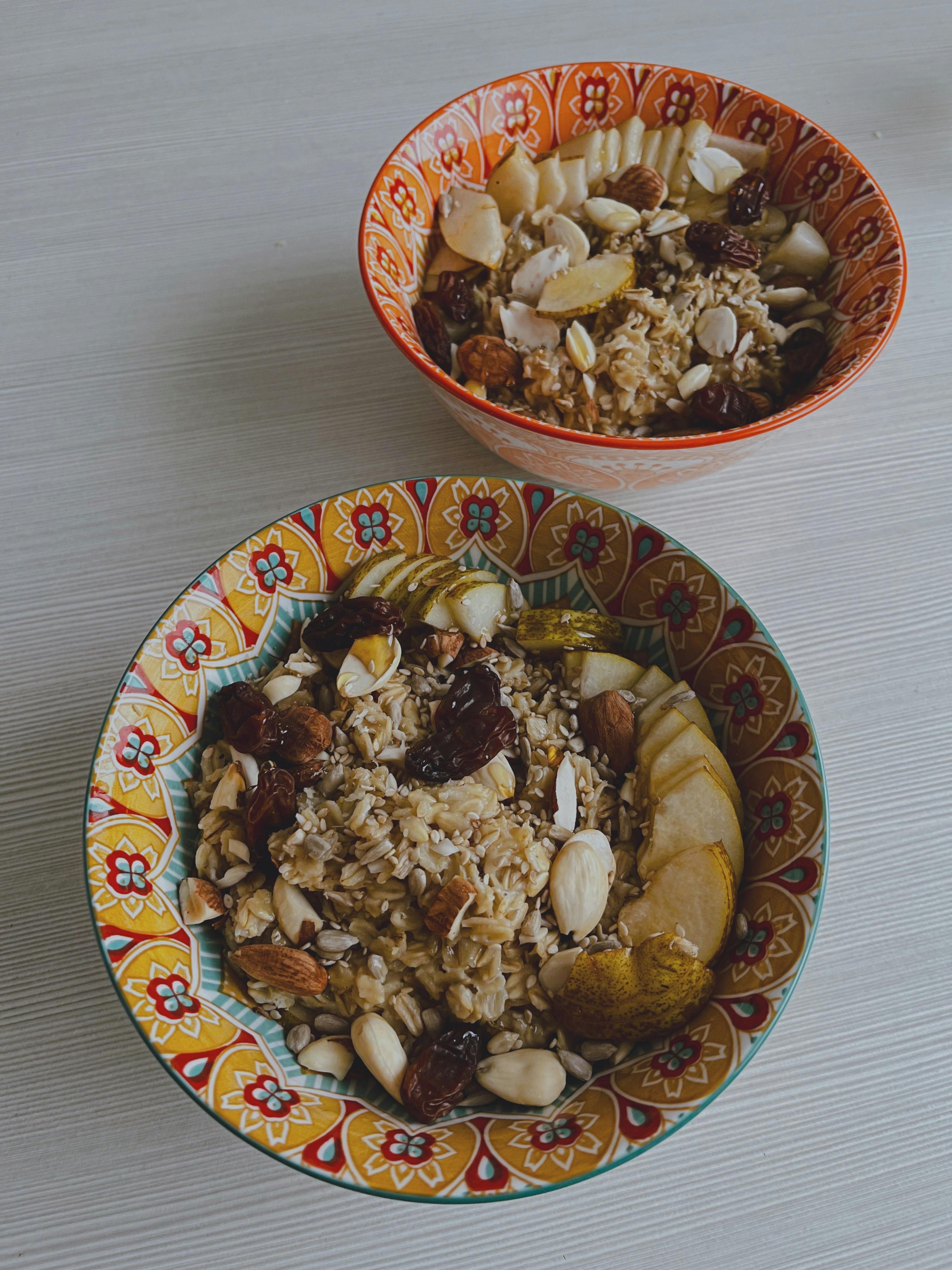
Photo: Regina Filange / Pexels
The diets react (see scores below)
Common Ingredients
- oats
- apple
- yogurt
- milk
- lemon
- hazelnuts
- berries
- honey
Specific recipes may vary.
Incompatible with 6 of 11 diets
Diet Ratings
Birchermuesli is fundamentally incompatible with ketogenic eating. Oats alone contain roughly 50-60g of net carbs per standard serving, which single-handedly exceeds the entire daily keto carb budget. Compounding this, the dish includes apple (high fructose, ~15-20g net carbs), honey (pure sugar, ~17g per tablespoon), milk (lactose adds carbs), and berries — all carbohydrate-dense ingredients. Even if hazelnuts and yogurt have some keto-friendly properties in isolation, they cannot offset the massive carbohydrate load from oats, apple, and honey. A single standard serving of Birchermuesli would likely deliver 80-120g of net carbs, which is 2-6x the maximum daily keto allowance. This dish would completely break ketosis.
Traditional Birchermuesli contains multiple animal-derived ingredients that make it clearly incompatible with a vegan diet. Yogurt and milk are dairy products (animal-derived), and honey is excluded by mainstream vegan organizations including the Vegan Society and PETA. The dish contains three separate non-vegan ingredients, making it firmly in the 'avoid' category. The base ingredients — oats, apple, lemon, hazelnuts, and berries — are all plant-based and excellent whole foods, so a vegan adaptation is straightforward (substitute plant-based yogurt, oat or nut milk, and maple syrup or agave for honey).
Birchermuesli is fundamentally incompatible with the Paleo diet. The dish's two core components — oats (a grain) and yogurt/milk (dairy) — are both explicitly excluded from the Paleo framework. Oats are a grain containing anti-nutrients like phytic acid and avenin, which Paleolithic humans did not consume as a dietary staple. Yogurt and milk are dairy products, also clearly off-limits. While several ingredients are perfectly Paleo-friendly — apple, lemon, berries, and hazelnuts are all approved — and honey falls into the caution/acceptable-in-moderation category, the foundational ingredients make this dish a clear avoid. The Paleo-compliant elements cannot redeem a dish built on two major excluded food categories.
Birchermuesli is a nutrient-dense breakfast that aligns well with Mediterranean diet principles. The base of whole grain oats provides complex carbohydrates and fiber. Fresh apple, berries, and lemon juice contribute vitamins, antioxidants, and polyphenols — all strongly encouraged. Hazelnuts are an excellent plant-based fat source comparable to other nuts celebrated in the Mediterranean pattern. Yogurt and milk are dairy components that fall within acceptable moderate consumption. Honey is a natural sweetener used traditionally in Mediterranean cultures, though ideally kept to a small amount. The dish is minimally processed, plant-forward, and free of red meat, refined grains, or added sugars beyond the honey. The main caveats are the dairy (yogurt and milk) and honey, which slightly temper an otherwise excellent score.
Some stricter modern Mediterranean diet interpretations would flag the dairy content (both yogurt and milk together) as pushing the upper boundary of moderate consumption in a single meal, preferring just one dairy component. Additionally, Birchermuesli is Swiss rather than traditional Mediterranean in origin, and purists may note that it lacks olive oil as a fat source, relying instead on nuts and dairy — though nuts are an accepted Mediterranean fat.
Birchermuesli is almost entirely plant-based and is fundamentally incompatible with the carnivore diet. The dish is built on oats (a grain), apple (fruit), lemon (fruit), hazelnuts (nuts), and berries (fruit) — all strictly excluded plant foods. Honey is the only ingredient with any animal connection, and it is debated even in permissive carnivore circles. Yogurt and milk are animal-derived dairy, but they represent a minor component surrounded by a majority of forbidden plant ingredients. There is no primary animal protein source. This dish violates virtually every core carnivore principle simultaneously.
Birchermuesli contains multiple excluded ingredients under the Whole30 program. Oats are a grain and are explicitly excluded. Yogurt and milk are dairy products and are explicitly excluded. Honey is an added sugar (natural sweetener) and is explicitly excluded. With four separate rule violations across core excluded categories, this dish is firmly off-limits on Whole30.
Birchermuesli as traditionally prepared contains multiple high-FODMAP ingredients at standard serving sizes. Yogurt and milk contribute lactose (high-FODMAP unless lactose-free alternatives are used). Apple is high in excess fructose and is a classic FODMAP trigger food at any standard serving (>20g becomes problematic). Honey is high-FODMAP due to excess fructose and is explicitly listed on the Monash avoid list. Oats themselves are low-FODMAP at 52g (½ cup), but the cumulative FODMAP load from the other ingredients makes this dish very problematic overall. Hazelnuts are low-FODMAP at 10 nuts (15g) but become high-FODMAP at larger portions. Berries vary — strawberries and blueberries are low-FODMAP in small amounts, but mixed berries may include high-FODMAP options. Lemon juice is low-FODMAP. The combination of apple, honey, yogurt, and milk in a single dish creates a very high cumulative FODMAP burden that is essentially unavoidable without fundamentally reformulating the dish.
Some FODMAP practitioners note that this dish could be made low-FODMAP with targeted substitutions: lactose-free yogurt and milk, omitting apple or using a very small amount (20g), replacing honey with maple syrup, and sticking to low-FODMAP berries like blueberries (40g). However, as traditionally served, Birchermuesli is not elimination-phase safe, and Monash University's guidance clearly flags apple, honey, lactose-containing dairy, and larger nut portions as high-FODMAP triggers.
Birchermuesli is an excellent fit for the DASH diet. Rolled oats provide whole grains and soluble fiber; berries, apple, and lemon supply potassium, antioxidants, and additional fiber; hazelnuts contribute heart-healthy unsaturated fats, magnesium, and protein; and yogurt with milk deliver calcium and low-fat dairy servings. Honey adds a small amount of added sugar, which DASH limits, but in typical Birchermuesli quantities it remains modest. Sodium content is naturally very low. The dish is rich in the key DASH nutrients — potassium, magnesium, calcium, and fiber — with no saturated-fat concerns beyond what yogurt and milk contribute, assuming low-fat or non-fat versions are used. The main caution is the type of dairy: if full-fat yogurt and whole milk are used (as in traditional Swiss preparation), saturated fat increases slightly and the score would lean closer to 7. With low-fat dairy, this scores at the high end of 'approve.'
NIH DASH guidelines specify low-fat or fat-free dairy, so traditional Birchermuesli made with full-fat yogurt and whole milk technically falls outside strict DASH recommendations; however, updated clinical interpretations note that emerging research does not consistently link full-fat dairy to worse cardiovascular outcomes, and some DASH-oriented practitioners now accept full-fat dairy in moderate portions.
Birchermuesli is a mixed Zone picture. On the positive side, it contains several Zone-favorable elements: berries are low-glycemic and polyphenol-rich, apple provides moderate-GI carbohydrates, yogurt contributes lean protein and fat, hazelnuts offer monounsaturated fat, and lemon adds polyphenols. However, the dish has structural challenges for the Zone. First, it lacks a meaningful lean protein source — yogurt alone is insufficient to anchor the 30% protein ratio for a full meal, and the dish is listed with no primary protein. Second, oats are an 'unfavorable' carbohydrate in Zone terminology — technically usable but higher glycemic than vegetables, and they dominate the carb block count here. Third, honey is a high-glycemic sugar that Sears would classify as unfavorable, spiking insulin and working against Zone balance. Fourth, the fat profile from hazelnuts is good (monounsaturated), but the overall fat content may be low relative to the heavy carbohydrate load from oats, apple, and honey combined. To Zone-ify this dish: reduce oats significantly, eliminate or minimize honey, add a protein source (e.g., egg whites, protein powder, or extra Greek yogurt), and load up on berries over apple to shift toward lower-GI carbs. As served traditionally, the carb-to-protein ratio skews well above 40/30/30.
Some Zone practitioners, particularly those following Sears' later writings emphasizing polyphenols and anti-inflammatory foods, would view Birchermuesli more favorably. The berries, lemon, and apple provide significant polyphenols; the hazelnuts supply monounsaturated fat and vitamin E; and yogurt does provide some protein and beneficial probiotics. A smaller portion (one Zone block equivalent) with Greek yogurt substituted for regular yogurt, honey minimized, and served alongside a protein source could be considered a reasonable Zone breakfast component rather than a meal to avoid.
Birchermüesli is a well-rounded anti-inflammatory breakfast with a strong nutritional profile. Rolled oats provide beta-glucan fiber, which has been shown to reduce CRP and support gut health. Berries are among the most antioxidant-dense foods available, rich in anthocyanins and polyphenols that actively suppress inflammatory pathways. Apple contributes quercetin and additional soluble fiber. Hazelnuts offer vitamin E, healthy monounsaturated fats, and manganese — all with anti-inflammatory properties. Lemon juice adds vitamin C and supports polyphenol absorption. Yogurt and milk introduce some saturated fat and dairy, which is generally acceptable in moderate amounts on an anti-inflammatory framework (low-fat dairy is specifically listed as acceptable). Honey is a form of added sugar and is mildly pro-inflammatory in excess, but in typical Birchermüesli quantities it is unlikely to be problematic. The dish contains no refined carbohydrates, seed oils, trans fats, or artificial additives. The overall composition — whole grains, fruit, nuts, and fermented dairy — aligns well with Dr. Weil's Anti-Inflammatory Food Pyramid principles.
Dairy-skeptic anti-inflammatory practitioners, including those following the Autoimmune Protocol (AIP), would flag yogurt and milk as potentially pro-inflammatory due to casein and lactose, arguing that dairy can elevate IGF-1 and trigger immune responses in sensitive individuals. Honey, while natural, is still a source of added sugar and would be minimized or omitted by stricter anti-inflammatory protocols concerned with glycemic load.
Birchermuesli is a nutrient-dense Swiss breakfast with meaningful fiber from oats, apple, and berries, and moderate protein from yogurt and milk. However, it falls short as a GLP-1-optimized meal due to its limited protein content — a standard serving is unlikely to reach the 15-30g per meal target without modification. Hazelnuts add healthy unsaturated fats but also increase caloric density, which matters when appetite is suppressed. Honey adds sugar with minimal nutritional benefit. The oats and fruit provide good fiber and are easy to digest, and the high water content of the dish (soaked oats, apple, milk) supports hydration. Overall, this is a wholesome, real-food breakfast that scores better than most processed options, but the protein gap is a meaningful drawback for GLP-1 patients without modification — swapping regular yogurt for Greek yogurt and reducing honey would meaningfully improve its profile.
Some GLP-1-focused dietitians would rate this more favorably, arguing that the combination of fiber, slow-digesting oats, and yogurt makes it a practical, tolerable breakfast, particularly for patients struggling with nausea who need easy-to-eat options. Others would flag the glycemic load from oats, honey, and fruit as a concern, especially for patients with concurrent insulin resistance or type 2 diabetes, and recommend limiting or swapping for a higher-protein, lower-carb alternative.
*See how scores were generated at our methodology page.
Nutritional profile
Six traits that cut across every diet.
Fiber & Plants
How much whole-plant food and fiber it delivers.
Healthy Fats
The quality of its fats (unsaturated, omega-3).
Whole / Unprocessed
How close it is to its natural, unprocessed form.
Gut Gentle
How easy it is on digestion (low FODMAP, few irritants).
Low Glycemic
How little it spikes your blood sugar.
Protein Density
How much protein it packs per calorie.
Controversy Index
Higher controversy = more disagreement between diets.
Diet-Specific Tips
 Mediterranean — 8/10
View tips
- Whole grain oats as a complex carbohydrate base
- Multiple servings of fruit (apple, berries, lemon) providing fiber and antioxidants
- Hazelnuts supply healthy plant-based fats aligned with Mediterranean nut consumption
- Yogurt and milk are acceptable moderate dairy but combined in one meal
- Honey is a natural traditional sweetener — acceptable in small quantities
- No refined grains, added sugars beyond honey, or processed ingredients
- Plant-forward, minimally processed dish despite non-Mediterranean Swiss origin
 DASH — 8/10
View tips
- Whole-grain oats provide fiber and satiety, a DASH cornerstone
- Berries and apple supply potassium, antioxidants, and fiber
- Hazelnuts add magnesium and heart-healthy monounsaturated fats
- Low-fat yogurt and milk fulfill DASH low-fat dairy servings
- Honey adds modest added sugar — portion control advised
- Naturally very low sodium — strong DASH advantage
- Full-fat dairy versions increase saturated fat, reducing compatibility
 Zone — 5/10
View tips
- Oats are 'unfavorable' carbohydrates in Zone terminology — higher glycemic index, limited to 0-1 grain servings/day
- Honey is a high-glycemic sugar that disrupts insulin balance — a Zone unfavorable ingredient
- No primary lean protein source; yogurt alone cannot anchor the required 30% protein ratio
- Hazelnuts provide Zone-favorable monounsaturated fat
- Berries are excellent Zone carbohydrates — low glycemic, high polyphenol, strongly approved
- Apple is a moderate Zone carb — acceptable but contributes to already-heavy carb load
- Yogurt provides some protein and probiotics but is insufficient as the sole protein block
- Overall macronutrient ratio skews heavily carbohydrate — likely 60%+ carbs as traditionally prepared
 Anti-Inflammatory — 8/10
View tips
- Rolled oats provide beta-glucan fiber with demonstrated CRP-lowering effects
- Berries are high in anthocyanins and polyphenols — strongly anti-inflammatory
- Hazelnuts contribute vitamin E and monounsaturated fats
- Apple adds quercetin and soluble fiber
- Yogurt and milk are acceptable as moderate low-fat dairy but introduce some saturated fat
- Honey adds a small amount of sugar — minimal concern at typical serving quantities
- No refined carbohydrates, seed oils, trans fats, or artificial additives
- Lemon juice supports polyphenol bioavailability and adds vitamin C
 GLP-1 Friendly — 5/10
View tips
- Moderate fiber from oats, apple, and berries supports digestion and GLP-1 constipation prevention
- Protein content is low for a GLP-1 meal — standard serving likely 8-12g without Greek yogurt substitution
- Hazelnuts provide beneficial unsaturated fats but add caloric density — portion-sensitive
- Honey is an unnecessary added sugar and should be minimized or eliminated
- Soaked oats and high water content are easy to digest and support hydration
- Swapping regular yogurt for Greek yogurt is a simple, high-impact modification
- No fried, processed, or high-saturated-fat ingredients — GI side effect risk is low