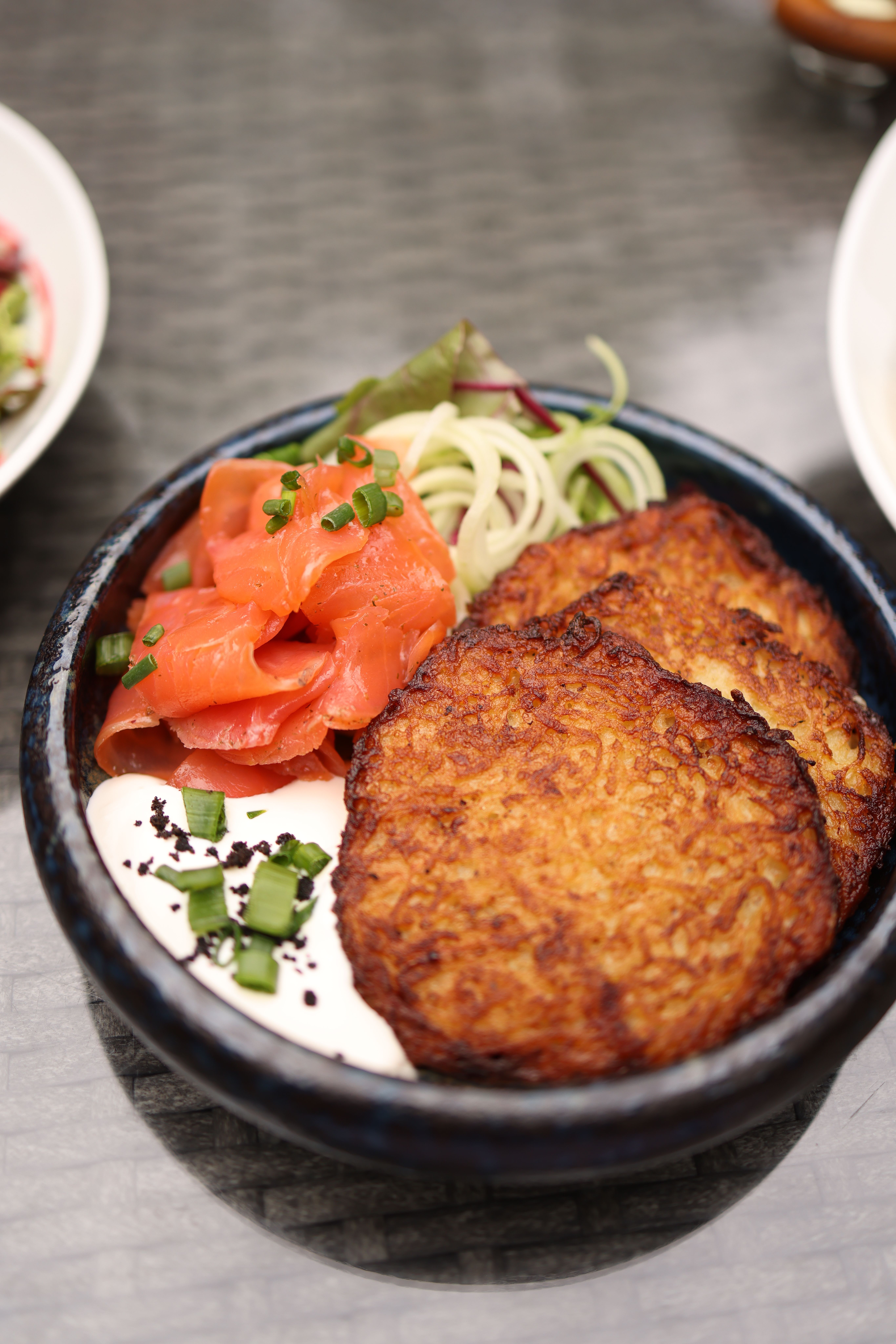
Photo: Valeria Boltneva / Pexels
The diets react (see scores below)
Common Ingredients
- potatoes
- butter
- salt
- pepper
- oil
Specific recipes may vary.
Incompatible with 7 of 11 diets
Diet Ratings
Rösti is made almost entirely from potatoes, which are a high-starch vegetable with extremely high net carbs. A standard serving (150-200g) delivers approximately 25-35g of net carbs, and a full portion as a side dish can easily exceed the entire daily keto carb budget of 20-50g in one sitting. While butter and oil are keto-friendly fats, they cannot offset the massive carbohydrate load from the potatoes. Potatoes are a starchy vegetable explicitly excluded from the ketogenic diet with no meaningful portion workaround for a dish where potato is the sole primary ingredient.
Traditional Swiss rösti as listed contains butter, which is a dairy product derived from cow's milk and is strictly excluded from a vegan diet. All other ingredients — potatoes, salt, pepper, and oil — are fully plant-based. The dish itself is simple and would be easily made vegan by substituting butter with a plant-based fat (e.g., more oil, vegan margarine), but as listed with butter, it fails vegan compliance.
Rösti contains multiple problematic ingredients from a paleo perspective. Salt is explicitly excluded as an additive. Butter is a dairy product discouraged in strict paleo (particularly the Cordain school). The 'oil' ingredient is unspecified — if it is a seed oil (sunflower, canola, vegetable), it is a clear paleo violation; even if a compliant oil like ghee or coconut oil were used, the other issues remain. White potatoes are themselves debated in the paleo community. Taken together, the combination of added salt, dairy butter, unspecified oil, and white potatoes makes this dish a poor paleo choice in its traditional form, pushing it firmly into avoid territory.
Mark Sisson and modern paleo practitioners generally allow white potatoes, and some accept ghee as a butter substitute since casein and lactose are removed. If rösti were prepared with ghee or coconut oil, no added salt, and freshly ground pepper only, a small segment of the paleo community might rate it as caution rather than avoid — but this would require significant departure from the traditional recipe.
Rösti is a Swiss dish made primarily from potatoes, which are a whole plant-based food and acceptable in the Mediterranean diet. However, the traditional preparation uses butter as the primary fat rather than olive oil, which conflicts with the Mediterranean diet's emphasis on extra virgin olive oil as the principal fat source. The dish also involves frying, which can add significant fat. Potatoes themselves are not among the most emphasized vegetables in Mediterranean eating (legumes, leafy greens, and colorful vegetables are preferred), and they are starchy with a higher glycemic impact. The inclusion of some oil alongside butter is noted, but if that oil is not olive oil, it adds little mitigation. Overall, rösti can be acceptable occasionally as a side dish, especially if prepared with olive oil instead of butter, but it is not a Mediterranean staple.
Some Mediterranean coastal and rural traditions do include potato-based dishes cooked in olive oil, and if the oil used here is olive oil, this dish edges closer to acceptable. However, the canonical Swiss preparation with butter places it outside core Mediterranean fat principles, and modern clinical Mediterranean diet guidelines consistently emphasize olive oil over butter as a cooking fat.
Rösti is a Swiss potato dish with no animal protein and is made almost entirely from plant-derived ingredients. Potatoes are a starchy plant food explicitly excluded from the carnivore diet. The butter in the recipe is the only animal-derived ingredient, but it plays a minor role in a dish that is fundamentally plant-based. Salt is acceptable, but pepper is a plant spice, and the oil is almost certainly a plant-based oil. There is no meaningful animal nutrition here — no meat, no organ, no significant animal fat — making this dish incompatible with carnivore principles at any tier.
Rösti as traditionally made contains regular butter, which is a dairy product explicitly excluded on Whole30. The only dairy exception in the program is ghee or clarified butter — regular butter is not allowed. All other ingredients (potatoes, salt, pepper, oil) are fully Whole30-compliant. Additionally, rösti is essentially a pan-fried potato cake, which could be seen as edging toward the 'no recreating junk food' rule (hash browns/potato cakes), though potatoes themselves are approved foods. The decisive issue is the butter: if standard butter is replaced with ghee or simply omitted in favor of the cooking oil alone, the dish would become compliant.
Rösti is a simple Swiss potato dish made from potatoes, butter, oil, salt, and pepper — all of which are low-FODMAP ingredients. Potatoes are low-FODMAP at a standard serving (Monash rates them as low-FODMAP at 1 medium potato/150g). Butter is low-FODMAP as it is essentially fat with negligible lactose. Cooking oil, salt, and pepper contain no FODMAPs. There are no high-FODMAP ingredients such as onion, garlic, wheat, or lactose-containing dairy in this recipe. This dish is safe during the elimination phase at a standard serving size.
Rösti is made primarily from potatoes, which are a DASH-friendly vegetable rich in potassium and fiber. However, the preparation involves butter and oil for frying, adding saturated fat and total fat that DASH guidelines recommend limiting. The dish also uses salt, which contributes to sodium intake — the amount varies by preparation but is a concern for the low-sodium DASH target of <1,500mg/day. Potatoes themselves are not emphasized on DASH (which favors non-starchy vegetables), and the frying method increases caloric density. As an occasional side dish with modest butter and salt, rösti is acceptable in moderation, but it is not a core DASH food. A lighter preparation using less butter, minimal salt, and a heart-healthy oil (e.g., olive or canola) would score higher.
NIH DASH guidelines emphasize low-fat cooking methods and limiting saturated fat, which would flag butter-fried potato dishes as suboptimal. However, updated clinical interpretations note that potatoes are a potassium-rich whole food, and some DASH practitioners consider modest amounts of butter acceptable if overall saturated fat intake stays within daily limits — preparation modifications (e.g., using olive oil instead of butter, reducing salt) can align rösti more closely with DASH principles.
Rösti is essentially a fried potato cake, and potatoes are explicitly listed as an 'unfavorable' high-glycemic carbohydrate in Dr. Sears' Zone Diet framework. Potatoes rank high on the glycemic index, causing rapid insulin spikes that directly oppose the Zone's core goal of hormonal balance. The dish also contains butter (saturated fat) and oil used for frying, offering no lean protein component and a fat profile dominated by saturated fat rather than the preferred monounsaturated fats. As a side dish with no protein, it provides no Zone-friendly protein block contribution. The macro profile is almost entirely high-GI carbohydrates and saturated fat — the worst combination for Zone balance. While small portions could theoretically be incorporated as a minor carb block, the glycemic impact per gram of carbohydrate makes this extremely difficult to fit into a Zone-compliant meal without severely limiting the portion to a few bites, rendering the dish functionally impractical for Zone eating.
Rösti is a simple Swiss potato dish with a mixed anti-inflammatory profile. Potatoes themselves are a moderate-glycemic whole food with some beneficial nutrients (vitamin C, potassium, resistant starch when cooled), but their high starch content can contribute to blood sugar spikes, which is a mild pro-inflammatory concern. The bigger issue is the cooking fat: butter is a saturated fat that anti-inflammatory frameworks generally recommend limiting, and the unspecified 'oil' is critical — if it's extra virgin olive oil, that would be favorable; if it's a refined seed oil (sunflower, vegetable), that tips the dish toward more pro-inflammatory territory. The dish has no significant anti-inflammatory positives (no omega-3s, antioxidant-rich vegetables, herbs, or polyphenols), though black pepper adds a minor benefit (piperine). Salt is a neutral ingredient at typical culinary amounts. Overall, this is a starchy, butter-cooked side dish — not actively harmful in moderation but offering little anti-inflammatory value and some concerns around saturated fat and glycemic load.
Some anti-inflammatory practitioners (following Dr. Weil's broader pyramid approach) would consider occasional whole-food potato dishes acceptable given potatoes' nutrient density and fiber, especially if cooled after cooking to increase resistant starch content. However, those following stricter anti-inflammatory or autoimmune protocols (AIP, nightshade-free frameworks) may flag potatoes as a nightshade and exclude them entirely due to solanine content and potential reactivity in sensitive individuals.
Rösti is a pan-fried potato cake made primarily with butter and oil, offering virtually no protein, minimal fiber (potato skin is largely absent in the classic preparation), and a significant fat load from the cooking fats. This combination is poorly suited for GLP-1 patients on multiple fronts: the high fat content worsens nausea, bloating, and reflux by further slowing already-delayed gastric emptying; the absence of protein does nothing to protect lean muscle mass during rapid weight loss; and the refined starch from peeled, shredded potato delivers a high glycemic load with low nutrient density per calorie. As a side dish with no primary protein, it contributes empty starch calories at a time when every bite must count nutritionally. The frying method (butter plus oil) pushes it firmly into the avoid category rather than merely caution.
*See how scores were generated at our methodology page.
Nutritional profile
Six traits that cut across every diet.
Fiber & Plants
How much whole-plant food and fiber it delivers.
Healthy Fats
The quality of its fats (unsaturated, omega-3).
Whole / Unprocessed
How close it is to its natural, unprocessed form.
Gut Gentle
How easy it is on digestion (low FODMAP, few irritants).
Low Glycemic
How little it spikes your blood sugar.
Protein Density
How much protein it packs per calorie.
Controversy Index
Higher controversy = more disagreement between diets.
Diet-Specific Tips
 Mediterranean — 4/10
View tips
- Potatoes are a whole plant food but not a Mediterranean diet staple vegetable
- Butter as primary fat conflicts with olive oil-centric Mediterranean fat principles
- Frying method adds significant saturated fat from butter
- Not a traditional Mediterranean dish — Swiss origin
- Could be improved significantly by substituting olive oil for butter
- No legumes, leafy greens, or other core Mediterranean plant foods included
 Low-FODMAP — 9/10
View tips
- Potatoes are low-FODMAP at standard servings (up to ~150g per Monash)
- Butter contains negligible lactose and is considered low-FODMAP
- Cooking oil, salt, and black pepper are FODMAP-free
- No onion, garlic, or other high-FODMAP aromatics in this traditional recipe
- All five ingredients are well-tested by Monash University with clear low-FODMAP status
 DASH — 5/10
View tips
- Potatoes are potassium-rich and DASH-compatible as a whole food
- Butter adds saturated fat, which DASH limits
- Frying in oil increases total fat and caloric density
- Salt content is a sodium concern, especially for low-sodium DASH (<1,500mg/day)
- Non-starchy vegetables are preferred over starchy ones on DASH
- Preparation method (butter vs. olive oil, salt quantity) significantly affects DASH compatibility
 Anti-Inflammatory — 4/10
View tips
- Potatoes are a whole food but high-glycemic starch with limited anti-inflammatory benefit
- Butter is a saturated fat — anti-inflammatory frameworks recommend limiting it
- Unspecified oil is a key variable: EVOO would improve the rating; refined seed oils would worsen it
- No omega-3s, antioxidants, polyphenols, or other anti-inflammatory compounds present
- Nightshade concern for autoimmune-sensitive individuals (potatoes contain solanine)
- Moderate portion as an occasional side dish is unlikely to cause significant inflammatory harm