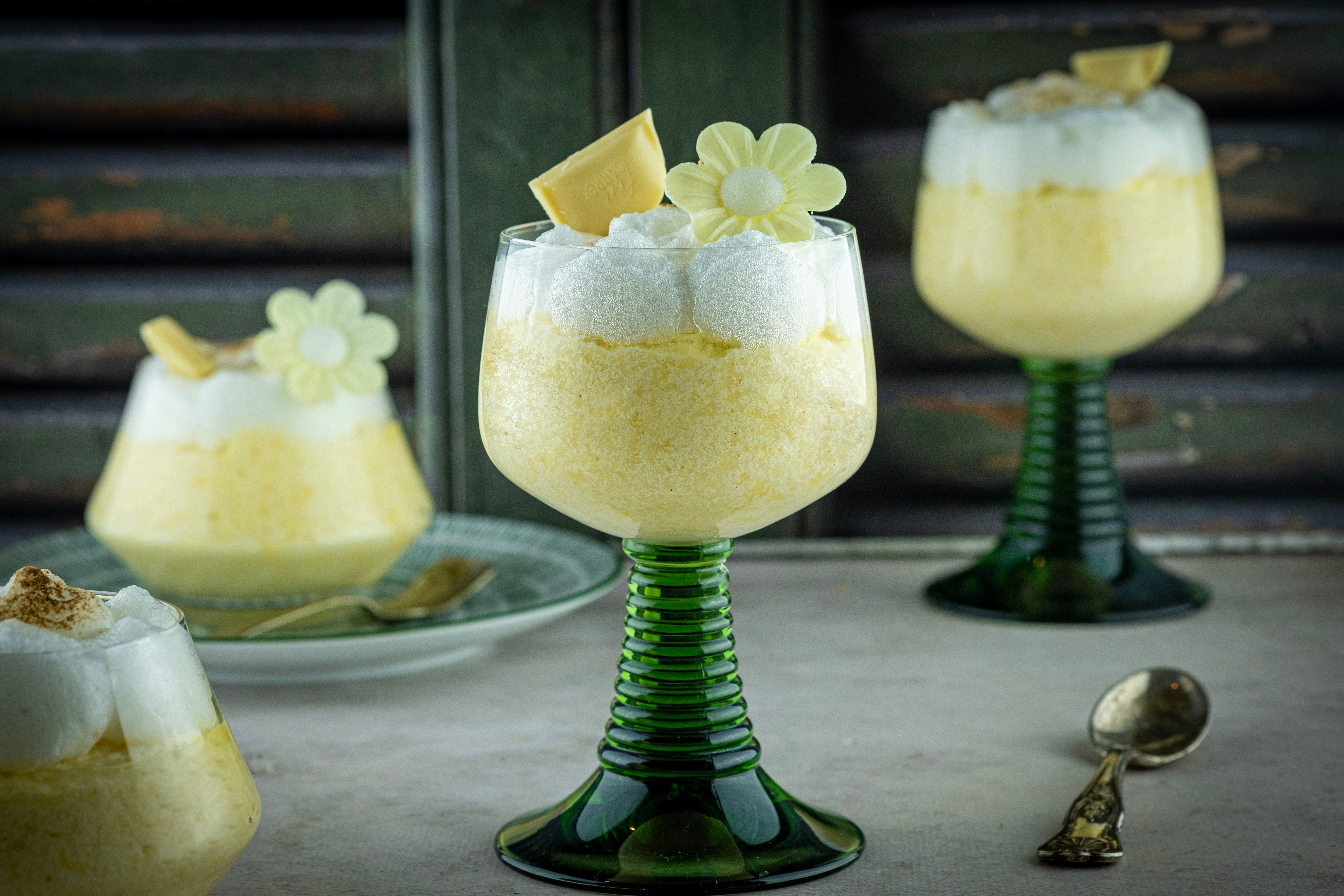
Photo: Elsa silva / Pexels
The diets react (see scores below)
Common Ingredients
- heavy cream
- milk
- white wine
- sugar
- lemon juice
- nutmeg
Specific recipes may vary.
Incompatible with 11 of 11 diets
Diet Ratings
Syllabub is fundamentally incompatible with a ketogenic diet in its traditional form. The dish contains two major keto-breaking ingredients: added sugar (a direct keto violation with zero tolerance) and white wine (which contributes residual sugars and carbohydrates). Milk adds further lactose-based carbs on top of the wine and sugar. While heavy cream is keto-friendly, it cannot offset the combined carb load from sugar, wine, and milk. A standard serving of syllabub could easily contain 20-30g of net carbs, potentially consuming or exceeding an entire day's carb allowance in a single snack. There is no meaningful way to consume a traditional syllabub within keto macros without fundamentally reformulating the recipe.
Syllabub is a traditional British dessert made primarily from heavy cream and milk, both of which are dairy products derived from animals. These are core animal-derived ingredients that are unambiguously excluded from a vegan diet. There is no plant-based version of this dish implied by the listed ingredients, and the primary protein is explicitly identified as dairy. The remaining ingredients (white wine, sugar, lemon juice, nutmeg) are plant-based, but the foundational dairy components make this dish entirely incompatible with veganism.
Syllabub is fundamentally incompatible with the Paleo diet. It is built on heavy cream and milk — both are dairy products explicitly excluded from Paleo. Sugar (refined) is a core ingredient and is firmly on the avoid list. White wine, while derived from grapes, is an alcoholic processed beverage. The only Paleo-compatible elements are lemon juice and nutmeg. The dish's foundation — dairy and refined sugar — makes it a clear avoid with no meaningful gray area.
Syllabub is a traditional British dessert/snack made primarily of heavy cream whipped with sugar, wine, and lemon juice. It is heavily centered on high-fat dairy (heavy cream and milk) with added sugar — both of which conflict with core Mediterranean diet principles. Heavy cream is high in saturated fat and is not a feature of Mediterranean eating; olive oil is the canonical fat source. Added sugar and a sugar-forward preparation further push this dish away from Mediterranean ideals. While wine and lemon juice are individually compatible with Mediterranean flavors, they function here as sweetened, indulgent dessert components rather than culinary staples. The dish is also of British origin with no Mediterranean tradition behind it.
Some Mediterranean diet interpreters note that dairy — including richer dairy products — appears in moderate amounts in certain regional traditions (e.g., Greek yogurt, Italian cream-based dishes). A small portion of syllabub could technically fit within the 'occasional dairy' allowance, and the wine and lemon components are Mediterranean-adjacent. However, the high saturated fat content from heavy cream combined with significant added sugar makes even moderate consumption difficult to justify under most Mediterranean diet frameworks.
Syllabub is fundamentally incompatible with the carnivore diet. While it does contain heavy cream and milk (animal-derived dairy), the dish is loaded with multiple strictly prohibited ingredients: white wine (plant/fermented), sugar (processed plant-derived sweetener), lemon juice (fruit/plant-derived), and nutmeg (plant spice). Even the dairy components are debated on carnivore, but the combination of alcohol, sugar, citrus, and spice makes this an unambiguous avoid. This is essentially a dessert drink built on plant-based and processed ingredients with dairy as a secondary component. No tier of carnivore — not even the most lenient 'animal-based' approach — would sanction sugar, wine, lemon juice, and nutmeg together.
Syllabub contains multiple excluded ingredients that make it clearly non-compliant with Whole30. Heavy cream and milk are dairy products (excluded), white wine is alcohol (excluded), and sugar is an added sweetener (excluded). Three separate rule violations exist simultaneously, making this dish definitively off-limits on the Whole30 program.
Syllabub contains several ingredients that are individually manageable on a low-FODMAP diet, but the combination and typical serving sizes introduce risk. Heavy cream is low-FODMAP in standard portions (up to 60ml) as it is very low in lactose. White wine is low-FODMAP in moderate amounts (up to 150ml). Sugar and lemon juice are low-FODMAP. Nutmeg is low-FODMAP in culinary quantities. The primary concern is milk: regular cow's milk is high in lactose and high-FODMAP even at small servings during elimination. Syllabub recipes typically include milk alongside cream, and the lactose load from milk — even in modest amounts — can trigger symptoms. A syllabub made with lactose-free milk or omitting the milk component could be low-FODMAP, but as written with standard milk, the dish warrants caution. Additionally, generous cream portions (above 60ml) can accumulate lactose risk when combined with any milk.
Monash University rates heavy cream as low-FODMAP at up to 60ml, and some FODMAP practitioners note that syllabub-style desserts can be tolerated if lactose-free milk is substituted. However, clinical FODMAP dietitians typically advise avoiding standard milk entirely during elimination, making this dish higher-risk without modification.
Syllabub is a traditional British dessert made primarily from heavy cream, which is high in saturated fat — a nutrient explicitly limited by DASH guidelines. The added sugar contributes empty calories with no nutritional benefit aligned with DASH principles. White wine adds alcohol, which DASH recommends limiting. The combination of full-fat dairy (heavy cream rather than the recommended fat-free or low-fat dairy), significant added sugar, and alcohol makes this dish fundamentally incompatible with the DASH eating plan. While lemon juice and nutmeg are DASH-friendly ingredients, they are minor components that do not offset the core nutritional concerns.
Syllabub is a traditional British dessert whip made primarily from heavy cream, sugar, and white wine — a combination that is deeply problematic from a Zone Diet perspective. The macronutrient profile is almost entirely fat (predominantly saturated fat from heavy cream) and simple carbohydrates (sugar, wine), with virtually no protein. This creates a macro ratio that is essentially the inverse of the Zone ideal: it is high-fat, high-glycemic carb, and near-zero protein. Sugar is a high-glycemic carbohydrate that Sears explicitly identifies as unfavorable. Heavy cream is high in saturated fat, which the Zone limits. There is no lean protein source to balance the meal. Even with careful portioning, there is no practical way to incorporate syllabub as a snack or meal component while achieving anything close to 40/30/30. It would need to be paired with a very large serving of lean protein and low-GI vegetables, at which point the syllabub itself contributes almost nothing useful to the Zone equation. The lemon juice and nutmeg are negligible nutritionally. This is one of the rare cases where the food genuinely resists Zone incorporation.
Syllabub is a traditional British dessert built almost entirely on ingredients that are problematic from an anti-inflammatory standpoint. Heavy cream is high in saturated fat, which is consistently flagged as pro-inflammatory in anti-inflammatory nutrition frameworks. Added sugar is a primary driver of inflammatory markers like CRP and IL-6, and it features prominently here. White wine, while alcohol, lacks the resveratrol concentration of red wine that earns moderate acceptance in some anti-inflammatory frameworks (e.g., Dr. Weil's pyramid), making it a less defensible inclusion. Milk adds additional saturated fat with minimal anti-inflammatory benefit in this context. Lemon juice provides a small amount of vitamin C and antioxidants, and nutmeg contributes trace anti-inflammatory compounds, but these are minor positives that cannot offset the heavily pro-inflammatory foundation of the dish. The combination of full-fat dairy plus added sugar in a dessert-style preparation is precisely the dietary pattern anti-inflammatory protocols aim to minimize. Occasional indulgence may be acceptable for generally healthy individuals, but this dish offers no meaningful anti-inflammatory value and several clear liabilities.
Syllabub is fundamentally incompatible with GLP-1 dietary guidelines. The primary ingredient is heavy cream, which is extremely high in saturated fat and will significantly worsen GLP-1 side effects including nausea, bloating, and reflux — especially problematic given that GLP-1 medications slow gastric emptying, meaning high-fat foods sit in the stomach even longer than usual. White wine adds alcohol and empty calories. Sugar contributes further empty calories with no nutritional benefit. The dish offers virtually no protein, no fiber, and no meaningful micronutrients. As a snack, it fails on every priority criterion: it is low-protein, zero-fiber, high-fat, high-sugar, contains alcohol, and provides empty calories with no nutrient density. Even a small portion delivers a problematic combination of heavy cream and alcohol that is likely to trigger or worsen GI side effects.
*See how scores were generated at our methodology page.
Nutritional profile
Six traits that cut across every diet.
Fiber & Plants
How much whole-plant food and fiber it delivers.
Healthy Fats
The quality of its fats (unsaturated, omega-3).
Whole / Unprocessed
How close it is to its natural, unprocessed form.
Gut Gentle
How easy it is on digestion (low FODMAP, few irritants).
Low Glycemic
How little it spikes your blood sugar.
Protein Density
How much protein it packs per calorie.
Controversy Index
Higher controversy = more disagreement between diets.