Syrian
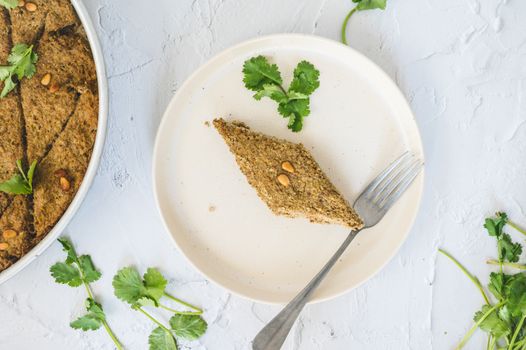
Kibbeh bil Sanieh
The diets react (see scores below)
Common Ingredients
- bulgur
- lamb
- onion
- pine nuts
- allspice
- cinnamon
- pomegranate molasses
- butter
Specific recipes may vary.
Incompatible with 7 of 11 diets
Diet Ratings
Kibbeh bil Sanieh is fundamentally incompatible with ketogenic diet principles. The primary structural ingredient is bulgur wheat, a whole grain that is extremely high in net carbs (roughly 25-30g net carbs per 100g cooked). A standard serving of this dish would deliver well in excess of a full day's keto carb allowance from the bulgur alone. Pomegranate molasses compounds the problem significantly, being a concentrated sugar syrup with very high sugar content. Together, these two ingredients make this dish an unambiguous keto violation. The lamb, pine nuts, butter, and spices are individually keto-friendly, but they cannot redeem a dish whose foundational ingredient is a high-glycemic grain. There is no realistic portion size that would render this dish compatible with ketosis.
Kibbeh bil Sanieh contains two clear animal products: lamb (meat) and butter (dairy). Both are categorically excluded from a vegan diet. Lamb is directly animal flesh, and butter is an animal-derived dairy product. The remaining ingredients — bulgur, onion, pine nuts, allspice, cinnamon, and pomegranate molasses — are all plant-based, but the presence of lamb and butter makes this dish entirely incompatible with vegan eating. There is no ambiguity here.
Kibbeh bil Sanieh is fundamentally incompatible with the paleo diet. Bulgur wheat — a processed whole grain — is the core structural ingredient of this dish, and grains are among the most clearly excluded foods in paleo across all major authorities (Cordain, Sisson, Wolf). Bulgur contains gluten, phytates, and lectins that the paleo framework explicitly aims to eliminate. Butter is also a dairy product excluded under strict paleo guidelines. Pomegranate molasses may contain added sugar depending on the preparation. The paleo-compliant ingredients — lamb, onion, pine nuts, allspice, cinnamon — are entirely acceptable, but the dish cannot be meaningfully prepared without its defining grain base, making it a clear avoid.
Kibbeh bil Sanieh is a traditional Syrian baked dish that combines bulgur (a positive whole grain element) with lamb as the primary protein and butter as the cooking fat. While bulgur, onion, pine nuts, and spices like allspice and cinnamon align well with Mediterranean principles, the dominant issues are the use of lamb (red meat) as the primary protein and butter as the fat source rather than olive oil. Mediterranean diet guidelines restrict red meat to a few times per month, and butter contradicts the foundational principle that extra virgin olive oil is the primary fat. The pomegranate molasses adds minimal sugar, which is not a major concern, and pine nuts are a welcome nut component. However, the combination of red meat and butter in meaningful quantities pushes this dish clearly into 'avoid' territory for regular consumption.
Traditional Levantine and Eastern Mediterranean cuisines, including Syrian cooking, have historically used lamb and clarified butter as culinary staples, and some Mediterranean diet scholars argue that the diet should be understood regionally rather than prescriptively — meaning occasional lamb dishes prepared with whole grains and vegetables, as in this dish, represent a legitimate Mediterranean tradition. The bulgur base and aromatic spices also align with the broader dietary pattern, and some practitioners would rate this as 'caution' rather than 'avoid' if consumed infrequently.
Kibbeh bil Sanieh is fundamentally incompatible with the carnivore diet. The dish is built around bulgur wheat as a primary structural ingredient — a grain that is entirely excluded on carnivore. Additional plant-based components include onion, pine nuts, allspice, cinnamon, and pomegranate molasses, all of which violate carnivore principles. While lamb and butter are carnivore-approved ingredients, they are minority components in a dish whose foundation is plant-derived. No modification short of a complete recipe overhaul would make this dish carnivore-compatible.
Kibbeh bil Sanieh contains two clearly excluded ingredients: bulgur (a cracked wheat grain, excluded as a grain) and butter (regular dairy butter, excluded — only ghee/clarified butter is permitted). Pomegranate molasses may also contain added sugar depending on the brand. Any single one of these violations is sufficient to make this dish non-compliant with Whole30 rules.
Kibbeh bil Sanieh contains multiple high-FODMAP ingredients that make it unsuitable during the elimination phase. Bulgur wheat is made from whole wheat and is high in fructans — a primary FODMAP concern. Onion is one of the highest-FODMAP foods tested by Monash University, rich in fructans, and is central to kibbeh's flavor profile rather than used in trace amounts. Pomegranate molasses, a concentrated reduction of pomegranate juice, is high in excess fructose at typical serving sizes. Butter is generally low-FODMAP (fat, not lactose), lamb and pine nuts are low-FODMAP at standard servings, and spices like allspice and cinnamon are low-FODMAP in culinary quantities. However, three high-FODMAP components (bulgur, onion, pomegranate molasses) make this dish a clear avoid during elimination.
Kibbeh bil Sanieh presents a mixed DASH profile. On the positive side, bulgur is an excellent whole grain rich in fiber and magnesium — a core DASH food. Onion, pine nuts, allspice, cinnamon, and pomegranate molasses contribute beneficial micronutrients, antioxidants, and potassium with minimal sodium. However, several factors pull it toward caution: lamb is red meat, which DASH explicitly limits due to its saturated fat content. Butter adds saturated fat, compounding the concern. Pine nuts are healthy unsaturated fats consistent with DASH but are calorie-dense. The dish is not high in sodium by default (no added salt listed), which is a plus. The primary tension is the combination of lamb (red meat) and butter, both of which DASH advises limiting. If lamb is used in a modest portion (3 oz or less) and butter is minimized or replaced with olive oil, this dish becomes more DASH-compatible. As commonly prepared, it warrants caution rather than avoidance because the bulgur base and spice-forward profile offset some of the saturated fat concerns.
NIH DASH guidelines categorically limit red meat and saturated fats, which would push this dish toward a lower score. However, some updated DASH-aligned clinicians note that lean lamb in small portions within an otherwise plant-forward, whole-grain-based dish can fit within weekly red meat allowances, and that the anti-inflammatory spices and pomegranate molasses may confer additional cardiovascular benefit not captured in traditional DASH scoring.
Kibbeh bil Sanieh presents several Zone Diet challenges. The dish is primarily built around bulgur wheat as its carbohydrate source — while bulgur is a whole grain with moderate glycemic index (lower than white rice or bread), Zone methodology treats grains as largely 'unfavorable' carbs and limits them to 0-1 servings/day. Lamb is the protein source, but it is a fatty red meat rather than a lean Zone-preferred protein (skinless chicken, fish, egg whites), carrying significant saturated fat. Butter adds additional saturated fat, compounding the issue. Pine nuts do provide some monounsaturated fat value, but are also calorie-dense. Pomegranate molasses is concentrated sugar, pushing the glycemic load higher. On the positive side, bulgur does provide fiber that reduces net carbs, onions are a Zone-favorable vegetable, and pomegranate polyphenols align with Sears' anti-inflammatory focus. The core problem is that this dish's macronutrient profile skews away from 40/30/30 — the bulgur base is carbohydrate-heavy, the lamb and butter load saturated fat rather than monounsaturated fat, and the fat-to-protein ratio is likely inverted from Zone ideals. With careful portion control (small serving alongside a large salad to shift the meal balance) it can be incorporated, but in its traditional form it is difficult to fit cleanly into Zone blocks.
Some Zone practitioners in later Sears' anti-inflammatory framework would note that bulgur's relatively low glycemic index and high fiber content make it more acceptable than refined grains, and that lamb in moderate portions does provide complete protein. Pomegranate polyphenols are specifically highlighted in Sears' later writings (The OmegaRx Zone) as beneficial for eicosanoid balance. A small portion of kibbeh paired with a large vegetable base could approximate Zone ratios, making it a 'caution' rather than 'avoid' in practical meal planning.
Kibbeh bil Sanieh presents a mixed anti-inflammatory profile. On the positive side, bulgur is a whole grain with fiber and a moderate glycemic index, supporting gut health and reducing inflammatory markers. Pine nuts provide some anti-inflammatory monounsaturated fats and vitamin E. Allspice and cinnamon are spices with documented antioxidant and anti-inflammatory properties (eugenol in allspice, cinnamaldehyde in cinnamon). Onion contributes quercetin, a potent anti-inflammatory flavonoid. Pomegranate molasses, while concentrated and high in sugar, retains polyphenols (punicalagins, ellagic acid) with meaningful anti-inflammatory activity — though the added sugar load is a concern. On the negative side, lamb is red meat, which the anti-inflammatory framework flags for its saturated fat content (stearic and palmitic acids) and potential to raise inflammatory arachidonic acid levels with regular consumption. Butter adds saturated fat and is explicitly in the 'limit' category. Together, lamb and butter create a notable saturated fat burden that partially offsets the beneficial ingredients. This dish is not inherently harmful in the context of an otherwise anti-inflammatory diet, but the combination of red meat and butter makes it a moderate-consumption food rather than an endorsement.
Some anti-inflammatory researchers, including those aligned with traditional Mediterranean and Middle Eastern diet research, would note that lamb consumed in traditional portions with spice-rich preparations and whole grains (as here) is consistent with dietary patterns associated with lower chronic disease rates in the Levant — and that the demonization of red meat in an anti-inflammatory context may overweight isolated nutrient analysis over dietary pattern evidence. Conversely, stricter anti-inflammatory protocols (such as those by Dr. Frank Sacks or anti-inflammatory oncology nutrition guidelines) would flag the lamb-plus-butter combination as meaningfully pro-inflammatory and recommend limiting this dish to occasional consumption.
Kibbeh bil Sanieh is a baked Syrian casserole combining bulgur wheat and ground lamb, which offers a mixed nutritional profile for GLP-1 patients. On the positive side, bulgur contributes meaningful fiber (~4-5g per cup cooked) and the lamb provides complete protein. However, several factors work against it: lamb is a relatively fatty red meat with notable saturated fat content, and the dish is traditionally prepared with added butter, which further raises the saturated fat load. Pine nuts add additional fat (predominantly healthy unsaturated fat, but calorie-dense). The overall fat content per serving is likely too high for comfortable digestion on a GLP-1 medication, where slowed gastric emptying makes high-fat meals particularly prone to triggering nausea, bloating, and reflux. Pomegranate molasses adds a small amount of sugar. The spices (allspice, cinnamon) are GLP-1-friendly. Protein yield is moderate but diluted by the bulgur and fat content, making protein density per calorie suboptimal. A typical serving may provide 18-22g protein alongside 15-25g fat depending on preparation ratios and portion size, which is borderline for GLP-1 tolerance. It is not an avoid because it contains whole grain fiber, real food ingredients, and meaningful protein — but it needs modification (leaner lamb, butter reduced or omitted, smaller portion) to be reliably tolerable.
Some GLP-1-focused dietitians would allow traditional kibbeh bil sanieh in small portions, noting that lamb's protein and bulgur's fiber together support satiety and that baking (vs. frying) makes it more digestible than many red meat dishes; others would caution more firmly against it due to saturated fat from both lamb and butter consistently worsening GI side effects in clinical practice, particularly in the early weeks of GLP-1 therapy.
*See how scores were generated at our methodology page.
Nutritional profile
Six traits that cut across every diet.
Fiber & Plants
How much whole-plant food and fiber it delivers.
Healthy Fats
The quality of its fats (unsaturated, omega-3).
Whole / Unprocessed
How close it is to its natural, unprocessed form.
Gut Gentle
How easy it is on digestion (low FODMAP, few irritants).
Low Glycemic
How little it spikes your blood sugar.
Protein Density
How much protein it packs per calorie.
Controversy Index
Higher controversy = more disagreement between diets.
Diet-Specific Tips
 DASH — 5/10
View tips
- Bulgur is a DASH-approved whole grain high in fiber and magnesium
- Lamb is red meat, explicitly limited in DASH guidelines due to saturated fat
- Butter adds additional saturated fat, compounding cardiovascular concern
- No high-sodium ingredients listed — favorable for blood pressure management
- Pine nuts provide DASH-friendly unsaturated fats but are calorie-dense
- Pomegranate molasses adds potassium and antioxidants with moderate natural sugar
- Substituting olive oil for butter and limiting lamb portion would significantly improve DASH compatibility
 Zone — 4/10
View tips
- Bulgur is a whole grain — Zone classifies grains as 'unfavorable' carbs, limited to 0-1 servings/day
- Lamb is a fatty red meat, not a lean Zone-preferred protein; saturated fat content is a concern
- Butter adds additional saturated fat, conflicting with Zone's preference for monounsaturated fats
- Pomegranate molasses is concentrated sugar, raising glycemic load
- Pine nuts provide beneficial monounsaturated fat, partially offsetting fat quality concerns
- Bulgur's fiber content reduces net carbs, partially redeeming its carb block value
- Pomegranate polyphenols are anti-inflammatory and align with Sears' later writings
- Traditional portion sizes likely exceed Zone protein and fat block limits significantly
 Anti-Inflammatory — 5/10
View tips
- Lamb (red meat): elevated saturated fat, arachidonic acid precursors — 'limit' category
- Butter: saturated fat contributor, explicitly in 'limit' category for anti-inflammatory diets
- Bulgur (whole grain): fiber, moderate GI, supports gut microbiome and reduces CRP
- Pine nuts: monounsaturated fats, vitamin E, mild anti-inflammatory benefit
- Allspice and cinnamon: eugenol and cinnamaldehyde with antioxidant/anti-inflammatory activity
- Onion: quercetin (flavonoid) with documented anti-inflammatory properties
- Pomegranate molasses: punicalagins and ellagic acid are anti-inflammatory, but high sugar concentration is a concern
 GLP-1 Friendly — 4/10
View tips
- Lamb is a fatty red meat with higher saturated fat than GLP-1-preferred proteins like chicken, turkey, or fish
- Butter adds additional saturated fat, worsening digestive tolerance
- Slowed gastric emptying on GLP-1s makes high-fat meals a significant nausea and reflux risk
- Bulgur provides whole-grain fiber (~4-5g per serving), a genuine positive
- Pine nuts contribute healthy unsaturated fats but are calorie-dense and add to overall fat load
- Protein content is moderate but protein density per calorie is diluted by fat and grain content
- Spices (allspice, cinnamon) are well-tolerated and GLP-1 safe
- Pomegranate molasses adds minor sugar — not a major concern at typical recipe quantities
- Baked preparation is preferable to fried versions but fat content remains a concern
- Portion size is critical — a small serving is far more tolerable than a standard full portion