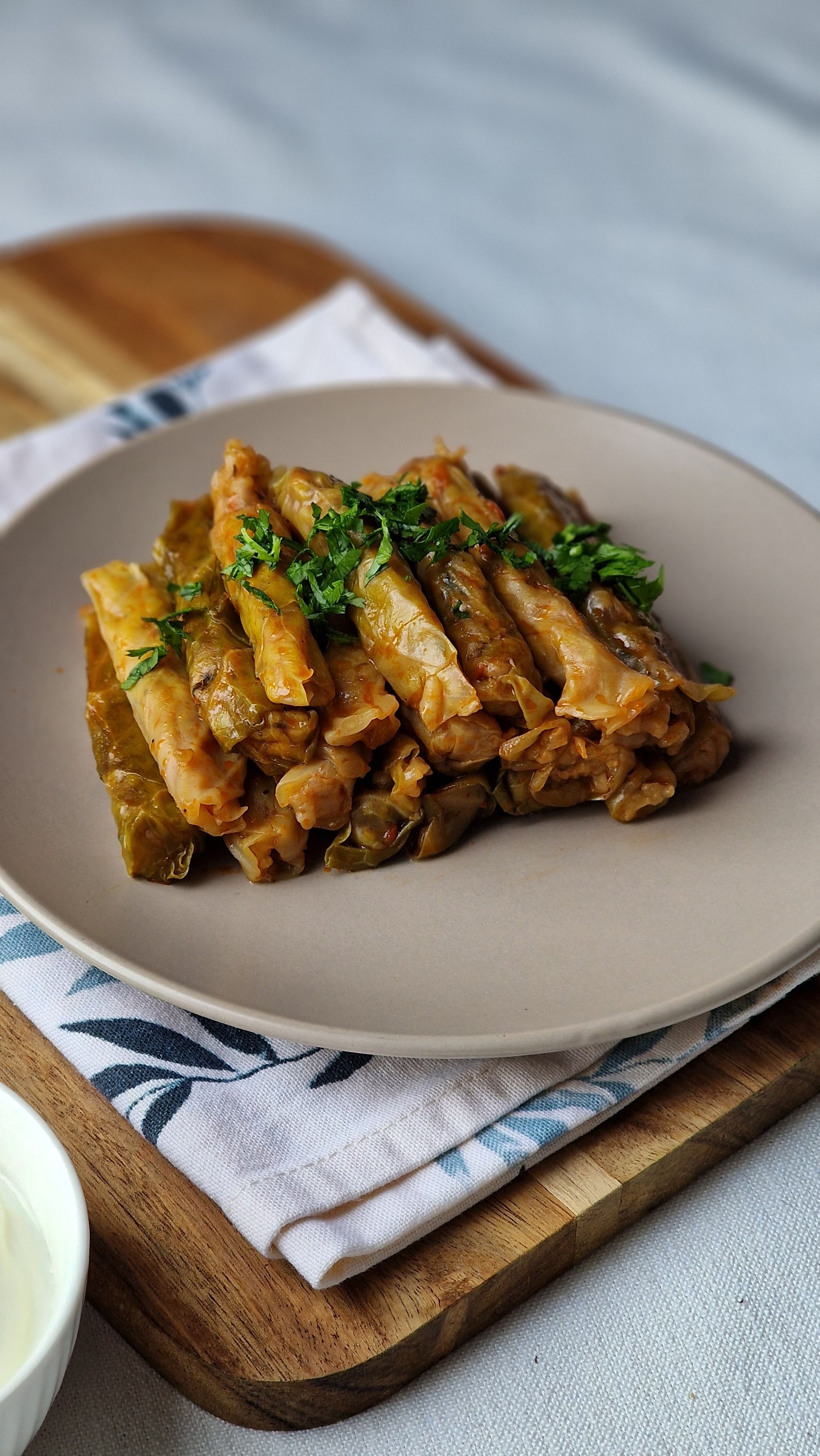
Photo: Nour Alhoda / Pexels
The diets react (see scores below)
Common Ingredients
- grape leaves
- lamb
- rice
- onion
- parsley
- mint
- lemon
- olive oil
Specific recipes may vary.
Incompatible with 6 of 11 diets
Diet Ratings
Yabrak (Syrian stuffed grape leaves) is fundamentally incompatible with a ketogenic diet due to the rice filling, which is a high-carb grain. A standard serving of 4-6 stuffed grape leaves contains roughly 20-35g of net carbs from rice alone, easily exceeding or consuming an entire day's keto carb allowance. While grape leaves themselves are low-carb, and lamb and olive oil are keto-friendly, the rice is a core structural ingredient that cannot be reduced to a token amount without fundamentally changing the dish. The dish is not salvageable in its traditional form for keto.
Yabrak (Syrian stuffed grape leaves) contains lamb as a primary protein, which is an animal product and therefore incompatible with a vegan diet. There is no ambiguity here — lamb is meat, and its inclusion makes this dish clearly non-vegan. The remaining ingredients (grape leaves, rice, onion, parsley, mint, lemon, olive oil) are all plant-based, so a vegan adaptation would be possible by simply omitting the lamb or substituting with lentils, chickpeas, or additional vegetables.
Yabrak (Syrian stuffed grape leaves) contains rice as a central filling ingredient, which is a grain and explicitly excluded from the paleo diet. While several components are paleo-approved — lamb (excellent protein source), grape leaves (a whole plant food), onion, parsley, mint, lemon, and olive oil are all paleo-friendly — the rice disqualifies this dish entirely. The grain exclusion is one of the most fundamental and unambiguous rules of the paleo framework, making this dish incompatible regardless of the otherwise high-quality ingredients surrounding it.
Yabrak (Syrian stuffed grape leaves) features several Mediterranean-friendly ingredients — grape leaves, olive oil, lemon, parsley, mint, and onion are all staples of the diet. However, lamb as the primary protein is red meat, which the Mediterranean diet limits to a few times per month. The rice filling is refined/white, which is less preferred than whole grains in modern Mediterranean guidelines. The dish is whole and minimally processed with no added sugars, which works in its favor. Overall, it sits in the caution zone: a traditional Levantine dish with strong Mediterranean roots, but the lamb content and white rice pull it away from core daily staples.
In traditional Levantine and broader Eastern Mediterranean culinary practice, dishes like yabrak are considered wholesome home cooking and are consumed regularly in modest portions. Some Mediterranean diet researchers, particularly those studying regional variations in Syria, Lebanon, and Greece (where similar dolmades exist), argue that lamb used in small quantities as a flavoring within a predominantly plant-based wrap is consistent with the spirit of the diet, especially when paired with olive oil and herbs.
Yabrak is a Syrian stuffed grape leaves dish that is fundamentally incompatible with the carnivore diet. While it does contain lamb as a protein source, it is heavily plant-dominant: grape leaves serve as the wrapper, rice is a grain-based filler, and the filling is seasoned with onion, parsley, mint, and lemon juice, all of which are plant foods. Olive oil is a plant-derived fat. The only carnivore-acceptable component is the lamb itself. This dish is essentially a vehicle for grains and vegetables with a small amount of meat — the inverse of what carnivore requires. There is no version of this dish that could be considered carnivore-compliant without a complete reconstruction that removes every ingredient except the lamb.
Yabrak (Syrian stuffed grape leaves) contains rice, which is a grain explicitly excluded from the Whole30 program. Rice is listed by name in the excluded grains category alongside wheat, oats, corn, quinoa, and others. All other ingredients in this dish — grape leaves, lamb, onion, parsley, mint, lemon, and olive oil — are fully Whole30 compliant, but the inclusion of rice as a core stuffing ingredient makes this dish non-compliant as traditionally prepared.
Yabrak (Syrian stuffed grape leaves) contains two significant high-FODMAP ingredients that make it unsuitable during the elimination phase. Onion is one of the most concentrated sources of fructans and is high-FODMAP even in very small amounts — it is essentially impossible to make a traditional version of this dish without enough onion to trigger symptoms. Grape leaves themselves have not been extensively tested by Monash University, adding uncertainty. The remaining ingredients (lamb, rice, parsley, mint, lemon, olive oil) are all individually low-FODMAP and safe. However, the onion alone is sufficient to classify this dish as high-FODMAP at any standard serving. Even if onion were omitted or replaced with the green tops of spring onions, the grape leaves' FODMAP status remains uncertain. As traditionally prepared, this dish should be avoided during the elimination phase.
Yabrak (Syrian stuffed grape leaves) is a mixed dish from a DASH perspective. Several ingredients are DASH-friendly: grape leaves are a vegetable rich in fiber and micronutrients, olive oil is a heart-healthy unsaturated fat, lemon juice adds flavor without sodium, and herbs like parsley and mint are nutrient-dense. Rice provides whole-grain-adjacent carbohydrates. However, lamb is a red meat with notable saturated fat content, which DASH guidelines recommend limiting. The dish's overall saturated fat load depends heavily on how fatty the lamb cut is and how much is used — leaner lamb preparations reduce this concern. Sodium content is moderate if no salt-heavy brined grape leaves or added salt is used, but commercially jarred grape leaves can be high in sodium. The dish is not heavily processed and avoids added sugars, making it better than many red meat preparations. It is acceptable in moderation but not a core DASH food due to the red meat protein source.
NIH DASH guidelines categorize red meat as a food to limit due to saturated fat. However, updated clinical interpretations note that lean lamb in modest portions, paired with vegetables, olive oil, and herbs, fits within a Mediterranean-DASH hybrid approach — some DASH-oriented dietitians allow lean red meat 1-2 times per week without concern for cardiovascular outcomes.
Yabrak (Syrian stuffed grape leaves) presents a mixed Zone profile. The dish has several Zone-friendly elements: grape leaves are low-glycemic and rich in polyphenols, olive oil is an ideal monounsaturated fat source, lemon and fresh herbs (parsley, mint) add polyphenols with negligible glycemic impact, and onion is a favorable Zone carbohydrate. However, the two main concerns are the rice and the lamb. Rice is a high-glycemic carbohydrate that Dr. Sears classifies as 'unfavorable' — it spikes insulin and disrupts the 40/30/30 balance when eaten in typical quantities. Lamb, while a complete protein, carries more saturated fat than Zone-preferred lean proteins like skinless chicken or fish. The traditional preparation typically uses a significant rice-to-meat ratio, meaning carbs may skew toward high-glycemic sources rather than the preferred low-glycemic vegetables. That said, with careful portioning — small portions to limit rice blocks, pairing with a large vegetable side, and treating the olive oil as the fat block — Yabrak can fit into a Zone meal. It is not a Zone-ideal dish but is far from categorically excluded.
Some Zone practitioners and later Sears writings (The OmegaRx Zone, The Anti-Inflammation Zone) place more emphasis on omega-3s and polyphenols and less on strict glycemic exclusion of all grains. From this perspective, a small portion of Yabrak — with its polyphenol-rich grape leaves, herbs, lemon, and olive oil — could be viewed more favorably, especially if the rice portion is kept minimal (1 carb block worth) and supplemented with vegetable-based carbs. Additionally, lamb's saturated fat content is somewhat offset by its CLA content, which Sears' later work acknowledges as less problematic than other saturated fats.
Yabrak (Syrian stuffed grape leaves) presents a mixed anti-inflammatory profile. On the positive side, grape leaves themselves are rich in polyphenols, antioxidants, and fiber. Olive oil is a cornerstone anti-inflammatory fat containing oleocanthal. Herbs like parsley and mint provide antioxidants and anti-inflammatory phytonutrients. Lemon adds vitamin C and flavonoids. Onion contributes quercetin, a well-studied anti-inflammatory flavonoid. Rice is a neutral, relatively benign carbohydrate. The primary concern is lamb, which is red meat with moderate-to-high saturated fat content — a food category explicitly listed as 'limit' in anti-inflammatory frameworks due to its association with elevated inflammatory markers like CRP and IL-6 at high consumption. However, lamb is not processed meat, and the portion of lamb per serving in stuffed grape leaves is relatively moderate when mixed with rice and herbs. The overall dish is minimally processed, herb-forward, olive-oil-based, and deeply rooted in a Mediterranean dietary pattern that is broadly anti-inflammatory. If lamb were replaced with a leaner protein or legumes, this dish would score significantly higher. As prepared, it sits in the 'caution/moderate' zone — acceptable occasionally but not an anti-inflammatory staple.
Some anti-inflammatory practitioners, including those following Mediterranean diet principles endorsed by researchers like Dr. Walter Willett, would view this dish more favorably, arguing that small amounts of red meat within an herb-rich, olive-oil-based, whole-food dish is consistent with a broadly anti-inflammatory Mediterranean eating pattern. Conversely, stricter anti-inflammatory protocols (e.g., those targeting autoimmune conditions or elevated CRP) would flag the lamb more firmly and recommend substituting it with fish or lentils.
Yabrak (stuffed grape leaves) is a mixed-profile dish for GLP-1 patients. On the positive side, grape leaves themselves are low-calorie and provide some fiber, while parsley, mint, and lemon add micronutrients without meaningful fat or sugar. Olive oil is a preferred unsaturated fat. However, lamb is a fatty red meat with meaningful saturated fat content, which can worsen GLP-1 side effects like nausea, bloating, and reflux due to slowed gastric emptying. Rice is a refined carbohydrate with low fiber density, contributing calories without strong nutritional payoff. The protein content is moderate but the saturated fat load from lamb is a real concern. The dish is naturally portioned in small rolls, which is a structural advantage for GLP-1 patients eating smaller meals. If made with lean ground lamb or a lamb-beef blend trimmed of fat, the profile improves. Traditional recipes vary significantly in fat content depending on the fat-to-meat ratio used.
Some GLP-1-focused dietitians accept lamb-based dishes in moderate portions because the overall protein contribution and cultural satiety value are meaningful, and the fat content per individual roll is manageable if portions are controlled to 2-3 pieces. Others flag fatty red meat categorically due to the elevated nausea and reflux risk from delayed gastric emptying, recommending substitution with lean ground turkey or chicken before approving the dish.
*See how scores were generated at our methodology page.
Nutritional profile
Six traits that cut across every diet.
Fiber & Plants
How much whole-plant food and fiber it delivers.
Healthy Fats
The quality of its fats (unsaturated, omega-3).
Whole / Unprocessed
How close it is to its natural, unprocessed form.
Gut Gentle
How easy it is on digestion (low FODMAP, few irritants).
Low Glycemic
How little it spikes your blood sugar.
Protein Density
How much protein it packs per calorie.
Controversy Index
Higher controversy = more disagreement between diets.
Diet-Specific Tips
 Mediterranean — 5/10
View tips
- Lamb is red meat, Mediterranean diet recommends limiting to a few times per month
- Grape leaves are a traditional Mediterranean ingredient rich in nutrients
- Olive oil, lemon, parsley, and mint are core Mediterranean staples
- White rice is a refined grain; whole grains would be preferred by modern guidelines
- Dish is minimally processed with no added sugars
- Lamb is used as a filling component, not a dominant protein portion, which partially mitigates concerns
- Traditional Levantine preparation with clear Mediterranean culinary heritage
 DASH — 5/10
View tips
- Lamb is red meat — DASH limits red meat due to saturated fat content
- Olive oil is a DASH-approved healthy fat
- Grape leaves are a vegetable, rich in fiber and micronutrients
- Herbs (parsley, mint) and lemon are DASH-positive additions with no sodium
- Jarred/brined grape leaves can be high in sodium — fresh or rinsed versions are preferred
- No added sugars or heavily processed ingredients
- DASH score improves significantly if lean lamb is used in modest portions
 Zone — 5/10
View tips
- Rice is a high-glycemic 'unfavorable' carbohydrate in Zone terminology, disrupting ideal block ratios
- Lamb is higher in saturated fat than Zone-preferred lean proteins (chicken, fish, egg whites)
- Olive oil is an ideal Zone monounsaturated fat source
- Grape leaves are low-glycemic and polyphenol-rich, highly Zone-compatible
- Fresh herbs, lemon, and onion are Zone-favorable low-glycemic carbohydrate sources
- Portion control critical — traditional rice-heavy stuffing ratio skews carb blocks toward unfavorable sources
- Can be made more Zone-compliant by reducing rice and pairing with a large vegetable salad
 Anti-Inflammatory — 5/10
View tips
- Lamb is red meat — categorized as 'limit' in anti-inflammatory frameworks due to saturated fat and potential to elevate CRP
- Grape leaves are rich in polyphenols and antioxidants — a positive anti-inflammatory element
- Olive oil is a core anti-inflammatory fat (oleocanthal, monounsaturated fats)
- Parsley, mint, and lemon provide antioxidants, flavonoids, and vitamin C
- Onion contributes quercetin, a potent anti-inflammatory flavonoid
- White rice is neutral — neither strongly anti- nor pro-inflammatory
- Dish is minimally processed and free of refined sugars, trans fats, or artificial additives
- Mediterranean dietary pattern context is broadly anti-inflammatory
- Lamb portion diluted by rice and vegetables moderates the inflammatory load
 GLP-1 Friendly — 5/10
View tips
- Lamb is a fatty red meat — saturated fat content increases nausea and reflux risk with slowed gastric emptying
- Rice is a low-fiber refined carbohydrate, reducing overall fiber density of the dish
- Grape leaves provide some fiber and are low-calorie, a mild positive
- Olive oil is a preferred unsaturated fat — positive in moderate amounts
- Dish is naturally small-portioned (individual rolls), which suits GLP-1 small meal recommendations
- Protein content is moderate but not high-density enough to strongly favor approval
- Fat content is portion-sensitive — 2-3 rolls is meaningfully different from 6-8
- Lemon, parsley, and mint add micronutrients and digestive support without drawbacks