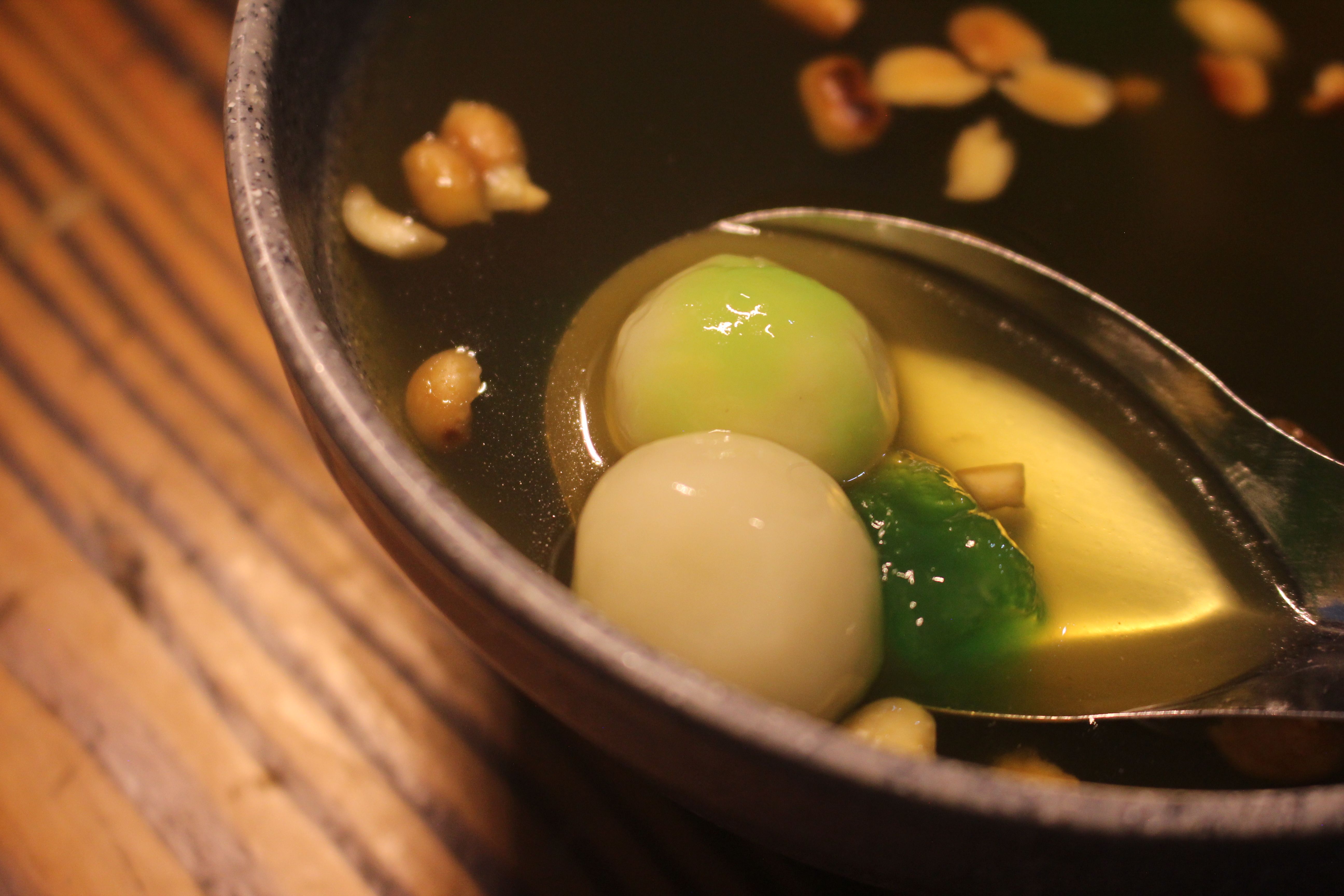
Photo: Jauhar Musthofal Qulub / Pexels
The diets react (see scores below)
Common Ingredients
- glutinous rice flour
- sesame paste
- peanut paste
- sugar
- water
- ginger
- rock sugar
Specific recipes may vary.
Incompatible with 7 of 11 diets
Diet Ratings
Tangyuan is fundamentally incompatible with a ketogenic diet. The primary ingredient, glutinous rice flour, is a high-glycemic starch with extremely high net carbs — a single serving of tangyuan can easily contain 40-60g of net carbs, instantly exceeding or saturating the entire daily keto carb budget. Compounding this, the dish contains multiple added sugars (granulated sugar and rock sugar) in both the filling and the broth. While sesame paste and peanut paste do contribute some fat, they are overwhelmed by the dominant carbohydrate load from the rice flour and sugars. Ginger and water are keto-neutral, but they do nothing to offset the fundamental incompatibility of this dish. There is no realistic portion size that makes tangyuan keto-friendly.
Tangyuan as described is entirely plant-based. The wrapper is made from glutinous rice flour and water, while the filling combines sesame paste, peanut paste, and sugar — all derived from plants. The broth uses ginger and rock sugar, both vegan-friendly. No animal products or animal-derived ingredients are present in any component of this dish. This is also a relatively whole-food preparation: the primary ingredients are minimally processed staples (rice flour, ground sesame, ground peanut). The score stops short of 10 only because sesame paste and peanut paste are processed forms of whole foods, but this is a very minor consideration for a traditional dish with such a clean ingredient list.
Tangyuan is fundamentally incompatible with the paleo diet. The primary ingredient, glutinous rice flour, is a grain product and one of the clearest exclusions in paleo eating. Peanut paste is derived from peanuts, which are legumes — another categorical paleo exclusion. Sugar and rock sugar are refined sweeteners, also strictly forbidden. Sesame paste sits in a gray zone as sesame seeds are technically paleo, but it is often processed with added salt or oil. The only paleo-compatible ingredients in this dish are ginger and water. With three major non-paleo categories represented (grains, legumes, refined sugar), this dish earns the lowest possible rating.
Tangyuan is made primarily from glutinous rice flour, which is a refined, high-glycemic starch with virtually no fiber — directly contradicting the Mediterranean emphasis on whole grains. The filling combines sesame paste and peanut paste (which have some redeeming nutritional value as plant-based fats and proteins) with significant added sugar, and the broth is sweetened further with rock sugar. The overall dish is essentially a sweet, refined-starch dumpling with high sugar content, placing it firmly in the 'avoid' category. While sesame and peanuts are plant-based foods consistent with Mediterranean principles, they are used here in a sugar-laden, refined-grain context that undermines those benefits.
Some Mediterranean diet interpreters might argue that sesame paste (tahini) and peanuts are genuinely wholesome plant foods, and that this dish — consumed occasionally as a cultural treat — is not categorically worse than other sweets sometimes permitted in moderation. The added sugar and refined glutinous rice flour remain significant concerns, but portion-conscious consumption could be framed similarly to how some traditional Mediterranean sweets (e.g., Greek halva, also sesame-based with sugar) are occasionally tolerated.
Tangyuan is entirely plant-based and incompatible with the carnivore diet. Every single ingredient — glutinous rice flour, sesame paste, peanut paste, sugar, water, ginger, and rock sugar — is either plant-derived or a processed sweetener. There is no animal product whatsoever. Glutinous rice flour is a grain, sesame and peanut pastes are seeds and legumes respectively, and sugar/rock sugar are refined carbohydrates. This dish represents essentially everything the carnivore diet excludes: grains, legumes, seeds, and sugar.
Tangyuan contains multiple excluded ingredients. Glutinous rice flour is a grain (rice) and is explicitly excluded on Whole30. Sugar and rock sugar are added sugars, which are also excluded. Additionally, peanut paste is made from peanuts, which are legumes and explicitly excluded. There is no compliant version of this dish possible without fundamentally changing its nature.
Tangyuan is a Chinese glutinous rice ball typically served in sweet ginger broth. Let's break down each ingredient: Glutinous rice flour is low-FODMAP and safe during elimination — despite its name, it contains no gluten and is made from sticky rice. Water is fine. Ginger is low-FODMAP at typical culinary doses (up to ~1 tsp fresh). Rock sugar and regular sugar are low-FODMAP (sucrose). The main concerns are the fillings: sesame paste is generally low-FODMAP in small amounts (Monash rates sesame seeds as low-FODMAP at 1 tbsp), but dense sesame paste fillings in multiple tangyuan can accumulate. Peanut paste/peanut butter is low-FODMAP at 2 tablespoons per Monash — this is likely within range for a small serving of tangyuan. The core issue is portion size: eating 2–3 tangyuan with moderate filling may be acceptable, but a typical serving of 5–6 pieces could push sesame and peanut paste into higher-FODMAP territory through accumulation. None of the individual ingredients are overtly high-FODMAP at small amounts, but the combined filling load and standard serving sizes create practical ambiguity.
Monash University has not specifically tested tangyuan as a composite dish, and individual ingredient data must be extrapolated. Some clinical FODMAP practitioners advise caution with glutinous rice–based desserts containing rich paste fillings due to uncertainty about cumulative FODMAP load from sesame and peanut paste at typical serving sizes (e.g., 4–6 pieces per portion).
Tangyuan is a glutinous rice ball filled with sesame paste, peanut paste, and sugar, served in a ginger-rock sugar broth. From a DASH perspective, the dish has both positive and concerning elements. On the positive side, it is very low in sodium, contains no red meat or saturated fat from animal sources, and sesame and peanut pastes provide small amounts of beneficial unsaturated fats, magnesium, and plant protein. Ginger is a DASH-friendly ingredient. However, glutinous rice flour (refined starch) lacks the fiber content of whole grains emphasized by DASH, and the combination of sesame paste, peanut paste, sugar, and rock sugar contributes notable added sugar and caloric density. DASH explicitly limits added sugars and sweets. The refined nature of glutinous rice flour (high glycemic index, negligible fiber) is at odds with DASH's emphasis on whole grains. Sesame paste also contains moderate saturated fat, though the predominant fat profile is unsaturated. Overall, Tangyuan is not a prohibited food but represents the 'sweets' category that DASH recommends limiting to ≤5 servings per week, and even then in small portions.
Traditional NIH DASH guidelines categorize sweets and refined starches as foods to limit, placing Tangyuan clearly in the caution zone. However, some updated DASH-oriented clinicians note that nuts and seed pastes (sesame, peanut) are explicitly encouraged in DASH for their healthy fat and mineral content, and that occasional consumption of traditional culturally significant desserts with low sodium is compatible with the overall DASH dietary pattern when portion-controlled.
Tangyuan is a Chinese glutinous rice dessert that presents serious challenges for the Zone Diet. The primary ingredient, glutinous rice flour, is extremely high-glycemic — glutinous (sticky) rice has one of the highest glycemic indices of any starch, well above white rice, making it one of the most unfavorable carbohydrate sources in Zone terminology. The addition of sugar and rock sugar compounds the glycemic problem significantly, delivering a rapid glucose spike with no fiber to moderate it. The dish contains no meaningful protein source, making a 40/30/30 macronutrient ratio structurally impossible without dramatic external supplementation. While sesame and peanut paste contribute some fat and trace protein, they do not come close to compensating for the absence of a protein block, and the fat profile includes significant omega-6 content from peanut and sesame rather than the preferred monounsaturated fats. The overall macronutrient profile skews heavily toward high-glycemic carbohydrates and sugar with negligible protein — essentially the inverse of what Zone requires. Even with careful portioning, this dish cannot anchor a Zone-compliant meal or snack without being accompanied by substantial lean protein and low-GI carbohydrates, at which point the tangyuan itself contributes almost nothing useful. Ginger is the only genuinely Zone-favorable ingredient (anti-inflammatory polyphenol), but it appears in negligible quantity.
Tangyuan presents a mixed anti-inflammatory profile. On the positive side, sesame paste contributes sesamin and sesamol — lignans with documented antioxidant and anti-inflammatory properties — along with calcium and some healthy fats. Peanut paste provides resveratrol, niacin, and monounsaturated fats, though it also brings omega-6 fatty acids. Ginger in the broth is a genuine anti-inflammatory asset, containing gingerols and shogaols that inhibit inflammatory pathways. However, the dish's foundation is glutinous rice flour — a refined, high-glycemic starch with virtually no fiber — which can drive post-meal blood glucose spikes and downstream inflammatory signaling. Added sugar (both granulated and rock sugar) compounds this concern; together, these sugars represent the dish's most meaningful pro-inflammatory element. The caloric density relative to nutrient density is unfavorable from an anti-inflammatory standpoint. Tangyuan is best viewed as an occasional treat rather than a dietary staple: the ginger broth and sesame filling offer partial redeeming value, but the refined carbohydrate and sugar load places it firmly in the moderation category.
Some functional nutrition practitioners would rate tangyuan more harshly, noting that glutinous rice flour ranks extremely high on the glycemic index and that chronic high-GI intake is consistently associated with elevated CRP and IL-6 — pushing this closer to 'avoid.' Conversely, traditional Chinese medicine perspectives (referenced by some integrative practitioners including aspects of Dr. Weil's broader philosophy) view warming ginger broths and sesame as genuinely therapeutic, potentially viewing a small serving as net beneficial in the context of an otherwise anti-inflammatory diet.
Tangyuan is a poor fit for GLP-1 patients across nearly every priority criterion. The dish is built on glutinous rice flour, a refined starch with negligible fiber and no meaningful protein, contributing empty carbohydrate calories. The fillings — sesame paste, peanut paste, and sugar — add significant fat (primarily from the pastes) and simple sugars, with no redeeming lean protein or fiber to offset them. The high fat content from sesame and peanut pastes is likely to worsen GLP-1 side effects including nausea, bloating, and reflux, particularly because GLP-1 medications slow gastric emptying, meaning fatty, dense fillings sit in the stomach longer. Sugar content is high between the filling sugar and rock sugar in the broth, making this a high-glycemic, low-nutrient-density food. The ginger in the broth has mild anti-nausea properties and is the only GLP-1-positive element, but it is incidental and does not meaningfully offset the profile of the dish. There is no protein, minimal fiber, high fat, and high sugar — this food fails on all four top-priority criteria simultaneously.
*See how scores were generated at our methodology page.
Nutritional profile
Six traits that cut across every diet.
Fiber & Plants
How much whole-plant food and fiber it delivers.
Healthy Fats
The quality of its fats (unsaturated, omega-3).
Whole / Unprocessed
How close it is to its natural, unprocessed form.
Gut Gentle
How easy it is on digestion (low FODMAP, few irritants).
Low Glycemic
How little it spikes your blood sugar.
Protein Density
How much protein it packs per calorie.
Controversy Index
Higher controversy = more disagreement between diets.
Diet-Specific Tips
 Vegan — 6/10
View tips
- Glutinous rice flour is a whole plant-derived ingredient
- Sesame paste and peanut paste are plant-based fillings with no dairy or egg binders
- Sugar and rock sugar are plant-derived sweeteners with no bone-char concern noted in this traditional preparation context
- Ginger broth base is fully plant-based
- No animal products, gelatin, dairy, or eggs in any component
- Traditional recipe with minimal processing overall
 Low-FODMAP — 4/10
View tips
- Glutinous rice flour is low-FODMAP — safe base ingredient
- Peanut paste is low-FODMAP up to ~2 tbsp per Monash; within range for small servings
- Sesame paste is low-FODMAP in small amounts (~1 tbsp sesame seeds equivalent) but can accumulate across multiple pieces
- Sugar (sucrose) and rock sugar are low-FODMAP
- Ginger is low-FODMAP at typical culinary doses
- Standard serving size (4–6 pieces) may push sesame/peanut paste into moderate-FODMAP territory cumulatively
- No Monash University direct testing of tangyuan as a dish — requires ingredient-level extrapolation
 DASH — 4/10
View tips
- Very low sodium — a strong DASH-positive attribute
- High added sugar (sugar + rock sugar) — DASH limits sweets to ≤5 servings/week
- Glutinous rice flour is refined starch with minimal fiber — not a whole grain
- Sesame and peanut pastes provide DASH-friendly unsaturated fats, magnesium, and plant protein
- Moderate saturated fat from sesame paste, though unsaturated fats predominate
- No animal protein, red meat, or full-fat dairy — DASH-neutral
- Ginger is a DASH-compatible anti-inflammatory ingredient
- Caloric density is relatively high for a snack portion
 Anti-Inflammatory — 4/10
View tips
- Glutinous rice flour is a refined high-glycemic starch with negligible fiber — pro-inflammatory at regular consumption
- Added sugar (granulated + rock sugar) elevates glycemic load and drives inflammatory signaling
- Sesame paste contains sesamin/sesamol lignans — meaningful antioxidant and anti-inflammatory compounds
- Ginger broth provides gingerols and shogaols — well-supported anti-inflammatory phytochemicals
- Peanut paste adds monounsaturated fats and resveratrol, but also omega-6 fatty acids
- No significant omega-3 content, antioxidant-rich vegetables, or other core anti-inflammatory nutrients
- Portion size and frequency matter significantly — occasional consumption is far less concerning than regular intake