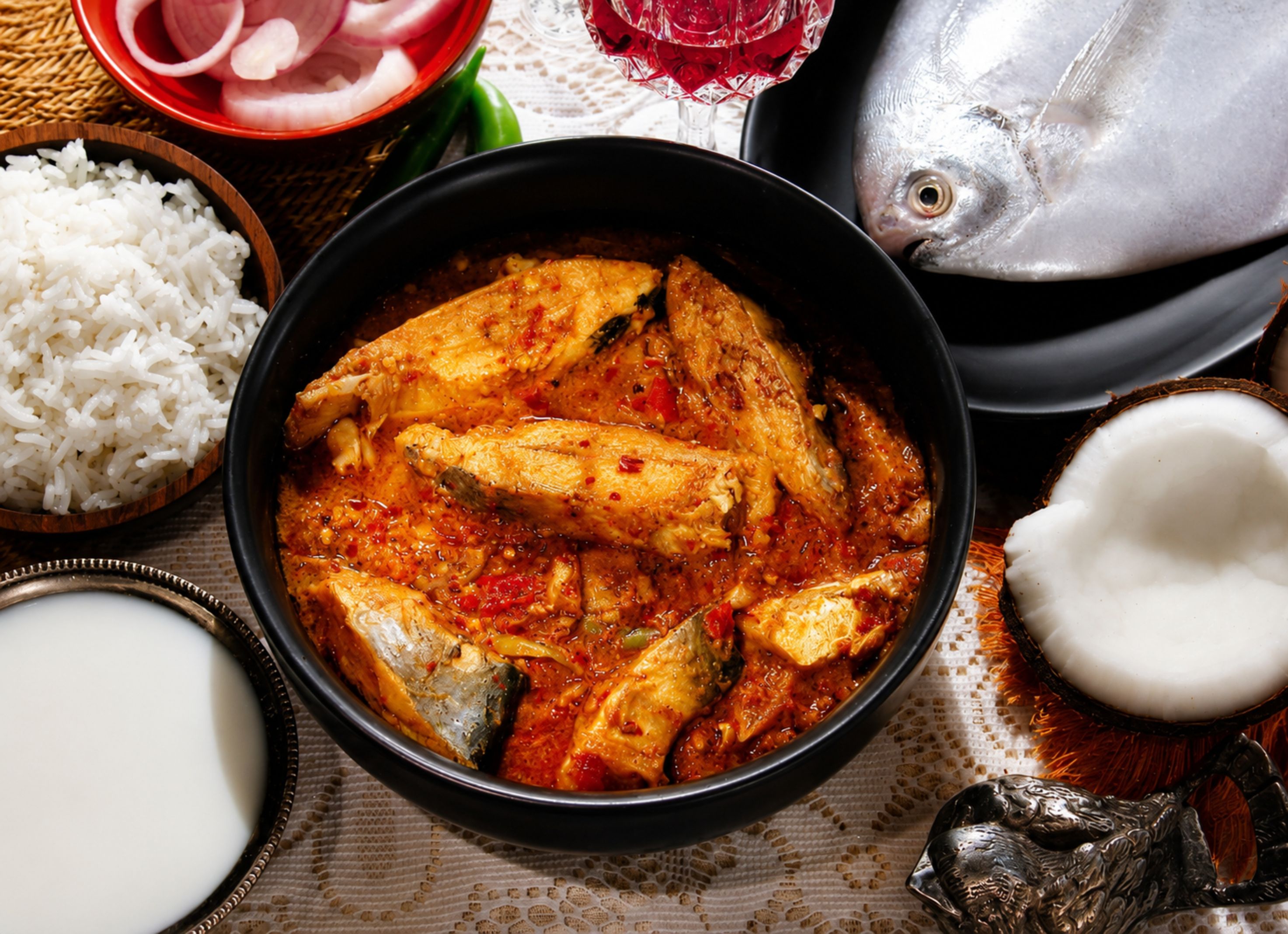
Photo: Gansham Ramchandani / Pexels
Tanzanian
Mchuzi wa Samaki
The diets react (see scores below)
Common Ingredients
- fish
- coconut milk
- tomatoes
- onions
- tamarind
- garlic
- ginger
- curry powder
Specific recipes may vary.
Incompatible with 3 of 11 diets
Diet Ratings
Mchuzi wa Samaki is a Tanzanian fish curry built on a largely keto-friendly base: fish is an excellent high-protein, low-carb protein source, and full-fat coconut milk provides healthy fats. Garlic, ginger, curry powder, and small amounts of onion and tomato are generally acceptable in keto in modest quantities. The main concern is tamarind, which carries a notable sugar and carb load (roughly 25g net carbs per 100g of tamarind paste). The quantity used in a curry sauce is typically small (1-2 tbsp), bringing estimated net carbs per serving to roughly 8-14g depending on portion size and tamarind quantity. This is manageable within daily keto limits but requires mindful portioning. Tomatoes and onions add a few additional net carbs. The dish is not inherently disqualifying but demands portion control and ideally a reduction in tamarind to remain safely within daily carb budgets.
Strict keto practitioners may flag this dish as avoid due to the combined carb load of tamarind, onions, and tomatoes, arguing that cumulative hidden carbs in restaurant or traditional preparations can easily push a single serving past 15-20g net carbs, leaving little room for other meals. They would recommend omitting tamarind entirely and using lemon juice as a substitute.
Mchuzi wa Samaki is a Tanzanian fish curry whose primary protein is fish, a clear animal product excluded under all vegan frameworks. The remaining ingredients — coconut milk, tomatoes, onions, tamarind, garlic, ginger, and curry powder — are all plant-based, but the presence of fish makes the dish entirely incompatible with a vegan diet. There is no ambiguity here.
Mchuzi wa Samaki is a Tanzanian fish curry built on ingredients that are largely paleo-compatible. Fish is a cornerstone paleo protein; tomatoes, onions, garlic, and ginger are all whole vegetables or aromatics fully approved on a paleo diet. Tamarind is a naturally occurring fruit-derived souring agent with no paleo objection. Curry powder is a blend of herbs and spices — inherently paleo. Coconut milk is the one ingredient that warrants brief note: it is widely accepted in the paleo community as a whole-food fat source, though commercial cans often contain guar gum or other stabilizers, which strict paleo practitioners flag as a minor additive concern. Overall, the dish is a clean, whole-food preparation with no grains, legumes, dairy, refined sugar, or seed oils, making it a strong paleo choice.
Some strict paleo purists (following Cordain's original framework) raise a caution flag on commercially processed coconut milk due to additives like guar gum and emulsifiers; they recommend making fresh coconut milk or sourcing additive-free canned versions. This concern is minor and does not alter the dish's fundamental paleo compatibility.
Mchuzi wa Samaki is a Tanzanian fish curry that features several Mediterranean-compatible ingredients: fish as the primary protein is strongly encouraged (2-3 times weekly), tomatoes, onions, garlic, and ginger are all plant-based vegetables aligned with Mediterranean principles, and tamarind adds a natural acidic element similar to lemon. The main deviation is coconut milk as the fat source rather than extra virgin olive oil. Coconut milk is high in saturated fat and is not part of the Mediterranean dietary tradition, where olive oil is the canonical primary fat. The dish is otherwise whole-food-based with no refined grains, added sugars, or processed ingredients, and the fish base is genuinely Mediterranean-compatible. The overall profile earns a moderate score — excellent protein choice and vegetable base, but the coconut milk fat source is a meaningful departure from core principles.
Some modern Mediterranean diet interpreters take a broader view of 'healthy fats' and focus on the overall dietary pattern rather than strict olive oil exclusivity; from this perspective, coconut milk in a fish-and-vegetable dish could be accepted occasionally, especially given the otherwise whole-food composition. However, traditional and clinical Mediterranean diet frameworks (e.g., the PREDIMED study protocol) consistently emphasize olive oil as the primary fat and would flag coconut milk's saturated fat content as a concern.
Mchuzi wa Samaki is a Tanzanian fish curry that is almost entirely incompatible with the carnivore diet. While fish itself is a carnivore-approved animal protein, the dish is built around a base of multiple plant-derived ingredients: coconut milk (plant fat), tomatoes, onions, garlic, ginger, tamarind, and curry powder (a spice blend). Every ingredient except the fish is excluded on a carnivore diet. The dish cannot be considered carnivore-compatible in any meaningful sense — the plant components are not minor trace additives but the defining flavor and sauce components of the recipe.
Mchuzi wa Samaki is a Tanzanian fish curry whose core ingredients — fish, coconut milk, tomatoes, onions, tamarind, garlic, ginger, and curry powder — are all Whole30-compliant whole foods. Fish is explicitly allowed, coconut milk is a natural fat approved on Whole30 (check label for no added sugar or sulfites, though sulfites are now allowed), tamarind is a natural souring agent from fruit, and curry powder is a spice blend. The main practical concern is that commercially prepared curry powder blends and canned coconut milk occasionally contain added sugar, fillers, or non-compliant additives, so label-reading is advised. Tamarind paste or concentrate products should also be checked for added sugar. Made from scratch or with verified compliant packaged ingredients, this dish is a strong Whole30 meal.
The official Whole30 program approves all of these ingredient categories without reservation, but some community practitioners flag that curry powder blends and packaged tamarind products frequently contain hidden sugars or non-compliant additives, making this dish 'approve in principle but verify in practice' rather than a guaranteed green light.
Mchuzi wa Samaki contains multiple high-FODMAP ingredients that make it unsuitable during the elimination phase. Garlic and onions are both significant sources of fructans and are among the highest-FODMAP foods tested by Monash University — both are firmly in the 'avoid' category at any culinary amount. Tamarind is high in excess fructose and is rated high-FODMAP. These three ingredients alone disqualify the dish. Coconut milk can be low-FODMAP at small servings (up to 1/2 cup per Monash), but in a curry it is often used in larger quantities. Fish itself, tomatoes, ginger, and curry powder (in moderate amounts) are generally low-FODMAP, but the combination of garlic, onions, and tamarind makes this dish a clear avoid during elimination.
Mchuzi wa Samaki is a Tanzanian fish curry with several DASH-friendly components — fish is an excellent lean protein encouraged by DASH, and tomatoes, onions, garlic, ginger, and spices are all vegetables and aromatics that align well with DASH principles. Tamarind provides potassium and antioxidants. However, the dish's primary concern from a DASH perspective is coconut milk, a tropical oil-based ingredient high in saturated fat, which DASH explicitly limits. Full-fat coconut milk can contribute 10–15g of saturated fat per serving, well above DASH thresholds. The curry powder and preparation style are sodium-neutral if home-cooked without added salt, but restaurant versions may add significant sodium. The fish and vegetable base would otherwise score in the approve range, but coconut milk's saturated fat content pulls this into caution territory.
NIH DASH guidelines explicitly restrict saturated fat and tropical oils including coconut, placing coconut milk-based dishes in the caution-to-avoid range. However, some updated clinical interpretations note that the medium-chain triglycerides (MCTs) in coconut milk may have a different metabolic profile than long-chain saturated fats, and that the overall dietary pattern — rich in fish, vegetables, and anti-inflammatory spices — may offset some cardiovascular risk, leading some DASH-oriented practitioners to allow small amounts of coconut milk in otherwise nutrient-dense dishes.
Mchuzi wa Samaki is a Tanzanian fish curry with several Zone-friendly elements but one significant challenge: coconut milk. Fish is an excellent lean Zone protein with anti-inflammatory omega-3 fatty acids — a clear Zone win. Tomatoes, onions, garlic, and ginger are low-glycemic, polyphenol-rich vegetables that align well with Zone carbohydrate goals. Tamarind adds a small carbohydrate load that needs to be counted in blocks but is manageable. The problem is coconut milk, which is high in saturated fat rather than the monounsaturated fats Sears favors. Coconut milk also adds significant calories that can throw off the 40/30/30 ratio, making the fat percentage too high relative to protein and carbs. Zone practitioners can work around this by using light coconut milk in small portions, which dilutes the saturated fat issue and brings fat blocks closer to target (1.5g per fat block). With careful portioning of coconut milk, this dish can be made Zone-compatible, but in its traditional full-fat form it tips the fat ratio too high and shifts fat quality away from monounsaturated sources. The spice profile (curry powder, ginger, garlic) actually earns bonus points in later Sears anti-inflammatory writings as polyphenol-rich additions.
Some Zone practitioners and later Sears writings (particularly around anti-inflammatory nutrition) take a more nuanced view of coconut fat. Medium-chain triglycerides (MCTs) in coconut milk are metabolized differently than long-chain saturated fats and may not carry the same inflammatory concerns. From this perspective, if the dish is portioned correctly with an appropriate fish-to-coconut milk ratio, it could be viewed as a solid Zone meal, potentially scoring closer to 7. The early Zone books were more strictly against saturated fat sources, while Sears' later work softened this stance somewhat.
Mchuzi wa Samaki is a Tanzanian fish curry with a broadly anti-inflammatory ingredient profile. Fish (especially if oily varieties like mackerel or tilapia are used) provides omega-3 fatty acids or at minimum lean protein. Garlic and ginger are well-supported anti-inflammatory agents with documented effects on CRP and inflammatory cytokines. Curry powder typically contains turmeric (curcumin), coriander, and other polyphenol-rich spices. Tomatoes and onions contribute quercetin, lycopene, and other antioxidants. Tamarind adds polyphenols and vitamins. The one nuance is full-fat coconut milk, which is high in saturated fat (lauric acid) — this is the primary point of debate. Mainstream anti-inflammatory guidance recommends limiting saturated fat, and coconut milk consumed regularly in substantial amounts would be a concern. However, coconut milk's saturated fat is predominantly medium-chain triglycerides (MCTs), which behave differently metabolically than long-chain saturated fats. As a dish ingredient rather than a daily cooking fat, the amount per serving is moderate. The overall profile — anti-inflammatory spice base, fish protein, vegetables — strongly favors an approve verdict.
Coconut milk's high saturated fat content is flagged by mainstream anti-inflammatory protocols (including Dr. Weil's guidelines, which recommend limiting saturated fat) and could be pro-inflammatory consumed regularly. However, a growing body of research, including perspectives from functional medicine practitioners, suggests MCT-rich coconut fat behaves differently from animal saturated fats and may not significantly raise inflammatory markers, particularly in the context of a spice-rich dish like this.
Mchuzi wa Samaki is a Tanzanian fish curry with a genuinely mixed GLP-1 profile. The fish base is excellent — lean protein, omega-3 fats, easy to digest, and nutrient-dense per calorie. Aromatics (garlic, ginger, onions, tomatoes, tamarind) are all GLP-1-friendly: anti-inflammatory, low-fat, and digestively supportive. Ginger in particular may help with GLP-1-related nausea. The significant concern is coconut milk, which is high in saturated fat. A standard serving of this dish made with full-fat coconut milk can deliver 15–25g of fat, much of it saturated, which worsens nausea, bloating, and reflux — the most common GLP-1 side effects. Curry powder is generally well-tolerated in moderate amounts and not a disqualifier. Tamarind adds a small fiber contribution. The dish scores higher than a fatty meat curry because fish is lean, but the coconut milk prevents an approve rating under standard preparation. Made with light coconut milk or reduced coconut milk volume, this dish would score 7–8.
Some GLP-1-focused dietitians accept coconut milk dishes in moderation, noting that the medium-chain triglycerides (MCTs) in coconut fat are metabolized differently than long-chain saturated fats and may be slightly better tolerated. Others maintain that any high-fat meal significantly worsens gastric emptying delays and GI side effects on GLP-1s, and recommend avoiding coconut milk dishes regardless of the fat type.
*See how scores were generated at our methodology page.
Nutritional profile
Six traits that cut across every diet.
Fiber & Plants
How much whole-plant food and fiber it delivers.
Healthy Fats
The quality of its fats (unsaturated, omega-3).
Whole / Unprocessed
How close it is to its natural, unprocessed form.
Gut Gentle
How easy it is on digestion (low FODMAP, few irritants).
Low Glycemic
How little it spikes your blood sugar.
Protein Density
How much protein it packs per calorie.
Controversy Index
Higher controversy = more disagreement between diets.
Diet-Specific Tips
 Keto — 5/10
View tips
- Fish is a zero-carb, high-quality protein — fully keto-compatible
- Full-fat coconut milk provides healthy fats and is keto-approved
- Tamarind is the primary carb concern — high sugar content; portion must be minimized
- Tomatoes and onions add moderate net carbs; small quantities are tolerable
- Curry powder and aromatics (garlic, ginger) are negligible in carb contribution
- Overall net carbs per serving estimated 8-14g — within keto range only with careful portioning
 Paleo — 8/10
View tips
- Fish is a primary paleo protein source — fully approved
- Coconut milk is widely accepted in paleo but commercial versions may contain guar gum or stabilizers
- Tomatoes, onions, garlic, and ginger are whole, unprocessed vegetables and aromatics — approved
- Tamarind is a natural fruit-derived souring agent — paleo compatible
- Curry powder is a blend of herbs and spices — approved
- No grains, legumes, dairy, refined sugar, or seed oils present
- Dish is minimally processed and aligned with whole-food paleo principles
 Mediterranean — 6/10
View tips
- Fish is the primary protein — strongly encouraged 2-3 times weekly
- Tomatoes, onions, garlic, ginger are Mediterranean-compatible whole plant foods
- Coconut milk replaces olive oil as the fat source — high in saturated fat, not Mediterranean-traditional
- No refined grains, added sugars, or processed ingredients
- Spice blend (curry powder, tamarind) is non-traditional but not nutritionally problematic
- Overall whole-food composition is a positive factor despite fat source deviation
 Whole30 — 8/10
View tips
- Fish is explicitly Whole30-approved protein
- Coconut milk is an approved natural fat — verify no added sugar in packaged versions
- Tamarind is a compliant souring agent derived from fruit — check packaged paste/concentrate for added sugar
- Curry powder is a spice blend — verify no anti-caking agents or non-compliant fillers
- Tomatoes, onions, garlic, and ginger are all whole compliant vegetables
- No grains, legumes, dairy, or other excluded categories present
 DASH — 5/10
View tips
- Fish is a DASH-encouraged lean protein rich in omega-3 fatty acids
- Coconut milk is high in saturated fat and a tropical oil, both limited by DASH guidelines
- Tomatoes, onions, garlic, and ginger are DASH-compatible vegetables and aromatics
- Tamarind adds potassium, a key DASH mineral
- Curry powder and spices contribute flavor without sodium when unsalted
- Sodium content is manageable if home-cooked without added salt but may be high in restaurant versions
- Substituting light coconut milk would significantly improve the DASH compatibility of this dish
 Zone — 6/10
View tips
- Fish is an excellent Zone protein source rich in anti-inflammatory omega-3 fatty acids
- Coconut milk introduces high saturated fat content, conflicting with Zone's preference for monounsaturated fats
- Tomatoes, onions, garlic, and ginger are favorable low-glycemic Zone carbohydrates
- Curry powder, ginger, and garlic are polyphenol-rich spices endorsed in Sears' anti-inflammatory framework
- Tamarind contributes carbohydrate blocks that must be accounted for but is manageable
- Using light coconut milk significantly improves Zone compatibility by reducing fat load
- Traditional full-fat preparation likely creates an excess fat-to-protein ratio, skewing away from 40/30/30
- Overall dish structure (protein + vegetable carbs + fat source) maps well to Zone meal architecture with portioning adjustments
 Anti-Inflammatory — 8/10
View tips
- Fish provides omega-3 fatty acids and lean anti-inflammatory protein
- Garlic and ginger are well-documented anti-inflammatory agents
- Turmeric (via curry powder) contributes curcumin, a potent anti-inflammatory compound
- Tomatoes and onions supply quercetin, lycopene, and antioxidants
- Tamarind adds polyphenols and micronutrients
- Coconut milk introduces significant saturated fat (MCT-type), the main moderating factor
- No refined carbohydrates, added sugars, or processed additives
- Whole-food, minimally processed dish overall
 GLP-1 Friendly — 5/10
View tips
- Fish is an excellent lean protein and omega-3 source — strongly GLP-1 positive
- Coconut milk is high in saturated fat and the primary concern for GLP-1 side effects
- Full-fat coconut milk per standard serving can add 15–25g fat, worsening nausea and reflux
- Ginger may actively help with GLP-1-related nausea — a meaningful positive
- Garlic, onion, tomato, tamarind are all low-fat, nutrient-dense, and GLP-1-compatible
- Curry spice blend is moderate — generally tolerated, not a disqualifier
- Dish scores significantly higher if made with light coconut milk or reduced portion of coconut milk
- Protein contribution depends on fish quantity — needs adequate fish to hit 15–30g protein per meal target