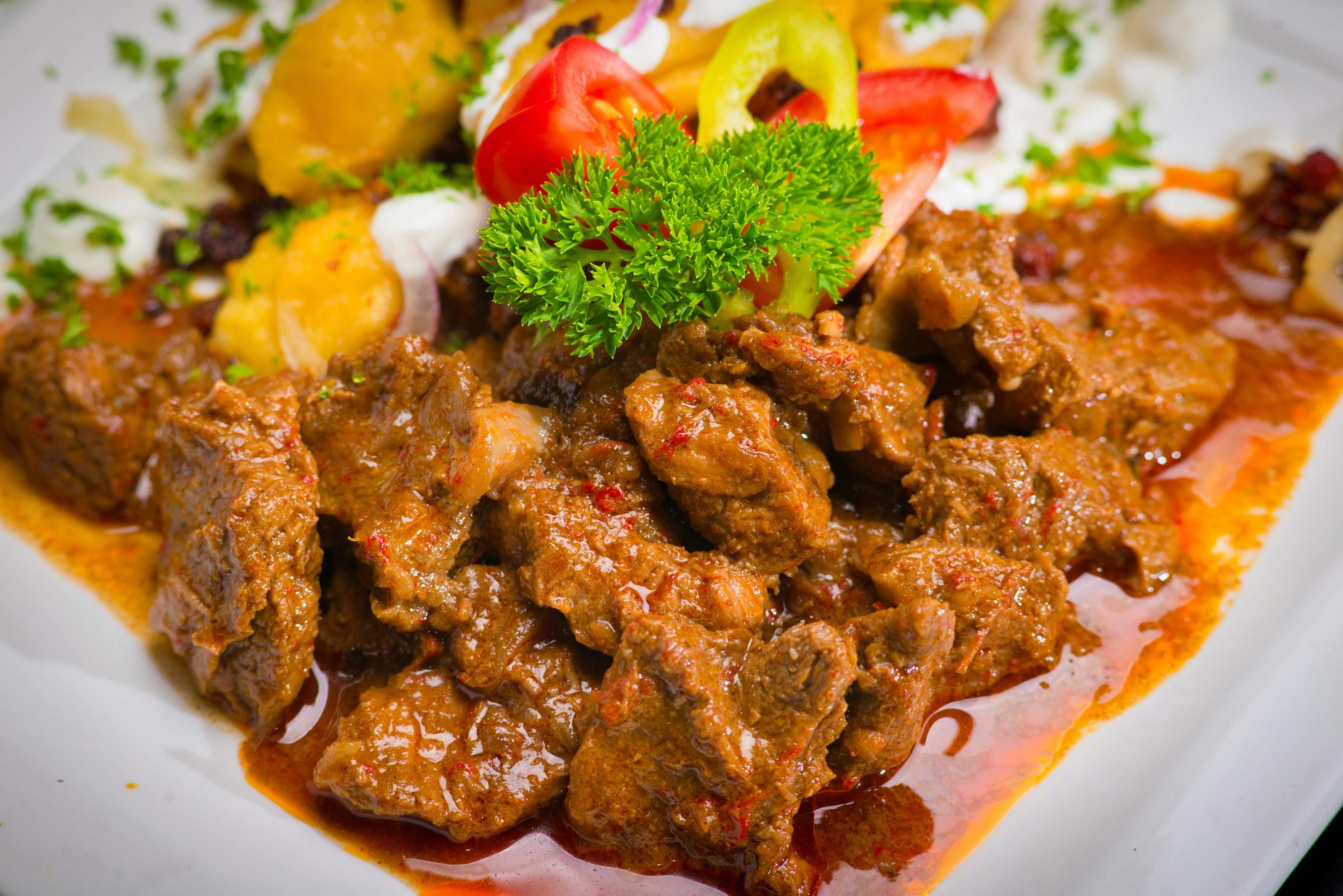
Photo: Novkov Visuals / Pexels
Tanzanian
Ndizi Nyama
The diets react (see scores below)
Common Ingredients
- beef
- green plantains
- tomatoes
- onions
- coconut milk
- garlic
- curry powder
- salt
Specific recipes may vary.
Incompatible with 6 of 11 diets
Diet Ratings
Ndizi Nyama is fundamentally incompatible with a ketogenic diet due to the green plantains, which are the dish's defining carbohydrate component. A single medium green plantain contains approximately 30-35g net carbs, which alone can meet or exceed the entire daily keto carb budget. The remaining ingredients — beef, coconut milk, tomatoes, onions, garlic, and spices — are largely keto-friendly or manageable in small amounts, but the plantains cannot be reduced to a token portion without fundamentally changing the dish. This is a starchy-vegetable-based main dish by design, making it a structural incompatibility, not a portion-control issue.
Ndizi Nyama is a traditional Tanzanian dish whose name literally translates to 'plantains and meat.' The primary protein is beef, which is unambiguously an animal product and entirely incompatible with a vegan diet. While the remaining ingredients — green plantains, tomatoes, onions, coconut milk, garlic, curry powder, and salt — are all fully plant-based, the presence of beef alone is sufficient to disqualify the dish. No meaningful vegan debate exists here.
Ndizi Nyama is a flavorful Tanzanian dish, but two ingredients disqualify it under paleo rules: salt (added salt is explicitly excluded) and coconut milk (while coconut itself is paleo-approved, commercial coconut milk often contains additives and preservatives, though pure coconut milk is generally accepted). More critically, salt is a clear violation. Without salt and using pure additive-free coconut milk, the remaining ingredients — beef, green plantains, tomatoes, onions, garlic, and curry powder — are all paleo-compatible. Green plantains are whole, unprocessed starchy fruits broadly accepted in paleo. The dish fails primarily due to added salt, which is explicitly prohibited.
Ndizi Nyama is a Tanzanian beef and green plantain stew that conflicts with core Mediterranean diet principles on multiple fronts. Beef is a red meat, which the Mediterranean diet limits to only a few times per month, making it a problematic primary protein for a main dish. Coconut milk, while a plant-derived fat, is high in saturated fat and is entirely absent from the traditional Mediterranean pantry, where extra virgin olive oil is the canonical fat source. The dish contains no olive oil at all. On the positive side, the dish does include several Mediterranean-friendly ingredients — tomatoes, onions, garlic, and green plantains (a whole, unprocessed starchy food) — and it is free of added sugars and highly refined ingredients. However, the combination of red meat as the central protein and coconut milk as the primary fat makes this dish a poor fit for regular Mediterranean diet consumption.
Some modern Mediterranean diet interpreters apply a broader 'whole foods, plant-rich' lens and would note that this dish is minimally processed with abundant vegetables and whole-food ingredients; they might rate it 'caution' rather than 'avoid' if beef is consumed only occasionally and the portion is small. Additionally, green plantains are a nutrient-dense whole food endorsed in plant-forward eating patterns.
Ndizi Nyama is a traditional Tanzanian beef and plantain stew that is fundamentally incompatible with the carnivore diet. While it contains beef as its primary protein, the dish is built around green plantains (a starchy plant food), tomatoes, onions, garlic, coconut milk (plant-derived), and curry powder (a blend of plant-based spices). The only carnivore-compliant ingredient is the beef and salt. The majority of the dish's ingredients — plantains, tomatoes, onions, garlic, coconut milk, and curry powder — are all plant-derived and explicitly excluded from the carnivore diet. This is not a borderline case; the dish is structurally a plant-heavy stew that happens to contain meat, not a meat dish with minor additions.
Ndizi Nyama is a traditional Tanzanian beef and green plantain stew. Every ingredient in this dish is fully Whole30 compliant: beef (meat, explicitly allowed), green plantains (a starchy fruit/vegetable, allowed), tomatoes and onions (vegetables, allowed), coconut milk (natural fat from coconut, allowed — just verify no added sugar or sulfites in packaged versions), garlic (allowed), curry powder (a spice blend, allowed — verify no added fillers or anti-caking agents with excluded ingredients), and salt (explicitly allowed). There are no grains, legumes, dairy, added sugars, or other excluded ingredients. This is a whole-food, minimally processed dish that aligns perfectly with the spirit and rules of Whole30.
Ndizi Nyama contains multiple high-FODMAP ingredients that make it unsuitable during the elimination phase. Garlic is one of the highest-FODMAP foods tested by Monash University, containing significant fructans even in small amounts. Onions are similarly high in fructans and are a major FODMAP trigger. These two ingredients alone are sufficient to classify the dish as high-FODMAP. Coconut milk is low-FODMAP only at 1/2 cup (125ml) per serve, but cooking a stew typically uses larger amounts distributed across portions, which can push individual servings into moderate-to-high FODMAP territory. The remaining ingredients — beef, green plantains, tomatoes, curry powder, and salt — are generally low-FODMAP at standard servings. Green plantains are low-FODMAP (unlike ripe plantains which have higher sugar content), plain beef is safe, and canned or fresh tomatoes are low-FODMAP in reasonable portions. However, the garlic and onion combination is a definitive disqualifier for the elimination phase with no practical workaround in this dish as traditionally prepared.
Ndizi Nyama presents a mixed DASH profile. On the positive side, green plantains are excellent DASH foods — high in fiber, potassium, and complex carbohydrates. Tomatoes, onions, and garlic are all core DASH vegetables rich in potassium, magnesium, and antioxidants. Curry powder adds beneficial spices with negligible sodium concern. However, two ingredients pull the score down significantly: (1) Beef — DASH limits red meat due to saturated fat content; occasional lean cuts in small portions are tolerated but not encouraged, and traditional preparations often use fattier cuts. (2) Coconut milk — high in saturated fat from lauric acid, which DASH explicitly limits alongside tropical oils. The combination of red meat and full-fat coconut milk creates a meaningful saturated fat load. Added salt further compounds sodium concerns. The dish is not categorically excluded — portion size, beef cut leanness, and whether light vs. full-fat coconut milk is used all matter — but as commonly prepared it sits firmly in 'caution' territory.
NIH DASH guidelines explicitly limit red meat and tropical oils like coconut due to saturated fat content. However, some updated clinical interpretations note that the saturated fat in coconut milk (primarily medium-chain triglycerides) may have a more neutral cardiovascular effect than long-chain saturated fats found in butter or lard, and some DASH-oriented dietitians permit modest coconut milk use when overall saturated fat targets are met for the day.
Ndizi Nyama presents a mixed Zone profile with several concerns requiring careful management. The dish combines beef (protein source with moderate-to-high saturated fat depending on cut), green plantains (higher-glycemic starchy carb, though green/unripe plantains have a lower GI than ripe ones and contain resistant starch), and coconut milk (high in saturated fat). On the positive side, tomatoes and onions are favorable Zone vegetables, garlic has anti-inflammatory polyphenols, and curry powder contains anti-inflammatory compounds like turmeric. The core problems are: (1) green plantains are an 'unfavorable' Zone carbohydrate — starchy and moderately high-glycemic, though better than ripe plantains; (2) coconut milk is dense in saturated fat, pushing the fat profile away from the preferred monounsaturated sources; (3) beef's saturated fat content adds further concern on the fat quality front. However, this dish is not a disaster — green plantains can be portioned as a limited carb block, the beef provides real protein, and the tomato/onion base adds favorable carbs. A Zone-conscious adaptation would use a lean cut of beef (e.g., sirloin), reduce coconut milk quantity significantly (or use light coconut milk), add more non-starchy vegetables, and keep plantain portions small (1-2 blocks). As served in traditional portions, the dish likely skews too high in starchy carbs and saturated fat for clean Zone alignment.
Some Zone practitioners and later Sears writings take a more lenient view on coconut milk's saturated fat, noting that medium-chain triglycerides (MCTs) in coconut are metabolized differently than long-chain saturated fats and may have a less adverse eicosanoid impact than previously thought. Additionally, green/unripe plantains have significantly more resistant starch than ripe plantains, lowering their effective glycemic impact — a Zone-aware cook who portions the plantain carefully (1 block ≈ ~1/3 cup cooked) and uses a lean cut of beef could build a reasonable 3-block Zone meal from this dish. In that framing, a score of 6 is defensible.
Ndizi Nyama is a Tanzanian stew of beef and green plantains in coconut milk with tomatoes, onions, garlic, and curry powder. The dish has a genuinely mixed anti-inflammatory profile. On the positive side: tomatoes contribute lycopene and antioxidants; garlic is a well-established anti-inflammatory allium; curry powder typically contains turmeric (curcumin), cumin, coriander, and other anti-inflammatory spices; onions provide quercetin and other polyphenols; and green plantains offer resistant starch and fiber that support gut microbiome health. These are meaningful anti-inflammatory contributors. On the negative side: beef is classified as a food to limit in anti-inflammatory frameworks due to saturated fat content and arachidonic acid, which can promote downstream inflammatory eicosanoids. Coconut milk is high in saturated fat (primarily lauric acid), which is contested — some research suggests lauric acid raises HDL more than LDL, while anti-inflammatory authorities including Dr. Weil recommend limiting saturated fat sources including coconut products. The combination of beef and full-fat coconut milk creates a notable saturated fat load. Overall, the dish sits in the 'caution' zone: it is not a processed or highly refined food and contains genuinely beneficial ingredients, but the red meat and coconut milk together limit its anti-inflammatory credentials for regular consumption.
Coconut milk's saturated fat (lauric acid) is contested — some functional medicine and paleo-aligned practitioners consider it a neutral or beneficial fat due to its medium-chain triglyceride content and HDL-raising effects, which would improve this dish's score. Conversely, strict anti-inflammatory protocols (including Dr. Weil's pyramid) advise limiting saturated fat from all sources including coconut, and red meat is consistently flagged across anti-inflammatory guidelines, which could push the score lower.
Ndizi Nyama is a Tanzanian braised beef and green plantain stew that presents a mixed nutritional profile for GLP-1 patients. On the positive side, beef provides meaningful protein, green plantains contribute fiber and resistant starch, and the tomatoes, onions, and garlic add micronutrients with minimal calories. However, two ingredients create significant concern: coconut milk is high in saturated fat and can worsen GLP-1 side effects like nausea, bloating, and reflux, especially given that GLP-1 medications slow gastric emptying and high-fat meals linger longer in the stomach. Beef, depending on the cut used, adds additional saturated fat. Traditional recipes also tend to use fatty cuts (chuck, short rib) rather than lean options. The curry spice blend is generally well-tolerated and may even aid digestion. Green plantains score better than ripe plantains for blood sugar stability due to lower glycemic index and higher resistant starch content, but they are a starchy carbohydrate that adds caloric volume with moderate fiber. Overall, this dish can be adapted — using a lean cut like sirloin or round, and substituting light coconut milk or reducing the quantity significantly — to become more GLP-1 compatible. As traditionally prepared, the saturated fat load from full-fat coconut milk and typical beef cuts makes this a caution-level dish.
Some GLP-1-focused dietitians may rate this dish more favorably if prepared with a lean beef cut and light coconut milk, arguing that the protein and fiber content from plantains adequately compensate; others flag coconut milk categorically as problematic for GLP-1 patients due to its high saturated fat density and the documented worsening of delayed gastric emptying symptoms, regardless of quantity used.
*See how scores were generated at our methodology page.
Nutritional profile
Six traits that cut across every diet.
Fiber & Plants
How much whole-plant food and fiber it delivers.
Healthy Fats
The quality of its fats (unsaturated, omega-3).
Whole / Unprocessed
How close it is to its natural, unprocessed form.
Gut Gentle
How easy it is on digestion (low FODMAP, few irritants).
Low Glycemic
How little it spikes your blood sugar.
Protein Density
How much protein it packs per calorie.
Controversy Index
Higher controversy = more disagreement between diets.
Diet-Specific Tips
 Whole30 — 9/10
View tips
- Beef is explicitly allowed as a primary protein
- Green plantains are a Whole30-compatible starchy vegetable/fruit
- Coconut milk is an approved natural fat — check label for no added sugars
- Curry powder is a compliant spice blend — verify no anti-caking agents or fillers with excluded ingredients
- All other ingredients (tomatoes, onions, garlic, salt) are straightforwardly approved
- No grains, legumes, dairy, or added sugars present
- Dish is a whole-food preparation, fully in the spirit of Whole30
 DASH — 4/10
View tips
- Red meat (beef) is limited on DASH due to saturated fat — lean cuts in small portions only
- Coconut milk is high in saturated fat from a tropical oil source, which DASH explicitly limits
- Green plantains are an excellent DASH-compatible starch — high fiber and potassium
- Tomatoes, onions, and garlic are core DASH vegetables
- Added salt raises sodium concern — preparation without added salt or with minimal salt improves compatibility
- Dish can be modified toward DASH compliance by substituting coconut milk with low-fat alternatives and using lean beef in small portions
 Zone — 5/10
View tips
- Green plantains are 'unfavorable' Zone carbohydrates — starchy and moderately high-glycemic, though better than ripe plantains due to resistant starch content
- Coconut milk is high in saturated fat, conflicting with Zone's preference for monounsaturated fat sources
- Beef contributes saturated fat; cut selection is critical — lean cuts (sirloin, round) improve Zone compatibility significantly
- Tomatoes, onions, and garlic are favorable Zone carb/vegetable components with anti-inflammatory polyphenols
- Curry powder/spices are Zone-positive due to anti-inflammatory compounds (turmeric, cumin)
- Dish can be adapted for Zone by reducing plantain portion, using light coconut milk, choosing lean beef, and adding non-starchy vegetables
- Traditional serving portions likely exceed Zone carbohydrate and saturated fat targets without modification
 Anti-Inflammatory — 5/10
View tips
- Beef (primary protein): pro-inflammatory — saturated fat and arachidonic acid; anti-inflammatory guidelines recommend limiting red meat
- Coconut milk: high in saturated fat (lauric acid) — contested; most anti-inflammatory frameworks recommend limiting full-fat coconut products
- Curry powder: anti-inflammatory — likely contains turmeric (curcumin), cumin, and coriander with documented anti-inflammatory properties
- Garlic: anti-inflammatory — allicin and organosulfur compounds reduce inflammatory markers
- Tomatoes: anti-inflammatory — lycopene, vitamin C, and polyphenols; cooking increases lycopene bioavailability
- Green plantains: mildly anti-inflammatory — resistant starch supports gut microbiome; low glycemic impact compared to ripe plantains
- Onions: anti-inflammatory — quercetin and flavonoids with antioxidant activity
- No refined carbohydrates, added sugars, or processed ingredients — a positive structural quality
 GLP-1 Friendly — 4/10
View tips
- Full-fat coconut milk is high in saturated fat and likely to worsen GLP-1 GI side effects including nausea and bloating
- Beef cut is unspecified — fatty cuts significantly worsen the fat profile; lean cuts partially redeem the dish
- Green plantains provide fiber and resistant starch with a lower glycemic impact than ripe plantains
- Protein content is moderate but dependent on beef-to-plantain ratio in the serving
- Curry powder and aromatics are generally well-tolerated and add micronutrient value
- Dish can be substantially improved with simple modifications: lean beef cut and light or reduced coconut milk
- Starchy plantains add caloric volume that may fill limited GLP-1 stomach capacity before protein targets are met