Photo: neilstha firman / Pexels
Tanzanian
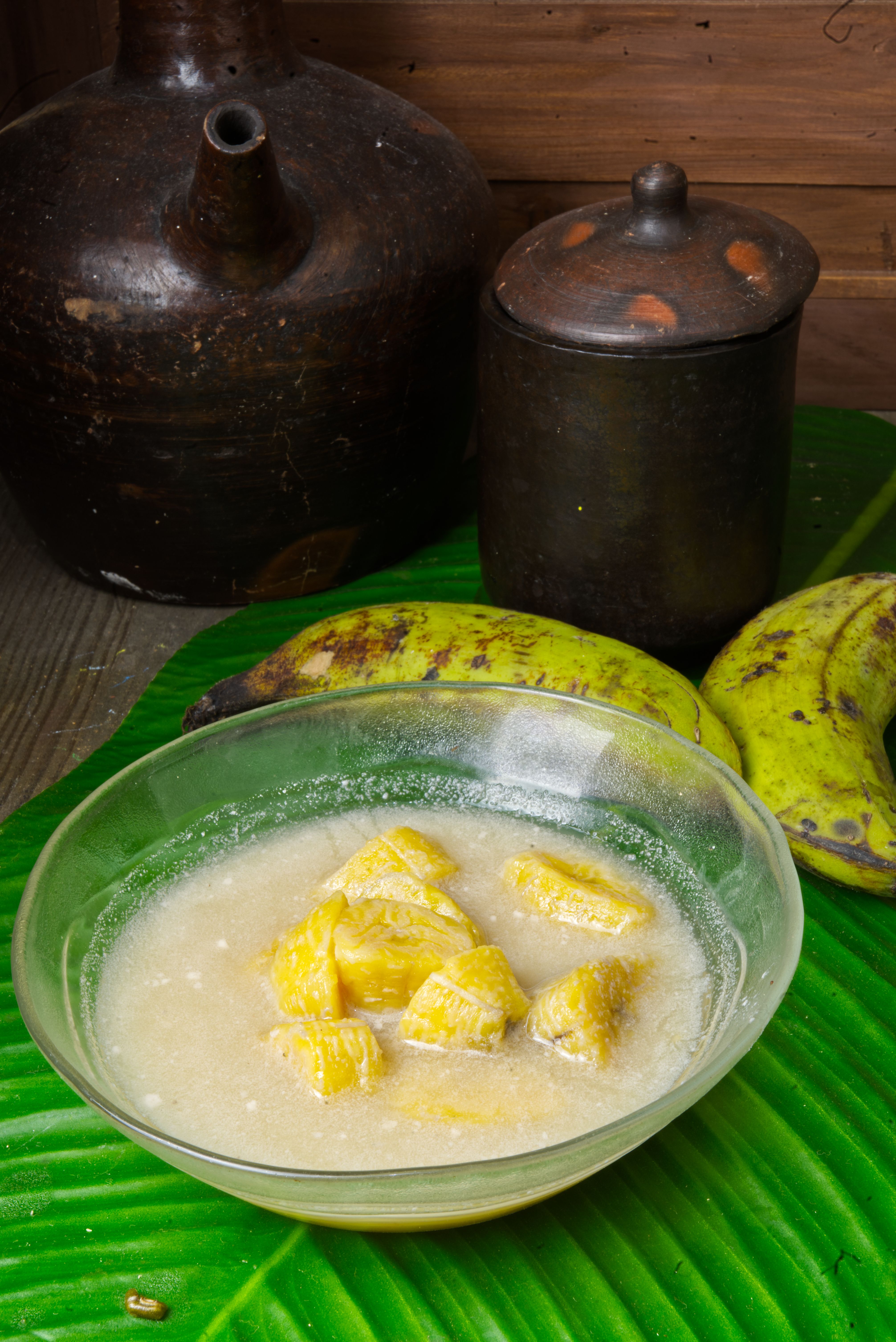
Supu ya Ndizi
The diets react (see scores below)
Common Ingredients
- green bananas
- onions
- tomatoes
- garlic
- coconut milk
- black pepper
- salt
Specific recipes may vary.
Incompatible with 5 of 11 diets
Diet Ratings
Supu ya Ndizi is fundamentally incompatible with ketogenic diet due to green bananas as the primary ingredient. Green bananas, while lower in sugar than ripe bananas due to their resistant starch content, still contain approximately 20-25g of net carbs per 100g serving. A single serving of this soup would likely contain one or more green bananas, pushing net carbs well beyond the daily keto limit in a single dish. The coconut milk is keto-friendly and the other aromatics (onions, tomatoes, garlic) contribute modest carbs, but they are secondary concerns compared to the banana base. The resistant starch in green bananas does not reduce net carb count sufficiently to make this dish viable for ketosis.
Supu ya Ndizi is a traditional Tanzanian green banana soup made entirely from whole plant foods. Every ingredient — green bananas, onions, tomatoes, garlic, coconut milk, black pepper, and salt — is unambiguously plant-derived. Coconut milk is a natural plant-based fat source, not a dairy product. The dish is minimally processed, nutritionally wholesome, and contains no animal products or animal-derived ingredients whatsoever. It scores very highly as a whole-food, plant-based meal.
This Tanzanian green banana soup is disqualified primarily by two ingredients: salt (added salt is excluded from paleo) and coconut milk (which requires scrutiny — while coconut itself is paleo-approved, commercial coconut milk often contains additives, guar gum, or preservatives). Beyond those issues, the base ingredients — green bananas, onions, tomatoes, and garlic — are all paleo-compatible whole foods, and black pepper is an approved spice. However, salt is a clear 'avoid' under standard paleo rules, and its presence is non-negotiable in this dish. Coconut milk in pure, additive-free form would be acceptable, but the combination with added salt pushes the dish into avoid territory. Without salt and using pure coconut milk, this dish would rate much higher.
Supu ya Ndizi is a whole-food, plant-based soup with no processed ingredients, which aligns well with Mediterranean principles. Green bananas, onions, tomatoes, and garlic are all vegetables or plant foods strongly encouraged in the Mediterranean diet. However, the primary fat source is coconut milk rather than olive oil, which is a notable departure from Mediterranean principles. Coconut milk is high in saturated fat and is not a traditional Mediterranean ingredient — olive oil is the canonical fat. The dish has no red meat, no refined grains, and no added sugars, so it is not harmful, but its reliance on coconut milk rather than olive oil keeps it from a full approval.
Some modern Mediterranean diet interpreters take a flexible, whole-food approach and would approve this dish, arguing that the absence of processed ingredients, red meat, and added sugar makes it fundamentally compatible. Traditional East African plant-based soups could be adapted to Mediterranean principles by swapping coconut milk for olive oil or a small amount of tahini, but the whole-food profile is otherwise sound.
Supu ya Ndizi is a Tanzanian green banana soup that is entirely plant-based. Every single ingredient — green bananas, onions, tomatoes, garlic, coconut milk, black pepper, and salt — is either plant-derived or a plant-based fat source. There are no animal products whatsoever. Green bananas are a starchy carbohydrate, onions, tomatoes, and garlic are vegetables, coconut milk is a plant-based liquid, and black pepper is a plant spice. This dish fundamentally violates every tier of the carnivore diet, including the most lenient interpretations. Even practitioners who allow minor additions like salt and spices would reject this dish entirely due to the complete absence of animal protein or fat and the heavy reliance on plant carbohydrates.
Supu ya Ndizi is a Tanzanian green banana soup with all Whole30-compliant ingredients. Green bananas are a whole fruit/vegetable, onions, tomatoes, and garlic are compliant vegetables, coconut milk is a natural fat allowed on Whole30 (as long as no non-compliant additives are present in the packaged version), black pepper and salt are compliant seasonings. Every ingredient in this dish falls squarely within the Whole30 approved foods list with no excluded ingredients present.
This dish contains multiple high-FODMAP ingredients that make it unsuitable during the elimination phase. Garlic is one of the highest-FODMAP foods tested by Monash University, rich in fructans, and must be avoided entirely during elimination — even small amounts are problematic. Onions are similarly very high in fructans and are a major FODMAP trigger. Green bananas (unripe) are high in resistant starch and GOS; Monash rates unripe banana as high-FODMAP, unlike ripe bananas which are low-FODMAP at one medium banana. Coconut milk can be low-FODMAP at small servings (up to 1/2 cup per Monash), so it is less of a concern at moderate amounts. Tomatoes and black pepper are low-FODMAP. However, the combination of garlic, onions, and green bananas creates a significantly high-FODMAP dish with no straightforward substitution that would preserve the dish's character during elimination.
Supu ya Ndizi is a Tanzanian green banana soup with several DASH-friendly ingredients — green bananas are rich in potassium and fiber, onions, tomatoes, and garlic are core DASH vegetables with beneficial antioxidants and minerals. However, the dish is anchored by coconut milk, a tropical oil-based ingredient that DASH guidelines specifically flag as a saturated fat concern (coconut products are high in lauric and myristic acids). The salt addition also introduces sodium risk depending on quantity used. The overall dish sits in 'caution' territory: the vegetable and fruit (green banana) base is excellent for DASH, but coconut milk pulls it away from full approval. If prepared with light/reduced coconut milk and minimal added salt, this dish could approach approval.
NIH DASH guidelines explicitly limit tropical oils including coconut products due to their high saturated fat content, placing coconut milk-based dishes in a restricted category. However, some updated clinical interpretations note that the saturated fats in coconut milk (primarily medium-chain triglycerides) may behave differently metabolically than long-chain saturated fats from animal sources, and some DASH-oriented dietitians permit moderate use of light coconut milk — particularly in dishes with an otherwise strong DASH-aligned nutrient profile like this one.
Supu ya Ndizi (green banana soup) presents a mixed Zone profile. Green bananas are meaningfully different from ripe bananas — they are higher in resistant starch and have a lower glycemic index than ripe bananas, making them more Zone-compatible than Dr. Sears' general caution about bananas might suggest. However, green bananas are still a starchy, high-carbohydrate ingredient that counts as an 'unfavorable' carb block in Zone terminology, and this dish is almost entirely carbohydrate-based with no lean protein source. The coconut milk adds saturated fat rather than preferred monounsaturated fat, which conflicts with Zone's anti-inflammatory fat guidelines. Onions, tomatoes, and garlic are favorable low-glycemic Zone vegetables and add polyphenols. The dish is protein-absent, meaning it cannot stand alone as a Zone meal without significant modification — adding a lean protein (chicken, fish, tofu) would be essential. As a Zone-compliant soup base it could work as a carb-fat block component, but the coconut milk's saturated fat and the starchy banana base make it a challenging fit requiring careful portion control and protein supplementation.
Some Zone practitioners and later Sears writings (particularly around resistant starch and gut health) would view green bananas more favorably than ripe ones, as their lower glycemic impact and prebiotic fiber content may support the anti-inflammatory goals of the Zone. In this reading, green banana soup with added lean protein could be a reasonable Zone meal with controlled portions. The saturated fat in coconut milk is also more accepted in later Zone/anti-inflammatory nutritional frameworks than in the original Enter the Zone.
Supu ya Ndizi is a Tanzanian green banana soup with a generally wholesome ingredient profile, but coconut milk introduces a meaningful tension in anti-inflammatory assessment. On the positive side: garlic and onions are well-established anti-inflammatory foods rich in quercetin, allicin, and organosulfur compounds that reduce inflammatory markers. Tomatoes provide lycopene and vitamin C. Black pepper contains piperine, which enhances bioavailability of other anti-inflammatory compounds. Green bananas (unripe) are rich in resistant starch, which feeds beneficial gut bacteria and supports systemic anti-inflammatory responses via short-chain fatty acid production — this is a meaningful positive. The main concern is full-fat coconut milk, which is high in saturated fat (primarily lauric acid, ~12g per 100ml). Dr. Weil's framework and mainstream anti-inflammatory nutrition categorize high saturated fat as moderately pro-inflammatory and recommend limiting it. However, there is genuine debate about coconut-derived saturated fat — lauric acid behaves differently from animal saturated fats metabolically, and some researchers argue it is neutral or even beneficial. Overall, the dish is plant-based, minimally processed, and uses whole food ingredients, which is strongly aligned with anti-inflammatory principles. The coconut milk keeps this in 'caution' territory rather than a clear approval.
Some anti-inflammatory practitioners, particularly those influenced by Ayurvedic and Southeast/East African traditional diet frameworks, view coconut milk as an acceptable or even beneficial fat due to its medium-chain triglyceride (MCT) content and lauric acid's antimicrobial properties. Dr. Weil's framework limits saturated fat broadly, but researchers like Dr. Mary Enig and keto-aligned anti-inflammatory practitioners argue that plant-derived saturated fats like coconut are categorically different from animal fats and should not be penalized equally.
Supu ya Ndizi is a Tanzanian green banana soup that has some redeeming nutritional qualities but presents meaningful concerns for GLP-1 patients. Green bananas provide resistant starch and modest fiber, which support gut health and blood sugar stability — a plus. Tomatoes, onions, and garlic add micronutrients and are easy to digest. However, the dish has no meaningful protein source, which is the top dietary priority for GLP-1 patients. Coconut milk is the primary fat source and, depending on quantity used, can add significant saturated fat and calories, potentially worsening nausea or reflux — key GLP-1 side effects. The carbohydrate load from green bananas is moderate and lower-glycemic than ripe bananas due to resistant starch, which is favorable, but without protein to anchor the meal, this soup does little to protect muscle mass or sustain satiety in the compressed eating windows typical of GLP-1 patients. As a side dish or starter in a small portion paired with a high-protein main, it is more acceptable. As a standalone meal, it falls short of GLP-1 dietary needs.
Some GLP-1-focused dietitians may view this soup more favorably on high-nausea days when easy digestibility and gentle ingredients are prioritized over protein density — green bananas and broth-based soups are often well tolerated during GI flare-ups. However, others would flag the coconut milk saturated fat content and absence of protein as disqualifying for regular inclusion, particularly during active weight loss phases where muscle preservation is critical.
*See how scores were generated at our methodology page.
Nutritional profile
Six traits that cut across every diet.
Fiber & Plants
How much whole-plant food and fiber it delivers.
Healthy Fats
The quality of its fats (unsaturated, omega-3).
Whole / Unprocessed
How close it is to its natural, unprocessed form.
Gut Gentle
How easy it is on digestion (low FODMAP, few irritants).
Low Glycemic
How little it spikes your blood sugar.
Protein Density
How much protein it packs per calorie.
Controversy Index
Higher controversy = more disagreement between diets.
Diet-Specific Tips
 Mediterranean — 5/10
View tips
- Green bananas, onions, tomatoes, and garlic are all Mediterranean-compatible whole plant foods
- Coconut milk replaces olive oil as the fat source — high in saturated fat and non-traditional in Mediterranean cuisine
- No red meat, processed ingredients, refined grains, or added sugars
- Entirely plant-based with no primary protein, fitting the plant-forward emphasis
- Simple seasoning with garlic, black pepper, and salt is consistent with Mediterranean flavoring
 Whole30 — 5/10
View tips
- Green bananas are compliant whole fruits
- Coconut milk is an approved natural fat — check label to ensure no non-compliant additives
- All vegetables (onions, tomatoes, garlic) are fully compliant
- Black pepper and salt are approved seasonings
- No grains, legumes, dairy, or added sugars present
- Simple, whole-food preparation aligns with the spirit of the program
 DASH — 5/10
View tips
- Green bananas are rich in potassium, fiber, and resistant starch — strongly DASH-positive
- Tomatoes, onions, and garlic are core DASH vegetables with potassium and antioxidant benefits
- Coconut milk is a tropical oil-derived ingredient high in saturated fat, explicitly limited by DASH guidelines
- Added salt raises sodium concern — quantity determines impact; dish could easily exceed DASH sodium thresholds
- No lean protein or low-fat dairy present, limiting DASH nutrient density
- Using light coconut milk and limiting added salt would significantly improve DASH compatibility
 Zone — 4/10
View tips
- No lean protein source — dish is protein-absent and cannot function as a standalone Zone meal
- Green bananas are starchy 'unfavorable' carbs in classic Zone, though lower GI than ripe bananas due to resistant starch
- Coconut milk provides saturated fat rather than Zone-preferred monounsaturated fat
- Onions, tomatoes, and garlic are favorable low-glycemic Zone vegetables with polyphenol benefits
- Dish is heavily carbohydrate-dominant with no 40/30/30 macro balance achievable without additions
- Would require significant modification (lean protein addition, portion control on banana) to fit Zone blocks
 Anti-Inflammatory — 6/10
View tips
- Green bananas provide resistant starch, supporting gut microbiome and anti-inflammatory SCFA production
- Garlic and onions are potent anti-inflammatory foods (allicin, quercetin, organosulfur compounds)
- Tomatoes contribute lycopene and vitamin C — beneficial antioxidants
- Black pepper contains piperine, an anti-inflammatory compound that enhances nutrient bioavailability
- Full-fat coconut milk is high in saturated fat — a limiting factor under most anti-inflammatory frameworks
- Dish is entirely plant-based, whole food, and minimally processed — strongly positive profile
- No refined carbohydrates, added sugars, seed oils, trans fats, or artificial additives
 GLP-1 Friendly — 4/10
View tips
- No protein source — fails the #1 GLP-1 dietary priority
- Coconut milk adds saturated fat, which can worsen nausea and reflux
- Green bananas provide resistant starch and modest fiber — supports blood sugar stability and gut health
- Easy to digest — favorable for GLP-1 patients experiencing GI side effects
- Low nutrient density per calorie without protein anchor
- Acceptable as a small side dish paired with lean protein, not as a standalone meal
- Portion-sensitive: coconut milk quantity significantly affects fat and calorie load