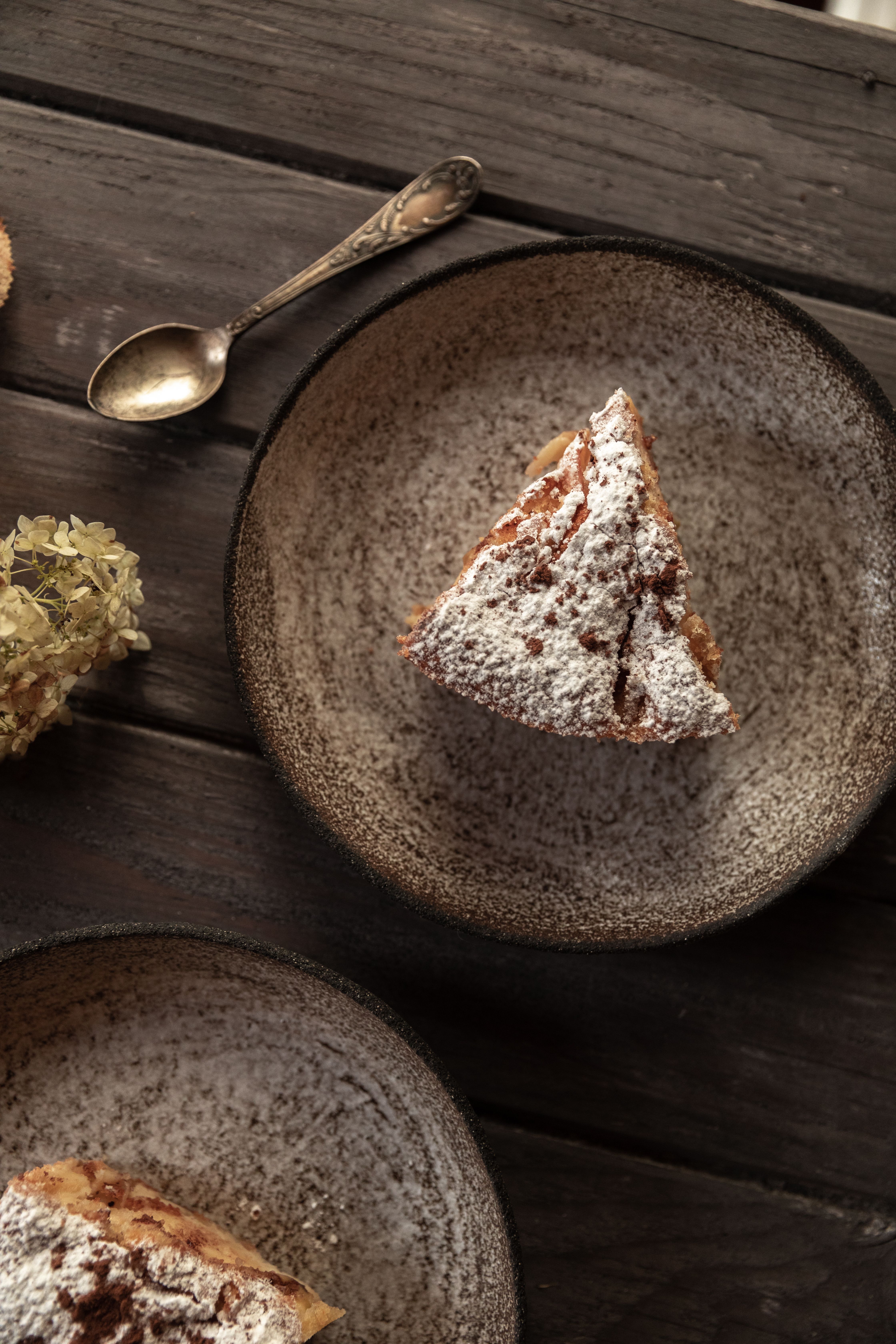
Photo: KATRIN BOLOVTSOVA / Pexels
Spanish
Tarta de Santiago
The diets react (see scores below)
Common Ingredients
- almonds
- eggs
- sugar
- butter
- cinnamon
- lemon zest
- powdered sugar
Specific recipes may vary.
Incompatible with 10 of 11 diets
Diet Ratings
Tarta de Santiago is a traditional Spanish almond cake that is fundamentally incompatible with ketogenic diet principles. While almonds and eggs are keto-friendly ingredients, the dish relies heavily on large quantities of sugar as a primary structural ingredient, and is finished with powdered sugar on top. A standard serving contains approximately 30-45g of net carbs, primarily from the sugar, which alone can exceed or max out an entire day's keto carb allowance. The almond base does provide fat and some fiber, but the sugar content is non-negotiable and cannot be portioned around — it is integral to the recipe, not a minor additive. This is a confection/dessert masquerading as a 'nut cake' and must be avoided on keto.
Tarta de Santiago contains multiple animal-derived ingredients that disqualify it from a vegan diet. Eggs and butter are core structural components of this traditional Galician almond cake — eggs provide binding and structure while butter adds richness and moisture. Both are unambiguously animal products excluded by all vegan standards. Almonds, sugar, cinnamon, lemon zest, and powdered sugar are plant-based, but the presence of eggs and butter makes this dish non-vegan regardless of the plant-based majority of ingredients.
Tarta de Santiago contains multiple non-paleo ingredients that disqualify it outright. Refined sugar and powdered sugar are processed sweeteners explicitly excluded from the paleo diet. Butter is a dairy product, which is excluded under strict paleo guidelines. While almonds, eggs, cinnamon, and lemon zest are individually paleo-approved, the overall dish is dominated by refined sugar and dairy, making it clearly incompatible with the paleo framework.
Tarta de Santiago is a traditional Galician almond cake with deep cultural roots in Spanish cuisine, but its nutritional profile conflicts with Mediterranean diet principles. While almonds are a Mediterranean staple and eggs are acceptable in moderation, the dish is loaded with added sugar (both granulated and powdered), uses butter as a fat instead of olive oil, and functions as a dessert/sweet snack. The high sugar content and refined sugar ingredients place it firmly in the 'avoid' category — Mediterranean diet guidelines strongly discourage added sugars and sweets. Butter, though used regionally in Galicia, contradicts the olive oil-first fat principle. As an occasional cultural treat it might be tolerated, but as a scored snack it cannot be approved.
Some Mediterranean diet scholars argue that traditional regional foods like Tarta de Santiago, consumed rarely and in small portions as part of a festive or cultural occasion, can coexist with Mediterranean eating patterns. The almond base provides protein, healthy fats, and fiber, and the Oldways/traditional Mediterranean framework does allow for occasional sweets made with nuts.
Tarta de Santiago is a traditional Spanish almond cake that is almost entirely plant-based and sugar-laden. The dominant ingredients — almonds, sugar, cinnamon, lemon zest, and powdered sugar — are all plant-derived and explicitly excluded from the carnivore diet. While eggs and butter are animal-derived and carnivore-compatible, they are minor components in a dish that is fundamentally incompatible with carnivore principles. This is a dessert built around nuts and sugar, two of the most disqualifying ingredient categories on the carnivore diet.
Tarta de Santiago contains multiple excluded ingredients. Sugar (added sugar) is explicitly prohibited on Whole30, and butter (regular dairy butter) is also excluded — only ghee or clarified butter is permitted. Additionally, this dish is a traditional Spanish almond cake, which falls squarely into the 'no recreating baked goods' rule (Rule 4), even if the ingredients could theoretically be made compliant. The combination of added sugar, regular butter, and the baked-good format makes this a clear avoid.
Tarta de Santiago is a traditional Spanish almond cake made without wheat flour, which makes it naturally gluten-free and free from fructans. Most ingredients are low-FODMAP: eggs, butter, sugar, cinnamon, and lemon zest are all safe. The primary concern is almonds. Per Monash University, almonds are low-FODMAP at 10 almonds (approximately 12g) per serving, but become high-FODMAP at larger servings due to GOS and excess fructose. A standard slice of Tarta de Santiago is almond-dense — a typical recipe uses around 200-250g of almonds for an 8-10 slice cake, meaning each slice could contain 25-35g of almonds, well above the Monash-approved 12g threshold. Powdered sugar is essentially sucrose and is low-FODMAP. The overall FODMAP load per standard serving is therefore moderate to high depending on slice size, placing this dish in caution territory.
Monash University rates almonds as low-FODMAP at 10 nuts (12g), but a realistic slice of Tarta de Santiago likely contains 2-3x this amount. Some FODMAP practitioners would advise avoiding this cake during strict elimination, while others suggest a very small portion (thin slice) could be tolerated — making compliance highly dependent on portion discipline.
Tarta de Santiago is a traditional Spanish almond cake that is fundamentally incompatible with DASH diet principles as a regular food. While almonds are a DASH-approved ingredient rich in magnesium, potassium, and healthy fats, the dish is dominated by large quantities of added sugar (both granulated and powdered), butter (saturated fat), and eggs. The sugar load is exceptionally high — sugar is the primary structural ingredient alongside almonds — placing this firmly in the 'sweets' category that DASH explicitly limits. Butter contributes saturated fat, which DASH restricts. The overall nutritional profile — high added sugar, significant saturated fat, calorie-dense, minimal fiber relative to its sugar content — conflicts directly with DASH core principles. DASH guidelines specifically call for limiting sweets to 5 or fewer servings per week (and those servings should be small/low-fat), and a slice of this tart would far exceed a single discretionary sweet serving. As an occasional very small treat it is not categorically forbidden, but as a snack it earns an 'avoid' rating.
Tarta de Santiago is a traditional Spanish almond cake whose macronutrient profile is fundamentally incompatible with Zone Diet principles. The dish is dominated by sugar (both granulated and powdered), which is a high-glycemic carbohydrate that Sears explicitly categorizes as unfavorable and essentially eliminates from Zone meals. While almonds and eggs provide some redeeming nutritional value — almonds offer monounsaturated fat and eggs provide lean protein — these favorable components are overwhelmed by the sugar load. The macronutrient ratio is heavily skewed toward fat and simple carbohydrates, with minimal lean protein, making it nearly impossible to fit this into a Zone-balanced 40/30/30 block structure in any meaningful portion. The butter adds saturated fat on top of an already problematic carbohydrate profile. Unlike most foods that can be portioned into Zone meals, the sugar concentration here means even a small slice delivers a glycemic spike that would disrupt eicosanoid balance — the core concern of Zone methodology. There is no practical way to use this as a snack building block without completely undermining Zone ratios.
Tarta de Santiago is a traditional Galician almond cake with a mixed anti-inflammatory profile. On the positive side, almonds are a genuine anti-inflammatory food — rich in vitamin E, monounsaturated fats, magnesium, and polyphenols that are associated with reduced CRP and IL-6 levels. Cinnamon is a recognized anti-inflammatory spice, and lemon zest contributes beneficial flavonoids. However, the dish is heavily weighted toward pro-inflammatory ingredients: sugar (both granulated and powdered/finishing sugar) is a primary component, and butter is a saturated fat that the anti-inflammatory framework explicitly limits. Eggs occupy a moderate position. The overall macronutrient and ingredient balance tilts this dish toward a high-sugar, high-saturated-fat dessert that uses almonds as a base but doesn't qualify as a net anti-inflammatory food. It is not as problematic as a heavily processed pastry — the absence of refined flour, trans fats, and artificial additives is a meaningful distinction — but the sugar load and butter content keep it firmly in the 'caution' zone. Suitable as an occasional treat, not a dietary staple.
Tarta de Santiago is a traditional Spanish almond cake that is poorly suited for GLP-1 patients. It is calorie-dense and high in sugar (granulated sugar plus powdered sugar topping), high in saturated fat (butter plus almonds), and offers minimal fiber despite the almond content. While almonds do contribute some protein, the overall protein density per calorie is low, and the primary protein is listed as none — this is essentially a dessert masquerading as a snack. The high fat and sugar content is likely to worsen common GLP-1 side effects including nausea, bloating, and reflux due to slowed gastric emptying. The empty-calorie profile from sugar undermines the critical need for nutrient density on a reduced-appetite diet. A standard slice delivers significant caloric load with little satiety-supporting fiber or protein payoff per calorie.
*See how scores were generated at our methodology page.
Nutritional profile
Six traits that cut across every diet.
Fiber & Plants
How much whole-plant food and fiber it delivers.
Healthy Fats
The quality of its fats (unsaturated, omega-3).
Whole / Unprocessed
How close it is to its natural, unprocessed form.
Gut Gentle
How easy it is on digestion (low FODMAP, few irritants).
Low Glycemic
How little it spikes your blood sugar.
Protein Density
How much protein it packs per calorie.
Controversy Index
Higher controversy = more disagreement between diets.
Diet-Specific Tips
 Anti-Inflammatory — 4/10
View tips
- Almonds are a strong anti-inflammatory food (vitamin E, monounsaturated fats, polyphenols)
- High added sugar content (granulated + powdered sugar) is pro-inflammatory
- Butter contributes saturated fat, which the anti-inflammatory framework limits
- Cinnamon provides minor anti-inflammatory benefit
- Lemon zest adds anti-inflammatory flavonoids
- No refined flour or trans fats — better than typical pastries
- Eggs are nutritionally moderate in this context
- Net profile is mixed but skews pro-inflammatory due to sugar and saturated fat dominance