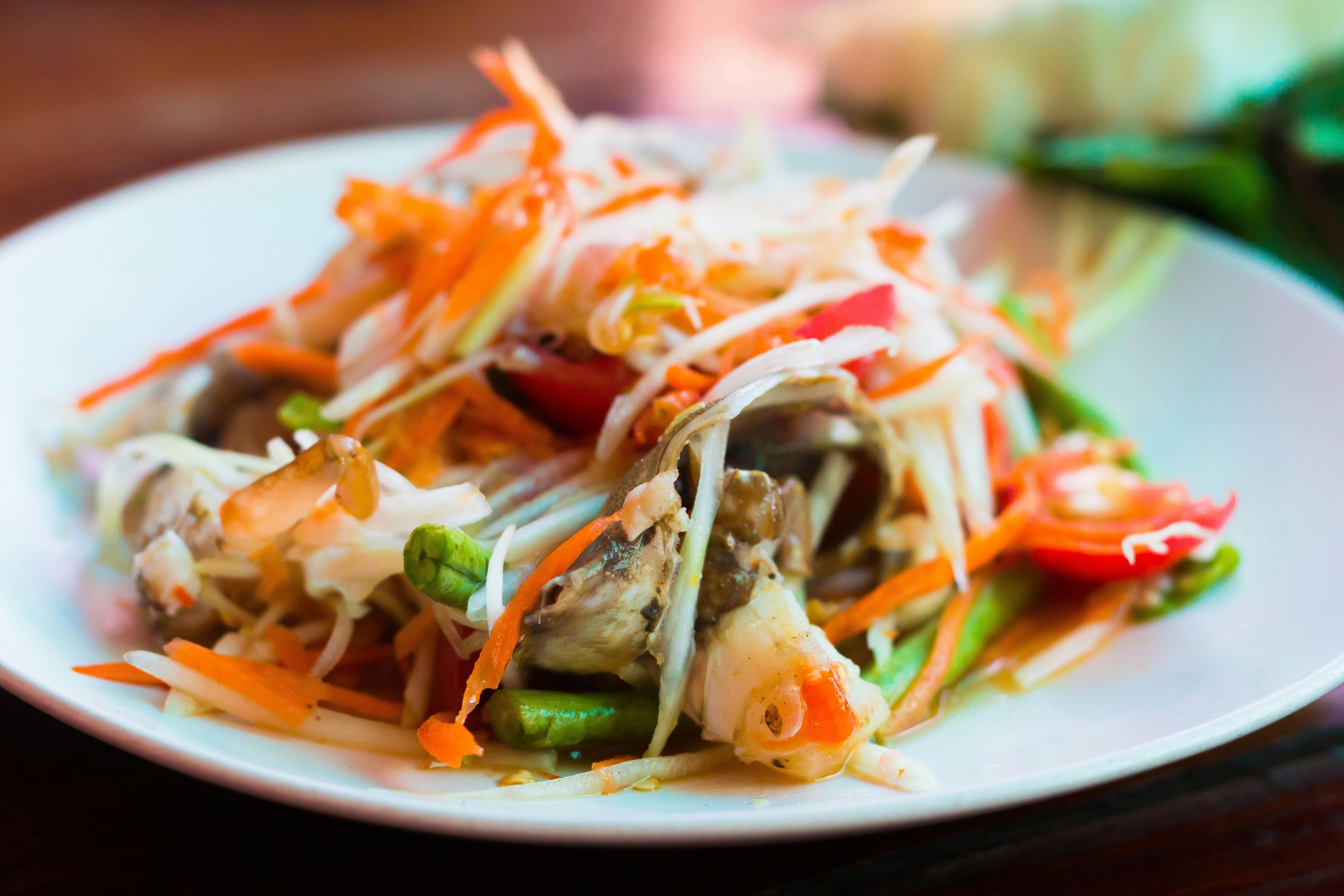
The diets react (see scores below)
Common Ingredients
- fish
- tamarind
- chili
- shrimp paste
- turmeric
- garlic
- shallots
- palm sugar
- fish sauce
- vegetables
Specific recipes may vary.
Incompatible with 5 of 11 diets
Diet Ratings
Gaeng Som (Thai sour curry soup) presents a mixed keto profile. The base ingredients — fish, shrimp paste, chili, turmeric, garlic, and fish sauce — are generally keto-compatible. However, two ingredients create significant concern: palm sugar is a direct added sugar used in meaningful quantities to balance the sourness of tamarind, and tamarind itself is relatively high in carbs. Together, these push the net carb count of a standard serving noticeably upward. The unspecified 'vegetables' add further uncertainty — Thai versions often include papaya, long beans, cabbage, or morning glory, which vary in carb content. A standard restaurant portion could easily contain 10-20g net carbs, making it marginal but not disqualifying for those tracking carefully. Home-prepared versions with palm sugar omitted or minimized and low-carb vegetables selected could be made more keto-friendly.
Some strict keto practitioners would rate this 'avoid' due to the non-negotiable role of palm sugar in the dish's identity — arguing that any dish with added sugar as a core structural ingredient should be excluded regardless of portion size, as it sets a precedent for sugar tolerance.
Gaeng Som contains multiple animal-derived ingredients that disqualify it from any vegan diet. Fish is the primary protein — a clear animal product. Fish sauce is made from fermented fish. Shrimp paste is derived from fermented crustaceans. These three ingredients alone make this dish firmly non-vegan, with no ambiguity. The remaining ingredients (tamarind, chili, turmeric, garlic, shallots, palm sugar, vegetables) are plant-based, but the dish as traditionally prepared cannot be considered vegan in any meaningful sense.
Gaeng Som contains several non-paleo ingredients that disqualify it from approval. Fish sauce is a processed condiment that typically contains added salt, and shrimp paste is a fermented, processed product with added salt — both violate the no-added-salt and no-processed-foods rules. Palm sugar is a refined sugar that falls into the avoid category. The core protein (fish) and most aromatics (chili, turmeric, garlic, shallots, tamarind, vegetables) are paleo-friendly, but the combination of fish sauce, shrimp paste, and palm sugar creates a fundamentally non-paleo dish as traditionally prepared. These are not minor trace ingredients — they are structural to the dish's flavor profile and cannot simply be omitted without fundamentally changing the recipe.
Gaeng Som is a Thai sour curry soup with fish as the primary protein, which strongly aligns with Mediterranean diet principles emphasizing fish 2-3 times weekly. The vegetables, garlic, shallots, and turmeric are all plant-forward ingredients consistent with the diet. However, several elements introduce friction: shrimp paste and fish sauce are highly processed, high-sodium condiments not found in the Mediterranean tradition; palm sugar is an added sugar, albeit in small amounts; and the dish lacks olive oil entirely, relying instead on no primary fat source (or implicitly coconut-based broths in some versions). The overall dish is nutritious and fish-forward, but its non-Mediterranean flavor profile and processed condiments prevent a full approval.
Some modern Mediterranean diet interpreters focus on the macronutrient and food-group pattern rather than strict regional ingredients, and would argue that a fish-and-vegetable soup with anti-inflammatory spices (turmeric, garlic, chili) fits the spirit of the diet well enough to approve, treating fish sauce and shrimp paste as minor flavoring agents analogous to anchovy paste used in traditional Mediterranean cooking.
Gaeng Som is a Thai sour curry that is fundamentally incompatible with the carnivore diet. While it does contain fish and fish sauce (animal-derived), the dish is built around a paste and broth made almost entirely from plant ingredients: tamarind (plant-based souring agent), chili, turmeric, garlic, shallots, and palm sugar. Vegetables are a core structural component of the dish, not a garnish. Palm sugar is a processed plant-derived sweetener. The shrimp paste, while animal-derived, is embedded in a plant-heavy curry paste. There is no version of this dish that could be considered carnivore-compatible without completely reconstructing it — it would no longer be Gaeng Som. The dominant ingredients and flavor profile are plant-based, making this a clear avoid.
Gaeng Som contains palm sugar, which is an added sugar and explicitly excluded on Whole30. While most of the other ingredients are compliant—fish, tamarind, chili, turmeric, garlic, shallots, and vegetables are all allowed, and fish sauce and shrimp paste are generally compliant—the inclusion of palm sugar disqualifies this dish. Whole30 prohibits all forms of added sugar, real or artificial, and palm sugar (also known as nam tan peep) is a real, caloric added sugar. Additionally, shrimp paste warrants label scrutiny for any added preservatives or non-compliant ingredients, but the primary disqualifier is the palm sugar.
Gaeng Som contains multiple high-FODMAP ingredients that make it unsuitable during the elimination phase. Garlic is one of the highest-FODMAP foods (fructans) and is a core component of the curry paste. Shallots are also high-FODMAP due to fructans and are used in meaningful quantities in this dish. Shrimp paste (kapi) frequently contains garlic and shallots as well, compounding the fructan load. These three ingredients alone make this dish a clear avoid. While fish, tamarind (in small amounts), chili, turmeric, fish sauce, and many vegetables are individually low-FODMAP, the garlic and shallot content is non-negotiable and cannot be reduced to safe portions in a traditional Gaeng Som preparation. Palm sugar is low-FODMAP at standard servings. The dish as traditionally prepared would trigger significant FODMAP symptoms in sensitive individuals.
Gaeng Som (Thai sour curry soup) contains several DASH-friendly elements — lean fish as the primary protein, tamarind for sourness, turmeric, garlic, shallots, and vegetables — all consistent with DASH principles. However, two ingredients raise significant concerns: fish sauce and shrimp paste, which are extremely high in sodium (fish sauce contains roughly 1,400mg sodium per tablespoon, and shrimp paste adds additional sodium), making a typical serving likely approach or exceed the DASH daily sodium target in one dish alone. Palm sugar adds refined sugar, and shrimp paste contributes moderate levels of sodium even in small quantities. The dish is not inherently high in saturated fat and does feature lean protein and vegetables, keeping it out of the 'avoid' category. However, the sodium load from traditional preparation is a major DASH concern. Home-prepared versions using reduced fish sauce, low-sodium fish sauce alternatives, and minimal shrimp paste could raise the score considerably.
NIH DASH guidelines categorically flag high-sodium condiments like fish sauce and shrimp paste as incompatible with DASH sodium targets. However, some DASH-oriented dietitians working with Southeast Asian populations argue that culturally adapted versions using reduced-sodium fish sauce and smaller quantities of shrimp paste can fit within DASH guidelines while preserving the dish's nutritional benefits (lean fish, vegetables, anti-inflammatory spices), and that the potassium and magnesium from vegetables and tamarind partially offset sodium's blood pressure impact.
Gaeng Som (Thai sour curry soup) has a strong Zone-compatible foundation but contains some elements requiring portion control. The fish protein is excellent — lean, anti-inflammatory omega-3 rich, and fits neatly into Zone protein blocks. The vegetable base aligns well with Zone's emphasis on colorful, low-glycemic carbohydrates. Tamarind, chili, turmeric (a polyphenol powerhouse Sears explicitly endorses), garlic, and shallots all support the anti-inflammatory focus of the Zone. However, palm sugar is a high-glycemic sweetener that raises the glycemic load, and fish sauce adds sodium. Shrimp paste is generally fine in small amounts. The dish is naturally low in fat, which paradoxically makes it harder to hit the 30% fat target without supplementing — a Zone meal built around this soup would need added monounsaturated fat (e.g., a side with olive oil or a few almonds). The tamarind contributes carbs that count toward blocks. Overall, this is a reasonably Zone-adaptable dish if the palm sugar is minimized and fat is supplemented, but as typically prepared in restaurants it skews toward carb-heavy with insufficient fat, earning a cautious approval.
Some Zone practitioners would rate this higher (7-8) because the anti-inflammatory ingredient profile — omega-3 fish, turmeric, garlic, chili, and polyphenol-rich vegetables — aligns closely with Sears' later writings in 'The Anti-Inflammation Zone,' where food quality and inflammation markers are weighted alongside strict macronutrient ratios. The palm sugar concern diminishes if the quantity used per serving is small (1-2 grams), which is typical in a large pot of soup.
Gaeng Som (Thai sour curry soup) has a genuinely strong anti-inflammatory foundation. Fish is the primary protein, providing lean protein and, depending on the species, meaningful omega-3 fatty acids. Turmeric is one of the most well-supported anti-inflammatory spices due to its curcumin content. Chili contains capsaicin, which has documented anti-inflammatory properties. Garlic and shallots contribute organosulfur compounds and quercetin with established anti-inflammatory effects. Tamarind offers antioxidants and polyphenols. The vegetable base adds fiber, carotenoids, and phytonutrients. The broth-based, oil-free preparation method is favorable — unlike coconut milk curries, Gaeng Som avoids saturated fat from coconut. The main concerns are: (1) fish sauce and shrimp paste contribute significant sodium, which is not directly pro-inflammatory but warrants moderation for cardiovascular health; (2) palm sugar adds refined sugar, which is mildly pro-inflammatory — the amount in a typical serving is small but not negligible; (3) shrimp paste is a fermented, processed condiment with additives and high sodium. Overall, the dish's anti-inflammatory strengths (fish, turmeric, chili, garlic, vegetables) substantially outweigh its modest liabilities, placing it solidly in approve territory, though not at the top of the scale due to sodium and added sugar.
Most anti-inflammatory frameworks would view this dish favorably given its whole-food ingredients and spice profile. However, some stricter anti-inflammatory and AIP-adjacent protocols flag shrimp paste and fish sauce as processed, additive-containing ingredients with high sodium that may provoke gut inflammation in sensitive individuals. The palm sugar, while small in quantity, is still an added refined sugar that purists like those following Dr. Fuhrman's nutrient-density approach would flag as a negative.
Gaeng Som (Thai sour curry soup) has a genuinely mixed profile for GLP-1 patients. On the positive side, fish is a lean, high-quality protein source that supports muscle preservation, and the broth-based format with vegetables provides fiber, hydration, and micronutrients with relatively low fat — a strong combination for patients eating smaller portions. Tamarind, turmeric, garlic, and shallots add nutritional value with minimal caloric cost. However, several ingredients raise concern: chili and shrimp paste can worsen GLP-1-related nausea, reflux, and GI irritation, especially in the early weeks of treatment or during dose escalation. Palm sugar adds simple sugars that contribute empty calories in a context where every calorie must count. Fish sauce is high in sodium, which can affect fluid retention and blood pressure. The spice level of a typical restaurant preparation of Gaeng Som is often significant — this is not a mildly spiced dish — which is the primary driver of the caution rating rather than its macronutrient profile. If prepared at home with reduced chili, no palm sugar, and controlled sodium, it could approach an approve rating.
Some GLP-1-focused dietitians would rate this higher, noting that broth-based soups with lean fish and vegetables are among the most GLP-1-compatible meal formats available, and that individual chili tolerance varies widely — patients who tolerate spice well may experience no additional GI burden. Others would rate it lower, citing the cumulative GI risk of combining chili, shrimp paste, and tamarind acid in a population already prone to nausea and reflux.
*See how scores were generated at our methodology page.
Nutritional profile
Six traits that cut across every diet.
Fiber & Plants
How much whole-plant food and fiber it delivers.
Healthy Fats
The quality of its fats (unsaturated, omega-3).
Whole / Unprocessed
How close it is to its natural, unprocessed form.
Gut Gentle
How easy it is on digestion (low FODMAP, few irritants).
Low Glycemic
How little it spikes your blood sugar.
Protein Density
How much protein it packs per calorie.
Controversy Index
Higher controversy = more disagreement between diets.
Diet-Specific Tips
 Keto — 4/10
View tips
- Palm sugar is a core ingredient and direct added sugar — significant keto concern
- Tamarind is moderately high in carbs and used in notable quantities for sourness
- Fish is an excellent keto protein source with zero carbs
- Shrimp paste, fish sauce, chili, turmeric are keto-compatible
- Vegetable selection is unspecified and could range from low to moderate carb
- Standard restaurant portion likely 10-20g net carbs — feasible for lazy keto, tight for strict keto
- Home preparation allows palm sugar reduction or substitution
 Mediterranean — 5/10
View tips
- Fish is the primary protein, meeting the 2-3x weekly seafood recommendation
- Abundant vegetables and plant-based aromatics align well with Mediterranean principles
- No olive oil; dish does not use Mediterranean-canonical fat sources
- Fish sauce and shrimp paste are highly processed, high-sodium condiments
- Palm sugar adds refined/added sugar, albeit typically in small quantities
- Turmeric and chili provide anti-inflammatory benefits consistent with Mediterranean diet values
 DASH — 4/10
View tips
- Very high sodium from fish sauce (~1,400mg/tbsp) — major DASH concern
- Shrimp paste adds additional significant sodium
- Lean fish protein aligns well with DASH lean protein guidelines
- Vegetables, garlic, shallots, turmeric support DASH nutrient targets
- Palm sugar contributes added sugar, a DASH-limited ingredient
- Tamarind provides beneficial antioxidants and potassium
- Low in saturated fat — a DASH positive
- Low-sodium preparation (reduced fish sauce, less shrimp paste) would score significantly higher
 Zone — 6/10
View tips
- Lean fish protein is ideal for Zone protein blocks and provides anti-inflammatory omega-3s
- Vegetable base supports Zone's emphasis on low-glycemic, colorful carbohydrates
- Turmeric and chili are polyphenol-rich, explicitly favored in Sears' anti-inflammatory Zone framework
- Palm sugar is a high-glycemic sweetener that increases glycemic load and requires portion monitoring
- Dish is naturally low in fat — requires supplemental monounsaturated fat to achieve 40/30/30 balance
- Tamarind contributes net carbs that must be counted in block calculations
- Fish sauce adds sodium but is used in small amounts and does not significantly affect macros
 Anti-Inflammatory — 7/10
View tips
- Fish provides lean protein and potential omega-3 fatty acids (species-dependent)
- Turmeric is a top-tier anti-inflammatory spice (curcumin)
- Chili contains capsaicin with anti-inflammatory and antioxidant properties
- Garlic and shallots contribute organosulfur compounds and quercetin
- Tamarind provides polyphenols and antioxidants
- Vegetable base adds fiber, carotenoids, and phytonutrients
- Broth-based preparation avoids saturated fat (no coconut milk)
- Fish sauce and shrimp paste are high-sodium processed condiments
- Palm sugar adds a small amount of refined sugar (mildly pro-inflammatory)
- Shrimp paste is fermented and may be problematic for gut-sensitive individuals
 GLP-1 Friendly — 5/10
View tips
- Lean fish protein supports muscle preservation and satiety
- Broth-based format aids hydration and easy digestibility
- Vegetables contribute fiber and micronutrient density
- High chili content poses meaningful risk of worsening nausea and reflux in GLP-1 patients
- Shrimp paste may irritate GI tract already sensitized by medication
- Palm sugar adds unnecessary simple sugars with no nutritional benefit
- High sodium from fish sauce warrants attention
- Spice level in typical restaurant preparation is a significant concern