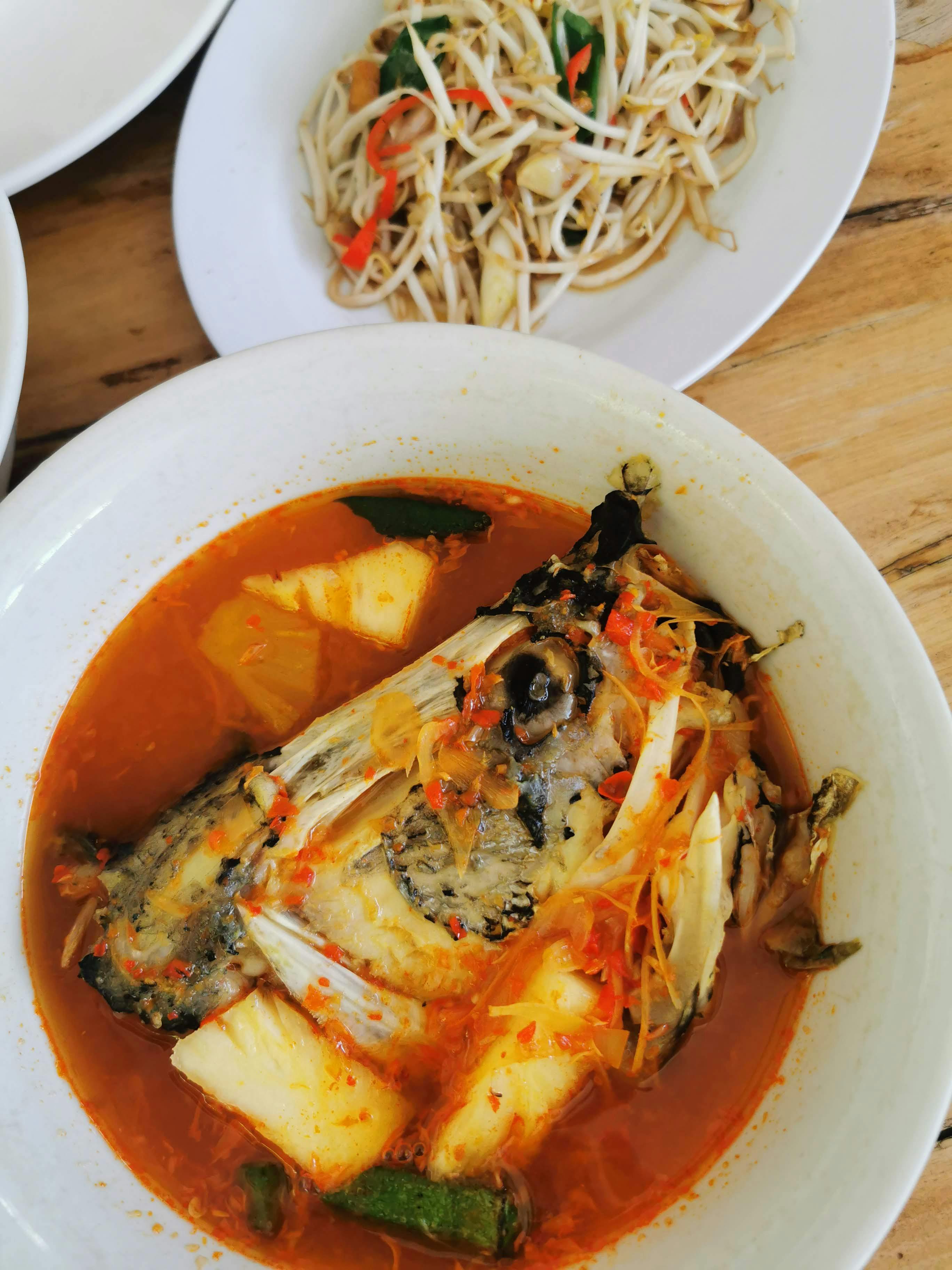
Photo: Monakha laden / Pexels
The diets react (see scores below)
Common Ingredients
- fish
- fermented fish innards
- turmeric
- chili
- lemongrass
- galangal
- kaffir lime leaves
- bamboo shoots
- eggplant
- shrimp paste
Specific recipes may vary.
Incompatible with 5 of 11 diets
Diet Ratings
Gaeng Tai Pla is a southern Thai curry soup with a solid keto foundation — fish and fermented fish innards provide quality protein and fat with negligible carbs, and the aromatic base (turmeric, chili, lemongrass, galangal, kaffir lime leaves, shrimp paste) contributes minimal net carbs. However, two ingredients create concern: bamboo shoots add moderate carbs (roughly 3-4g net carbs per 100g) and eggplant adds another 3-4g net carbs per 100g. In a restaurant serving, both are typically used in generous quantities, potentially pushing net carbs to 10-15g per bowl. Crucially, this dish is made without coconut milk (unlike most Thai curries), so the fat content is lower than expected. The fermented fish base (tai pla) itself is fine — it's a salt-and-ferment product. The dish is keto-compatible with portion awareness on the bamboo shoots and eggplant, but restaurant versions may be borderline.
Strict keto practitioners may flag this dish due to unpredictable restaurant portion sizes of bamboo shoots and eggplant, combined with the lack of high-fat coconut milk, making it a poor macro fit; lazy keto adherents who track net carbs loosely would likely approve it freely given the quality protein and low-sugar profile.
Gaeng Tai Pla contains multiple animal-derived ingredients that are unambiguously non-vegan. Fish is a direct animal product, fermented fish innards (tai pla) are the defining ingredient of this southern Thai curry and are also animal-derived, and shrimp paste (kapi) is made from fermented crustaceans. All three are clear violations of vegan dietary rules. There is no meaningful debate within the vegan community about any of these ingredients.
Gaeng Tai Pla is a strongly flavored southern Thai curry soup built on a foundation of fish and aromatic herbs and vegetables — many of which are paleo-compatible. Fish, turmeric, chili, lemongrass, galangal, kaffir lime leaves, bamboo shoots, and eggplant are all whole, unprocessed ingredients available in some form to hunter-gatherers. However, two ingredients create significant paleo concerns: fermented fish innards (tai pla) and shrimp paste (kapi). Both are heavily fermented, salted, and processed condiments — shrimp paste in particular contains added salt and undergoes significant industrial or artisanal processing, placing it in the processed/preserved food category that strict paleo excludes. Fermented fish products occupy a gray zone: fermentation itself is ancient and natural, but the high sodium content and processing method push tai pla toward the edge of paleo acceptability. The dish's core protein and aromatics are solid, but these two condiments are central to the dish's identity and cannot be easily separated from it, preventing a full approval.
Some paleo practitioners, particularly those following a more ancestral or primal framework (e.g., Chris Kresser's approach), argue that traditionally fermented fish products like fish sauce and fermented fish paste are among the most ancestral condiments humans have consumed and are acceptable despite salt content. Under this view, tai pla and shrimp paste could be considered marginally acceptable as minimally processed, nutrient-dense fermented foods.
Gaeng Tai Pla is a Thai fish-based soup with several Mediterranean-compatible elements: fish as the primary protein is strongly encouraged 2-3 times weekly, and vegetables like eggplant, bamboo shoots, and aromatic herbs align well with plant-forward principles. However, the dish features fermented fish innards and shrimp paste, which are high-sodium, highly processed fermented ingredients not typical of the Mediterranean pattern. There is no olive oil, and the overall flavor profile relies heavily on fermentation and chili heat rather than the fresh, whole-food approach central to Mediterranean eating. The dish is not harmful in composition — it is largely whole-food and plant-rich — but its reliance on very salty fermented condiments and the absence of Mediterranean staples places it in cautious territory rather than a clear approval.
Some Mediterranean diet interpreters focused on the 'whole food, plant-forward with fish' framework could argue the dish warrants a higher score, as fish, eggplant, and aromatic vegetables are all core Mediterranean ingredients; the fermented components, while non-traditional, are not processed in the same way as refined grains or added sugars, and traditional Mediterranean cuisines also use salt-preserved fish products like bottarga and anchovies.
Gaeng Tai Pla is a heavily plant-laden Thai curry soup that is fundamentally incompatible with the carnivore diet. While it does contain carnivore-approved ingredients — fish and fermented fish innards (an organ-like product) — these are completely overshadowed by the extensive list of plant-based ingredients. Turmeric, chili, lemongrass, galangal, and kaffir lime leaves are plant spices and aromatics. Bamboo shoots and eggplant are vegetables explicitly excluded from the carnivore diet. Shrimp paste, while animal-derived, is typically fermented with plant additives. The dish's entire flavor profile and structure is built around plant compounds, making it an avoid regardless of the fish content.
Gaeng Tai Pla is a Southern Thai curry soup built around fermented fish innards (tai pla) and shrimp paste (kapi), both of which are highly processed fermented condiments. The base ingredients — fish, turmeric, chili, lemongrass, galangal, kaffir lime leaves, bamboo shoots, and eggplant — are all Whole30-compliant whole foods. However, the two signature fermented components raise concern. Shrimp paste commonly contains added salt and sometimes sugar or preservatives, requiring careful label scrutiny. More critically, fermented fish innards (tai pla) is an intensely fermented product that may contain added sugar, sulfites (now allowed per 2024 rules), or other additives depending on the brand/preparation. If both fermented components are sourced in pure, additive-free forms (fish + salt only), the dish is technically compliant. However, the reliance on two heavily processed fermented condiments as the flavor backbone of the dish places it in caution territory. In practice, commercially available tai pla and shrimp paste almost always require label verification, and homemade versions vary widely.
Some Whole30 practitioners would argue that traditional fermented fish products made with only fish and salt are perfectly aligned with the program's emphasis on ancestral, whole-food eating, and that Melissa Urban's guidelines do not specifically exclude fermented fish condiments. Conversely, others flag that highly processed, pungent fermented pastes mirror the spirit-of-the-program concern around relying on condiments to make otherwise plain food palatable.
Gaeng Tai Pla is a intensely flavored Southern Thai curry soup built around fermented fish innards (tai pla), which is the central and non-negotiable ingredient. Several components raise significant FODMAP concerns. Fermented fish innards (tai pla) are a complex fermented product with no Monash testing; their fermentation process and composition make FODMAP status unpredictable, and some fermented pastes contain onion or garlic derivatives. Shrimp paste (kapi) frequently contains added garlic and onion-based seasonings, making it a likely fructan source. Bamboo shoots are rated by Monash as low-FODMAP at 1/2 cup but canned versions can vary. Thai eggplant (a variety distinct from standard eggplant) has limited specific Monash data — standard eggplant is low-FODMAP at small serves (~75g) but Thai eggplants are used in larger quantities in curries. Galangal and lemongrass are generally considered low-FODMAP aromatics (used as flavor infusers, often removed). Kaffir lime leaves and turmeric are low-FODMAP. Chili is low-FODMAP. The fish itself is fine. The critical issues are the shrimp paste (likely contains garlic/onion) and the completely untested fermented fish innards paste, which together make this dish very high risk during the elimination phase. This is not a dish where high-FODMAP ingredients can be omitted — tai pla IS the dish.
Monash University has not specifically tested tai pla (fermented fish innards) or many traditional Thai shrimp paste formulations, so the exact FODMAP load is unknown. Some FODMAP-trained dietitians may argue that the small quantities of shrimp paste used per serving could fall within tolerable limits, but the presence of unvetted fermented fish innards and likely garlic/onion in shrimp paste makes most clinical practitioners advise avoidance during elimination.
Gaeng Tai Pla is a Southern Thai curry soup whose defining characteristic is fermented fish innards (tai pla), a highly fermented, intensely salty condiment that contributes extremely high sodium levels to the dish. Shrimp paste (kapi) adds further sodium. Together these two ingredients can push a single serving well above the entire daily sodium limit for even standard DASH (2,300mg/day), let alone the low-sodium DASH target of 1,500mg/day. While the dish contains genuinely DASH-friendly components — fish as lean protein, turmeric, lemongrass, galangal, kaffir lime leaves as anti-inflammatory aromatics, and bamboo shoots and eggplant as vegetables — these positives are overwhelmed by the sodium load from fermented fish innards and shrimp paste. This is not a preparation issue that can be easily mitigated: the fermented fish innards are the central, defining ingredient of the dish, and removing or reducing them fundamentally changes the dish to something else entirely.
NIH DASH guidelines focus on overall dietary sodium patterns rather than single dishes, and some DASH-oriented clinicians note that if the rest of the day's intake is very low in sodium, occasional high-sodium dishes may fit within daily limits. Additionally, fermented fish products provide beneficial probiotics and omega-3-associated compounds that some updated nutritional interpretations view favorably, though the sodium burden remains the dominant concern for hypertension management.
Gaeng Tai Pla is a Southern Thai curry soup with a reasonably Zone-compatible macro profile. Fish is an excellent lean protein source, well-favored in Zone methodology and rich in omega-3 fatty acids. The vegetable components — bamboo shoots, eggplant, lemongrass, galangal, kaffir lime leaves, and turmeric — are all low-glycemic, polyphenol-rich ingredients that align well with Zone's anti-inflammatory emphasis. Turmeric in particular is a standout polyphenol that Sears highlights in his later writings. The primary Zone concerns center on the fermented fish innards (tai pla paste) and shrimp paste, both of which are very high in sodium and contribute a small but meaningful amount of saturated fat. The fermented fish innards are also nutritionally complex and difficult to block-count precisely. The dish is typically consumed without significant added fat beyond what's in the paste, which is mostly seafood-derived rather than seed oils — a mild positive. The main challenge is portioning: as traditionally served, the dish may be carbohydrate-light (favorable) but the protein block is hard to calibrate given the fermented paste contributes some protein alongside the main fish. A Zone practitioner can use this dish effectively by pairing it with a measured protein portion of fish and treating the vegetable components as favorable carb blocks, keeping the overall meal ratio on target.
Some Zone practitioners may rate this more favorably (score 7-8), noting that fish-based soups with low-glycemic vegetables are near-ideal Zone meals, and that traditional fermented ingredients, while high in sodium, do not meaningfully disrupt the 40/30/30 ratio. The sodium concern is a health consideration but not strictly a Zone macronutrient concern. Conversely, stricter Zone followers may flag the difficulty of precisely block-counting fermented pastes and the potential for hidden carbohydrates or saturated fats in restaurant preparations, keeping it firmly in caution territory.
Gaeng Tai Pla is a deeply flavored Southern Thai curry soup built on a powerful anti-inflammatory spice foundation — turmeric, chili, lemongrass, galangal, and kaffir lime leaves are all strongly anti-inflammatory ingredients with well-documented polyphenol and bioactive compound profiles. Fish as the primary protein adds omega-3 fatty acids, supporting an anti-inflammatory verdict. Bamboo shoots and eggplant contribute fiber and antioxidants (eggplant contains nasunin, a potent antioxidant). However, the defining ingredient of this dish — tai pla (fermented fish innards/viscera paste) — introduces significant complexity. It is extremely high in sodium, and chronic high sodium intake is associated with endothelial inflammation and increased cardiovascular risk markers. Fermented fish products also carry a high histamine load, which can trigger inflammatory responses in histamine-sensitive individuals. Shrimp paste similarly adds sodium and fermented histamine-containing compounds. The dish is not processed in the industrial sense, and the fermentation does provide some probiotic-adjacent benefit, but the salt load and histamine content are genuine anti-inflammatory concerns that prevent a full approval. For a generally healthy individual consuming this occasionally, the spice and fish benefits are meaningful, but the sodium and histamine burden keep this in caution territory.
Some fermented food advocates, including those aligned with gut-health-focused anti-inflammatory frameworks, would argue that traditionally fermented fish products like tai pla support the microbiome and should not be categorically flagged — fermentation can increase bioavailability of nutrients and introduce beneficial metabolites. Conversely, practitioners following autoimmune or histamine-intolerance protocols (such as the Low-Histamine Diet or AIP framework) would likely rate this dish more harshly, citing fermented fish viscera and shrimp paste as significant histamine triggers that could actively worsen inflammatory conditions in sensitive individuals.
Gaeng Tai Pla is a strongly flavored Southern Thai curry-style soup built around fermented fish innards (tai pla), which gives it an intensely pungent, salty, and high-sodium profile. While fish provides lean protein and the vegetable ingredients (bamboo shoots, eggplant, lemongrass, galangal, kaffir lime leaves) add some fiber and nutrients, several features make this dish problematic for GLP-1 patients. The fermented fish innards are extremely high in sodium and carry a heavy, pungent fermented character that is likely to trigger or worsen nausea, reflux, and GI distress — the very side effects GLP-1 medications already amplify. The dish is typically very spicy (heavy chili load), which further risks aggravating reflux and stomach discomfort in patients with slowed gastric emptying. Shrimp paste adds additional sodium and fermented intensity. The combination of high sodium, heavy spice, fermented gut-irritating ingredients, and GI-aggravating flavor profile makes this a poor choice for most GLP-1 patients, even though the underlying fish protein is otherwise a positive. The vegetable components (bamboo shoots, eggplant) offer some fiber value but are insufficient to offset the core concerns.
A small number of GLP-1 nutrition practitioners may note that individual tolerance to fermented and spicy foods varies significantly — patients with prior high tolerance for Southern Thai cuisine may experience less GI distress than naive consumers. Additionally, the lean fish base does provide meaningful protein, and some clinicians prioritize cultural food preservation and may counsel portion reduction and chili modification rather than outright avoidance.
*See how scores were generated at our methodology page.
Nutritional profile
Six traits that cut across every diet.
Fiber & Plants
How much whole-plant food and fiber it delivers.
Healthy Fats
The quality of its fats (unsaturated, omega-3).
Whole / Unprocessed
How close it is to its natural, unprocessed form.
Gut Gentle
How easy it is on digestion (low FODMAP, few irritants).
Low Glycemic
How little it spikes your blood sugar.
Protein Density
How much protein it packs per calorie.
Controversy Index
Higher controversy = more disagreement between diets.
Diet-Specific Tips
 Keto — 5/10
View tips
- Fish and fermented fish innards are excellent keto protein sources with near-zero carbs
- No coconut milk means lower fat content than typical Thai curries — not ideal macro balance
- Bamboo shoots contribute moderate net carbs, quantity-dependent
- Eggplant adds additional net carbs; cumulative carb load from vegetables can be significant in restaurant portions
- Aromatic spice base (lemongrass, galangal, kaffir lime, shrimp paste, turmeric) is keto-friendly
- No added sugar or grains in traditional preparation
- Total net carbs likely 8-15g per serving depending on portion — manageable but requires tracking
 Paleo — 5/10
View tips
- Fish is a core paleo-approved protein
- Turmeric, chili, lemongrass, galangal, kaffir lime leaves are all paleo-approved herbs and aromatics
- Bamboo shoots and eggplant are paleo-compatible vegetables
- Shrimp paste (kapi) is a heavily salted, processed condiment — added salt and processing are excluded under strict paleo
- Fermented fish innards (tai pla) are deeply traditional but heavily salted and processed, placing them in a gray zone
- No grains, legumes, dairy, or seed oils present
- The dish's defining flavors depend on the two problematic fermented/salted condiments
 Mediterranean — 5/10
View tips
- Fish as primary protein is Mediterranean-positive
- Eggplant, bamboo shoots, and aromatics add plant-forward value
- Fermented fish innards and shrimp paste are very high in sodium
- No olive oil; fat profile differs from Mediterranean baseline
- Not a traditional Mediterranean dish — requires cross-cultural adaptation assessment
- High sodium content from multiple fermented ingredients is a concern for strict Mediterranean guidelines
 Whole30 — 4/10
View tips
- Fermented fish innards (tai pla) may contain added sugar or non-compliant additives — label verification essential
- Shrimp paste (kapi) commonly contains additives; must be sourced in a compliant form (fish/shrimp + salt only)
- All vegetable and aromatic ingredients (turmeric, lemongrass, galangal, kaffir lime, bamboo shoots, eggplant, chili) are fully compliant
- Fish as primary protein is explicitly allowed
- Sulfites are no longer excluded per 2024 Whole30 rule change, removing one prior concern
- Highly fermented, processed condiments as the dish's flavor foundation raises spirit-of-the-program scrutiny
 Zone — 6/10
View tips
- Fish is a lean, omega-3-rich Zone-favorable protein
- Low-glycemic vegetables (bamboo shoots, eggplant) contribute favorable carb blocks
- Turmeric, galangal, and lemongrass are polyphenol-rich — aligned with Sears' anti-inflammatory focus
- Fermented fish innards (tai pla) are difficult to block-count and add sodium and minor saturated fat
- Shrimp paste adds additional sodium and negligible saturated fat
- No high-glycemic carbohydrates or seed oils present
- Dish lacks added fat component — would benefit from a small serve of monounsaturated fat to complete Zone meal balance
 Anti-Inflammatory — 5/10
View tips
- Strong anti-inflammatory spice base: turmeric, chili, galangal, lemongrass, kaffir lime leaves
- Fish provides omega-3 fatty acids (anti-inflammatory)
- Fermented fish innards (tai pla) introduce very high sodium content — pro-inflammatory at excess levels
- Fermented ingredients carry high histamine load — problematic for sensitive individuals
- Eggplant and bamboo shoots add fiber and antioxidants
- Shrimp paste adds additional sodium and fermented histamine compounds
- No refined carbohydrates, added sugars, or industrial seed oils
- Occasional consumption in a varied diet is acceptable; regular intake of high-sodium fermented components is a concern