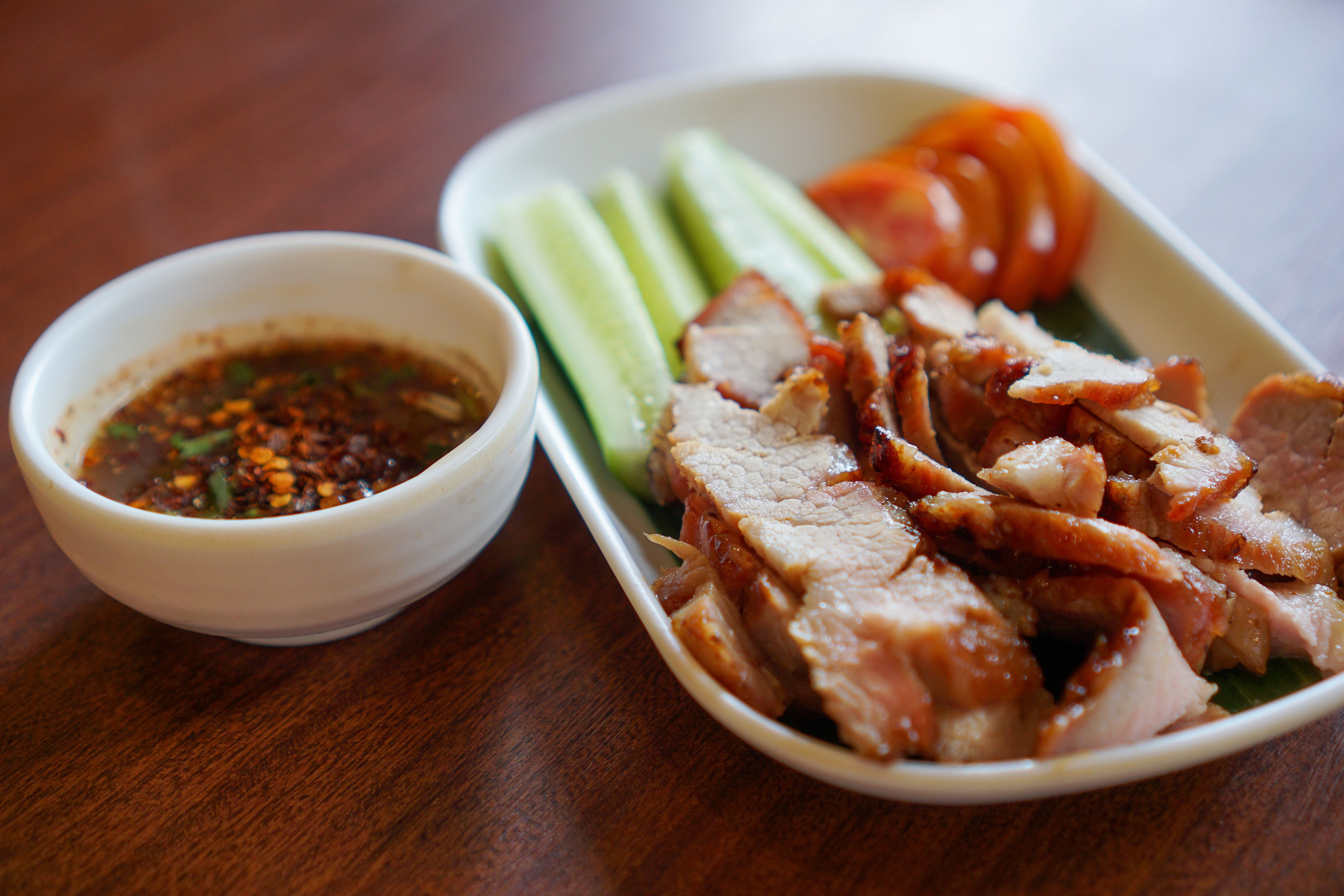
Photo: pipop kunachon / Pexels
The diets react (see scores below)
Common Ingredients
- chicken
- lemongrass
- garlic
- cilantro root
- white pepper
- fish sauce
- turmeric
- palm sugar
- oyster sauce
- soy sauce
Specific recipes may vary.
Incompatible with 5 of 11 diets
Diet Ratings
Kai Yang is Thai grilled chicken with a marinade that includes several keto-friendly spices (lemongrass, garlic, turmeric, white pepper, cilantro root, fish sauce), but also contains meaningful carb sources: palm sugar is a direct added sugar, and oyster sauce and soy sauce both contain added sugars and carbs. The chicken itself is an excellent keto protein source. The concern is the marinade — palm sugar can add 3-6g of sugar per serving depending on how generously it's used, and oyster sauce adds additional sugars. A standard restaurant serving could push 8-12g net carbs from the marinade alone, making it borderline. Home-prepared versions with palm sugar omitted or minimized would be much more keto-friendly. As a snack portion, it may stay within limits, but as a full serving it risks disrupting ketosis for carb-sensitive individuals.
Lazy keto and flexible keto practitioners often allow dishes like Kai Yang, arguing that the marinade sugar is distributed across multiple servings and largely caramelizes off during grilling, making the effective carb load per piece quite low. Strict keto adherents, however, reject any added sugar regardless of quantity, flagging palm sugar and oyster sauce as automatic disqualifiers.
Kai Yang is a Thai grilled chicken dish with multiple animal-derived ingredients. Chicken is a direct animal product, fish sauce is derived from fermented fish, and oyster sauce is made from oyster extracts. All three ingredients independently disqualify this dish from vegan compliance. There is no ambiguity here — this dish is fundamentally built on animal products.
Kai Yang (Thai grilled chicken) contains several non-paleo ingredients that disqualify it. Soy sauce is derived from soy, a legume, and typically contains wheat — both excluded from paleo. Oyster sauce is a processed condiment containing added sugar, starch thickeners, and preservatives. Fish sauce, while made from fermented fish, almost universally contains added salt and sometimes sugar, making it a processed product. Palm sugar is a refined/processed sugar. While the base of chicken with lemongrass, garlic, cilantro root, turmeric, and white pepper would be paleo-compliant, the combination of soy sauce, oyster sauce, and palm sugar makes this dish clearly non-paleo in its traditional preparation.
Kai Yang is Thai grilled marinated chicken, which aligns reasonably well with Mediterranean diet principles in several ways: chicken (poultry) is acceptable in moderation, and the marinade features whole, unprocessed aromatics like lemongrass, garlic, cilantro root, and turmeric — all plant-based and health-supportive ingredients. However, the dish includes palm sugar (added sugar), oyster sauce, and soy sauce, which are processed condiments not part of traditional Mediterranean eating. Fish sauce, while fermented and salty, is analogous to the ancient Mediterranean garum tradition and is less concerning. The overall dish is non-Mediterranean in origin but is protein-moderate, low in saturated fat, and herb-forward. Poultry places it in the 'caution' zone by default, and the processed sauce components prevent a higher score.
Some Mediterranean diet practitioners applying a flexible, whole-foods lens might rate this more favorably, noting that grilled poultry with aromatic herbs and minimal oil closely mirrors traditional Greek or Turkish grilled chicken preparations; the sauce ingredients are used in small quantities as flavorings rather than primary components, which some nutritionists consider nutritionally negligible.
Kai Yang is a Thai grilled chicken dish that is heavily marinated with numerous plant-based ingredients. While the base protein (chicken) is animal-derived, the marinade contains multiple carnivore-incompatible components: lemongrass, garlic, cilantro root, white pepper, and turmeric are all plant-derived spices/aromatics. Palm sugar is a plant-derived sweetener that directly violates carnivore rules. Oyster sauce typically contains sugar, starch, and other additives. Soy sauce is a fermented plant (soy/wheat) product that is entirely plant-derived. Fish sauce is the only marinade ingredient that is animal-derived and carnivore-compatible. The dish as prepared is disqualified primarily by palm sugar (a sugar), soy sauce (plant-based), and the extensive use of plant aromatics and spices. Even lenient carnivore practitioners who tolerate some spices would reject palm sugar and soy sauce outright.
Kai Yang contains multiple excluded ingredients that make it non-compliant with Whole30. Palm sugar is an added sugar (excluded). Oyster sauce typically contains sugar and sometimes other non-compliant additives. Most critically, soy sauce is a soy-based product, which falls under the legumes exclusion — soy is explicitly excluded on Whole30. While fish sauce is generally compliant (check for no added sugar), and most other ingredients (chicken, lemongrass, garlic, cilantro root, white pepper, turmeric) are fully compliant, the combination of palm sugar, soy sauce, and likely non-compliant oyster sauce make this dish a clear avoid in its traditional form.
Kai Yang contains garlic as a primary marinade ingredient, which is high-FODMAP due to fructans and must be avoided during the elimination phase at any realistic quantity. Garlic is typically used in meaningful amounts in this dish, not trace quantities. Additionally, oyster sauce often contains garlic and/or wheat-based thickeners, adding further FODMAP load. Soy sauce (regular) contains wheat and fructans, though the small quantities used may keep that contribution minimal. Lemongrass is low-FODMAP at standard culinary quantities. Fish sauce, white pepper, turmeric, cilantro root, and palm sugar are generally low-FODMAP at typical serving amounts. However, the garlic alone disqualifies this dish during the elimination phase — it is a core marinade ingredient, not an incidental trace. The combination of garlic plus potentially problematic oyster sauce and soy sauce makes this a clear 'avoid' for strict elimination.
Kai Yang (Thai grilled marinated chicken) features lean chicken as its base protein, which aligns well with DASH principles. However, the marinade contains multiple high-sodium condiments — fish sauce, oyster sauce, and soy sauce — which together can push sodium content well above DASH targets (even a few tablespoons of these sauces can contribute 800–1,500mg+ sodium per serving). Palm sugar adds refined/added sugar, another DASH concern. On the positive side, the aromatic ingredients (lemongrass, garlic, cilantro root, turmeric, white pepper) are DASH-friendly and anti-inflammatory. The protein itself (grilled chicken) is a DASH-approved lean protein source, and the cooking method (grilling) is low in added fat. The dish is not categorically excluded from a DASH diet, but the sodium-heavy marinade makes it a 'caution' item that requires portion control, careful selection, or modification (reducing or substituting lower-sodium versions of the sauces) to fit DASH guidelines comfortably.
NIH DASH guidelines explicitly limit high-sodium condiments like fish sauce, soy sauce, and oyster sauce due to their sodium content; however, some DASH-oriented clinicians note that when these sauces are used as a marinade (much of which drips off during grilling) rather than a direct condiment, the actual sodium absorbed per serving may be meaningfully lower than the total marinade sodium, making occasional consumption of dishes like Kai Yang more acceptable within an otherwise low-sodium DASH pattern.
Kai Yang (Thai grilled chicken) is fundamentally a lean protein dish — grilled chicken being one of the most Zone-favorable proteins available. The marinade ingredients (lemongrass, garlic, cilantro root, turmeric, white pepper) are polyphenol-rich, anti-inflammatory aromatics that align well with Sears' later emphasis on polyphenols and omega-3/anti-inflammatory eating. Turmeric in particular is a highly regarded anti-inflammatory ingredient in Zone methodology. The concerns are modest: palm sugar and oyster sauce introduce small amounts of added sugar and higher-glycemic carbohydrates, and soy sauce adds sodium. However, marinade quantities of these ingredients are typically small, and their glycemic impact per serving is minimal. Fish sauce contributes sodium but negligible carbohydrates. As a snack-category dish, a portion of Kai Yang can serve as a clean 1-2 protein block anchor, paired with a low-GI vegetable side and a small monounsaturated fat source to complete the Zone ratio. The dish scores well because it is protein-centric, minimally processed, contains no refined grains or high-glycemic carbs as a main component, and features anti-inflammatory herbs and spices.
The use of palm sugar and oyster sauce introduces 'unfavorable' carbohydrate sources in Zone terminology. If the marinade is applied heavily or the dish is served with a sweet dipping sauce (as is traditional), the sugar load increases meaningfully. Some Zone practitioners would rate this as 'caution' rather than 'approve' due to these added sugars, even in small quantities, particularly for individuals with insulin sensitivity issues. The Zone's strict block system also requires pairing this protein with specific carbohydrate and fat blocks — on its own as a snack, it is protein-heavy and needs complementary Zone-balanced sides.
Kai Yang (Thai grilled marinated chicken) has a genuinely mixed anti-inflammatory profile. On the positive side, the marinade is rich in potent anti-inflammatory ingredients: turmeric (curcumin), garlic (allicin), lemongrass (citral, flavonoids), and cilantro root (polyphenols) are all well-supported anti-inflammatory agents. White pepper enhances curcumin bioavailability (similar to piperine in black pepper). Chicken as a lean protein is categorized as 'moderate' — acceptable and far preferable to red meat. The dish is grilled, avoiding inflammatory frying oils. However, several ingredients temper the rating: palm sugar is an added sugar that, even in moderate marinade quantities, contributes to glycemic load and can promote inflammation with regular consumption. Fish sauce, oyster sauce, and soy sauce introduce significant sodium and some processed condiment concerns, though in marinade quantities the inflammatory load is limited. Oyster sauce in particular contains added sugars and thickeners. The overall dish is not inherently pro-inflammatory but is not strongly anti-inflammatory either — the excellent spice profile is partially offset by the condiment and sugar content.
Some anti-inflammatory practitioners (particularly those aligned with Dr. Weil's broader framework) would rate this higher given the exceptional marinade — turmeric, garlic, and lemongrass together represent a genuinely potent anti-inflammatory combination, and the lean grilled protein is ideal. Conversely, practitioners focused on strict glycemic control and sodium minimization (e.g., functional medicine clinicians treating inflammatory conditions) would rate it lower, flagging palm sugar and the sodium-heavy condiment trio as meaningful concerns for inflamed individuals.
Kai Yang is Thai grilled marinated chicken, making it a strong GLP-1-friendly option at its core. The primary ingredient is chicken — a lean, high-protein, easily digestible protein source that directly supports the #1 dietary priority. The marinade ingredients (lemongrass, garlic, cilantro root, turmeric, white pepper) are aromatic and anti-inflammatory with negligible caloric impact. Fish sauce, soy sauce, and oyster sauce add umami flavor with minimal fat, though they contribute meaningful sodium. The small amount of palm sugar in the marinade is a minor concern but typical quantities used in marinades are low enough that sugar per serving remains modest. As a snack-portioned serving of grilled chicken, this dish is high in protein, low in fat (assuming skin-off or minimal skin), easy to digest, and nutrient-dense per calorie. White pepper is milder than chili-based spices and unlikely to trigger reflux or nausea in most GLP-1 patients. The main caveats are portion and preparation variables: skin-on versions significantly increase fat content, and street-food versions may use fattier cuts or be served with sticky rice and sweet dipping sauces that would lower the overall rating.
Some GLP-1 nutrition practitioners would flag the sodium load from fish sauce, soy sauce, and oyster sauce combined, particularly for patients with hypertension or fluid retention concerns common in obesity medicine. Additionally, if served skin-on or with a high-sugar dipping sauce (as is traditional), the fat and sugar content rises enough that some clinicians would downgrade this to caution territory pending clarification of preparation style.
*See how scores were generated at our methodology page.
Nutritional profile
Six traits that cut across every diet.
Fiber & Plants
How much whole-plant food and fiber it delivers.
Healthy Fats
The quality of its fats (unsaturated, omega-3).
Whole / Unprocessed
How close it is to its natural, unprocessed form.
Gut Gentle
How easy it is on digestion (low FODMAP, few irritants).
Low Glycemic
How little it spikes your blood sugar.
Protein Density
How much protein it packs per calorie.
Controversy Index
Higher controversy = more disagreement between diets.
Diet-Specific Tips
 Keto — 5/10
View tips
- Palm sugar is an added sugar and direct keto concern
- Oyster sauce contains added sugar and starch
- Soy sauce adds minor carbs
- Chicken is an excellent keto protein source
- Marinade carbs partially caramelize during grilling, reducing effective carb load
- Portion size is critical — snack portions may fit, full servings may not
- Home preparation allows sugar reduction or substitution
 Mediterranean — 5/10
View tips
- Chicken (poultry) is acceptable in moderation per Mediterranean guidelines
- Lemongrass, garlic, turmeric, cilantro root are whole plant-based aromatics — positive
- Palm sugar is an added sugar — negative
- Oyster sauce and soy sauce are processed condiments not part of Mediterranean tradition
- Fish sauce in small quantities is analogous to traditional fermented fish products
- Grilled preparation is healthy and preferred over fried
- Non-Mediterranean cuisine origin introduces interpretive uncertainty
 DASH — 5/10
View tips
- Lean grilled chicken is a DASH-approved protein source
- Fish sauce, oyster sauce, and soy sauce are very high in sodium — a key DASH concern
- Palm sugar contributes added sugar, which DASH limits
- Grilling is a DASH-friendly cooking method with no added saturated fat
- Aromatic herbs and spices (lemongrass, turmeric, garlic) are DASH-compatible and nutritionally beneficial
- Much of the marinade sodium may be reduced during grilling, but sodium load is still significant
- Low-sodium soy sauce and reduced fish sauce would meaningfully improve the DASH score of this dish
 Zone — 7/10
View tips
- Lean grilled chicken is an ideal Zone protein source (~7g protein per block)
- Turmeric, lemongrass, and garlic are polyphenol-rich, anti-inflammatory ingredients strongly aligned with Sears' later Zone writings
- Palm sugar in the marinade is a minor unfavorable carbohydrate source — quantity is typically small but adds some glycemic load
- Oyster sauce contributes small amounts of added sugar and sodium; impact is marginal at typical marinade volumes
- No refined grains, high-glycemic starches, or seed oils present in the core dish
- As a snack, needs pairing with low-GI carb and monounsaturated fat to complete Zone block ratios
- Traditional sweet dipping sauces (e.g., nam jim) would significantly worsen the Zone profile if included
 Anti-Inflammatory — 6/10
View tips
- Turmeric provides curcumin — one of the most well-researched anti-inflammatory compounds
- Garlic and lemongrass add synergistic anti-inflammatory polyphenols and flavonoids
- White pepper may enhance curcumin absorption (similar mechanism to piperine)
- Chicken (lean poultry) is a 'moderate' protein — acceptable per anti-inflammatory guidelines
- Grilled preparation avoids pro-inflammatory seed oils
- Palm sugar is an added sugar — pro-inflammatory in excess, and a concern even in marinades
- Fish sauce, oyster sauce, and soy sauce add processed condiment burden and high sodium
- Oyster sauce contains added sugar and thickeners that reduce the overall rating
 GLP-1 Friendly — 7/10
View tips
- High lean protein from chicken supports muscle preservation during GLP-1-related weight loss
- Grilled preparation avoids the high-fat, difficult-to-digest issues of fried foods
- Aromatic marinade ingredients (lemongrass, turmeric, garlic) are well-tolerated and anti-inflammatory
- White pepper is mild enough that reflux or nausea risk is low for most patients
- Palm sugar present but marinade quantities are typically small — sugar per serving is modest
- Sodium is elevated due to fish sauce, soy sauce, and oyster sauce combination
- Score reduced from potential 8-9 because skin-on preparation or accompanying sticky rice and dipping sauces are common and would meaningfully worsen the nutritional profile
- As a snack portion of grilled chicken, small serving size aligns well with GLP-1 small-meal recommendations