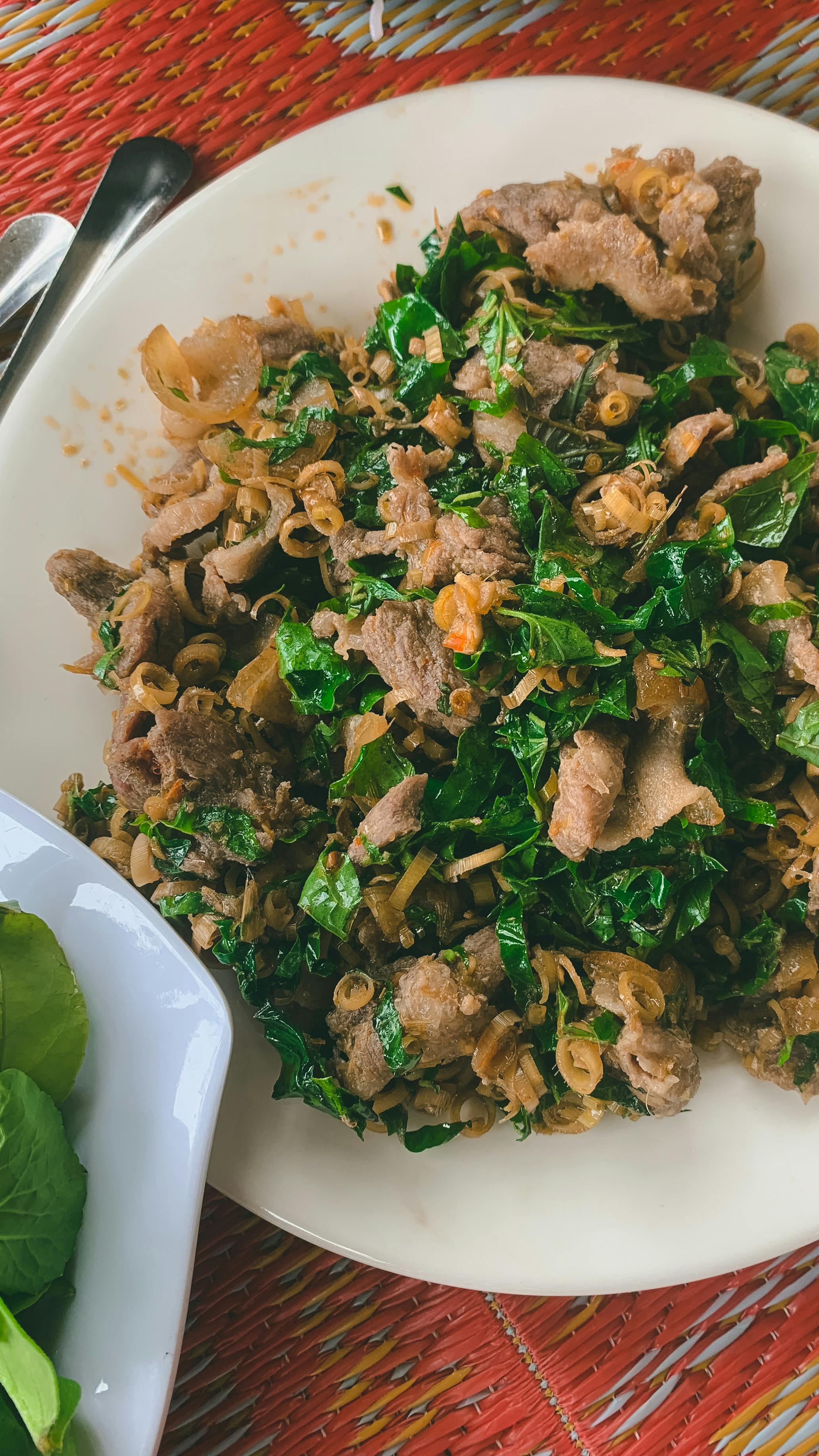
Photo: Khoa Nguyen / Pexels
The diets react (see scores below)
Common Ingredients
- minced pork
- toasted rice powder
- lime
- fish sauce
- chili
- shallots
- mint
- cilantro
- scallions
- galangal
Specific recipes may vary.
Incompatible with 5 of 11 diets
Diet Ratings
Larb is primarily minced pork with herbs, lime, fish sauce, and chili — all keto-friendly components. The main concern is the toasted rice powder (khao khua), a traditional ingredient used as a thickener and flavor enhancer. While the amount per serving is typically small (1-2 teaspoons), it does add net carbs from a grain source, which strict keto avoids entirely. The shallots also contribute a modest amount of carbs. Without the rice powder, this dish would be a solid keto approve; with it, portion awareness is needed. A standard restaurant serving likely stays within a 5-10g net carb range, making it manageable for lazy keto but borderline for strict protocols.
Strict keto practitioners argue that toasted rice powder, being a grain-derived ingredient, should disqualify the dish regardless of quantity, as it reintroduces a grain threshold and can be easily omitted or substituted at home. Some also flag fish sauce for trace sugars added in commercial preparations.
Larb as prepared here contains two clear animal-derived ingredients: minced pork (meat) and fish sauce (derived from fermented fish). Both are unambiguously non-vegan. The remaining ingredients — toasted rice powder, lime, chili, shallots, mint, cilantro, scallions, and galangal — are all plant-based, but the presence of pork and fish sauce makes this dish incompatible with a vegan diet. A vegan version could theoretically substitute minced mushrooms or tofu for the pork and use soy sauce or a vegan fish sauce alternative, but as described, this dish is not vegan.
Larb contains two significant non-paleo ingredients: toasted rice powder (a grain, excluded from all paleo frameworks) and fish sauce (typically contains added salt and often preservatives, making it a processed condiment). The toasted rice powder is not incidental — it is a core structural ingredient in larb, providing the characteristic texture and flavor. Without it, the dish is fundamentally altered. Fish sauce is also a staple in authentic larb and is generally considered non-paleo due to added salt and processing. The remaining ingredients — minced pork, lime, chili, shallots, mint, cilantro, scallions, and galangal — are all paleo-compliant and excellent. The dish fails primarily on the rice powder, which is an unavoidable grain inclusion in the traditional recipe.
Larb's primary protein is minced pork, which is red meat — limited to a few times per month under Mediterranean diet principles. While the dish has many positive elements (fresh herbs like mint, cilantro, and scallions; lime juice as an acidic dressing; shallots; chili; and galangal), the foundation of minced pork pushes it into the 'avoid' category. Fish sauce adds sodium but is a minor ingredient. The toasted rice powder is a refined grain element, though in small quantities as a thickener. The herb-forward, acid-dressed salad format actually mirrors Mediterranean salad philosophy quite well, but the red meat base and non-olive-oil fat profile are the key disqualifiers.
Some Mediterranean diet practitioners argue that lean pork in modest portions — especially in a dish so abundant in fresh herbs, aromatics, and acid — could qualify as an occasional 'caution' item, similar to how some clinical guidelines treat lean red meat eaten infrequently. The dish's fat content is relatively low due to the absence of added oils, which could make it more acceptable than fattier red meat preparations.
Larb is fundamentally incompatible with the carnivore diet. While minced pork and fish sauce are animal-derived, the dish is overwhelmingly plant-based in its composition. Toasted rice powder (a grain), lime (fruit), chili (nightshade), shallots (allium vegetable), mint (herb), cilantro (herb), scallions (vegetable), and galangal (root spice) are all plant foods explicitly excluded from carnivore. The rice powder alone acts as a primary textural component, not a trace ingredient. This dish is essentially a herbed grain-and-herb salad that happens to contain pork — the plant ingredients are structural and load-bearing, not incidental. There is no meaningful carnivore adaptation possible here without completely deconstructing the dish into plain pork.
Larb is a Southeast Asian minced meat salad with mostly Whole30-compliant ingredients: minced pork, lime, fish sauce, chili, shallots, mint, cilantro, scallions, and galangal are all allowed. The key concern is toasted rice powder (khao khua), which is a traditional and essential ingredient made from toasted raw rice that is ground into a coarse powder. Rice is a grain and is explicitly excluded on Whole30. While the quantity used is small (typically 1-2 tablespoons per serving) and functions as a textural seasoning rather than a primary ingredient, it is still a grain-derived ingredient and technically makes the dish non-compliant. A Whole30-compliant version of larb can be made by simply omitting the toasted rice powder. Fish sauce should also be label-checked to ensure no added sugar, though many traditional fish sauces contain only anchovies, salt, and water.
Some community members argue that toasted rice powder in such small quantities is inconsequential and functions more as a spice or textural element than a grain, and that the spirit of Whole30 is not violated by its trace inclusion. However, official Whole30 guidelines make no exception for rice in any form or quantity — if rice is an ingredient, the dish is technically non-compliant regardless of amount.
Larb contains several ingredients that create FODMAP concerns during the elimination phase. The primary protein (minced pork), lime juice, fish sauce, chili, mint, cilantro, and galangal are generally low-FODMAP. However, shallots are high-FODMAP due to fructans — even small amounts can exceed safe thresholds, and they are typically used in meaningful quantities in larb. Scallions (green tops only) are low-FODMAP, but if the white bulb portions are used, they contribute fructans. Toasted rice powder (khao khua) in the small amounts typical for larb (~1 tsp) is generally considered low-FODMAP. The dish as traditionally prepared almost always includes shallots in amounts that push it into high-FODMAP territory, making it risky during strict elimination without modification. A modified version omitting shallots and using only the green parts of scallions could be approved.
Monash University has tested shallots and confirmed they are high-FODMAP even in small servings (>1 shallot), which is a standard component of larb. Some clinical FODMAP practitioners would rate traditional larb as 'avoid' outright given the near-universal inclusion of shallots in the recipe, while others allow it if the patient specifically requests the dish be made without onion-family alliums — a modification that significantly alters the dish's character.
Larb contains a mix of DASH-friendly and DASH-concerning elements. On the positive side, it is rich in herbs (mint, cilantro, scallions, shallots, galangal) that contribute potassium and phytonutrients, uses lime juice for brightness without added sodium, and toasted rice powder adds modest fiber. However, two key concerns push it into 'caution' territory. First, minced pork — while leaner cuts qualify as acceptable lean protein under DASH, ground pork as commonly used in larb tends to have moderate saturated fat content (more than lean poultry or fish). Second, and more significantly, fish sauce is a high-sodium condiment: a single tablespoon contains roughly 1,200–1,400mg of sodium. Traditional larb recipes use fish sauce liberally, which can push a single serving toward or beyond the entire daily sodium budget for the low-sodium DASH target (1,500mg) and close to the standard DASH limit (2,300mg). The dish is not inherently unhealthy — it has no added sugar, uses whole-food ingredients, and is lighter than many Thai dishes — but sodium from fish sauce and the moderate saturated fat from pork require careful portion control and ideally sodium-reduction modifications to fit DASH guidelines comfortably.
Standard NIH DASH guidelines flag both high-sodium condiments and red/fatty meats as foods to limit, which would rate this dish cautiously. However, some updated DASH-oriented clinical dietitians note that when larb is made with lean ground pork loin or substituted with turkey/chicken, and fish sauce is used sparingly or partially replaced with reduced-sodium alternatives, the dish's strong herb and citrus profile makes it broadly compatible with DASH principles — closer to a 6-7 score in those modified forms.
Larb is a Thai minced meat salad that has several Zone-friendly qualities but also a few concerns worth noting. On the positive side, the dish is protein-forward (minced pork), herb-rich (mint, cilantro, scallions, shallots, galangal), and uses lime and fish sauce for flavoring rather than sugar-heavy sauces — all consistent with Zone principles. The abundance of fresh herbs and aromatics contributes polyphenols and minimal glycemic load, which Sears would appreciate. The primary concern is the protein source: minced pork can vary significantly in fat content. Ground pork is often 20-30% fat by weight, including meaningful saturated fat, making it a less ideal Zone protein compared to skinless chicken or fish. It is not a 'lean protein' by Zone standards unless using very lean ground pork. The toasted rice powder (khao khua) adds a small but notable high-glycemic carbohydrate element — though the quantity used is typically small (a tablespoon or two), it is white rice-based and unfavorable in Zone terms. The dish also lacks fat-balancing monounsaturated fats and has no meaningful carbohydrate block from vegetables, meaning it would need to be paired with Zone-favorable sides (additional vegetables) to achieve the 40/30/30 ratio. Overall, larb is a reasonable Zone-compatible dish if made with leaner pork and portioned carefully, but the fat profile of standard ground pork and the rice powder push it into caution territory.
Some Zone practitioners would rate larb more favorably, arguing that the herb-heavy, low-sugar, low-starch profile makes it an excellent Zone salad when paired with additional vegetables. Dr. Sears' later anti-inflammatory work places heavy emphasis on polyphenols and omega-3s; the mint, cilantro, galangal, and lime in larb are all polyphenol-rich. Additionally, lean ground pork (93%+ lean) could qualify as an acceptable Zone protein block. In that reading, this dish could approach a score of 7.
Larb is a nuanced dish from an anti-inflammatory standpoint. On the positive side, it contains an impressive array of anti-inflammatory ingredients: chili peppers (capsaicin), fresh mint, cilantro, shallots, galangal (a close relative of ginger with documented anti-inflammatory properties), lime juice (vitamin C, flavonoids), and scallions. These herbs and aromatics collectively provide meaningful antioxidant and polyphenol content. Toasted rice powder is a minimally processed whole grain component. Fish sauce, while high in sodium, is fermented and used in small amounts. The primary concern is minced pork. Pork falls in the 'limit' category — it is red/processed-adjacent meat with saturated fat content that can promote inflammatory pathways (arachidonic acid, saturated fat-driven NF-κB activation) when consumed regularly or in large portions. However, larb is typically served as one component of a broader Thai meal, often with rice and vegetables, meaning portion sizes of pork per serving are moderate. The herb-to-meat ratio in larb is notably high compared to most Western meat dishes, which partially offsets concerns. The dish contains no added sugar, no seed oils, no processed additives, and no trans fats. Overall: a mixed profile where genuinely strong anti-inflammatory herbs and spices partially mitigate concerns about regular pork consumption.
A stricter anti-inflammatory interpretation (e.g., Dr. Weil's emphasis on limiting all red meat including pork) would rate this more cautiously, especially if consumed frequently, as saturated fat from pork can elevate inflammatory markers like CRP. Conversely, a whole-foods-first approach would highlight that the herb density, fermented fish sauce, and absence of processed ingredients make this far preferable to most Western protein dishes, and lean minced pork in moderate portions has relatively modest saturated fat impact.
Larb made with minced pork sits in caution territory for GLP-1 patients. The dish has genuine strengths: it is herb-forward, low in added sugars, contains no frying, and the lime, fresh herbs (mint, cilantro, scallions), and shallots contribute fiber, micronutrients, and high water content. Fish sauce adds sodium but minimal calories. The toasted rice powder adds a small amount of digestible carbohydrate and mild fiber. However, the primary protein source — minced pork — is the key concern. Depending on the cut used (typically shoulder or a mixed grind), fat content per serving can be moderate to high, with meaningful saturated fat. This can worsen nausea, bloating, and reflux, which are already common GLP-1 side effects. The chili and galangal introduce spice that may aggravate GI discomfort in sensitive patients. Protein content is solid if a full serving is consumed, but GLP-1 patients eating smaller portions may not hit the 15–30g per meal target. The dish is not inherently bad, but the fat profile of pork and the spice level make it portion-sensitive and individual-tolerance-dependent.
Some GLP-1-focused dietitians consider lean minced pork acceptable as a protein source when fat is trimmed or a leaner grind (93% lean or higher) is used, arguing that the overall dish profile — low sugar, no frying, high herb volume — is well above average for a restaurant meal. Others flag that in traditional preparation the pork cut is rarely specified and fat content is unpredictable, and that chili and galangal make this dish higher-risk for patients still experiencing active GI side effects, particularly in early weeks of dose escalation.
*See how scores were generated at our methodology page.
Nutritional profile
Six traits that cut across every diet.
Fiber & Plants
How much whole-plant food and fiber it delivers.
Healthy Fats
The quality of its fats (unsaturated, omega-3).
Whole / Unprocessed
How close it is to its natural, unprocessed form.
Gut Gentle
How easy it is on digestion (low FODMAP, few irritants).
Low Glycemic
How little it spikes your blood sugar.
Protein Density
How much protein it packs per calorie.
Controversy Index
Higher controversy = more disagreement between diets.
Diet-Specific Tips
 Keto — 5/10
View tips
- Toasted rice powder adds grain-based net carbs — typically 2-4g per serving but a keto gray area
- Minced pork is an excellent high-fat, moderate-protein keto base
- Herbs, lime juice, chili, and fish sauce are low-carb and keto-compatible in typical amounts
- Shallots add minor carbs but in small quantities are generally acceptable
- Dish can be made fully keto-compliant by omitting rice powder
- Restaurant versions may use more rice powder or sweetened fish sauce, increasing carb load
 Whole30 — 6/10
View tips
- Toasted rice powder (khao khua) is a ground grain and technically excluded as rice is a prohibited grain
- Small quantity used but no official exception exists for rice in any amount
- Fish sauce must be label-checked for added sugar
- All other ingredients (pork, lime, herbs, chili, shallots, galangal) are fully compliant
- Dish is easily made Whole30-compliant by omitting toasted rice powder
 DASH — 5/10
View tips
- Fish sauce is very high in sodium (~1,200-1,400mg per tbsp), the primary DASH concern
- Ground pork has moderate saturated fat; lean cuts or substitution with ground chicken/turkey would improve DASH compatibility
- Abundant fresh herbs (mint, cilantro, shallots, scallions, galangal) provide potassium, phytonutrients, and flavor without sodium
- Lime juice adds acidity and vitamin C with no sodium — DASH-positive
- No added sugars or refined carbohydrates
- Toasted rice powder adds modest fiber and whole-grain character
- Portion size and fish sauce quantity are critical variables — home-prepared versions can be significantly modified for DASH compliance
- Low-sodium fish sauce or partial substitution with lime juice would improve the score to 6-7
 Zone — 6/10
View tips
- Minced pork fat content is variable — standard ground pork is too fatty for ideal Zone protein; lean ground pork improves the profile significantly
- Toasted rice powder (khao khua) is a white rice derivative — classified as an 'unfavorable' Zone carbohydrate due to high glycemic index, though used in small amounts
- Herb-heavy composition (mint, cilantro, scallions, shallots, galangal) provides polyphenols and aligns with Sears' anti-inflammatory emphasis
- No added sugars or high-glycemic sauces — fish sauce and lime are Zone-friendly flavorings
- Dish lacks monounsaturated fat component — would need a Zone fat block added (e.g., sliced avocado or a small amount of olive oil) to meet 40/30/30
- No meaningful low-GI vegetable carbohydrate block — must be paired with vegetables to achieve Zone ratio balance
 Anti-Inflammatory — 5/10
View tips
- Pork (primary protein) is in the 'limit' category — contains saturated fat and arachidonic acid with pro-inflammatory potential at high intake
- Galangal is a potent anti-inflammatory spice (related to ginger, contains galangin and other bioactive compounds)
- Chili pepper provides capsaicin, a well-documented anti-inflammatory and antioxidant compound
- High herb density (mint, cilantro, scallions) contributes meaningful antioxidant and polyphenol load
- Lime juice adds vitamin C and flavonoids that support antioxidant defense
- Shallots contain quercetin, a flavonoid with anti-inflammatory properties
- No seed oils, added sugars, trans fats, or artificial additives — clean whole-food ingredient list
- Toasted rice powder is minimally processed; fish sauce is fermented and used in small quantities
- Dish is typically eaten as part of a balanced Thai meal, moderating pork portion size in context
 GLP-1 Friendly — 5/10
View tips
- Minced pork fat content is variable and potentially high in saturated fat, worsening GLP-1 GI side effects
- Chili and galangal introduce spice risk for nausea and reflux
- No frying, no added sugar, no carbonation — structurally a clean dish
- Fresh herbs and lime provide micronutrients, antioxidants, and hydration support
- Toasted rice powder adds digestible carbohydrate and trace fiber but minimal nutritional density
- Protein per serving depends heavily on portion size — GLP-1 patients eating small amounts may fall short of 15–30g target
- Sodium from fish sauce is notable but not disqualifying
- Substituting chicken breast or turkey for pork would significantly improve the rating