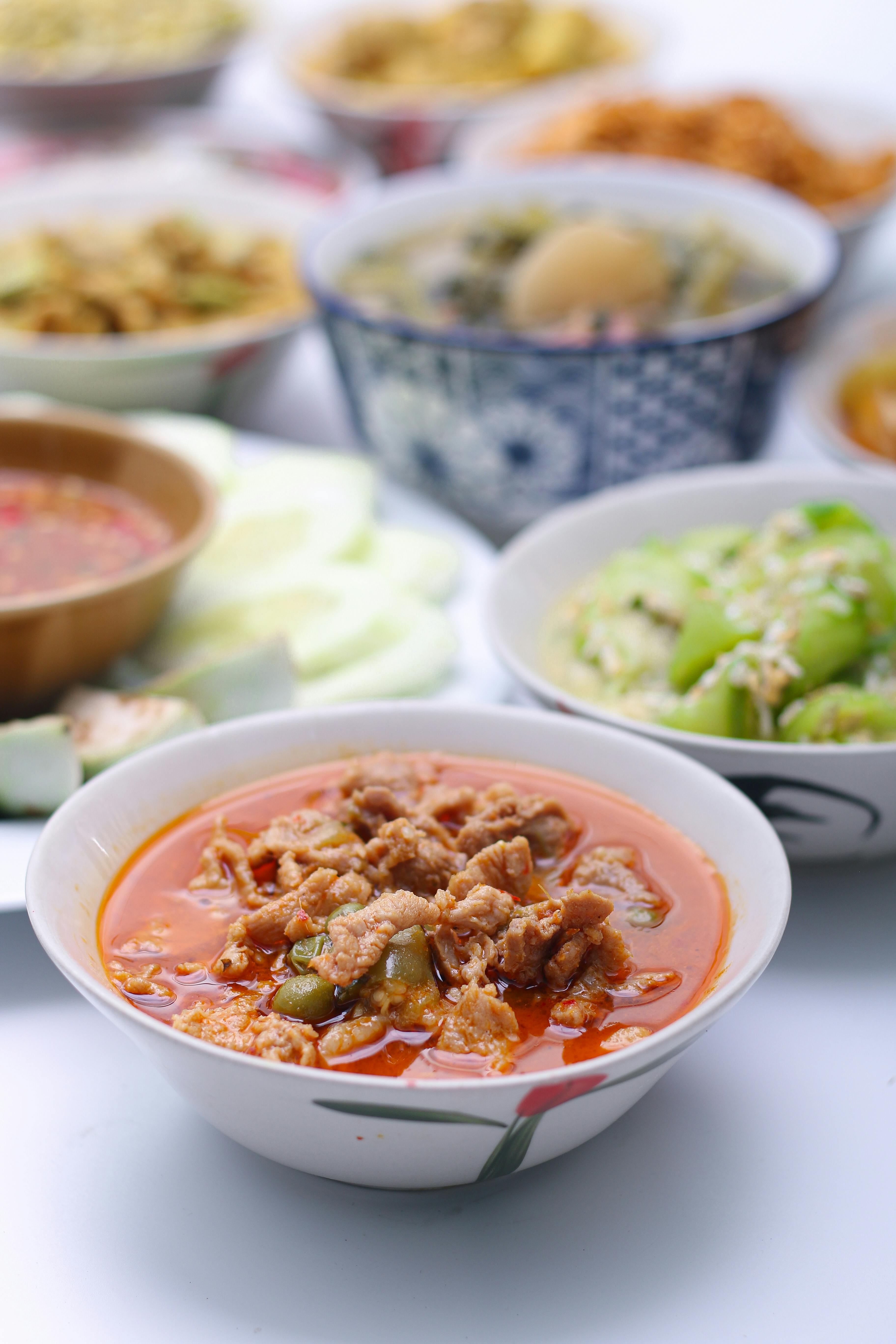
Photo: Eaksit Sangdee / Pexels
The diets react (see scores below)
Common Ingredients
- pork
- tomatoes
- dried chili
- garlic
- shallots
- shrimp paste
- lemongrass
- fermented soybean
- cilantro
- fish sauce
Specific recipes may vary.
Incompatible with 7 of 11 diets
Diet Ratings
Nam Prik Ong is a northern Thai chili dip made with ground pork, tomatoes, dried chilies, and aromatics. The pork and fat content are keto-friendly, but the dish contains several moderate-carb contributors: tomatoes add net carbs (~3-4g per 100g), shallots and garlic contribute additional carbs, and fermented soybean paste can contain carbohydrates and sometimes sugars. Dried chilies in quantity also add carbs. As a condiment typically served in small portions (2-4 tbsp), the net carb load per serving is manageable and likely stays within keto limits. However, if consumed in larger quantities or alongside other carb sources, it could push daily limits. The fermented soybean ingredient is the most variable factor, as different brands carry different carb loads. Overall, small portions are compatible with keto, but it requires mindful portioning.
Strict keto practitioners may flag fermented soybean paste and the cumulative carb load from tomatoes, shallots, and garlic, arguing that processed/fermented legume-based ingredients should be avoided entirely due to unpredictable carb content and potential insulin effects, regardless of portion size.
Nam Prik Ong contains multiple animal-derived ingredients that make it entirely incompatible with a vegan diet. Pork is a direct animal product (meat), shrimp paste is derived from fermented crustaceans, and fish sauce is an animal-derived condiment made from fermented fish. Any single one of these three ingredients would be sufficient to disqualify this dish; together they represent a fundamental incompatibility with vegan principles. The plant-based components — tomatoes, dried chili, garlic, shallots, lemongrass, fermented soybean, and cilantro — are all vegan-friendly, but they cannot offset the presence of three distinct animal products.
Nam Prik Ong contains multiple non-paleo ingredients that disqualify it under strict paleo guidelines. Fermented soybean is a legume and a clear paleo violation. Shrimp paste, while made from shrimp, is a heavily processed, salted, fermented product with additives inconsistent with paleo principles. Fish sauce similarly contains added salt and is a processed condiment. Together, these ingredients make the dish incompatible with a paleo diet. The base ingredients — pork, tomatoes, dried chili, garlic, shallots, lemongrass, and cilantro — are individually paleo-friendly, but the dish as traditionally prepared cannot be approved.
Nam Prik Ong is a Northern Thai chili dip built around ground pork as its primary protein, which immediately places it outside core Mediterranean diet principles. Red meat is limited to a few times per month in the Mediterranean pattern, and pork here is not a minor ingredient but the main component. Beyond the protein concern, the dish relies on shrimp paste and fish sauce — highly processed, sodium-dense condiments not found in the Mediterranean tradition. Fermented soybean paste adds further processing. While several ingredients are genuinely Mediterranean-friendly (tomatoes, garlic, shallots, dried chili, cilantro, lemongrass), these positives are outweighed by the pork-forward base and the heavy load of high-sodium fermented condiments. There is no olive oil, no legumes as the protein anchor, and no whole grains. As a condiment it might be consumed in small quantities, but its foundational ingredient profile conflicts with Mediterranean principles.
Some Mediterranean diet interpreters might note that if consumed in a small condiment portion (a few tablespoons), the actual quantity of pork ingested is modest and the abundance of vegetables, garlic, and tomatoes could be seen as net positive. Traditional Mediterranean cuisines do occasionally use small amounts of pork for flavoring (e.g., Italian soffritto with pancetta), and a strict quantity-based reading might soften the verdict to 'caution' for very small servings.
Nam Prik Ong is overwhelmingly plant-based in its ingredient profile. While it contains pork and shrimp paste (animal-derived), the dish is fundamentally a plant-forward condiment built on tomatoes, dried chili, garlic, shallots, lemongrass, fermented soybean, and cilantro — all strictly excluded on the carnivore diet. Fermented soybean is a legume product and one of the worst offenders. Tomatoes, chilies, garlic, shallots, and lemongrass are all plant foods entirely off-limits. Fish sauce may be carnivore-compatible in isolation, but it cannot redeem a dish where the majority of ingredients are plant-derived. This dish cannot be adapted into a carnivore-compatible form without fundamentally changing what it is.
Nam Prik Ong contains fermented soybean, which is a soy/legume product and explicitly excluded on the Whole30 program. Soy in all forms (including fermented soybean paste, miso, tempeh, etc.) is prohibited. This single ingredient disqualifies the dish regardless of the other compliant components (pork, tomatoes, chili, garlic, shallots, lemongrass, cilantro, and fish sauce are all fine). Shrimp paste requires label-checking but is generally compliant; the fermented soybean is the clear dealbreaker.
Nam Prik Ong contains multiple high-FODMAP ingredients that make it unsuitable during the elimination phase. Garlic is one of the highest-FODMAP foods tested by Monash University, containing significant fructans even in small amounts. Shallots are similarly high in fructans and must be avoided entirely during elimination. Fermented soybean (tua nao) is high in GOS, adding another FODMAP burden. Shrimp paste often contains onion or garlic-derived ingredients and may contribute additional fructans. These are not trace or borderline ingredients — garlic and shallots are foundational aromatics in this dish and cannot be reduced to safe FODMAP levels while maintaining the dish's character. Even if pork, tomatoes (low-FODMAP at standard serves), lemongrass (low-FODMAP), fish sauce (low-FODMAP in small amounts), cilantro, and dried chili are individually acceptable, the cumulative FODMAP load from garlic, shallots, and fermented soybean makes this dish clearly high-FODMAP.
Nam Prik Ong contains multiple high-sodium ingredients that make it incompatible with DASH dietary guidelines. Shrimp paste, fish sauce, and fermented soybean are each individually very high in sodium — combined, they can contribute thousands of milligrams of sodium per small serving, far exceeding both the standard DASH limit (2,300mg/day) and the stricter low-sodium DASH limit (1,500mg/day). Ground pork adds saturated fat, which DASH also limits. While the dish does include DASH-friendly components such as tomatoes, garlic, shallots, lemongrass, and chili, these beneficial ingredients are outweighed by the sodium burden from the fermented and preserved condiments. As a condiment, even small portions can deliver a significant sodium load. The combination of shrimp paste, fish sauce, and fermented soybean represents a triple source of high-sodium fermented ingredients explicitly at odds with DASH principles.
Nam Prik Ong is a Northern Thai chili dip/sauce made with ground pork, tomatoes, dried chilies, aromatics, and fermented ingredients. As a condiment, it is used in small portions alongside raw or blanched vegetables and sticky rice. From a Zone perspective, the dish has several positive elements: pork provides lean protein, tomatoes are a favorable low-glycemic carbohydrate, and the aromatic vegetables (garlic, shallots, lemongrass) are Zone-friendly. The fermented soybean and shrimp paste add umami depth with minimal macro impact. However, there are notable Zone concerns: pork, depending on the cut used, can carry moderate saturated fat, and the preparation style as a condiment makes achieving a balanced 40/30/30 block ratio difficult in isolation. The dish is typically served with sticky rice (high-glycemic, unfavorable in Zone) and the sodium content from fish sauce and shrimp paste is high. As a condiment component within a broader Zone-structured meal—paired with raw vegetables instead of sticky rice and portioned carefully—it can fit. The fermented ingredients and polyphenol-rich chilies and tomatoes align with Sears' anti-inflammatory emphasis in later works. Overall it earns a 'caution' rating because it requires deliberate meal construction to fit Zone ratios properly.
Some Zone practitioners following Sears' later anti-inflammatory framework (Toxic Fat, The Anti-Inflammation Zone) may view fermented soybean and polyphenol-rich ingredients like dried chili and tomatoes more favorably, potentially rating this higher if lean pork is used and it is served with non-starchy vegetables rather than sticky rice. Conversely, stricter early-Zone adherents would flag the saturated fat risk from pork and the high sodium as concerns requiring careful portioning.
Nam Prik Ong is a Northern Thai chili dip with a genuinely mixed anti-inflammatory profile. On the positive side, it contains numerous anti-inflammatory stars: dried chilies (capsaicin reduces inflammatory cytokines), garlic (allicin, well-documented anti-inflammatory effects), tomatoes (lycopene and antioxidants), shallots (quercetin, a potent flavonoid), lemongrass (citral, anti-inflammatory terpenes), and cilantro (polyphenols). Fermented soybean contributes probiotics and bioactive peptides, which may support gut-mediated anti-inflammatory pathways. Fish sauce and shrimp paste are fermented and used in small quantities as flavor bases, providing some probiotic benefit though they are high in sodium. The primary concern is ground pork, which introduces saturated fat and arachidonic acid — both associated with pro-inflammatory signaling at higher intakes. Red meat and pork are in the 'limit' category in anti-inflammatory frameworks. However, Nam Prik Ong is a condiment, meaning pork is consumed in relatively modest portions relative to the dish's overall volume, which moderates this concern. The dish is typically served alongside fresh vegetables and rice, further diluting the inflammatory burden. The net profile leans toward cautious acceptability: strong anti-inflammatory aromatics and fermented components partially offset by moderate saturated fat from pork.
Some anti-inflammatory practitioners, particularly those following stricter autoimmune or Wahls Protocol frameworks, would more firmly caution against this dish due to the combination of pork (arachidonic acid) and shrimp paste (potential histamine load in sensitive individuals). Conversely, integrative nutrition researchers aligned with Dr. Weil's broader framework would likely view the tomato-chili-garlic base as substantially anti-inflammatory, accepting pork in condiment-level quantities as a reasonable moderation choice.
Nam Prik Ong is a Northern Thai chili-based meat sauce/condiment made with ground pork, tomatoes, dried chilies, and fermented ingredients. As a condiment, it is consumed in small portions alongside vegetables and sticky rice, which limits total fat and calorie load. However, several factors complicate its GLP-1 compatibility. The dried chilies and shrimp paste make it moderately to significantly spicy and pungent, which can worsen nausea, reflux, and GI discomfort — common GLP-1 side effects. Pork is a moderate-fat protein; ground pork in particular often contains 15–25g fat per 100g depending on the cut used, which is higher than preferred. Fermented ingredients (shrimp paste, fermented soybean, fish sauce) contribute meaningful sodium and may cause bloating in GLP-1 patients with slowed gastric motility. On the positive side, tomatoes add lycopene and some fiber, garlic and shallots provide prebiotic fiber, and the dish does deliver real protein. Served in true condiment portions (2–4 tbsp) with raw vegetables as dippers, the risk profile is lower. Larger servings or use as a main protein source would score worse.
Some GLP-1-focused dietitians would argue that small-portion, whole-food-based condiments like Nam Prik Ong are preferable to processed sauces and acceptable when spice tolerance is confirmed individually — the concern is primarily with patients who already experience nausea or reflux on their current dose. Others flag the spice and sodium load from fermented ingredients as problematic regardless of portion size for patients on higher GLP-1 doses where gastric emptying is most delayed.
*See how scores were generated at our methodology page.
Nutritional profile
Six traits that cut across every diet.
Fiber & Plants
How much whole-plant food and fiber it delivers.
Healthy Fats
The quality of its fats (unsaturated, omega-3).
Whole / Unprocessed
How close it is to its natural, unprocessed form.
Gut Gentle
How easy it is on digestion (low FODMAP, few irritants).
Low Glycemic
How little it spikes your blood sugar.
Protein Density
How much protein it packs per calorie.
Controversy Index
Higher controversy = more disagreement between diets.
Diet-Specific Tips
 Keto — 5/10
View tips
- Pork provides keto-friendly protein and fat
- Tomatoes add moderate net carbs (~3-4g/100g)
- Fermented soybean paste introduces variable carb content and is legume-derived
- Shallots and garlic contribute additional net carbs
- Portion control critical — small condiment serving is manageable
- Dried chilies in quantity add minor carbs
- Fish sauce and shrimp paste are low-carb and keto-compatible
- No grains or added sugars in traditional recipe
 Zone — 5/10
View tips
- Pork protein is acceptable but cut-dependent for saturated fat content
- Tomatoes and aromatic vegetables are favorable low-glycemic Zone carbohydrates
- Typically served with high-glycemic sticky rice, which is unfavorable in Zone
- Fermented ingredients align with Sears' later anti-inflammatory polyphenol focus
- High sodium from fish sauce and shrimp paste is a minor Zone concern
- As a condiment, macro ratios cannot be evaluated in isolation — context of full meal matters
- Best incorporated paired with raw non-starchy vegetables to build a Zone-balanced plate
 Anti-Inflammatory — 5/10
View tips
- Pork provides saturated fat and arachidonic acid — pro-inflammatory at higher intakes, but used in condiment quantities
- Dried chilies and garlic are strong anti-inflammatory agents (capsaicin, allicin)
- Tomatoes contribute lycopene and antioxidants
- Shallots provide quercetin, a well-researched anti-inflammatory flavonoid
- Fermented components (shrimp paste, fermented soybean, fish sauce) support gut microbiome diversity
- Lemongrass contains anti-inflammatory terpenes (citral, geraniol)
- High sodium content from fish sauce and shrimp paste warrants moderation
- Condiment serving size mitigates pork's pro-inflammatory contribution
 GLP-1 Friendly — 4/10
View tips
- Moderate-to-high spice level from dried chilies may worsen GLP-1-related nausea and reflux
- Ground pork is a moderate-fat protein — less ideal than lean poultry or fish
- Fermented ingredients (shrimp paste, fish sauce, fermented soybean) add significant sodium and may contribute to bloating
- Tomatoes and alliums provide some fiber and micronutrients
- As a true condiment in small portions, fat and calorie load is limited
- Not a standalone protein source — protein contribution per typical serving is low
- Whole-food ingredient base is a positive versus ultra-processed condiments