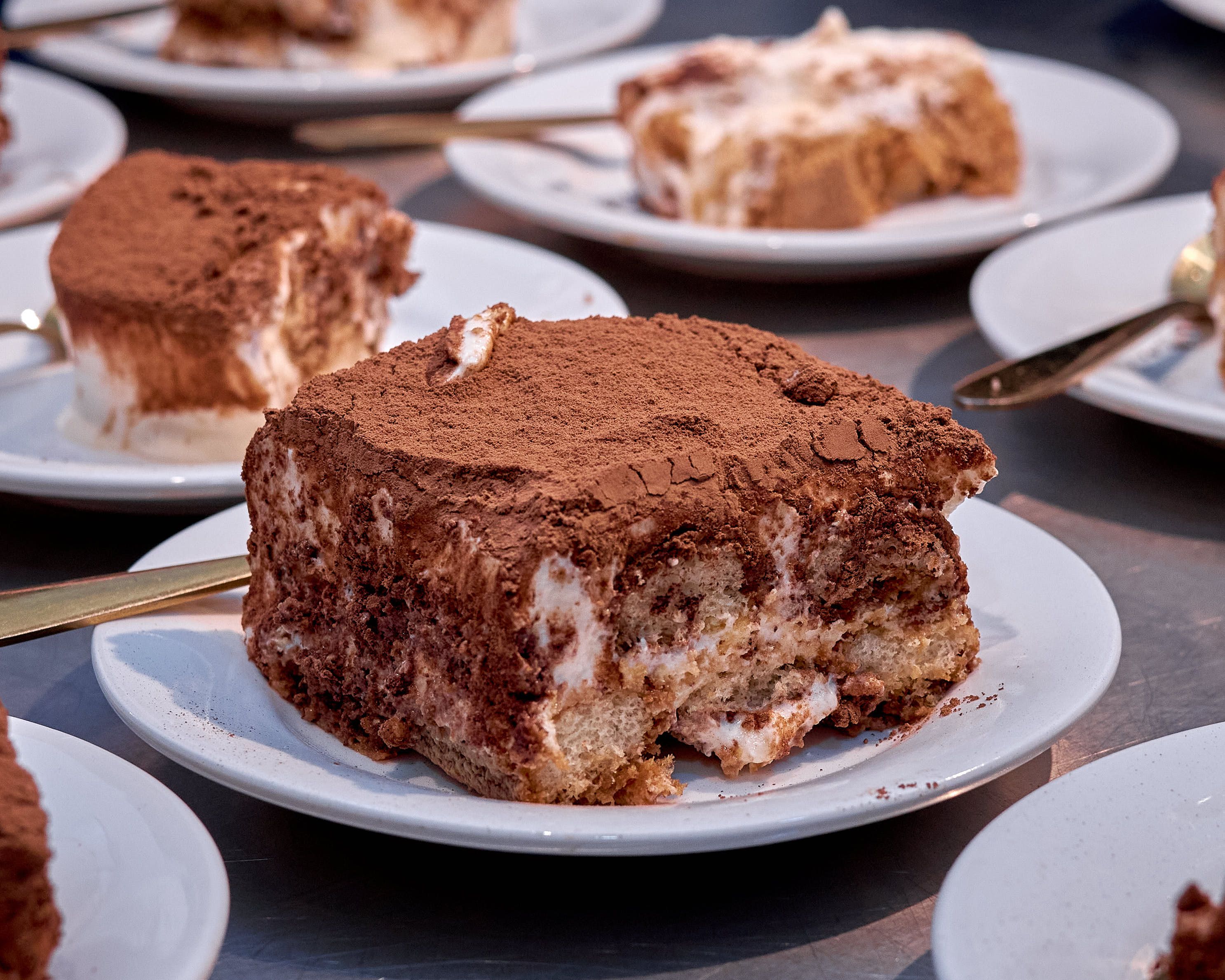
Photo: Tochukwu Ekeh / Pexels
The diets react (see scores below)
Common Ingredients
- mascarpone
- eggs
- sugar
- espresso
- ladyfingers
- cocoa powder
- coffee liqueur
Specific recipes may vary.
Incompatible with 11 of 11 diets
Diet Ratings
Tiramisu is fundamentally incompatible with ketogenic diet in its traditional form. The dish contains multiple high-carb ingredients that together create an extremely high net carb load. Ladyfingers (savoiardi) are grain-based cookies loaded with refined flour and sugar, contributing the bulk of the carbs. Added sugar appears both in the ladyfingers and the mascarpone mixture. Coffee liqueur adds additional sugar. A standard serving of tiramisu typically contains 35-50g of net carbs, which alone can exceed or completely consume an entire day's keto carb allowance. While mascarpone and eggs are keto-friendly ingredients, they are outweighed by the carb-dense components. Cocoa powder and espresso are minor ingredients that pose no keto concern, but they cannot redeem this dessert. There is no meaningful portion size at which traditional tiramisu becomes keto-compatible.
Tiramisu contains multiple animal-derived ingredients that are fundamentally incompatible with a vegan diet. Mascarpone is a dairy cream cheese, eggs are a direct animal product, and traditional ladyfingers (savoiardi) are made with eggs. These are not trace or incidental ingredients — they are the primary structural and flavor components of the dish. There is no ambiguity here: classic tiramisu cannot be considered vegan in any mainstream or fringe interpretation of veganism. Vegan versions of tiramisu do exist using cashew cream or coconut cream in place of mascarpone, aquafaba or flax eggs as egg substitutes, and vegan ladyfingers, but the dish as described with its listed ingredients is clearly non-vegan.
Tiramisu is fundamentally incompatible with the Paleo diet. It contains multiple non-paleo ingredients: mascarpone (dairy), ladyfingers (wheat-based grain product), and refined sugar. These three ingredients alone — dairy, grains, and refined sugar — are among the core exclusions of any paleo framework. Coffee liqueur is also processed and contains added sugar and alcohol. Cocoa powder and espresso are the only ingredients that could be considered paleo-adjacent. This dish is not a gray-area case; it is a textbook example of a non-paleo food across all major paleo authorities.
Tiramisu is a rich Italian dessert that conflicts with core Mediterranean diet principles on multiple fronts. Mascarpone is a high-fat dairy product very different from the modest amounts of yogurt or cheese typical in Mediterranean eating. The dish is high in added sugar, uses refined ladyfinger biscuits (refined grain), and contains coffee liqueur (added alcohol beyond any modest wine allowance). While eggs are acceptable in moderation, here they combine with saturated-fat-heavy mascarpone and significant sugar to create a calorie-dense, nutrient-poor dessert. Occasional small indulgences exist in Mediterranean culture, but tiramisu as formulated is far from a staple or even a moderate-frequency food — it is a celebratory treat at best and should be very infrequent.
Tiramisu is fundamentally incompatible with the carnivore diet. While it contains two animal-derived ingredients (mascarpone and eggs), the dish is dominated by plant-based and processed components: ladyfingers are a grain-based biscuit (wheat flour, sugar), sugar is a refined plant-derived carbohydrate, espresso and coffee liqueur are plant-derived beverages, and cocoa powder is a plant product. The overwhelming majority of ingredients violate carnivore principles, and this is a dessert built around carbohydrates and plant compounds. No meaningful carnivore adaptation is possible without reconstructing the dish entirely — at which point it is no longer tiramisu.
Tiramisu contains multiple Whole30-excluded ingredients: mascarpone (dairy), sugar (added sugar), ladyfingers (grain-based baked goods made from wheat flour), and coffee liqueur (alcohol). There is no compliant version of this dish possible without fundamentally changing what it is. Even if you substituted compliant alternatives, attempting to recreate a dessert like tiramisu would violate Whole30's rule against recreating junk food and baked goods with compliant ingredients.
Tiramisu contains multiple high-FODMAP ingredients that make it unsuitable during the elimination phase. Mascarpone is a high-fat soft cheese with significant lactose content — while fat slows digestion, the lactose load in a standard tiramisu serving is substantial. Ladyfingers (savoiardi) are wheat-based biscuits and are high in fructans, a major FODMAP category. Coffee liqueur (e.g., Kahlúa) typically contains high-fructose corn syrup or excess fructose, as well as potentially other high-FODMAP additives. Espresso itself is low-FODMAP in small amounts, eggs and sugar are low-FODMAP, and cocoa powder in small quantities is borderline acceptable — but the combination of mascarpone, ladyfingers, and coffee liqueur creates an unavoidably high-FODMAP dish at any standard serving size. There is no realistic portion reduction that would make tiramisu safe during elimination.
Tiramisu is fundamentally incompatible with the DASH diet. Mascarpone is a full-fat dairy product extremely high in saturated fat, directly contradicting DASH's emphasis on fat-free or low-fat dairy. The dish is loaded with added sugar from ladyfingers and granulated sugar, violating DASH's limit on sweets. Coffee liqueur adds both sugar and alcohol. While espresso and cocoa powder are relatively benign, no single ingredient redeems this dessert from a DASH perspective. The overall macronutrient profile — high saturated fat, high added sugar, low fiber, low potassium, low magnesium — is the opposite of what DASH emphasizes. Even in small portions, the saturated fat density from mascarpone alone makes this a poor fit for the DASH eating plan.
Tiramisu is one of the most Zone-incompatible desserts due to a convergence of multiple problematic elements. The macronutrient profile is severely imbalanced: it is overwhelmingly fat (from mascarpone, which is an extremely high-fat, high-saturated-fat cheese) and high-glycemic carbohydrates (sugar and ladyfingers, which are essentially refined flour cookies). There is virtually no lean protein — the eggs are present but their protein contribution is overwhelmed by the fat from mascarpone. The fat profile is dominated by saturated fat (mascarpone has roughly 6g saturated fat per tablespoon), which Sears explicitly discourages. Sugar is the primary carbohydrate driver, making this high-glycemic and pro-inflammatory. Ladyfingers are made from refined flour and sugar, placing them firmly in the 'unfavorable' carb category. The coffee liqueur adds additional sugar with no nutritional value. There is no realistic portioning strategy that would bring a serving of tiramisu into Zone ratios — you would need to eat such a small amount (a few spoonfuls) that it cannot function as a meaningful snack. Even then, the saturated fat and sugar content would disqualify it from Zone-favorable status. This is a dessert built from three Zone 'avoid' categories simultaneously: high-glycemic refined carbs, high saturated fat, and added sugar.
Tiramisu is a dessert with a strongly pro-inflammatory nutritional profile. Mascarpone is a full-fat, high-saturated-fat cheese — exactly the type of ingredient anti-inflammatory frameworks recommend limiting or avoiding. The dish is loaded with added sugar (both from the sugar itself and the sweet ladyfinger biscuits), which is a primary driver of inflammatory markers like CRP and IL-6. Ladyfingers are refined carbohydrates with a high glycemic load, promoting insulin spikes and downstream inflammation. Coffee liqueur adds alcohol beyond the narrow 'moderate red wine' exception recognized in anti-inflammatory frameworks, and contributes additional sugar. The only redeeming elements are espresso (coffee polyphenols have modest anti-inflammatory associations) and cocoa powder (which contains flavanols with anti-inflammatory properties) — but both are present in small quantities relative to the dominant pro-inflammatory ingredients. Eggs offer some neutral-to-modest benefit (choline, selenium), but cannot offset the saturated fat, refined sugar, and alcohol load. As an occasional indulgence in an otherwise strong anti-inflammatory diet, tiramisu is not catastrophic, but it does not align with anti-inflammatory principles and earns a low score.
Tiramisu is a poor fit for GLP-1 patients on nearly every key criterion. Mascarpone is extremely high in saturated fat, directly worsening nausea, bloating, and reflux — the most common GLP-1 side effects. Sugar is the dominant carbohydrate source, offering empty calories with no fiber or micronutrient benefit. Ladyfingers are refined-grain, low-fiber biscuits that contribute further empty carbohydrates. Coffee liqueur adds alcohol, which contributes additional empty calories. The espresso component adds caffeine beyond the 1-2 cup daily limit if consumed alongside other caffeinated beverages. Protein content from eggs and mascarpone is modest relative to the calorie load and fat burden — this is not a protein-dense food per calorie. Fiber content is essentially zero. The dish is also portion-sensitive in the wrong direction: even a small serving delivers significant fat, sugar, and alcohol. There is no meaningful redeeming nutritional quality that would lift this above an avoid rating for GLP-1 patients.
*See how scores were generated at our methodology page.
Nutritional profile
Six traits that cut across every diet.
Fiber & Plants
How much whole-plant food and fiber it delivers.
Healthy Fats
The quality of its fats (unsaturated, omega-3).
Whole / Unprocessed
How close it is to its natural, unprocessed form.
Gut Gentle
How easy it is on digestion (low FODMAP, few irritants).
Low Glycemic
How little it spikes your blood sugar.
Protein Density
How much protein it packs per calorie.
Controversy Index
Higher controversy = more disagreement between diets.