Austrian
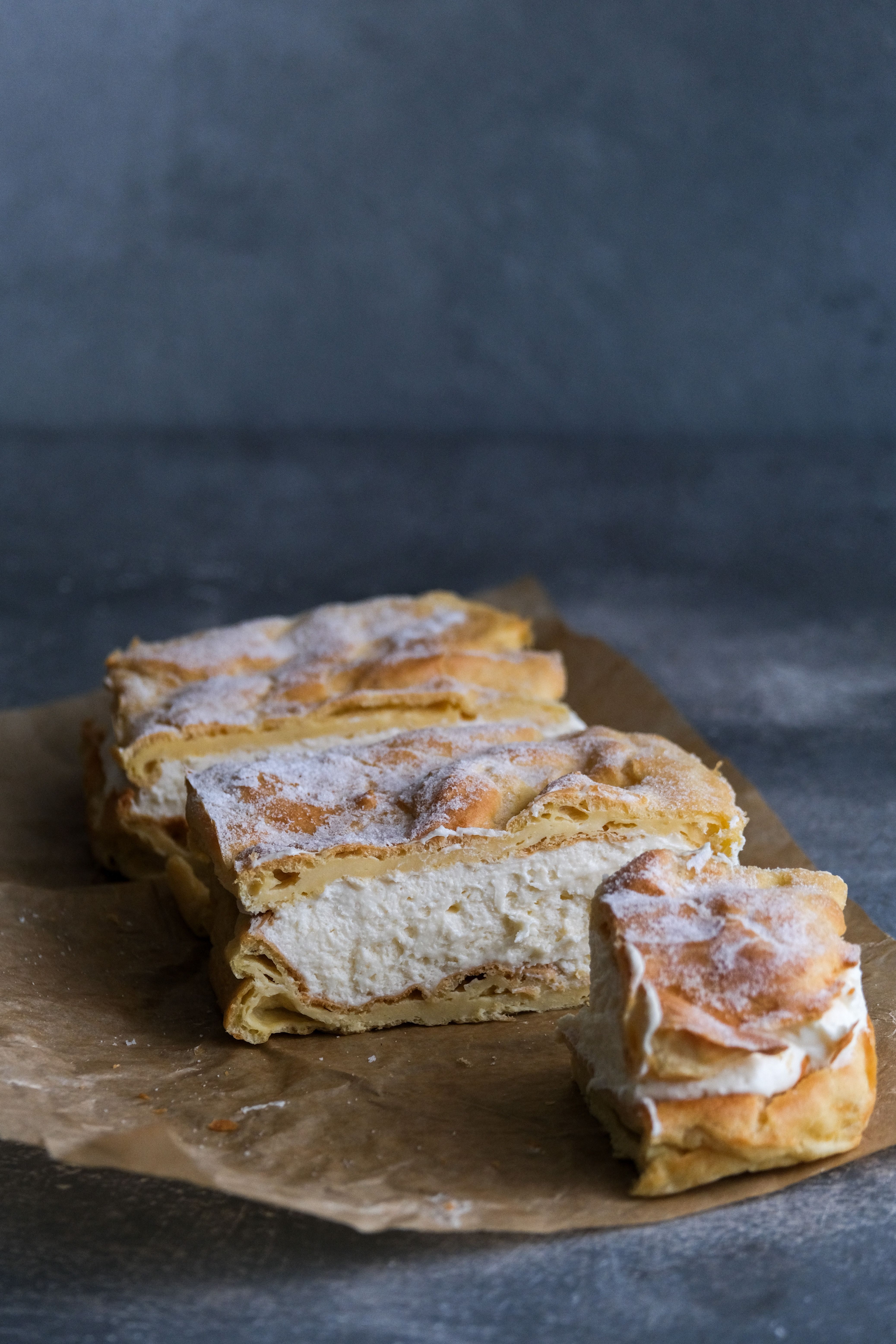
Topfenstrudel
The diets react (see scores below)
Common Ingredients
- strudel dough
- quark
- sugar
- eggs
- raisins
- butter
- cinnamon
- breadcrumbs
Specific recipes may vary.
Incompatible with 7 of 11 diets
Diet Ratings
Topfenstrudel is fundamentally incompatible with a ketogenic diet. The dish contains multiple high-carb ingredients that together make it impossible to fit within daily net carb limits. Strudel dough is a wheat-flour pastry with very high net carbs; breadcrumbs add additional grain-based carbs; sugar is a direct keto disqualifier; and raisins are a concentrated source of sugar and carbohydrates. Even a small serving would likely exceed the entire daily net carb allowance of 20-50g. While quark, eggs, and butter are individually keto-friendly, they cannot redeem this dish given the other ingredients.
Topfenstrudel contains multiple animal-derived ingredients that disqualify it from a vegan diet. Quark is a fresh dairy cheese, eggs are a direct animal product, and butter is a dairy fat — all three are core animal products explicitly excluded under vegan principles. The strudel dough and breadcrumbs may also contain eggs and dairy depending on preparation. There is no ambiguity here: this dish is fundamentally built on dairy and eggs.
Topfenstrudel is fundamentally incompatible with the Paleo diet. Strudel dough is made from wheat flour, a grain explicitly excluded from Paleo. Quark is a fresh dairy product, also excluded. Breadcrumbs are another grain-based ingredient. Refined sugar is a non-Paleo sweetener. These are not minor or debated violations — grains, dairy, and refined sugar are among the most clearly prohibited categories in all mainstream Paleo frameworks. Eggs, butter (debated), cinnamon, and raisins are the only ingredients with any Paleo standing, but they cannot redeem a dish whose foundation is built on multiple core exclusions.
Topfenstrudel is an Austrian pastry that conflicts with Mediterranean diet principles on multiple fronts. The strudel dough is a refined grain product, sugar is a direct added sugar, butter replaces the preferred olive oil as the primary fat, and breadcrumbs add further refined carbohydrates. While quark (a fresh dairy) and eggs are acceptable in moderation, the overall dish is essentially a sweet pastry dessert — a category explicitly discouraged by Mediterranean diet guidelines. The combination of refined flour, added sugar, and butter-based fat places this firmly in 'avoid' territory.
Some Mediterranean diet interpreters note that small, occasional portions of traditional dairy-rich desserts can fit within a culturally flexible framework, and quark itself is a lean, protein-rich dairy analogous to Greek yogurt or ricotta used in Mediterranean sweets. However, the dominant consensus would still flag the refined dough, added sugar, and butter as disqualifying for regular consumption.
Topfenstrudel is fundamentally incompatible with the carnivore diet. While it contains a small amount of animal-derived ingredients (quark, eggs, butter), the dish is dominated by plant-based and processed components: strudel dough (grain-based wheat flour), sugar, raisins (fruit), cinnamon (plant spice), and breadcrumbs (grain-based). This is a pastry dessert — a high-carbohydrate, grain-heavy baked good that violates virtually every core carnivore principle. Even the animal-derived ingredients (quark) would be debated by strict carnivore practitioners. The overall dish is a clear avoid with no ambiguity.
Topfenstrudel contains multiple Whole30-excluded ingredients. Strudel dough is a grain-based product (wheat flour), which is entirely excluded. Quark is a dairy product, also excluded. Sugar is an added sweetener, excluded. Butter (regular, not ghee) is dairy, excluded. Breadcrumbs are grain-based, excluded. Additionally, the dish itself is a pastry/baked good, which falls squarely into the 'no recreating baked goods' rule even if compliant ingredients could theoretically be found. This dish fails on nearly every front.
Topfenstrudel contains multiple high-FODMAP ingredients that make it unsuitable during the elimination phase. Strudel dough is made from wheat flour, which is high in fructans — a major FODMAP. Quark (Topfen) is a fresh soft cheese with significant lactose content, making it high-FODMAP in the quantities used in this dish. Raisins are high in fructose and polyols (sorbitol) and are high-FODMAP even at small servings (~1 tablespoon or 13g can already be borderline). Standard breadcrumbs are also typically wheat-based, adding further fructan load. Sugar, eggs, butter, and cinnamon are low-FODMAP, but the combination of wheat dough, quark, and raisins creates a dish with at least three independent high-FODMAP sources, making it clearly unsuitable for the elimination phase.
Topfenstrudel is an Austrian quark-filled pastry that presents a mixed DASH diet profile. On the positive side, quark (a fresh cheese similar to cottage cheese) is relatively low in sodium and provides calcium and protein aligned with DASH dairy goals — though it is not the specified low-fat dairy variety. Raisins contribute potassium and some fiber. However, the dish has several DASH concerns: it contains added sugar, butter (saturated fat), refined strudel dough (not a whole grain), and breadcrumbs (refined carbohydrate). The combination of butter and full-fat quark contributes meaningful saturated fat. As a sweet pastry snack, it sits closer to the 'sweets' category that DASH recommends limiting (≤5 servings per week). Sodium is relatively low, which is a positive. Overall, this is an occasional treat rather than a DASH staple, warranting a caution rating with portion control advised.
NIH DASH guidelines specify low-fat dairy and limited sweets and saturated fats, placing this dish in the caution category. However, some updated clinical interpretations note that quark and fresh cheeses have favorable protein-to-fat ratios, and that small portions of traditional foods with natural ingredients (no ultra-processing, no trans fats) may be reasonably accommodated in a flexible DASH framework — particularly if low-fat quark is substituted and butter is reduced.
Topfenstrudel is an Austrian pastry that presents significant challenges for Zone Diet compliance. The dish combines strudel dough (refined, high-glycemic carbohydrate), sugar (pure high-glycemic carb), raisins (unfavorable high-sugar fruit in Zone terminology), and breadcrumbs — all high-glycemic carbohydrate sources that would dramatically skew the macronutrient ratio toward carbohydrates with a high glycemic load. Quark (a form of fresh cheese/curd similar to cottage cheese) is actually a favorable Zone protein source with a reasonable protein-to-fat ratio, and eggs contribute lean protein. However, the butter adds saturated fat rather than preferred monounsaturated fat. The overall dish profile is carbohydrate-heavy and sugar-forward, making it very difficult to balance into a 40/30/30 Zone block structure in any reasonable portion. As a snack specifically, the high sugar and refined carb content would trigger a significant insulin response, directly opposing Zone's core anti-inflammatory, insulin-management goals. It scores low within 'caution' territory rather than 'avoid' only because quark and eggs provide some redeemable protein content, and technically a very small portion could theoretically be worked into a larger Zone framework.
Some Zone practitioners might argue that quark-based desserts in very small portions (1-block carb equivalent) could be incorporated occasionally as a treat, especially since quark itself is a favorable Zone protein. Sears' later writings acknowledge that occasional unfavorable foods in controlled portions don't break the Zone, and the protein from quark and eggs partially offsets the carbohydrate load. The cinnamon is actually a polyphenol-rich spice Sears endorses for insulin sensitivity.
Topfenstrudel is a traditional Austrian pastry with a mixed inflammatory profile. On the positive side, quark (a fresh soft cheese) is a moderate-protein dairy with lower fat than aged cheeses; cinnamon is a genuinely anti-inflammatory spice with polyphenolic compounds; eggs provide selenium and choline; and raisins offer some polyphenols and fiber. However, the dish is structurally a refined-carbohydrate dessert: the strudel dough is made from refined white flour (a refined carbohydrate that can spike blood glucose), added sugar is a primary ingredient, butter contributes saturated fat, and breadcrumbs add more refined starch. The combination of refined flour, sugar, and butter hits multiple 'limit' categories in anti-inflammatory guidelines simultaneously. Quark is categorized as low-fat dairy, which is in the 'moderate' tier — acceptable but not emphasized. The overall dish is closer to a conventional European pastry than an anti-inflammatory food, though it avoids the worst offenders (no trans fats, no high-fructose corn syrup, no artificial additives, no seed oils). It is acceptable as an occasional treat but should not be a dietary staple in an anti-inflammatory eating pattern.
Topfenstrudel is an Austrian quark-filled pastry that presents a mixed nutritional profile for GLP-1 patients. The quark (Topfen) filling is a genuine positive — it is a high-protein, relatively low-fat dairy product similar to cottage cheese, providing meaningful protein per serving. Eggs add further protein. However, the dish is built around refined strudel dough (refined carbohydrates, low fiber), contains added sugar, butter (saturated fat), and raisins (concentrated sugar). The breadcrumbs add refined starch with minimal nutritional value. The overall dish is a dessert-style pastry: moderate protein from the dairy-egg filling, but low fiber, moderate-to-high refined carbohydrate load, and meaningful saturated fat from butter. Portion size is critical — a small slice can be a reasonable protein-containing snack, but a typical Austrian serving size is large and calorie-dense relative to its nutrient return. The sugary, buttery pastry format risks nausea and bloating given slowed gastric emptying on GLP-1s. It is not an ideal GLP-1 snack but is not categorically harmful in a small portion if quark content is high relative to dough.
Some GLP-1-focused dietitians would view the quark base favorably and permit a small portion as a protein-containing treat, particularly if homemade with reduced sugar and butter. Others would caution against any refined-dough pastry with added sugar as a snack choice, noting that the refined carbohydrate and fat combination is likely to worsen GI side effects and displace more nutrient-dense protein and fiber sources from an already calorie-restricted diet.
*See how scores were generated at our methodology page.
Nutritional profile
Six traits that cut across every diet.
Fiber & Plants
How much whole-plant food and fiber it delivers.
Healthy Fats
The quality of its fats (unsaturated, omega-3).
Whole / Unprocessed
How close it is to its natural, unprocessed form.
Gut Gentle
How easy it is on digestion (low FODMAP, few irritants).
Low Glycemic
How little it spikes your blood sugar.
Protein Density
How much protein it packs per calorie.
Controversy Index
Higher controversy = more disagreement between diets.
Diet-Specific Tips
 DASH — 4/10
View tips
- Quark provides calcium and protein but is typically full-fat, not the DASH-preferred low-fat dairy
- Added sugar from sugar and raisins contributes to the sweets category DASH limits
- Butter adds saturated fat inconsistent with DASH fat guidelines
- Strudel dough and breadcrumbs are refined grains, not whole grains
- Relatively low sodium profile is a DASH-positive attribute
- Raisins contribute potassium and some fiber
- No trans fats or tropical oils; less processed than commercial pastries
- Portion control critical — suitable only as an occasional DASH treat
 Zone — 5/10
View tips
- Strudel dough is refined, high-glycemic carbohydrate — unfavorable in Zone
- Sugar is a direct high-glycemic carbohydrate that spikes insulin — strongly unfavorable
- Raisins are explicitly listed as unfavorable high-sugar carbs in Zone methodology
- Breadcrumbs add additional refined carbohydrate load
- Quark is a favorable Zone protein source, partially redeeming the dish
- Eggs contribute lean protein consistent with Zone guidelines
- Butter provides saturated fat rather than preferred monounsaturated fat
- Overall macro ratio is heavily skewed toward high-glycemic carbohydrates
- As a snack, the insulin response would be disproportionately large relative to Zone goals
- Cinnamon is a Zone-friendly polyphenol that may modestly support insulin sensitivity
 Anti-Inflammatory — 4/10
View tips
- Refined white flour strudel dough is a refined carbohydrate — a 'limit' category in anti-inflammatory frameworks
- Added sugar is a pro-inflammatory ingredient present in significant quantity
- Butter contributes saturated fat, placed in the 'limit' category
- Quark is relatively lean dairy — acceptable in moderation per anti-inflammatory guidelines
- Cinnamon has documented anti-inflammatory polyphenolic properties
- No trans fats, artificial additives, or high-fructose corn syrup — avoids the worst inflammatory triggers
- Eggs are a moderate/neutral ingredient in the anti-inflammatory context
- Raisins add small amounts of polyphenols but also concentrated natural sugar
 GLP-1 Friendly — 4/10
View tips
- Quark filling provides meaningful protein, a genuine positive for GLP-1 patients
- Refined strudel dough contributes low-fiber, high-glycemic refined carbohydrates
- Added sugar and raisins increase simple sugar load — counterproductive on GLP-1
- Butter adds saturated fat, which can worsen nausea and bloating with slowed gastric emptying
- Low fiber overall — does not support the 25-30g daily fiber target
- Portion-sensitive: a small slice is more defensible than a standard Austrian serving
- Breadcrumbs add refined starch with negligible nutritional value
- Better alternatives exist for a high-protein dairy snack (plain quark with fruit, cottage cheese)