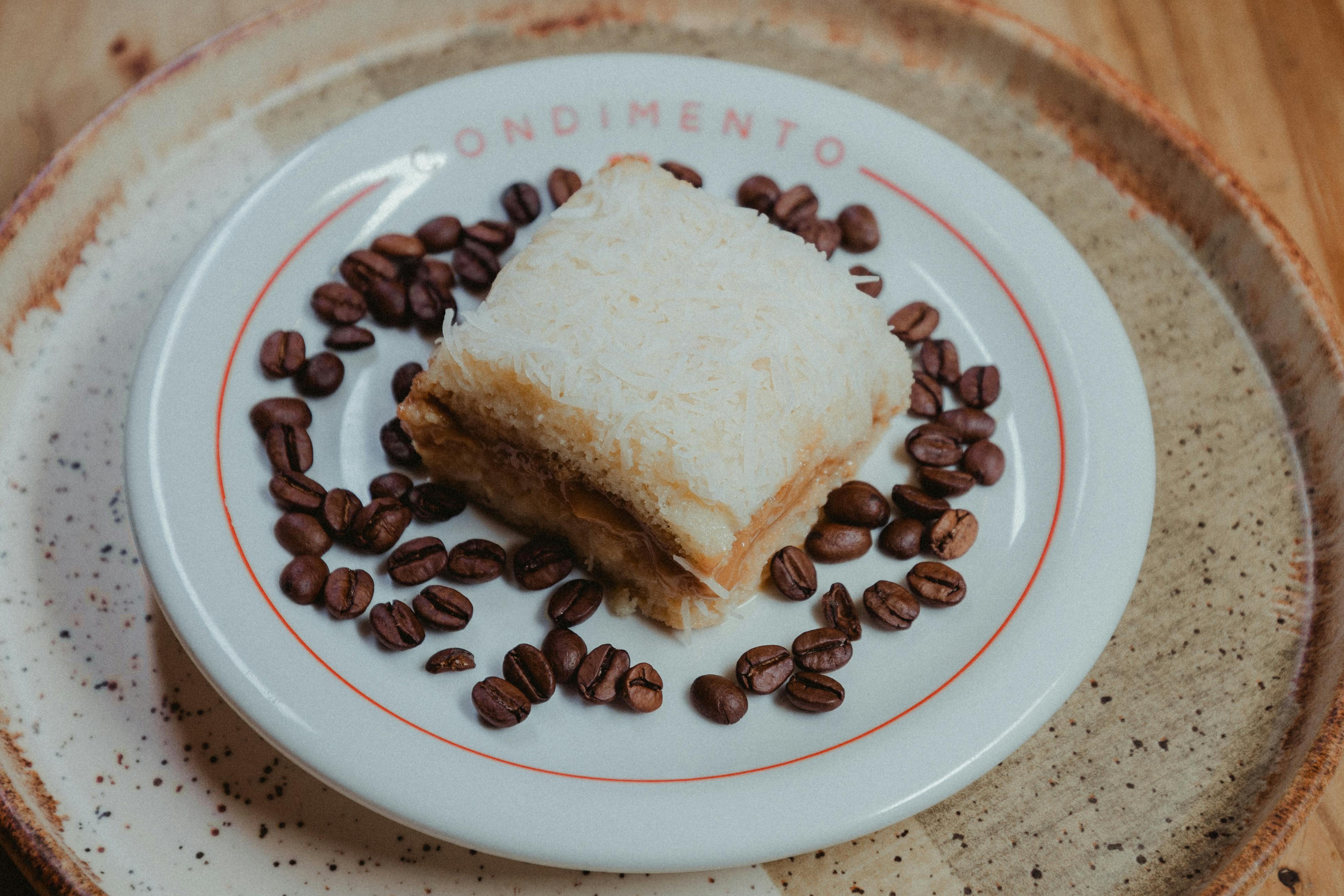
Photo: Matheus Bertelli / Pexels
Portuguese
Toucinho do Ceu
The diets react (see scores below)
Common Ingredients
- egg yolks
- sugar
- almonds
- butter
- cinnamon
- lard or shortening
- flour
- salt
Specific recipes may vary.
Incompatible with 11 of 11 diets
Diet Ratings
Toucinho do Céu is a traditional Portuguese almond cake that is fundamentally incompatible with a ketogenic diet. Despite containing keto-friendly ingredients like egg yolks, almonds, butter, and lard, the dish is heavily laden with sugar (a primary ingredient) and flour, both of which are absolute disqualifiers. The combination of large quantities of sugar and wheat flour would deliver an enormous glycemic load, driving net carbs far beyond the 20-50g daily keto threshold in even a small serving. This is a dessert/confection by nature, and no portion size makes it keto-compatible without a complete recipe overhaul.
Toucinho do Céu is a traditional Portuguese confection that is fundamentally incompatible with a vegan diet. It contains multiple animal-derived ingredients: egg yolks are a direct animal product, butter is a dairy derivative, and lard is rendered pig fat. These are not incidental or trace ingredients — they are structural components of the dish. There is no vegan version of this recipe in its traditional form, as eggs and butter define its characteristic rich, dense texture and flavor.
Toucinho do Céu is a traditional Portuguese almond cake that contains multiple non-paleo ingredients. Flour (wheat) is a grain and a clear paleo violation. Refined sugar is explicitly excluded from the paleo diet. Butter is a dairy product (excluded under strict paleo). Salt is listed as added salt, which is discouraged. Shortening, if used instead of lard, is a processed seed oil product — also a hard avoid. While egg yolks, almonds, cinnamon, and lard are individually paleo-compliant, the dish as a whole is disqualified by the flour, refined sugar, butter, and potentially shortening. With at least three to four firm paleo exclusions present, this dish cannot be rated higher than 'avoid'.
Toucinho do Céu is a traditional Portuguese confection that is fundamentally at odds with Mediterranean diet principles. It is built around large quantities of egg yolks and sugar as its base, with lard or shortening as the primary fat rather than olive oil. The very high added sugar content alone warrants an 'avoid' rating under Mediterranean guidelines, and the use of lard/shortening adds saturated fat from a non-recommended source. While almonds are a Mediterranean staple and eggs are acceptable in moderation, they cannot redeem a dish whose structural foundation is refined sugar and animal lard. This is an occasional indulgence dessert, not a snack compatible with Mediterranean dietary patterns.
Toucinho do Céu is a traditional Portuguese almond and egg yolk dessert that is fundamentally incompatible with the carnivore diet. While it does contain egg yolks and butter (animal-derived ingredients), the majority of its ingredients are plant-based or otherwise excluded: almonds (nuts, strictly avoided), sugar (processed sweetener, strictly avoided), cinnamon (plant-based spice), and flour (grain, strictly avoided). The presence of lard is carnivore-friendly, but it cannot redeem a dish that is structurally built around plant foods and sugar. This is essentially a sweet confection/pastry that violates multiple core carnivore principles simultaneously.
Toucinho do Céu is a traditional Portuguese almond cake that contains multiple Whole30-excluded ingredients. Sugar is an added sweetener explicitly banned on Whole30. Flour (wheat) is a grain, which is entirely excluded. Butter (regular, not ghee/clarified) is a dairy product and not permitted. Even if individual ingredient substitutions were attempted, this dish is fundamentally a baked good — a cake/confection — which falls squarely into the 'no recreating baked goods' rule (Rule 4), making it non-compliant regardless of ingredient swaps.
Toucinho do Céu is a traditional Portuguese almond cake whose FODMAP status depends heavily on the amount of each ingredient per serving. Egg yolks, butter, lard/shortening, cinnamon, and salt are all low-FODMAP. Sugar is low-FODMAP at standard amounts. The two problematic ingredients are almonds and flour. Almonds are low-FODMAP at 10 almonds (approximately 12g) per Monash, but become high-FODMAP (GOS and excess fructose) above 20 almonds — almond-heavy desserts like this often exceed the safe threshold per slice. Wheat flour is high-FODMAP due to fructans, and even small amounts during the strict elimination phase are typically discouraged. A single serving of this dessert likely contains a meaningful quantity of both almonds and wheat flour, pushing it into caution or potentially avoid territory. The combined FODMAP load from two borderline ingredients makes this risky during elimination without knowing exact per-serving quantities.
Monash University rates almonds as low-FODMAP at ≤10 almonds and wheat flour as high-FODMAP at any meaningful quantity; some FODMAP practitioners would rate this dish 'avoid' outright during elimination due to the wheat flour component, while others might permit it if a gluten-free flour substitution is made and almond quantities are controlled per slice.
Toucinho do Céu is a traditional Portuguese almond and egg yolk cake that is fundamentally incompatible with DASH diet principles. It is built almost entirely on ingredients the DASH plan restricts or discourages: a very large quantity of egg yolks (high in cholesterol and saturated fat), substantial sugar (high added sugar), lard or shortening (high in saturated and/or trans fat), and butter (saturated fat). The dish is a confection — a sweet dessert snack with negligible fiber, no meaningful potassium or magnesium contribution, and no vegetables, whole grains, or low-fat dairy. The DASH diet explicitly limits saturated fat, added sugars, and sweets. While almonds are a DASH-approved nut, their benefit is entirely overwhelmed by the surrounding ingredients. This dish offers no redeeming DASH-positive nutritional profile and should be avoided on the DASH plan.
Toucinho do Céu is a traditional Portuguese confection built almost entirely around high-glycemic, Zone-unfavorable ingredients. Sugar is the dominant carbohydrate source — pure sucrose with a very high glycemic index that Sears explicitly classifies as a food to eliminate. Flour adds additional high-glycemic carbohydrate load. The fat profile is severely problematic: lard or shortening (saturated and potentially trans fat) plus butter provide heavy saturated fat content directly contrary to the Zone's emphasis on monounsaturated fats. Egg yolks alone do not redeem this dish — while they provide some protein, they are accompanied by no lean protein source and the fat they contribute is primarily saturated. Almonds are the one Zone-favorable ingredient (monounsaturated fat, some protein), but they are present in insufficient quantity relative to the sugar and lard to shift the macronutrient profile meaningfully. The resulting dish is overwhelmingly carbohydrate-heavy (high-glycemic), saturated-fat-heavy, and provides essentially no lean protein — the inverse of what a Zone snack requires. Even small portions would be difficult to incorporate into a balanced Zone meal without severe imbalance, as this is a dessert confection with no low-glycemic carbohydrate, no lean protein, and no monounsaturated fat dominance.
Toucinho do Céu is a traditional Portuguese confection built almost entirely around ingredients that rank poorly on anti-inflammatory metrics. The dish is dominated by refined sugar (a primary driver of inflammatory cytokines and elevated CRP), egg yolks in large quantity (moderate concern for arachidonic acid load), butter and/or lard (saturated fats that anti-inflammatory frameworks consistently limit or avoid), and shortening (which may contain partially hydrogenated or hydrogenated fats — strictly avoided in anti-inflammatory protocols). White flour adds refined carbohydrates with minimal fiber. The one redeeming ingredient is almonds, which provide vitamin E, monounsaturated fats, and some anti-inflammatory polyphenols, and cinnamon, which has modest anti-inflammatory properties. However, these are present in supporting rather than dominant roles and cannot offset the high sugar, saturated fat, and potential trans fat burden of the overall dish. As a high-sugar, high-saturated-fat pastry with possible shortening (hydrogenated oils), this falls firmly in the 'avoid' category for anti-inflammatory eating.
Toucinho do Céu is a traditional Portuguese confection built almost entirely on ingredients that conflict with GLP-1 dietary guidelines. The ingredient list is dominated by sugar, lard or shortening, butter, and egg yolks — delivering a very high sugar load, high saturated fat content, and nearly zero fiber. While egg yolks and almonds contribute some protein, the overall protein density per calorie is very low relative to the sugar and fat load. The high fat content (lard/shortening, butter) is likely to worsen GLP-1 side effects including nausea, bloating, and reflux, given that these medications already slow gastric emptying significantly. The high sugar content represents empty calories at a time when every calorie must be nutritionally justified. Refined flour adds additional low-nutrient starch. Even in a small serving, this dish delivers saturated fat, sugar, and refined carbohydrates with minimal protein or fiber return — the opposite of what GLP-1 patients need.
*See how scores were generated at our methodology page.
Nutritional profile
Six traits that cut across every diet.
Fiber & Plants
How much whole-plant food and fiber it delivers.
Healthy Fats
The quality of its fats (unsaturated, omega-3).
Whole / Unprocessed
How close it is to its natural, unprocessed form.
Gut Gentle
How easy it is on digestion (low FODMAP, few irritants).
Low Glycemic
How little it spikes your blood sugar.
Protein Density
How much protein it packs per calorie.
Controversy Index
Higher controversy = more disagreement between diets.