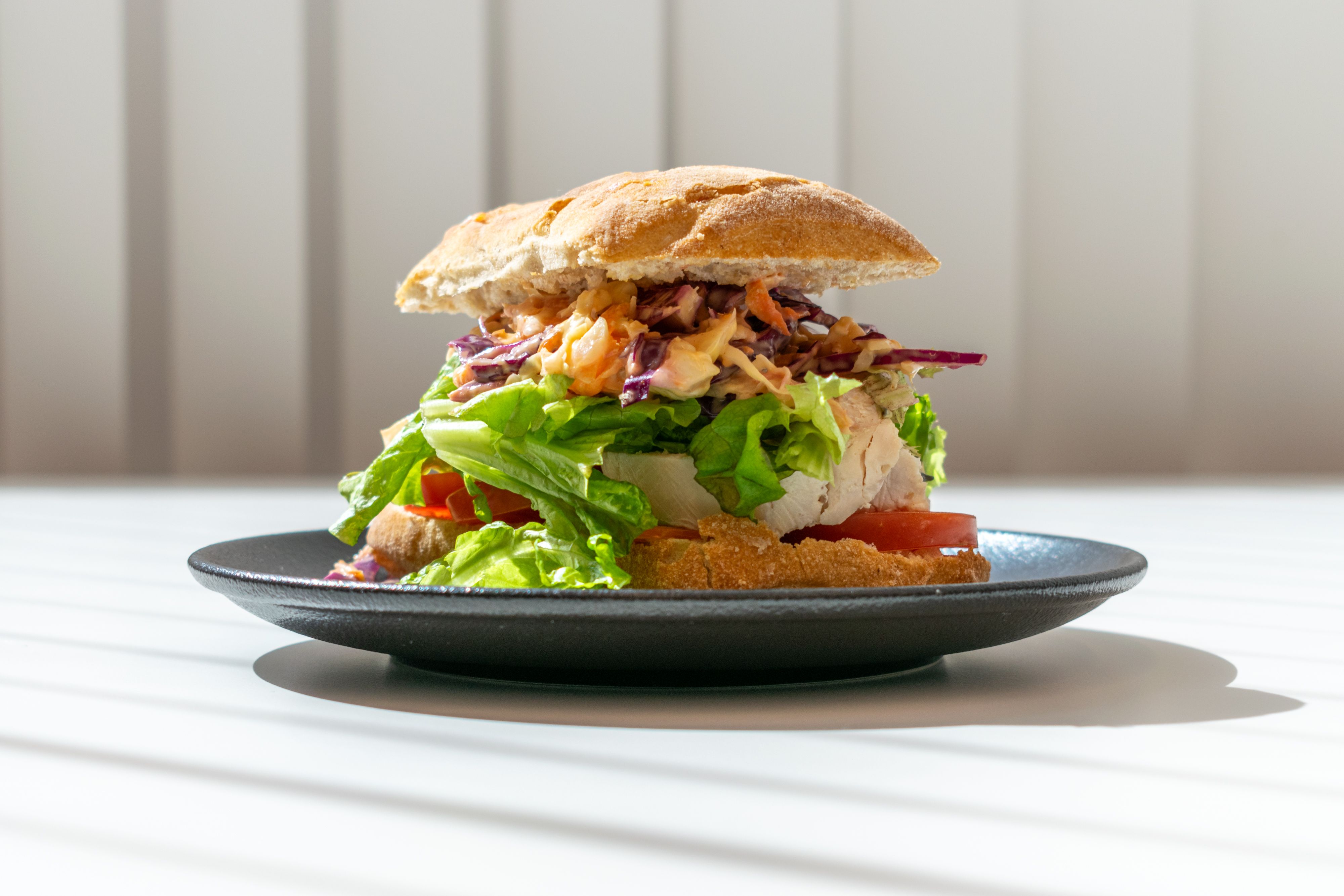
Photo: Sofía Falco / Pexels
Trinidadian
Bake and Shark
The diets react (see scores below)
Common Ingredients
- shark
- flour
- tamarind
- chadon beni
- garlic
- scotch bonnet
- cabbage
- lettuce
- lime
Specific recipes may vary.
Incompatible with 7 of 11 diets
Diet Ratings
Bake and Shark is fundamentally incompatible with a ketogenic diet due to the 'bake' component — a deep-fried bread made from wheat flour. The fried dough bread alone contains a high concentration of refined carbohydrates from flour, which would almost certainly exceed the daily keto carb limit in a single serving. While shark itself is an excellent keto protein source, and ingredients like garlic, scotch bonnet, chadon beni, cabbage, lettuce, and lime are low-carb, the tamarind sauce also adds sugar-based carbs. The entire dish is built around a flour-based bread, making it structurally incompatible with ketosis regardless of the keto-friendly fillings inside.
Bake and Shark is a classic Trinidadian street food consisting of fried shark meat served in fried bread (bake) with various plant-based condiments and garnishes. Shark is a fish and therefore an animal product, making this dish entirely incompatible with a vegan diet. The non-shark components — flour dough, tamarind, chadon beni (culantro), garlic, scotch bonnet pepper, cabbage, lettuce, and lime — are all plant-based, but the primary and defining ingredient is animal-derived seafood.
Bake and Shark is a Trinidadian street food where fried shark is served inside a fried 'bake' — a deep-fried bread made from wheat flour. Flour (wheat) is a grain and one of the clearest exclusions in the paleo diet. The dish is fundamentally structured around this non-paleo bread, making it incompatible regardless of the other ingredients. The shark itself is fully paleo-approved, and most other components — chadon beni (culantro), garlic, scotch bonnet, cabbage, lettuce, and lime — are paleo-compliant vegetables and aromatics. Tamarind is a legume-family fruit but the pulp/paste is generally treated as a fruit/flavoring and accepted by most paleo practitioners. However, the wheat flour bake is the defining and non-negotiable element of this dish, disqualifying the dish as a whole. The frying oil used in street-food preparation is also very likely a seed oil (soybean, canola, or corn oil), adding a second major paleo violation.
Bake and Shark presents a mixed Mediterranean diet profile. The shark itself is a positive element — fish is strongly encouraged 2-3 times weekly — and the accompanying vegetables (cabbage, lettuce), herbs (chadon beni, garlic), and citrus (lime) align well with plant-forward Mediterranean principles. Tamarind and scotch bonnet are whole, minimally processed ingredients that add flavor without contradiction. The significant concern is the 'bake' component: the fried dough bread is made from refined white flour and is deep-fried, combining two Mediterranean diet negatives — refined grains and frying in non-olive oil fat. This shifts the dish from a simple grilled or baked fish meal toward a processed, high-refined-carb format. The overall dish is not a core Mediterranean food, but its fish and vegetable components have genuine merit.
Some Mediterranean diet practitioners emphasize the quality of the protein and vegetable components over the preparation method, arguing that fish with abundant fresh herbs and raw vegetables is net positive regardless of the bread vehicle. Traditional coastal Mediterranean cuisines also occasionally include fried fish preparations (e.g., Italian fritto misto), suggesting frying is not categorically excluded.
Bake and Shark is fundamentally incompatible with the carnivore diet. While shark itself is an excellent carnivore-approved fish, the dish is built around a fried bread (the 'bake') made from flour — a grain-based product that is completely excluded. Beyond the bread, the dish is loaded with plant-based ingredients: tamarind (a legume-family fruit used as a sour condiment), chadon beni (a herb similar to cilantro), scotch bonnet pepper, cabbage, and lettuce. The lime juice adds further plant content. Essentially, only the shark protein is carnivore-compatible; the entire preparation method and all accompaniments are plant-derived. This is a street food sandwich at its core, and sandwiches/fried breaded foods are among the clearest avoid categories in carnivore eating.
Bake and Shark is a Trinidadian street food sandwich where fried shark is served inside a fried 'bake' (a flour-based fried bread). The 'bake' component is made from wheat flour, which is a grain and therefore explicitly excluded on Whole30. Additionally, the dish structurally falls into the 'bread/wrap/sandwich' category that Whole30 explicitly prohibits even with compliant ingredients. The shark itself, along with the vegetable toppings (cabbage, lettuce, chadon beni, garlic, scotch bonnet) and condiments (tamarind, lime) are all Whole30-compatible, but the fundamental bake component makes this dish non-compliant. This is not a borderline case — flour-based bread is a core exclusion.
Bake and Shark contains two definitive high-FODMAP ingredients that make it unsuitable during the elimination phase. First, 'bake' is a fried bread made from wheat flour, which is high in fructans — a primary FODMAP trigger. This alone disqualifies the dish. Second, garlic is one of the highest-FODMAP foods tested by Monash University, containing significant fructans even in very small amounts. These two ingredients together make the dish clearly high-FODMAP regardless of portion size. The remaining ingredients are largely low-FODMAP: shark (plain fish, low-FODMAP), tamarind (low-FODMAP in small amounts), chadon beni/culantro (low-FODMAP herb), scotch bonnet pepper (low-FODMAP), cabbage (low-FODMAP at standard serves), lettuce (low-FODMAP), and lime (low-FODMAP). However, the wheat-based bake and garlic are non-negotiable disqualifiers during elimination phase.
Bake and Shark is a Trinidadian street food where seasoned, fried shark is served in a fried bread (bake) with fresh toppings. The dish has both DASH-friendly and DASH-problematic elements. On the positive side, shark is a lean fish high in protein and omega-3s, and the toppings — cabbage, lettuce, tamarind, chadon beni (culantro), garlic, scotch bonnet, and lime — are vegetables, herbs, and fruits that align well with DASH principles. However, the 'bake' (the bread) is made from refined white flour rather than whole grain, and both the bread and the shark are deep-fried, adding significant fat and potentially sodium. Frying the shark introduces saturated/trans fats depending on the oil used, and the overall sodium content of the dish as typically prepared on the street can be moderate to high. The refined flour bake also lacks the fiber and nutrients of whole grains emphasized by DASH. If the frying method were replaced with baking or grilling and a whole-grain bread substitute were used, the dish would score considerably higher.
NIH DASH guidelines emphasize lean fish as a core protein and vegetables/herbs as central components, which dominate the topping profile here. Some DASH-oriented clinicians note that occasional consumption of fried fish dishes is acceptable within an otherwise DASH-compliant dietary pattern, and that the herb-and-vegetable-heavy toppings partially offset the refined flour and frying concerns — particularly if portion-controlled and prepared with heart-healthy oils.
Bake and Shark is a Trinidadian street food where fried shark fillets are served inside a fried dough bread ('bake'), topped with fresh condiments. The macro balance presents several Zone challenges. The shark itself is an excellent lean protein source, favorable in Zone terms, and the accompaniments — cabbage, lettuce, chadon beni (culantro), garlic, scotch bonnet, and lime — are low-glycemic, polyphenol-rich vegetables that Zone strongly approves of. Tamarind adds a modest glycemic load but in condiment quantities is manageable. The critical problem is the 'bake' — a flour-based fried dough that is both high-glycemic (refined white flour) and fried, likely in omega-6-heavy vegetable oil. This delivers a large carbohydrate hit that skews far above the 40% carb ceiling while adding unfavorable saturated or omega-6 fats from frying. The result is a carb-and-fat-heavy dish with insufficient protein proportion relative to the total caloric load. It cannot easily be portioned into Zone blocks without fundamentally altering the dish (e.g., removing or minimizing the bake). As a snack, the portion might be smaller, which slightly mitigates the glycemic spike, but the fried flour base remains the dominant macronutrient issue.
A Zone practitioner might argue that a small serving of Bake and Shark, where the bake portion is minimized and the shark and vegetable toppings are maximized, could be roughly balanced into a 1-2 block snack. Sears' later writings acknowledge that occasional unfavorable carbohydrates can be accommodated if the overall meal block ratio is maintained. The shark, cabbage, and fresh herbs are genuinely Zone-favorable components that partially redeem the dish.
Bake and Shark is a beloved Trinidadian street food with a genuinely mixed anti-inflammatory profile. On the positive side, shark is a lean fish that contains omega-3 fatty acids, supporting an anti-inflammatory response. The accompaniments are impressive from an anti-inflammatory standpoint: chadon beni (culantro, a relative of cilantro) and garlic are both anti-inflammatory herbs; scotch bonnet pepper contains capsaicin and antioxidants with well-documented anti-inflammatory properties; cabbage and lettuce provide fiber and polyphenols; tamarind offers antioxidants including tartaric acid; and lime adds vitamin C. These toppings collectively represent a strong anti-inflammatory herb and vegetable profile. However, the 'bake' component — a fried or baked flatbread made from refined white flour — is a significant drawback. The refined flour is a refined carbohydrate with minimal fiber, contributing to glycemic load and potentially promoting inflammation. More critically, the traditional preparation involves deep-frying the bread in oil (often vegetable/seed oils high in omega-6) and frying the shark itself, which introduces pro-inflammatory oxidized fats. If baked rather than fried, the dish scores noticeably better. The street food version as typically served is almost always deep-fried, which tips the balance toward caution. Additionally, shark as a large predatory fish carries mercury concerns with regular consumption, though this is a food safety rather than strictly inflammatory issue.
Some anti-inflammatory practitioners would rate this closer to 'avoid' specifically due to the deep-frying in refined seed oils (omega-6 load and oxidation products) and the refined white flour bake — components that Dr. Weil and the IF Rating system both flag as pro-inflammatory. On the other hand, a more optimistic reading emphasizing the exceptional herb, spice, and vegetable toppings — which rival any anti-inflammatory condiment profile — alongside the lean fish protein could push this toward the higher end of caution or even a modest approval, particularly if the bread is baked rather than fried.
Bake and Shark is a popular Trinidadian street food where shark fillets are deep-fried and served in a fried dough (bake) sandwich with toppings. Despite containing lean shark meat (a decent protein source) and fiber-friendly toppings like cabbage and lettuce, the dish is fundamentally a double-fried preparation — both the dough and the fish are deep-fried — making it problematic on multiple GLP-1 criteria. The fried dough bake is a refined-carbohydrate, high-fat base with negligible fiber and poor nutrient density per calorie. The deep-frying of the shark adds significant saturated and trans fats. Scotch bonnet pepper is one of the hottest chilies available and is a meaningful reflux and nausea trigger for GLP-1 patients. The overall portion is large and heavy, slowing gastric emptying further on top of the medication's existing effect. Tamarind and chadon beni are benign, and lime adds brightness with no concern. The protein contribution from the shark is real but is outweighed by the high fat load, refined carb base, spice intensity, and fry-heavy preparation.
Some GLP-1-experienced dietitians would argue that the shark itself, if isolated, represents a lean high-quality protein and that a small portion eaten without the fried bake could be acceptable; the disagreement centers on whether the dish should be rated as typically prepared (deep-fried double) or on its best-case modifiable version. Individual tolerance to scotch bonnet also varies significantly among GLP-1 patients, with some reporting no reflux and others experiencing severe nausea even from mild heat.
*See how scores were generated at our methodology page.
Nutritional profile
Six traits that cut across every diet.
Fiber & Plants
How much whole-plant food and fiber it delivers.
Healthy Fats
The quality of its fats (unsaturated, omega-3).
Whole / Unprocessed
How close it is to its natural, unprocessed form.
Gut Gentle
How easy it is on digestion (low FODMAP, few irritants).
Low Glycemic
How little it spikes your blood sugar.
Protein Density
How much protein it packs per calorie.
Controversy Index
Higher controversy = more disagreement between diets.
Diet-Specific Tips
 Mediterranean — 5/10
View tips
- Shark is a fish, supporting the 2-3x weekly seafood recommendation
- Refined flour dough (bake) is a refined grain, discouraged by Mediterranean principles
- Deep-frying method likely uses non-olive oil fat, contradicting primary fat source guidance
- Fresh vegetables (cabbage, lettuce) and herbs (chadon beni, garlic) are positive plant-based elements
- Tamarind and lime provide whole-food flavor without added sugars or processing
- Overall dish is a street food snack format, not a Mediterranean dietary staple
 DASH — 5/10
View tips
- Shark is a lean, DASH-approved protein source rich in omega-3 fatty acids
- Both the bread and shark are deep-fried, adding unhealthy fat and potential sodium
- Bake (bread) is made from refined white flour, not DASH-preferred whole grain
- Vegetable and herb toppings (cabbage, lettuce, garlic, scotch bonnet, chadon beni) are DASH-positive
- Tamarind and lime provide potassium and vitamin C, aligning with DASH micronutrient goals
- Street-prepared versions likely contain moderate-to-high sodium from seasoning
- Grilled/baked preparation with whole-grain bread would significantly improve DASH compatibility
 Zone — 4/10
View tips
- Shark is a lean protein source — Zone-favorable
- Fried flour dough ('bake') is high-glycemic refined carbohydrate — Zone-unfavorable
- Frying likely uses omega-6 seed oils, promoting inflammation — contrary to Zone anti-inflammatory principles
- Cabbage, lettuce, chadon beni, garlic, scotch bonnet are low-glycemic polyphenol-rich vegetables — Zone-approved
- Lime and tamarind add negligible glycemic load in condiment quantities
- Dish macro ratio is heavily skewed toward carbohydrates and fat, with protein underrepresented relative to total calories
- As a snack, smaller portions reduce but do not eliminate the glycemic concern from the fried dough
 Anti-Inflammatory — 5/10
View tips
- Shark provides lean protein and omega-3 fatty acids (anti-inflammatory positive)
- Refined white flour 'bake' is a refined carbohydrate with low fiber (pro-inflammatory negative)
- Traditional deep-frying introduces oxidized seed oils high in omega-6 (pro-inflammatory negative)
- Scotch bonnet pepper contains capsaicin and antioxidants with anti-inflammatory properties
- Garlic and chadon beni (culantro) are potent anti-inflammatory herbs
- Cabbage and lettuce contribute fiber, polyphenols, and micronutrients
- Tamarind and lime add antioxidants and vitamin C
- Mercury content in shark warrants caution for frequent consumption
- Preparation method (baked vs. fried) significantly affects the inflammatory rating