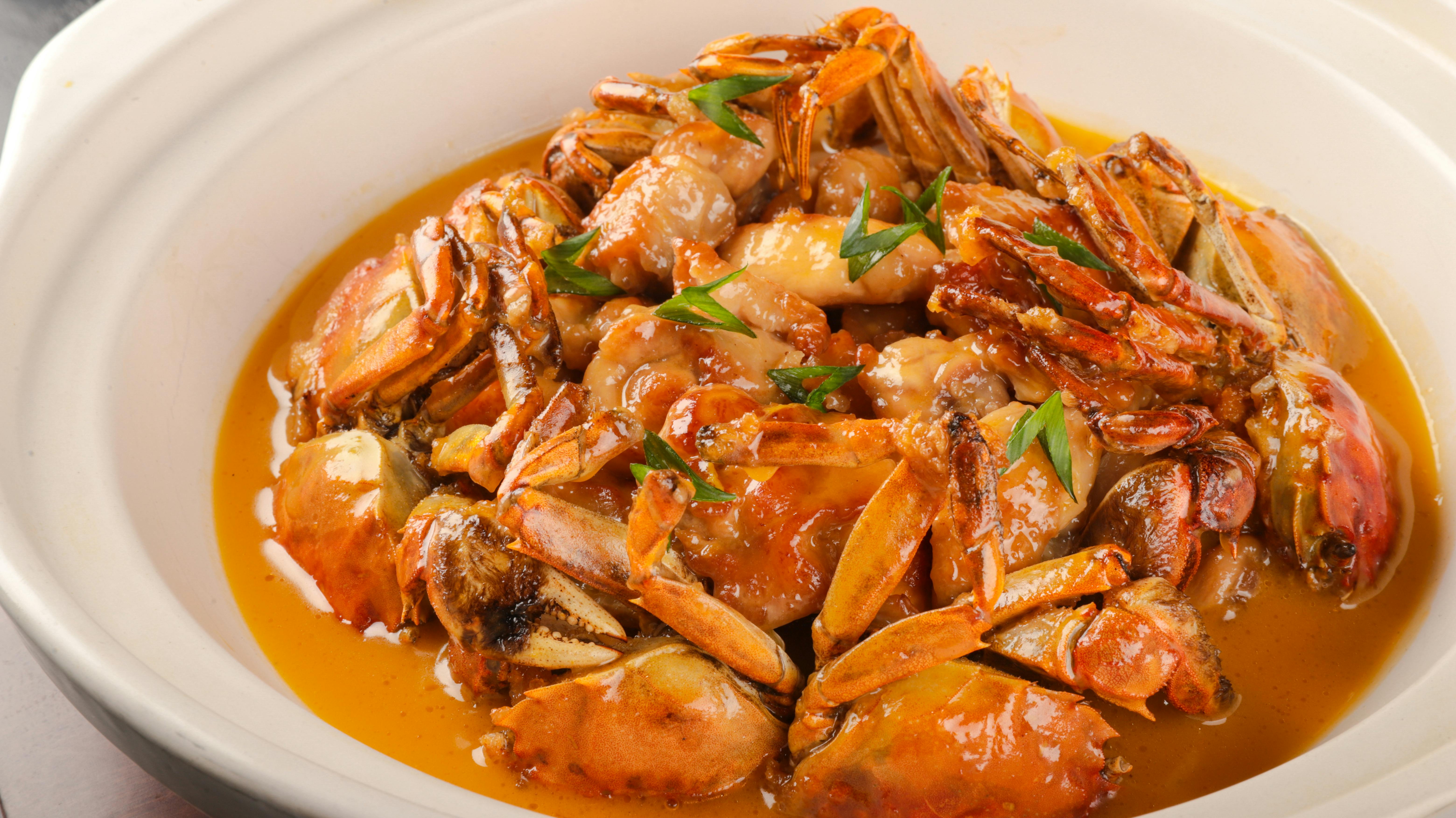
Photo: Change C.C / Pexels
Trinidadian
Curry Crab and Dumpling
The diets react (see scores below)
Common Ingredients
- blue crab
- curry powder
- coconut milk
- garlic
- chadon beni
- scotch bonnet
- flour
- onion
- turmeric
Specific recipes may vary.
Incompatible with 6 of 11 diets
Diet Ratings
Curry Crab and Dumpling is fundamentally incompatible with keto due to the flour-based dumplings, which are the dish's defining component. Traditional Trinidadian dumplings are made from wheat flour, a high-carb grain that alone can contribute 30-50g+ of net carbs per serving. While the crab, curry powder, coconut milk, garlic, chadon beni, scotch bonnet, and onion components are keto-friendly or at worst moderate, the dumplings are a deal-breaker. The dish cannot be meaningfully evaluated without its dumplings — they are structurally central to the dish, not an optional garnish. Removing them would yield a different dish entirely (curry crab), not this one.
Curry Crab and Dumpling is a beloved Trinidadian dish centered on blue crab, which is an animal product (seafood/shellfish). Despite the otherwise plant-based supporting ingredients — curry powder, coconut milk, garlic, chadon beni (culantro), scotch bonnet, flour, onion, and turmeric — the primary protein and defining ingredient is crab, an animal. This makes the dish entirely incompatible with a vegan diet. There is no ambiguity here; shellfish are unambiguously excluded under all vegan frameworks.
Curry Crab and Dumpling fails the paleo assessment primarily because of the flour-based dumplings. Wheat flour is a grain product and is strictly excluded from the paleo diet — this is one of the clearest 'avoid' cases in paleo doctrine. The dumplings are not a minor ingredient but a core, defining component of the dish. Setting aside the dumplings, most remaining ingredients are paleo-compliant: blue crab is an excellent paleo protein, coconut milk is approved, garlic and onion are paleo vegetables, chadon beni (culantro) and scotch bonnet are fresh herbs/peppers, and turmeric is a paleo-friendly spice. Curry powder blends can occasionally contain additives or salt, but in their natural spice form are generally acceptable. However, the flour dumplings alone are sufficient to disqualify this dish. The dish cannot be meaningfully separated from its dumplings — they are structurally central to the recipe, not a garnish.
Curry Crab and Dumpling presents a mixed Mediterranean diet profile. The blue crab is an excellent seafood protein fully aligned with Mediterranean principles (seafood 2-3 times weekly). Garlic, onion, chadon beni (culantro), scotch bonnet, and turmeric are all whole, plant-based aromatics and spices that fit well. However, two ingredients create friction: coconut milk is a saturated fat source not traditional to the Mediterranean diet (where olive oil dominates), and the flour dumplings are a refined grain component that adds little nutritional value by Mediterranean standards. Curry powder itself is not a Mediterranean flavor profile but is not inherently problematic nutritionally. The dish is whole-food based with no processed ingredients or added sugars, which is a significant positive. Overall, the seafood foundation and vegetable aromatics earn approval, but the coconut milk and refined flour dumplings moderate the score into caution territory.
Some modern Mediterranean diet interpretations are more permissive about coconut milk, viewing it as a whole plant-derived fat acceptable in occasional use, particularly when the overall dish is seafood-forward and vegetable-rich. Traditional practitioners, however, would emphasize substituting olive oil for coconut milk and a whole-grain or legume-based side for the dumplings to bring this dish closer to core principles.
Curry Crab and Dumpling is almost entirely incompatible with the carnivore diet. While blue crab itself is a carnivore-approved seafood, every other ingredient in this dish violates carnivore principles. The dumplings are made from flour (wheat — a grain and plant food). Curry powder, turmeric, chadon beni (culantro), scotch bonnet peppers, garlic, and onion are all plant-derived spices, herbs, and vegetables that are excluded on carnivore. Coconut milk is a plant-based fat/liquid also excluded. The dish is essentially a plant-heavy, spice-laden stew with a grain-based dumpling component, making it fundamentally incompatible with the carnivore diet beyond the single animal-derived ingredient (crab).
Curry Crab and Dumpling contains flour as a core ingredient for the dumplings. Flour is a wheat-based grain product, which is explicitly excluded on the Whole30 program. The dumplings themselves also fall under the 'no recreating baked goods or bread-like foods' guidance (dumplings are pasta/noodle-adjacent dough items). The remaining ingredients — blue crab, curry powder, coconut milk, garlic, chadon beni (culantro), scotch bonnet pepper, onion, and turmeric — are all Whole30-compliant on their own. However, the flour-based dumplings make this dish non-compliant as traditionally prepared.
Curry Crab and Dumpling contains multiple high-FODMAP ingredients that make it unsuitable during the elimination phase. Garlic is one of the highest-FODMAP foods (high fructans), onion is similarly high in fructans, and the flour-based dumplings are made from wheat flour which is high in fructans. These three ingredients alone disqualify the dish. Coconut milk is low-FODMAP only at small servings (up to 1/2 cup), and while it may be used in moderate amounts, the other ingredients are the primary concern. Blue crab (shellfish) is low-FODMAP, curry powder is generally low-FODMAP, turmeric is low-FODMAP, scotch bonnet pepper is low-FODMAP, and chadon beni (culantro/recao) is low-FODMAP. However, garlic, onion, and wheat flour dumplings create unavoidable high-FODMAP exposure that cannot be mitigated by portion size in a standard serving of this dish.
Curry Crab and Dumpling is a culturally rich Trinidadian dish with several DASH-compatible elements but notable concerns that limit its overall rating. Blue crab is an excellent lean protein source, rich in potassium, magnesium, and low in saturated fat — strongly aligned with DASH principles. Garlic, onion, chadon beni (culantro), scotch bonnet, and turmeric are all low-sodium, nutrient-dense aromatics that DASH readily approves. Curry powder provides antioxidant and anti-inflammatory spices with no sodium concerns if unsalted. However, the dish has two significant DASH friction points: (1) Coconut milk is high in saturated fat from a tropical oil source, which DASH explicitly limits; a full-fat coconut milk base in a main dish could contribute 10–15g of saturated fat per serving, well above DASH's guidance to keep saturated fat under 6% of total calories. (2) The flour dumplings are made from refined white flour, not a whole grain, offering little fiber or micronutrient value and representing empty carbohydrates. Sodium content depends heavily on preparation — crab is naturally moderate in sodium (~300mg per 3oz), and if no added salt is used, total sodium may be manageable, but typical home preparation often includes added salt. The dish is not inherently disqualifying but requires meaningful modifications — light coconut milk or coconut milk reduction, whole wheat dumplings, and strict sodium control — to approach DASH compatibility.
NIH DASH guidelines explicitly restrict tropical oils including coconut milk due to saturated fat content, placing this dish in caution territory. However, some updated clinical interpretations note that the saturated fat in coconut milk is predominantly medium-chain triglycerides (MCTs), which some cardiovascular nutrition researchers argue may have a more neutral or even favorable lipid profile effect compared to long-chain saturated fats — though the AHA and most DASH practitioners maintain the standard restriction pending stronger evidence.
Curry Crab and Dumpling presents a mixed Zone Diet profile. The blue crab is an excellent lean protein source, fitting well within Zone protein blocks at approximately 7g protein per ounce. Curry powder and turmeric are actually Zone-positive due to their potent anti-inflammatory and polyphenol properties, which Sears specifically endorses in his later writings. Aromatic vegetables like garlic, onion, chadon beni (culantro), and scotch bonnet pepper are low-glycemic carb sources that count favorably toward Zone carb blocks. The primary Zone concerns are twofold: (1) Coconut milk is high in saturated fat, which early Zone methodology strictly limited, and its fat profile is not monounsaturated — this disrupts the preferred fat quality even if quantity can be managed by using light coconut milk in moderation. (2) The flour dumplings are a high-glycemic, refined carbohydrate component — essentially white flour with little fiber — which Zone classifies as an 'unfavorable' carb. Dumplings significantly elevate the glycemic load of the meal, making it harder to maintain the 40/30/30 ratio without spiking insulin. The dish can be incorporated into a Zone framework by reducing dumpling portion size substantially and using light coconut milk, but as traditionally prepared it skews toward excess carbohydrate calories from unfavorable sources and saturated fat.
Sears' later anti-inflammatory work (notably 'The Zone Diet' updates and 'Toxic Fat') takes a more nuanced view of coconut fat, acknowledging that medium-chain triglycerides (MCTs) in coconut milk behave differently metabolically than long-chain saturated fats. Some Zone-informed practitioners therefore treat light coconut milk as acceptable in moderate portions. Additionally, the turmeric and curry polyphenols are strongly encouraged in Sears' anti-inflammatory protocol, giving this dish genuine Zone-positive qualities that offset some concerns. A strict early-Zone interpreter would rate this lower due to the saturated fat and dumpling carbs, while a modern Sears follower might rate it slightly higher given the anti-inflammatory spice profile.
Curry Crab and Dumpling is a richly flavored Trinidadian dish with several strong anti-inflammatory components balanced against some neutral or mildly inflammatory ones. On the positive side, blue crab is an excellent lean seafood protein with meaningful omega-3 fatty acids and selenium, both of which support reduced inflammatory markers. Curry powder, turmeric, and garlic are among the most celebrated anti-inflammatory spices in the research literature — curcumin (from turmeric) and allicin (from garlic) have well-documented effects on CRP and NF-κB pathways. Scotch bonnet pepper contributes capsaicin, a potent anti-inflammatory compound, and chadon beni (culantro) is rich in antioxidants and flavonoids. Onion adds quercetin, another anti-inflammatory polyphenol. The main concerns are coconut milk and the flour dumplings. Coconut milk is high in saturated fat (lauric acid), which is debated in anti-inflammatory circles — it is not trans fat, but heavy or regular use is generally moderated in anti-inflammatory frameworks. The flour dumplings are refined carbohydrates, which are a 'limit' category food — they add glycemic load without meaningful anti-inflammatory benefit. The overall dish is not pro-inflammatory, but it's not a cleanly 'approve' either due to the refined flour base and coconut milk volume. In moderate portions, this dish leans toward acceptable with its spice and seafood benefits dominating.
Coconut milk is the primary point of contention: Dr. Weil's anti-inflammatory framework recommends limiting saturated fats including coconut products, while some functional medicine and ancestral diet advocates (e.g., paleo and AIP communities) consider lauric acid in coconut milk to be a neutral or even beneficial medium-chain saturated fat with antimicrobial properties. The flour dumplings are uniformly considered a neutral-to-negative element across all anti-inflammatory frameworks, though their portion-relative impact is modest.
Curry Crab and Dumpling presents a mixed nutritional profile for GLP-1 patients. Crab is an excellent lean protein source (roughly 15-20g protein per 3oz serving, very low fat), which is a strong positive. However, several components create meaningful concerns. Coconut milk is high in saturated fat, which can worsen GLP-1 side effects like nausea, bloating, and reflux. The flour dumplings are refined carbohydrates with low protein density and low fiber, representing relatively empty calories that take up limited stomach capacity. Scotch bonnet pepper is one of the hottest peppers available and a significant reflux and nausea trigger for GLP-1 patients, whose slowed gastric emptying already increases acid exposure time. Curry powder and turmeric are generally well-tolerated and may support digestion. Chadon beni (culantro) and garlic are nutritionally negligible concerns. The dish as traditionally prepared is also high-effort to eat (shell-on crab), which can cause patients to under-eat protein. Portion sensitivity is high — the dumplings displace protein-dense bites in an already small appetite window.
Some GLP-1-focused dietitians would rate the crab component more favorably given its exceptional protein-to-fat ratio and micronutrient density (zinc, B12, selenium), arguing that a reduced-coconut-milk preparation with fewer or smaller dumplings could make this dish workable. Others maintain that the scotch bonnet heat level and saturated fat from full-fat coconut milk make this dish a consistent GI risk for GLP-1 patients regardless of modification, and would recommend avoiding it entirely rather than attempting modification of a traditional preparation.
*See how scores were generated at our methodology page.
Nutritional profile
Six traits that cut across every diet.
Fiber & Plants
How much whole-plant food and fiber it delivers.
Healthy Fats
The quality of its fats (unsaturated, omega-3).
Whole / Unprocessed
How close it is to its natural, unprocessed form.
Gut Gentle
How easy it is on digestion (low FODMAP, few irritants).
Low Glycemic
How little it spikes your blood sugar.
Protein Density
How much protein it packs per calorie.
Controversy Index
Higher controversy = more disagreement between diets.
Diet-Specific Tips
 Mediterranean — 5/10
View tips
- Blue crab is an excellent seafood protein, fully endorsed by Mediterranean dietary guidelines
- Coconut milk is high in saturated fat and not a traditional Mediterranean fat source — olive oil is preferred
- Flour dumplings are refined grain carbohydrates, which are minimized in Mediterranean eating
- Garlic, onion, scotch bonnet, chadon beni, and turmeric are whole-food aromatics with strong nutritional profiles
- No processed ingredients, added sugars, or red meat — a significant positive
- Dish is whole-food and home-cooked in nature, consistent with Mediterranean dietary patterns overall
 DASH — 4/10
View tips
- Blue crab is a DASH-approved lean protein rich in potassium and magnesium
- Coconut milk is high in saturated fat from a tropical oil — explicitly limited by DASH guidelines
- Flour dumplings are refined carbohydrates with low fiber, not aligned with DASH whole grain emphasis
- Aromatics (garlic, onion, chadon beni, scotch bonnet, turmeric) are all DASH-friendly
- Sodium content is preparation-dependent; no added salt versions are significantly more DASH-compatible
- Dish can be modified toward DASH compliance with light coconut milk and whole wheat dumplings
 Zone — 5/10
View tips
- Blue crab is an excellent lean Zone protein source, low in fat and rich in omega-3s
- Flour dumplings are high-glycemic refined carbohydrates — 'unfavorable' Zone carbs that spike insulin
- Coconut milk is high in saturated fat, conflicting with Zone's preference for monounsaturated fats
- Turmeric and curry powder provide potent polyphenols and anti-inflammatory compounds strongly endorsed by Sears
- Aromatic vegetables (garlic, onion, chadon beni, scotch bonnet) are low-glycemic and Zone-favorable
- As traditionally prepared, the carbohydrate ratio is dominated by unfavorable sources (dumplings) rather than vegetables
- Portion control of dumplings and use of light coconut milk could bring this closer to Zone compliance
 Anti-Inflammatory — 6/10
View tips
- Blue crab provides omega-3 fatty acids and selenium — anti-inflammatory seafood protein
- Turmeric and curry powder contribute curcumin, a well-researched anti-inflammatory compound
- Garlic adds allicin with established anti-inflammatory and immunomodulatory effects
- Scotch bonnet pepper provides capsaicin, which inhibits inflammatory pathways
- Chadon beni (culantro) and onion add antioxidants and quercetin
- Coconut milk is high in saturated fat — moderated in most anti-inflammatory frameworks
- Flour dumplings are refined carbohydrates with no meaningful anti-inflammatory benefit
- Overall dish is spice-forward and seafood-based, which skews the balance positively
 GLP-1 Friendly — 4/10
View tips
- Crab is a high-quality lean protein with excellent protein density per calorie — strong positive
- Coconut milk adds significant saturated fat per serving, increasing nausea and bloating risk
- Scotch bonnet pepper is a high-heat chili and a notable reflux and nausea trigger given slowed gastric emptying on GLP-1s
- Flour dumplings are refined carbs with low fiber and low protein, occupying limited stomach capacity with poor nutritional return
- Shell-on crab is time-intensive to eat and may reduce actual protein consumed per sitting
- Curry powder and turmeric are anti-inflammatory and generally well-tolerated
- Traditional preparation not easily portioned into small GLP-1-friendly servings
- Dish could be partially rehabilitated by using light coconut milk, omitting or minimizing dumplings, and reducing scotch bonnet