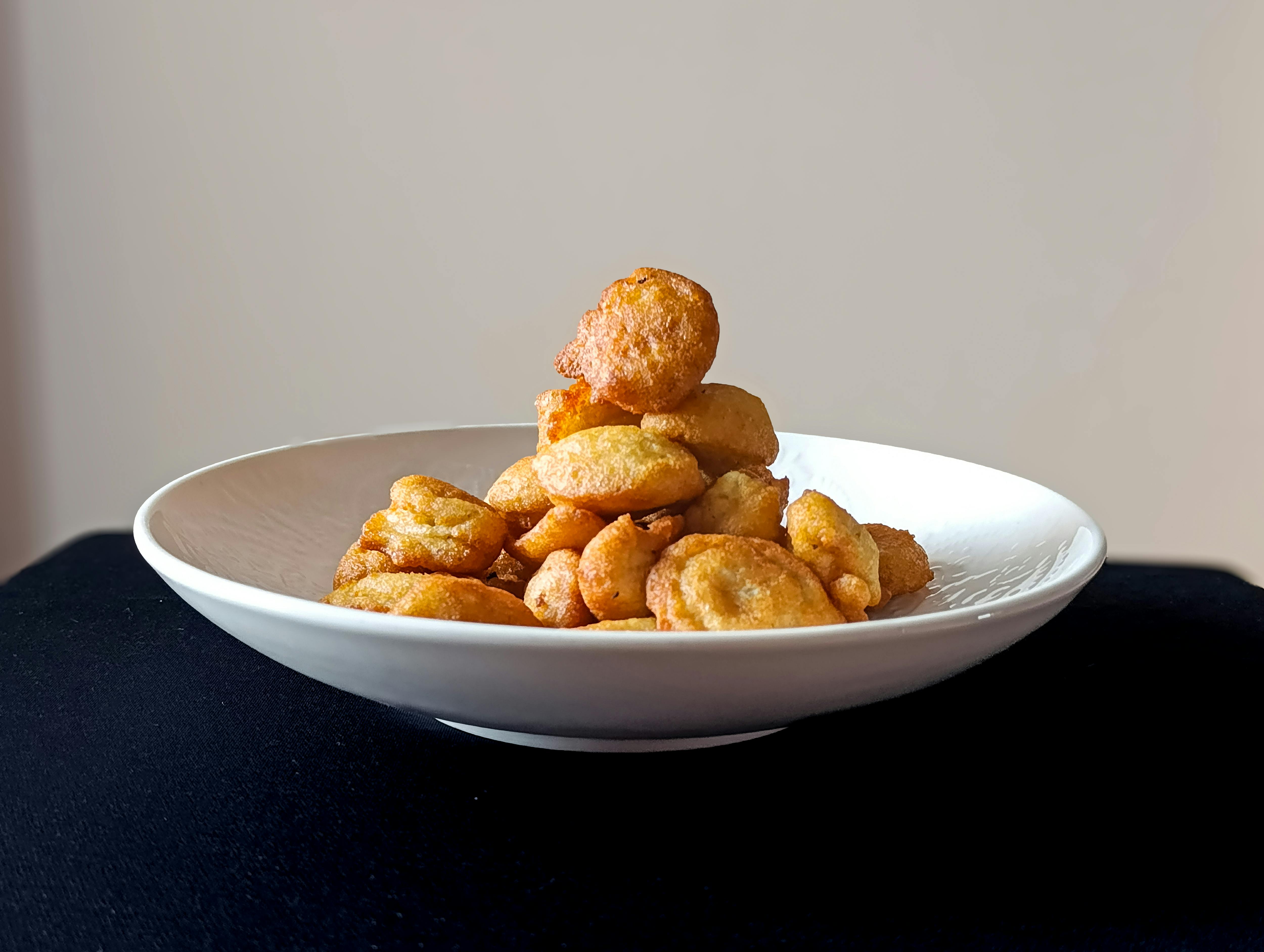
Trinidadian
Pholourie
The diets react (see scores below)
Common Ingredients
- split pea flour
- flour
- turmeric
- cumin
- garlic
- tamarind
- scotch bonnet
- baking powder
Specific recipes may vary.
Incompatible with 5 of 11 diets
Diet Ratings
Pholourie is a deep-fried fritter made primarily from split pea flour and all-purpose flour, both of which are high-carbohydrate ingredients that make this dish fundamentally incompatible with ketogenic eating. Split pea flour contains approximately 60g of net carbs per 100g, and all-purpose flour is even higher at roughly 70g net carbs per 100g. Even a small serving of 2-3 pholourie balls would likely exceed the entire daily carb budget for a strict keto dieter. The tamarind dipping sauce typically served alongside adds further sugar and carbs. While the spices (turmeric, cumin, garlic, scotch bonnet) are keto-friendly, they are incidental to the dish's core nutritional profile. There is no realistic portion size that makes this snack compatible with maintaining ketosis.
Pholourie is a traditional Trinidadian fried dough snack made entirely from plant-based ingredients. Split pea flour provides the primary protein, combined with all-purpose flour, leavened with baking powder, and seasoned with turmeric, cumin, and garlic. The tamarind dipping sauce and scotch bonnet pepper are also fully plant-derived. Every ingredient in this dish is unambiguously vegan — no animal products, dairy, eggs, or animal-derived additives are present. The use of legume-based flour (split pea) adds nutritional value, though the dish is deep-fried, which places it slightly below the highest whole-food scores. It scores an 8 rather than a 9-10 because it is a processed/fried snack food rather than a minimally processed whole food.
Pholourie is fundamentally incompatible with the paleo diet. The two base ingredients — split pea flour (a legume) and flour (wheat, a grain) — are both explicitly excluded from paleo. Split peas are legumes, banned due to lectins, phytates, and antinutrients. Wheat flour is a grain, one of the clearest paleo exclusions. Baking powder typically contains cornstarch (a grain derivative) and is a processed additive. While turmeric, cumin, garlic, tamarind, and scotch bonnet are paleo-friendly spices and flavourings, they cannot redeem a dish whose entire structural foundation consists of two non-paleo ingredients. This is not a gray-area case.
Pholourie is a fried snack made primarily from split pea flour (a legume, Mediterranean-friendly) with beneficial spices like turmeric, cumin, and garlic, and served with tamarind sauce. The legume base and anti-inflammatory spices align well with Mediterranean principles. However, the dish is deep-fried, which is a significant departure from Mediterranean cooking methods — the diet strongly favors olive oil-based sautéing or roasting over deep frying. The inclusion of refined white flour also dilutes the whole-food legume base. If fried in olive oil it would be more acceptable (some Mediterranean traditions do fry in olive oil), but typically pholourie is fried in neutral vegetable oils. The overall profile is legume-forward and plant-based, which is positive, but the frying method and refined flour temper the endorsement.
Some Mediterranean diet interpreters point to traditional Middle Eastern and Southern European fritters (e.g., Greek loukoumades, falafel) as precedent for fried legume-based snacks, arguing that occasional fried legume dishes fit within the broader Mediterranean eating pattern — particularly if olive oil is used for frying. In this view, the split pea and spice base could push the score toward the lower approve range.
Pholourie is entirely plant-based and incompatible with the carnivore diet. Every single ingredient is derived from plants: split pea flour (legume), wheat flour (grain), turmeric (spice/plant), cumin (spice/plant), garlic (vegetable), tamarind (fruit), scotch bonnet pepper (plant), and baking powder (plant-based leavening). There is no animal product whatsoever in this dish. It is a deep-fried dough fritter with a legume base, representing the exact opposite of carnivore principles — high in plant proteins, carbohydrates, anti-nutrients (lectins from split peas, phytates from flour), and plant compounds across the board.
Pholourie contains multiple excluded ingredients. Split pea flour is made from split peas, which are legumes — excluded on Whole30. 'Flour' refers to wheat flour, a grain — also excluded. Additionally, even if those ingredients were compliant, pholourie is a fried dough fritter, which falls squarely into the 'no recreating baked goods/junk food' category (similar to fritters, chips, or fried snack foods). There is no compliant version of this dish possible given its fundamental structure.
Pholourie contains multiple high-FODMAP ingredients that make it unsuitable during the elimination phase. Split pea flour (made from yellow split peas/chana dal) is high in GOS (galacto-oligosaccharides), a key FODMAP that must be avoided. Regular wheat flour is high in fructans. Garlic is one of the highest-FODMAP foods known, rich in fructans. Tamarind is high-FODMAP due to excess fructose and polyols at typical serving sizes. These are not minor contributors — split pea flour, wheat flour, and garlic are all foundational to this dish and cannot be portioned down to a safe level while still constituting a recognizable serving of pholourie. The combination of GOS from legume flour, fructans from wheat and garlic, and problematic fructose from tamarind creates a very high cumulative FODMAP load.
Pholourie is a Trinidadian fried split pea fritter with a mixed DASH profile. On the positive side, split pea flour provides legume-based protein, fiber, potassium, and magnesium — all emphasized in DASH. Anti-inflammatory spices like turmeric, cumin, and garlic are DASH-friendly. However, the primary concern is the deep-frying method, which significantly increases total fat content and caloric density. Baking powder adds moderate sodium, and the refined flour dilutes the nutritional quality of the split pea base. Tamarind chutney accompaniment is generally low in sodium but can add sugar. As a fried snack food, pholourie is not a DASH staple but is acceptable in moderation given its legume base and absence of red meat, saturated fat-heavy ingredients, or high added sodium in the base itself.
NIH DASH guidelines emphasize legumes as a core food group and do not explicitly prohibit fried preparations, suggesting a more lenient reading could partially approve pholourie given its split pea foundation. However, updated clinical DASH interpretation by cardiologists typically discourages deep-fried foods categorically due to elevated total fat and caloric load, particularly for weight-conscious hypertensive patients.
Pholourie is a Trinidadian fried split pea fritter that presents a mixed Zone profile. The base is split pea flour combined with all-purpose white flour — the split pea component offers a reasonable protein and fiber source that Zone would view somewhat favorably, but the all-purpose flour is a high-glycemic refined carbohydrate that raises concerns. The dish is deep-fried, introducing a significant fat load that is likely from vegetable/seed oils (omega-6 heavy) rather than Zone-preferred monounsaturated fats like olive oil or avocado. The spices (turmeric, cumin, garlic) are excellent from an anti-inflammatory perspective, aligning with Sears' polyphenol emphasis. The tamarind-based dipping sauce adds additional carbohydrates, likely with moderate glycemic impact. As a snack, pholourie is calorie-dense from frying, carbohydrate-dominant (not 40/30/30 balanced), and would be difficult to fit into Zone blocks without dramatically small portions. The protein contribution from split peas is modest relative to the carbohydrate and fat content. While not categorically forbidden in Zone, it is an 'unfavorable' carb-heavy, fried snack that would require very careful portioning and ideally substitution of the frying method.
A Zone practitioner focused on Sears' anti-inflammatory framework might note that split pea flour has a lower glycemic index than pure wheat flour and contributes plant-based protein and fiber, reducing the net carb impact. Small portions (2-3 pieces) paired with a lean protein source and vegetable crudités could approximate a rough Zone snack balance. The turmeric and garlic carry meaningful polyphenol value Sears endorses in later works.
Pholourie is a Trinidadian fried split pea fritter with a genuinely mixed anti-inflammatory profile. On the positive side, split pea flour provides plant-based protein and fiber, and the spice blend is excellent — turmeric (curcumin), cumin, garlic, and scotch bonnet (capsaicin) are all well-documented anti-inflammatory agents. Tamarind adds polyphenols and antioxidants. These ingredients individually align well with anti-inflammatory principles. The limiting factor is the preparation method: pholourie is deep-fried, and the addition of refined wheat flour dilutes the nutritional quality of the split pea base. Deep frying at high heat — particularly if seed oils high in omega-6 (e.g., sunflower or corn oil, common in Trinidadian cooking) are used — introduces pro-inflammatory oxidized fats and shifts the omega-3:omega-6 ratio unfavorably. Baking powder is benign. The dish is typically eaten as a street snack in quantity, which amplifies the refined carbohydrate and fried fat load. Eaten occasionally, the anti-inflammatory spice content provides meaningful benefit, but the frying method and refined flour prevent a full approval. If air-fried or baked with a higher split pea to wheat flour ratio and a neutral heat-stable oil, this dish would score considerably higher.
Some anti-inflammatory practitioners (aligned with Dr. Weil's more flexible pyramid) would focus on the excellent spice profile — turmeric, garlic, cumin, and chili — and the legume base as net positives, arguing that occasional fried snacks with substantive anti-inflammatory ingredients are acceptable within a broadly healthy diet. Conversely, stricter anti-inflammatory and AIP-adjacent frameworks would flag the refined flour, deep frying in omega-6-rich oils, and the glycemic load as meaningful concerns that outweigh the spice benefits.
Pholourie are deep-fried split pea flour fritters — a popular Trinidadian street snack. The split pea flour base provides meaningful plant protein and fiber, and the spice blend (turmeric, cumin, garlic) adds anti-inflammatory value with negligible caloric cost. However, the deep-frying method is the dominant concern for GLP-1 patients: frying significantly increases fat content and overall calorie density per small fritter, worsens gastric emptying issues, and increases nausea and reflux risk. The refined white flour dilutes the protein and fiber contribution of the split pea flour. The scotch bonnet pepper in the tamarind dipping sauce introduces significant capsaicin heat, which can aggravate GLP-1-related nausea and reflux. The tamarind sauce itself may also add concentrated sugar. As a small snack, a single fritter's fat load may be manageable, but these are rarely eaten singly. The protein per serving is modest relative to the fat and carbohydrate content, making this a poor use of limited caloric capacity on GLP-1 medications.
Some GLP-1-focused dietitians note that split pea-based foods occupy a legitimate place in high-protein, high-fiber snack planning, and may allow pholourie in very small quantities (1-2 pieces) for patients with stable GI tolerance who are culturally connected to this food — emphasizing that dietary adherence long-term depends partly on cultural inclusion. Others maintain that the fried preparation categorically disqualifies it regardless of the base ingredients, citing consistent clinical guidance to avoid fried foods due to delayed gastric emptying and nausea amplification.
*See how scores were generated at our methodology page.
Nutritional profile
Six traits that cut across every diet.
Fiber & Plants
How much whole-plant food and fiber it delivers.
Healthy Fats
The quality of its fats (unsaturated, omega-3).
Whole / Unprocessed
How close it is to its natural, unprocessed form.
Gut Gentle
How easy it is on digestion (low FODMAP, few irritants).
Low Glycemic
How little it spikes your blood sugar.
Protein Density
How much protein it packs per calorie.
Controversy Index
Higher controversy = more disagreement between diets.
Diet-Specific Tips
 Vegan — 8/10
View tips
- Split pea flour is a plant-based legume protein — fully vegan
- All-purpose flour, baking powder, and all spices are plant-derived
- Tamarind and scotch bonnet are fruits — no animal involvement
- No eggs or dairy used in traditional preparation
- Deep-fried preparation reduces score slightly from a whole-food-plant-based perspective but does not affect vegan compliance
 Mediterranean — 5/10
View tips
- Split pea flour provides a strong legume base — a Mediterranean staple
- Deep-frying contradicts the Mediterranean emphasis on olive oil-based cooking methods
- Refined white flour is a less desirable ingredient under Mediterranean guidelines
- Turmeric, cumin, and garlic are anti-inflammatory spices consistent with Mediterranean flavoring
- Tamarind-based dipping sauce is plant-derived but adds sugar; scotch bonnet adds no nutritional concern
- No red meat, no processed ingredients beyond flour and baking powder
- Cooking oil type not specified — if deep-fried in seed oils, less compatible than olive oil
 DASH — 5/10
View tips
- Split pea flour provides DASH-valued legume protein, fiber, potassium, and magnesium
- Deep-frying significantly increases total fat content — not aligned with DASH fat guidance
- Baking powder contributes moderate sodium — relevant for low-sodium DASH (<1,500mg/day) followers
- Refined all-purpose flour reduces whole grain quality of the dish
- Anti-inflammatory spices (turmeric, cumin, garlic) are DASH-compatible
- No red meat, tropical oils, or high saturated fat ingredients in the base
- Tamarind and scotch bonnet accompaniments are low in sodium but portion-dependent for sugar
 Zone — 4/10
View tips
- All-purpose white flour is a high-glycemic refined carbohydrate unfavorable in Zone
- Deep-frying adds significant fat likely from omega-6 seed oils, not Zone-preferred monounsaturated fats
- Split pea flour provides some plant protein and fiber, moderating glycemic impact slightly
- Carbohydrate-dominant macro profile is difficult to balance to 40/30/30 without very small portions
- Turmeric, cumin, and garlic offer anti-inflammatory polyphenols aligned with Sears' later writings
- Tamarind dipping sauce adds additional carbohydrate load
- As a snack food it is calorie-dense and macro-imbalanced toward carbs and fat
 Anti-Inflammatory — 5/10
View tips
- Split pea flour: good source of plant protein and fiber, anti-inflammatory legume base
- Turmeric: curcumin is one of the most well-researched anti-inflammatory compounds
- Garlic, cumin, scotch bonnet (capsaicin): all have documented anti-inflammatory properties
- Tamarind: provides polyphenols and antioxidant activity
- Deep frying: major concern — introduces oxidized fats and significantly increases caloric density
- Refined wheat flour: dilutes legume content, adds refined carbohydrates with minimal nutritional value
- Frying oil likely omega-6-rich (sunflower/corn oil common in Trinidad): unfavorable omega-3:omega-6 ratio
- Portion context: typically eaten in multiples as a snack, amplifying fried carbohydrate load
 GLP-1 Friendly — 4/10
View tips
- Deep-fried preparation significantly increases fat content and worsens GLP-1 GI side effects
- Split pea flour provides plant protein and fiber but is diluted by refined white flour
- Scotch bonnet pepper is a high-capsaicin spice that can trigger or worsen nausea and reflux on GLP-1s
- Tamarind dipping sauce may add concentrated sugar
- Small individual fritter size is portion-friendly in theory, but typical consumption involves multiple pieces
- Nutrient density per calorie is reduced by frying — poor use of limited caloric capacity
- Anti-inflammatory spices (turmeric, cumin, garlic) are a minor positive