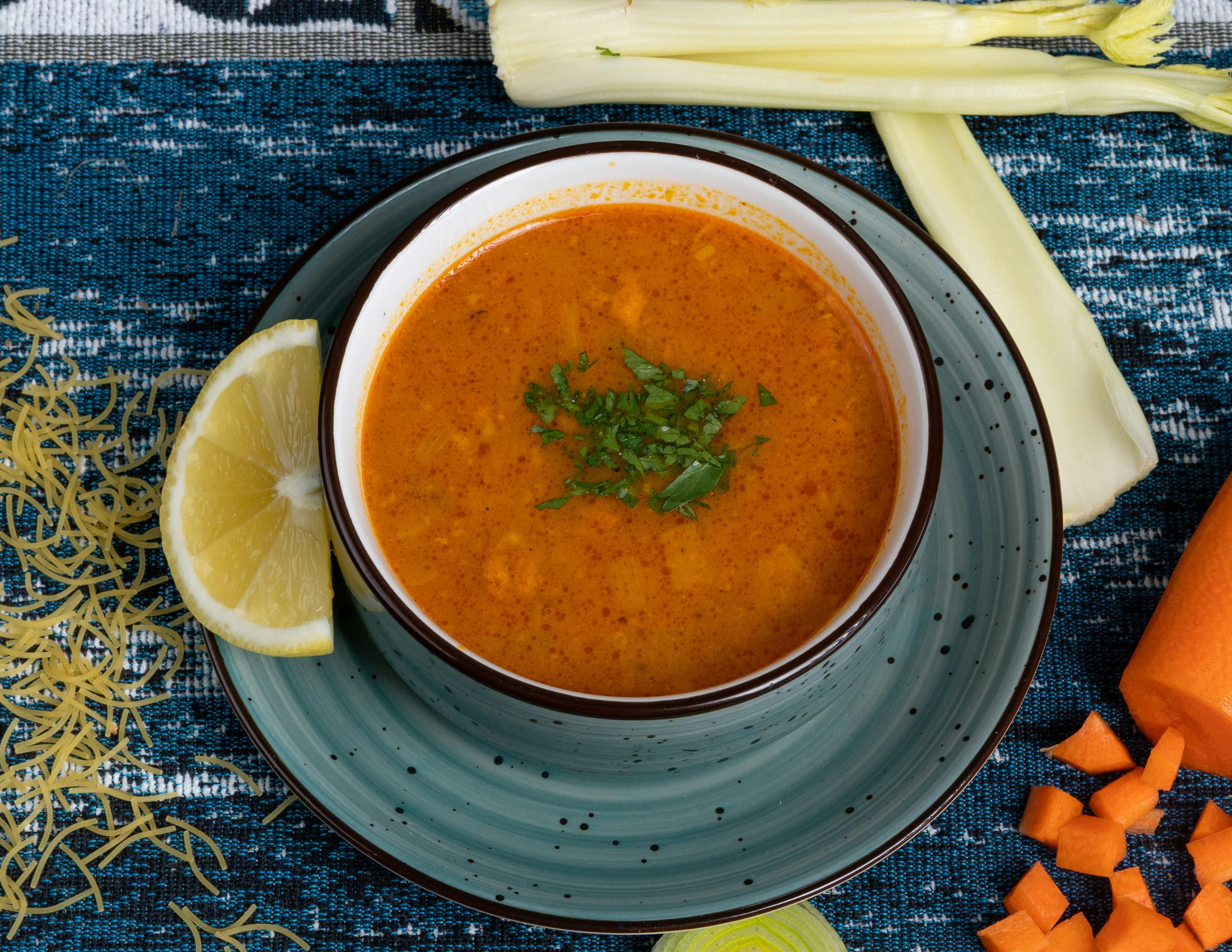
Photo: Shameel mukkath / Pexels
Tunisian
Chorba Frik
The diets react (see scores below)
Common Ingredients
- freekeh
- lamb
- tomato
- onion
- parsley
- harissa
- caraway
- olive oil
Specific recipes may vary.
Incompatible with 6 of 11 diets
Diet Ratings
Chorba Frik is fundamentally built around freekeh (roasted green wheat), a whole grain that is the defining and primary carbohydrate component of the dish. Freekeh contains approximately 65-70g of net carbs per 100g dry weight, making even a small serving of this soup far exceed the daily keto limit of 20-50g net carbs. The lamb, olive oil, and spices (harissa, caraway) are keto-compatible, and the tomato and onion add minor carbs, but the freekeh grain alone disqualifies this dish entirely. There is no practical way to reduce the freekeh portion and still have an authentic Chorba Frik — the grain is the dish's identity. This soup is incompatible with ketosis in any reasonable serving size.
Chorba Frik contains lamb as a primary protein, which is an animal product and a direct disqualifier under vegan dietary rules. All other ingredients (freekeh, tomato, onion, parsley, harissa, caraway, olive oil) are fully plant-based, but the inclusion of lamb makes this dish entirely incompatible with a vegan diet. There is no ambiguity here — lamb is slaughtered animal flesh.
Chorba Frik is fundamentally defined by freekeh — a roasted green durum wheat grain — which is unambiguously a grain and a core paleo exclusion. Freekeh is not merely an incidental ingredient; it is the dish's namesake and primary carbohydrate base. All major paleo authorities (Cordain, Sisson, Wolf) exclude wheat in every form, including ancient or minimally processed variants like freekeh. The remaining ingredients — lamb, tomato, onion, parsley, caraway, and olive oil — are individually paleo-compatible, and harissa is generally acceptable if free of added seed oils or preservatives. However, the dish cannot be meaningfully evaluated without its defining grain component. Removing freekeh would produce a different dish entirely, not a paleo version of Chorba Frik.
Chorba Frik is a traditional North African soup that blends several Mediterranean-positive elements with one notable concern. Freekeh (roasted green wheat) is an excellent whole grain, rich in fiber and nutrients, and is strongly encouraged. Tomato, onion, parsley, and olive oil are quintessential Mediterranean staples. Harissa and caraway are plant-based flavor enhancers that align well with the dietary pattern. The primary concern is lamb, which is a red meat — limited to a few times per month or once weekly under Mediterranean diet guidelines. As the primary protein, it pulls the dish away from the approved zone. However, in a soup context lamb is used in modest quantities relative to the whole grain and vegetables, which partially mitigates the impact.
Traditional North African and Eastern Mediterranean culinary practice (including Tunisian, Moroccan, and Lebanese traditions) incorporates lamb regularly in celebratory and everyday cooking, and some Mediterranean diet authorities acknowledge that lean lamb in moderate portions within a largely plant-forward meal is acceptable, particularly when it is not the dominant caloric component. The WHO-endorsed EAT-Lancet framework similarly allows small amounts of red meat weekly without major health penalty.
Chorba Frik is fundamentally incompatible with the carnivore diet. The dish is built around freekeh (a roasted green wheat grain), making it a grain-based soup. Beyond the grain, it contains multiple plant-based ingredients: tomato, onion, parsley, harissa (a chili paste), caraway (a spice), and olive oil (a plant-derived fat). The only carnivore-compatible ingredient is the lamb. With the vast majority of ingredients being plant-derived — including a grain as the primary carbohydrate base — this dish is firmly in the 'avoid' category. There is no meaningful way to adapt this dish without completely rebuilding it, as the freekeh is a defining structural component, not a minor additive.
Chorba Frik contains freekeh, which is a roasted green wheat grain. Grains — including all forms of wheat — are explicitly excluded on the Whole30 program for the full 30 days. No exception exists for freekeh or any other wheat-based grain. All other ingredients (lamb, tomato, onion, parsley, harissa, caraway, olive oil) are individually Whole30-compatible, but the inclusion of freekeh makes this dish non-compliant. The dish cannot be made compliant without fundamentally changing its defining ingredient and character.
Chorba Frik contains multiple high-FODMAP ingredients that make it unsuitable during the elimination phase. Freekeh (cracked green wheat) is a wheat-based grain and is high in fructans — it is explicitly rated high-FODMAP by Monash University and cannot be made safe at any reasonable serving size in a soup context. Onion is one of the highest-FODMAP foods tested, rich in fructans, and is a core ingredient in this dish. Harissa paste typically contains garlic and/or onion as primary ingredients, adding further fructan load. While lamb, tomato (in moderate quantities), parsley, caraway, and olive oil are individually low-FODMAP, the combination of freekeh + onion + harissa creates a dish that is high-FODMAP at any standard serving.
Chorba Frik contains several DASH-positive elements: freekeh (a whole grain high in fiber and protein), tomatoes, onion, parsley, and olive oil all align well with DASH principles. However, two ingredients raise concerns. Lamb is a red meat with meaningful saturated fat content — DASH explicitly limits red meat, recommending it only occasionally and in small portions. Harissa, while a flavorful chili paste, is typically high in sodium due to added salt, and as a North African condiment it can contribute significantly to daily sodium load. The combination of lamb and harissa together creates a moderate-to-high sodium and saturated fat burden that places this dish in the caution zone. If prepared with a lean lamb cut (leg rather than shoulder or ribs), minimal harissa, and no added salt, the dish could approach approvable territory given its strong whole-grain base and vegetable content.
NIH DASH guidelines categorically limit red meat and emphasize low-sodium preparation, which would flag lamb and harissa as problematic. However, updated clinical interpretations note that lean cuts of lamb in moderate portion sizes (2–3 oz) are occasionally accepted by DASH-oriented dietitians, and homemade harissa with controlled salt is substantially lower in sodium than commercial versions, potentially shifting this dish toward a higher caution or borderline approve rating.
Chorba Frik is a nutritious Tunisian soup with several Zone-friendly elements but also some concerns requiring careful portioning. On the positive side: olive oil is an ideal Zone monounsaturated fat, tomatoes and onions are favorable low-glycemic carbohydrates rich in polyphenols, parsley adds micronutrients and polyphenols, and harissa and caraway are anti-inflammatory spices aligned with Sears' later writings on polyphenol-rich foods. The challenges are twofold. First, freekeh (cracked green durum wheat) is a whole grain with moderate glycemic index — it's far better than white rice or pasta, but Zone treats whole grains as 'unfavorable' carbs to be used sparingly (0-1 servings/day). A typical Chorba Frik serving will likely be heavy on freekeh, pushing carb blocks toward the higher end. Second, lamb is a 'less favorable' Zone protein due to its saturated fat content compared to lean proteins like skinless chicken or fish. A 25g protein serving of lamb will bring along meaningful saturated fat, making it harder to stay within the 30% fat target without overshooting on saturated fat specifically. The dish is not a Zone disaster — it's a real-food, minimally processed soup with identifiable whole ingredients — but portioning (smaller freekeh portion, leaner lamb cuts like leg rather than shoulder, broth-heavy preparation) is required to fit Zone blocks cleanly.
Some Zone practitioners, particularly those following Sears' later anti-inflammatory evolution (The Anti-Inflammation Zone, 2005), would rate this more favorably. Freekeh has a lower glycemic index than most grains (~43 GI) and is high in fiber, meaning net carbs per serving are manageable. Lamb, while higher in saturated fat, also contains anti-inflammatory conjugated linoleic acid (CLA) and zinc. In this context, a moderate portion of Chorba Frik with reduced freekeh could be treated as a 3-block meal with acceptable macro balance, earning a score of 6-7 rather than 5.
Chorba Frik is a traditional Tunisian soup with a genuinely mixed anti-inflammatory profile. On the positive side, freekeh (young green durum wheat) is a whole grain with higher fiber, protein, and antioxidant content than most refined grains, and research suggests it has prebiotic properties that support gut health. Olive oil provides oleocanthal and monounsaturated fats with well-documented anti-inflammatory benefits. Tomato contributes lycopene (enhanced by cooking), onion provides quercetin, parsley is rich in flavonoids and vitamin C, caraway has antioxidant and carminative properties, and harissa (chili pepper base) delivers capsaicin, which has anti-inflammatory effects. These ingredients collectively represent a strong anti-inflammatory supporting cast. The limiting factor is lamb, which is red meat with moderate-to-high saturated fat content — anti-inflammatory guidelines consistently recommend limiting red meat. However, lamb is less processed than cured meats, and in a soup context the portion relative to the vegetable and grain base is likely moderate. The dish does not contain refined carbohydrates, added sugars, seed oils, or processed additives. Overall, this is a reasonably nutritious traditional dish that falls short of 'approve' primarily due to the lamb, but is far from pro-inflammatory given the quality of surrounding ingredients.
Some anti-inflammatory practitioners, particularly those aligned with Mediterranean and Middle Eastern dietary traditions (which Dr. Weil's pyramid acknowledges), would argue that moderate lamb consumption in the context of an otherwise vegetable- and whole-grain-rich meal is acceptable and that the overall dish pattern — not individual ingredients — is what matters. Conversely, stricter anti-inflammatory protocols (e.g., those targeting cardiovascular or autoimmune inflammation) would flag lamb's arachidonic acid and saturated fat content and recommend substituting poultry or legumes.
Chorba Frik is a traditional Tunisian lamb and freekeh soup with meaningful nutritional strengths but several GLP-1 concerns. On the positive side, freekeh is a high-fiber whole grain (roughly 8g fiber per cooked cup) that supports digestion and blood sugar stability — a notable asset. The broth-based, soup format is inherently portion-friendly, easy to digest, and hydrating, which aligns well with GLP-1 needs. Tomato, onion, and parsley contribute micronutrients and water content. Olive oil is a preferred unsaturated fat. The primary concern is lamb: while it provides protein, it is a fattier red meat with significant saturated fat, especially if shoulder or leg cuts with marbling are used. This can worsen nausea, bloating, and reflux — common GLP-1 side effects. Harissa is a moderately spicy condiment that may irritate the GI tract in sensitive patients. Caraway is generally GI-friendly and may even reduce bloating. Overall, this dish sits in the caution zone: the fiber and broth format are genuine assets, but the fatty lamb and spice level introduce meaningful GLP-1 risk. Preparation matters significantly — leaner lamb cuts, trimmed fat, and reduced harissa would move this dish toward a higher score.
Some GLP-1-focused dietitians consider lamb acceptable as a protein source when fat is trimmed and portions are small, arguing the overall nutrient density of the dish justifies inclusion; others flag all fatty red meats as categorically problematic due to the compounding effect of slowed gastric emptying and high saturated fat on GI side effects, making individual tolerance the deciding factor.
*See how scores were generated at our methodology page.
Nutritional profile
Six traits that cut across every diet.
Fiber & Plants
How much whole-plant food and fiber it delivers.
Healthy Fats
The quality of its fats (unsaturated, omega-3).
Whole / Unprocessed
How close it is to its natural, unprocessed form.
Gut Gentle
How easy it is on digestion (low FODMAP, few irritants).
Low Glycemic
How little it spikes your blood sugar.
Protein Density
How much protein it packs per calorie.
Controversy Index
Higher controversy = more disagreement between diets.
Diet-Specific Tips
 Mediterranean — 5/10
View tips
- Lamb is a red meat, restricted to occasional consumption under Mediterranean diet rules
- Freekeh is a nutrient-dense whole grain — a strong positive
- Olive oil used as the primary fat — aligns with Mediterranean principles
- Tomato, onion, and parsley contribute plant-based volume and nutrients
- Soup format dilutes meat proportion relative to plant ingredients
- Harissa and caraway are plant-based and traditionally Mediterranean-adjacent
- No processed foods, refined grains, or added sugars present
 DASH — 5/10
View tips
- Lamb is a red meat — DASH limits red meat due to saturated fat; portion size and cut are critical
- Harissa is typically high in sodium — a significant DASH concern; homemade/low-sodium versions reduce risk
- Freekeh is an excellent whole grain: high in fiber, protein, and magnesium — strongly DASH-aligned
- Olive oil is the recommended fat in DASH dietary patterns
- Tomatoes, onion, and parsley contribute potassium, antioxidants, and fiber — all DASH-positive
- Dish sodium load is highly preparation-dependent; standard restaurant versions may exceed DASH sodium targets
 Zone — 5/10
View tips
- Freekeh is a whole grain — lower GI than refined grains but still 'unfavorable' in Zone terminology; typical soup portions may deliver 2+ carb blocks from grain alone
- Lamb is higher in saturated fat than Zone's preferred lean proteins (chicken, fish, tofu), making fat block management more complex
- Olive oil is an ideal Zone monounsaturated fat source — a strong positive
- Tomatoes, onions, and parsley are favorable low-glycemic, polyphenol-rich carbohydrate sources
- Harissa and caraway are anti-inflammatory spice additions aligned with Sears' polyphenol emphasis
- Dish is whole-food, minimally processed — consistent with Zone's anti-inflammatory principles
- Portioning strategy (more broth, less freekeh, leaner lamb cuts) can bring this into Zone compliance
 Anti-Inflammatory — 5/10
View tips
- Lamb (red meat): moderate saturated fat and arachidonic acid — primary reason for caution rating
- Freekeh (whole grain): high fiber, prebiotic potential, low glycemic index — anti-inflammatory positive
- Olive oil: oleocanthal and monounsaturated fats — strong anti-inflammatory benefit
- Harissa/chili pepper: capsaicin with documented anti-inflammatory properties
- Tomato (cooked): bioavailable lycopene — antioxidant and anti-inflammatory
- Caraway and parsley: antioxidant and anti-inflammatory phytochemicals
- No refined carbohydrates, added sugars, seed oils, or processed additives — positive overall profile
- Soup format likely dilutes lamb portion relative to anti-inflammatory plant components
 GLP-1 Friendly — 5/10
View tips
- Lamb is a fatty red meat with high saturated fat — a meaningful concern given GLP-1 slowed gastric emptying
- Freekeh is a high-fiber whole grain that supports digestion and blood sugar stability — a significant asset
- Broth-based soup format is hydrating, portion-friendly, and easy to digest
- Harissa may worsen GI symptoms in sensitive GLP-1 patients — quantity matters
- Olive oil is a preferred unsaturated fat used in moderate amounts
- Protein contribution from lamb is real but comes with a high-fat cost compared to lean alternatives
- Preparation-dependent: lean lamb cuts with trimmed fat and reduced harissa meaningfully improve the profile