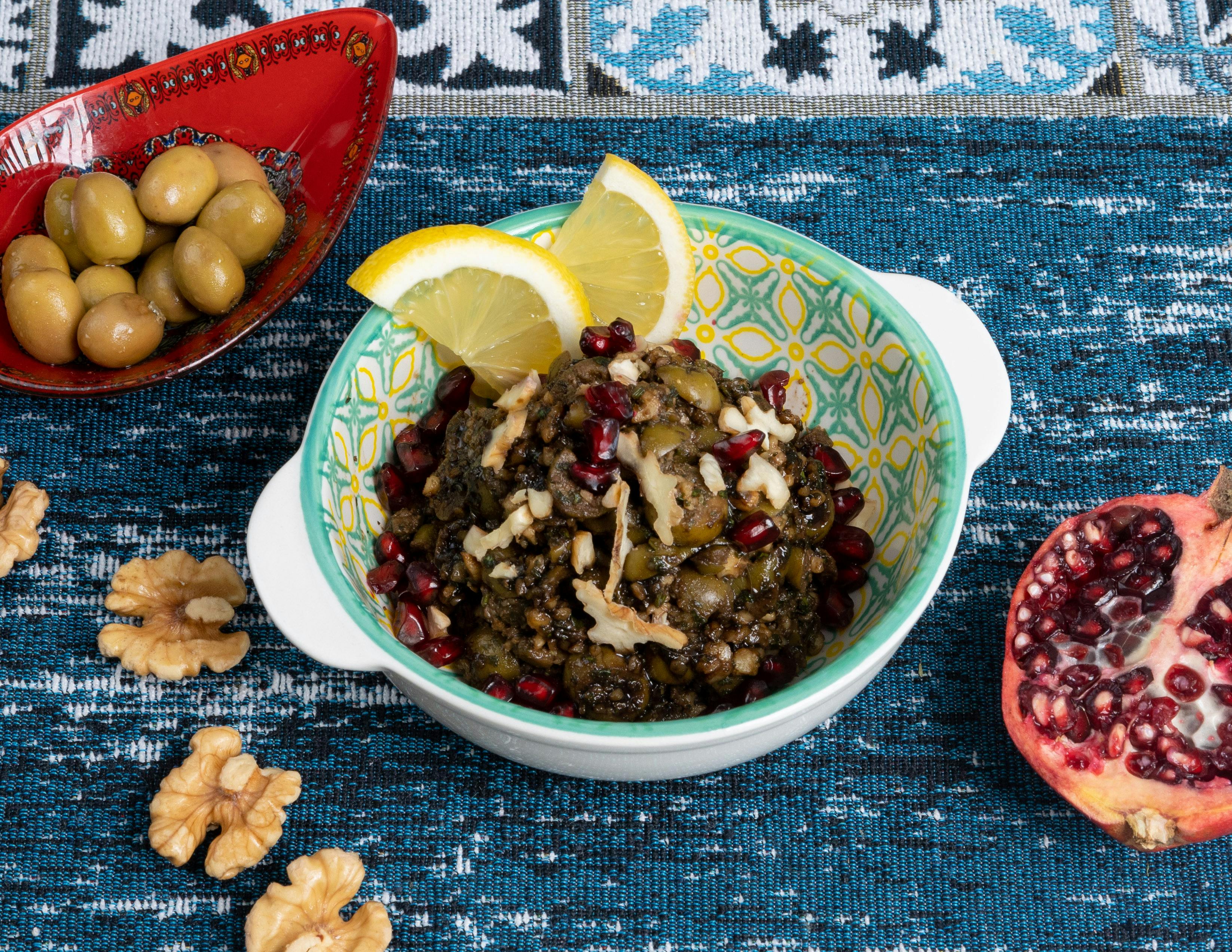
Photo: Shameel mukkath / Pexels
Tunisian
Slata Mechouia
The diets react (see scores below)
Common Ingredients
- green peppers
- tomato
- garlic
- olive oil
- caraway
- coriander
- lemon
- tuna
Specific recipes may vary.
Incompatible with 3 of 11 diets
Diet Ratings
Slata Mechouia is a roasted/grilled Tunisian salad made from charred green peppers, tomatoes, garlic, olive oil, lemon juice, and spices, typically topped with tuna. The dominant ingredients are low-to-moderate carb vegetables rich in fiber. A typical serving (roughly 150-200g) would yield approximately 6-10g net carbs, comfortably within keto limits when portioned sensibly. Olive oil and tuna contribute healthy fats and quality protein. Tomatoes and green peppers add some carbs but are fiber-rich, and the spices (caraway, coriander) are negligible. Lemon juice in small amounts is acceptable. The dish is whole-food, unprocessed, and contains no grains or added sugars, making it a solid keto-compatible choice at a standard serving size.
Some stricter keto practitioners flag tomatoes as a borderline fruit with moderate sugar content, arguing that cooked/roasted tomatoes concentrate their natural sugars. Those following very strict clinical keto protocols (targeting under 20g net carbs daily) may prefer to limit or avoid tomato-heavy dishes to preserve their carb budget.
Slata Mechouia as listed contains tuna, which is a fish and therefore an animal product. This makes the dish incompatible with a vegan diet. The remaining ingredients — grilled green peppers, tomatoes, garlic, olive oil, caraway, coriander, and lemon — are all fully plant-based and would otherwise make an excellent vegan salad. However, the inclusion of tuna is a clear disqualifier. A vegan version of this dish is easily achievable by simply omitting the tuna or substituting it with capers, olives, or chickpeas.
Slata Mechouia is a grilled Tunisian salad made entirely from whole, unprocessed ingredients that align well with paleo principles. Green peppers, tomatoes, and garlic are vegetables freely available to hunter-gatherers. Olive oil is a preferred paleo fat. Caraway and coriander are natural spices with no paleo objections. Lemon provides natural acidity. Tuna, when in its unprocessed or minimally processed form (fresh or canned in water or olive oil without additives), is a clean paleo protein source. There are no grains, legumes, dairy, refined sugars, seed oils, or processed ingredients present. This dish is naturally paleo-compatible with no meaningful modifications required.
Slata Mechouia is an exemplary Mediterranean dish rooted in traditional Tunisian cuisine. It combines roasted or grilled vegetables (green peppers, tomatoes, garlic) with extra virgin olive oil, aromatic spices (caraway, coriander), lemon juice, and tuna — all hallmarks of the Mediterranean dietary pattern. The base is entirely plant-forward, olive oil is the primary fat, and tuna provides lean seafood protein encouraged 2-3 times weekly. There are no refined grains, added sugars, processed ingredients, or problematic fats. This dish aligns almost perfectly with Mediterranean diet principles across every dimension.
Slata Mechouia is fundamentally incompatible with the carnivore diet. The dish is almost entirely plant-based: green peppers, tomatoes, garlic, olive oil, caraway, coriander, and lemon are all excluded plant foods. While it contains tuna — an approved carnivore food — tuna is a minor garnish in this context, and the dish as a whole is a vegetable salad dressed with plant oil and spices. Even the tuna cannot redeem a dish whose primary composition violates every core carnivore principle. All vegetables, plant oils, spices, and citrus are strictly off-limits on the carnivore diet.
Slata Mechouia is a Tunisian roasted/grilled salad made from charred green peppers, tomatoes, garlic, olive oil, caraway, coriander, and lemon, typically topped with tuna. All of these ingredients are fully Whole30 compliant: vegetables, healthy fats, herbs and spices, citrus, and plain tuna (assuming canned tuna packed in water or olive oil with no added soy, sugar, or other excluded ingredients). The dish is a whole-food preparation with no grains, legumes, dairy, or added sugars. The only watch point is the tuna — canned tuna commonly used in this dish should be checked to ensure it contains no soy, broth with additives, or pyrophosphate with restricted ingredients, though plain water- or olive-oil-packed tuna is widely available and compliant.
Confidence is medium rather than high because canned tuna, the most common protein addition to this dish, often contains additives like soy (soy broth, vegetable broth, or hydrolyzed soy protein) that would make it non-compliant. Official Whole30 guidelines require label-checking for processed or canned goods; practitioners advise choosing tuna labeled with only tuna, water or olive oil, and salt to stay compliant.
Slata Mechouia contains whole garlic cloves, which is the critical disqualifying ingredient. Garlic is one of the highest-FODMAP foods tested by Monash University, containing very high levels of fructans even in small quantities (a single clove can exceed FODMAP thresholds). The remaining ingredients are largely low-FODMAP: grilled green peppers are low-FODMAP at a standard serve, tomatoes are low-FODMAP at up to 1 medium tomato, olive oil is FODMAP-free, lemon juice is low-FODMAP, canned tuna in oil or water is low-FODMAP, caraway seeds are low-FODMAP at typical culinary amounts, and coriander (seeds or leaves) is low-FODMAP. However, garlic is integral to this dish — it is grilled and blended directly into the salad, not used as an infusion in oil — meaning the fructans remain fully present in the final dish. This single ingredient makes the dish unsuitable for the elimination phase of the low-FODMAP diet. A compliant version could be made by substituting garlic with garlic-infused oil.
Slata Mechouia is a grilled Tunisian salad built almost entirely from DASH-friendly ingredients. Green peppers and tomatoes are excellent DASH vegetables rich in potassium, magnesium, vitamin C, and fiber. Garlic is heart-healthy and sodium-free. Olive oil is the recommended vegetable oil in DASH guidelines. Spices (caraway, coriander) and lemon juice add flavor without sodium, supporting the DASH goal of reducing reliance on salt. Tuna is a lean protein source endorsed by DASH — however, canned tuna (the most common form used) can be moderately high in sodium (200–300mg per serving), so water-packed, low-sodium canned tuna is preferred. The dish is low in saturated fat, contains no added sugars, no full-fat dairy, and no red meat. Overall, this is a nutrient-dense, vegetable-forward dish that aligns well with DASH principles, with a minor caution around tuna sodium content depending on preparation.
NIH DASH guidelines broadly endorse fish and non-starchy vegetables without specific concerns for this dish profile; however, some DASH-oriented clinicians note that canned tuna's sodium content warrants attention — opting for fresh or low-sodium canned tuna resolves this concern and would push the score closer to 9.
Slata Mechouia is a grilled Tunisian salad that aligns exceptionally well with Zone Diet principles. The base ingredients — roasted green peppers and tomatoes — are low-glycemic, colorful vegetables that are explicitly favored in Zone methodology. Tuna provides lean, high-quality protein that counts as an ideal Zone protein block (approximately 7g protein per block). Olive oil delivers monounsaturated fat, which is the gold standard fat source in the Zone. Garlic, caraway, coriander, and lemon are essentially free foods with negligible macro impact but contribute polyphenols and anti-inflammatory compounds that Sears explicitly champions in his later works. The dish naturally approximates Zone balance: protein from tuna, low-GI carbs from vegetables, and monounsaturated fat from olive oil. The primary consideration is portioning the olive oil (staying within 1.5–3g fat blocks per serving) and ensuring enough tuna to meet protein block targets (~25g protein per meal). With modest olive oil portions and a reasonable tuna serving, this dish can hit the 40/30/30 ratio with minimal adjustment.
Slata Mechouia is a roasted Tunisian salad that reads like a showcase of anti-inflammatory ingredients. Green peppers and tomatoes provide carotenoids, vitamin C, and polyphenols — all well-documented antioxidants that help suppress NF-κB and reduce CRP. Garlic contains allicin and organosulfur compounds with strong anti-inflammatory and immunomodulatory properties. Extra virgin olive oil is one of the most evidence-backed anti-inflammatory fats, rich in oleocanthal (a natural COX inhibitor comparable to ibuprofen at culinary doses). Tuna contributes meaningful omega-3 fatty acids (EPA and DHA), which directly reduce pro-inflammatory eicosanoids and have been shown to lower IL-6 and TNF-α. Lemon juice provides vitamin C and flavonoids. The spices round out the profile impressively: caraway has demonstrated antioxidant and anti-inflammatory activity in research; coriander (likely ground coriander seed here) contains linalool and flavonoids with anti-inflammatory properties. Roasting the vegetables (as is traditional) increases bioavailability of some carotenoids like lycopene in tomatoes. There are essentially no pro-inflammatory ingredients in this dish — no refined carbs, added sugar, seed oils, or saturated fat. This dish aligns strongly with Dr. Weil's Anti-Inflammatory Food Pyramid across multiple categories simultaneously.
Slata Mechouia is a roasted vegetable salad built around charred green peppers, tomatoes, and garlic, dressed with olive oil and lemon, and typically topped or mixed with canned tuna. With tuna included, this dish punches well above its calorie count: tuna adds 20-25g of lean protein per standard serving, making it a strong GLP-1 companion despite being listed with no primary protein. The vegetable base is high in water content (supporting hydration), moderately high in fiber, and easy to digest once roasted. Olive oil contributes heart-healthy unsaturated fats in modest amounts. Spices — caraway and coriander — are mild and generally well-tolerated. Lemon juice aids palatability and adds no problematic load. The dish is naturally small-portion-friendly, nutrient-dense per calorie, and low in saturated fat. The main limiting factor is olive oil quantity: if generously applied, fat content rises and could aggravate nausea or reflux in sensitive patients. Portion discipline on the oil keeps this firmly in the approve range.
Some GLP-1-focused dietitians would flag the olive oil volume in traditional preparations as a caution, since even unsaturated fats can worsen delayed gastric emptying symptoms in patients who are oil-sensitive; they may recommend requesting a lighter drizzle or preparing it at home with a measured teaspoon rather than a free pour.
*See how scores were generated at our methodology page.
Nutritional profile
Six traits that cut across every diet.
Fiber & Plants
How much whole-plant food and fiber it delivers.
Healthy Fats
The quality of its fats (unsaturated, omega-3).
Whole / Unprocessed
How close it is to its natural, unprocessed form.
Gut Gentle
How easy it is on digestion (low FODMAP, few irritants).
Low Glycemic
How little it spikes your blood sugar.
Protein Density
How much protein it packs per calorie.
Controversy Index
Higher controversy = more disagreement between diets.
Diet-Specific Tips
 Keto — 7/10
View tips
- Olive oil provides healthy fat base, aligning with keto macros
- Tuna adds quality protein and additional fat
- Tomatoes contribute natural sugars (~3-4g net carbs per 100g) — portion control advised
- Green peppers are low net-carb and high fiber
- No grains, added sugars, or starchy ingredients
- Roasting/charring vegetables does not significantly alter net carb content
- Lemon juice in small quantities adds negligible carbs
- Whole, unprocessed ingredients with no additives
 Paleo — 9/10
View tips
- All vegetables (green peppers, tomato, garlic) are whole and unprocessed — fully paleo
- Olive oil is a preferred paleo cooking fat
- Caraway and coriander are natural spices with universal paleo approval
- Lemon juice provides natural acidity — no concerns
- Tuna is a clean paleo protein; canned tuna should be in water or olive oil without additives or added salt to remain strictly compliant
- No grains, legumes, dairy, seed oils, or refined sugars present
 Mediterranean — 9/10
View tips
- Abundant vegetables (peppers, tomato, garlic) as the primary base
- Extra virgin olive oil as the sole fat source
- Tuna provides encouraged seafood protein
- Lemon juice adds brightness with no added sugar
- Aromatic spices (caraway, coriander) replace excess salt
- No processed ingredients, refined grains, or unhealthy fats
- Authentically rooted in North African Mediterranean culinary tradition
 Whole30 — 9/10
View tips
- Green peppers, tomatoes, and garlic are fully compliant vegetables
- Olive oil is an approved natural fat
- Caraway, coriander, and lemon are compliant spices and citrus
- Tuna is compliant in principle but label-reading required — many canned varieties contain soy
- No grains, dairy, legumes, or added sugars present
- Whole, unprocessed preparation method (roasting/grilling) aligns with Whole30 philosophy
 DASH — 8/10
View tips
- Rich in DASH-approved non-starchy vegetables (peppers, tomatoes)
- Olive oil is the recommended fat source in DASH
- Tuna provides lean protein, but canned varieties may add moderate sodium — low-sodium or fresh tuna preferred
- No added salt, saturated fat, sugar, or processed ingredients
- Lemon and spices as flavor enhancers align with DASH sodium-reduction strategy
- High potassium and fiber content from vegetable base supports blood pressure management
 Zone — 8/10
View tips
- Tuna is a lean, ideal Zone protein source with excellent omega-3 fatty acid content
- Green peppers and tomatoes are low-glycemic, colorful vegetables explicitly favored in Zone
- Olive oil is the preferred monounsaturated fat source in Zone methodology
- Garlic, lemon, and spices contribute polyphenols supporting Sears' anti-inflammatory framework
- Dish is naturally low in carbohydrates, making macro balancing straightforward
- Olive oil quantity should be monitored to stay within fat block targets (1.5–3g fat per block)
- Tuna portion should be sufficient to reach ~25g protein per meal (approximately 3 protein blocks)
 Anti-Inflammatory — 9/10
View tips
- Tuna provides omega-3 fatty acids (EPA/DHA) — directly anti-inflammatory
- Extra virgin olive oil is rich in oleocanthal, a natural COX-1/COX-2 inhibitor
- Garlic contains allicin and organosulfur compounds with well-documented anti-inflammatory effects
- Roasted tomatoes and peppers deliver lycopene, beta-carotene, and vitamin C
- Caraway and coriander spices contribute additional antioxidant and anti-inflammatory phytochemicals
- Lemon juice adds flavonoids and vitamin C
- No pro-inflammatory ingredients: no refined carbs, added sugar, trans fats, or high-omega-6 oils
- Whole-food, minimally processed preparation method preserves nutrient integrity
 GLP-1 Friendly — 8/10
View tips
- Tuna provides 20-25g lean protein per serving — strong GLP-1 priority #1 support
- Roasted peppers and tomatoes are high in water content, supporting hydration
- Vegetable base provides meaningful fiber and micronutrient density per calorie
- Olive oil is a preferred unsaturated fat but volume must be controlled to avoid nausea
- Mild spices (caraway, coriander) are generally well-tolerated on GLP-1 medications
- No refined grains, added sugars, saturated fat, or fried components
- Small-portion-friendly — satisfying in modest servings due to protein and fiber combination
- Easy digestibility: roasted vegetables are softer and gentler on a slowed GI tract than raw