Photo: Павел Хлыстунов / Pexels
The diets react (see scores below)
Common Ingredients
- lamb
- eggplant
- yogurt
- garlic
- butter
- tomato paste
- red pepper flakes
- parsley
Specific recipes may vary.
Incompatible with 6 of 11 diets
Diet Ratings
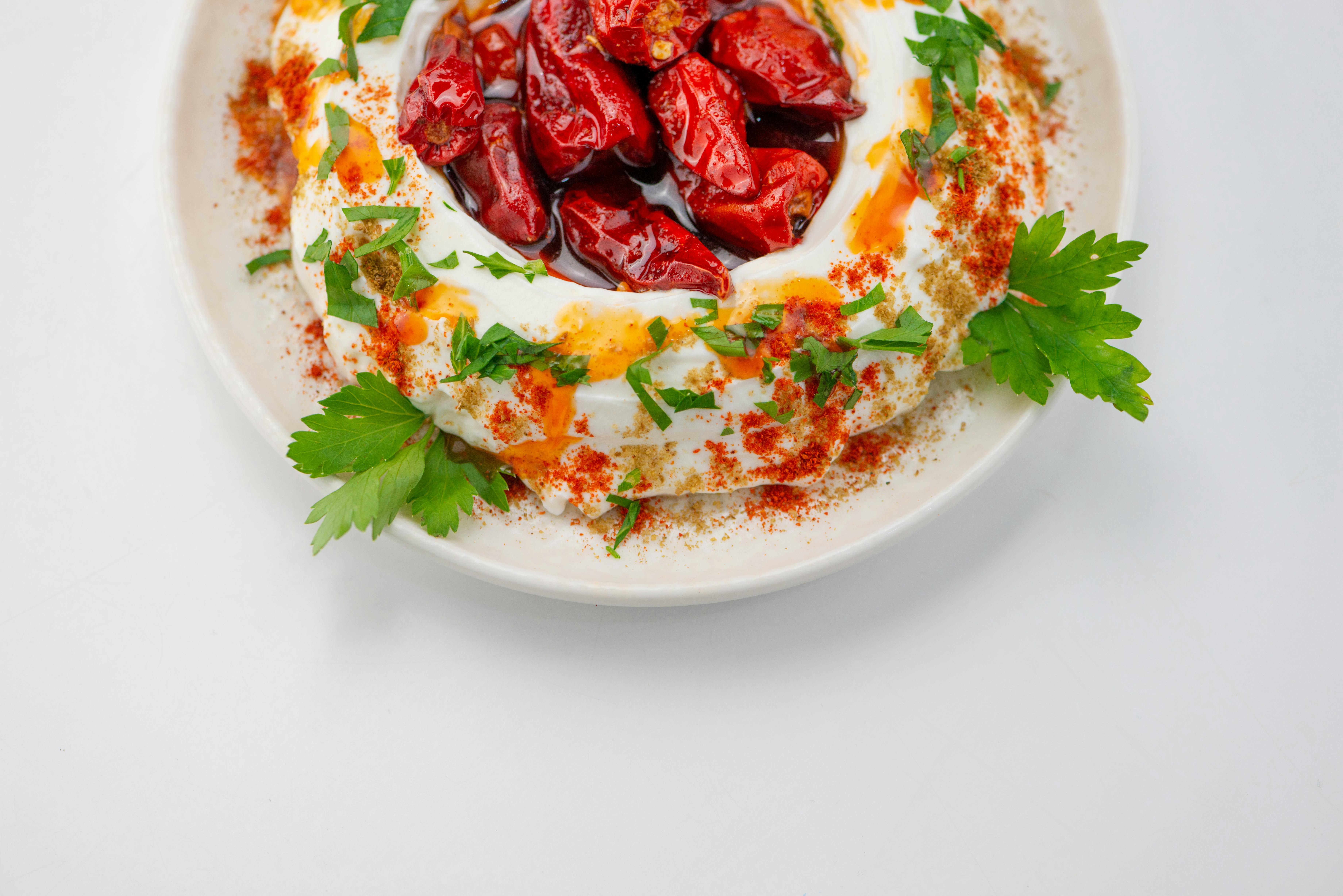
Ali Nazik is a Turkish lamb dish served over a smoky eggplant and yogurt purée, finished with butter and tomato paste. The core components — lamb, eggplant, butter, and garlic — are keto-friendly. However, two ingredients introduce concern: yogurt and tomato paste. Full-fat yogurt contains lactose (milk sugars) and in a generous serving can add meaningful carbs; Greek yogurt is lower-carb but still a consideration. Tomato paste is concentrated and relatively high in net carbs per tablespoon. Combined, these push the dish into caution territory rather than a clean approve. With portion control — moderate yogurt, minimal tomato paste, and a standard serving of lamb and eggplant — this dish can likely be kept within keto limits, making it conditionally compatible rather than outright avoided.
Some strict keto practitioners flag yogurt entirely due to its lactose content and potential insulin response, and would avoid tomato paste as a concentrated carb source, arguing this dish requires too many modifications to be considered keto-viable. Others in the lazy-keto camp would approve it freely given the high fat and protein content from lamb and butter.
Ali Nazik is a traditional Turkish dish that contains multiple animal products, making it entirely incompatible with a vegan diet. The dish includes lamb (meat), yogurt (dairy), and butter (dairy) as core, non-optional ingredients. These are not trace contaminants or processing aids — they are foundational to the dish's identity and flavor profile. There is no meaningful vegan debate here; this dish is clearly and unambiguously non-vegan.
Ali Nazik contains yogurt as a core structural ingredient, which is a dairy product excluded from the paleo diet. The dish also commonly uses tomato paste, which may contain added salt or preservatives. While lamb, eggplant, garlic, butter (debated), parsley, and red pepper flakes are paleo-compatible, the yogurt base is a fundamental non-paleo component that cannot be overlooked. Dairy — including yogurt — is explicitly excluded under standard paleo guidelines as it was not available to Paleolithic hunter-gatherers in processed form. The dish cannot be considered paleo-compliant in its traditional form.
Ali Nazik is a traditional Turkish dish featuring lamb as the primary protein, served over smoky eggplant purée with yogurt. While several components are Mediterranean-friendly — eggplant is an excellent plant-based ingredient, yogurt provides acceptable dairy, garlic and parsley are encouraged, and tomato paste adds beneficial lycopene — the dish is fundamentally built around lamb (red meat) cooked with butter as the primary fat. Red meat is limited to a few times per month in the Mediterranean diet, and butter contradicts the principle of extra virgin olive oil as the primary fat source. The combination of red meat plus saturated fat (butter) pushes this into 'avoid' territory for regular consumption, though individual ingredients like eggplant and yogurt have genuine Mediterranean merit.
Some Mediterranean diet researchers acknowledge that lamb holds a traditional place in Eastern Mediterranean and Levantine cuisines (Turkey, Greece, Lebanon), where it appears in festive and weekly meals more frequently than Western interpretations suggest. A harm-reduction perspective might rate this 'caution' if lamb is used sparingly and butter is substituted with olive oil, bringing it closer to traditional Turkish-Greek culinary crossover practices.
Ali Nazik is a traditional Turkish dish that is fundamentally incompatible with the carnivore diet. While it does contain lamb — an excellent ruminant meat — the dish is built around multiple plant-based and problematic ingredients. Eggplant forms the base of the dish as a roasted vegetable purée, which is entirely plant-derived and excluded. Tomato paste, garlic, red pepper flakes, and parsley are all plant-derived additives. Yogurt, while animal-derived dairy, adds further complexity. The dish as a whole cannot be considered carnivore-compatible because the plant ingredients are structural and inseparable from the dish itself, not mere trace seasonings.
Ali Nazik contains two excluded ingredients: yogurt (dairy) and butter (dairy). Yogurt is explicitly excluded under the Whole30 dairy rule, and regular butter is excluded — only ghee or clarified butter is permitted. The lamb, eggplant, garlic, tomato paste, red pepper flakes, and parsley are all compliant, but the dish as traditionally prepared cannot be considered Whole30-compatible due to these two dairy components. A modified version using ghee instead of butter and a compliant dairy-free yogurt substitute (e.g., coconut yogurt with no added sugar or non-compliant additives) could potentially be adapted, but the traditional dish as listed must be avoided.
Ali Nazik contains multiple high-FODMAP ingredients that make it unsuitable during the elimination phase. Yogurt is high in lactose and a significant FODMAP concern unless lactose-free yogurt is substituted. Garlic is one of the highest-FODMAP foods tested by Monash University, containing substantial fructans even in small amounts. Eggplant is moderate-FODMAP at typical serving sizes (Monash rates it as low at 75g but it becomes high-FODMAP at larger serves, and a standard portion in a main dish like Ali Nazik would typically exceed this threshold). Tomato paste is high-FODMAP at amounts commonly used in cooking (Monash rates it as high-FODMAP at 2 tablespoons/28g due to excess fructose). The lamb itself is low-FODMAP, parsley is low-FODMAP, butter is low-FODMAP, and red pepper flakes are low-FODMAP in typical amounts. However, the combination of yogurt (lactose), garlic (fructans), eggplant (potentially polyols at standard serving), and tomato paste (excess fructose) makes this dish a significant FODMAP load that would be problematic during the strict elimination phase.
Ali Nazik is a traditional Turkish dish with several DASH-compatible elements (eggplant, yogurt, garlic, tomato paste, parsley) alongside some problematic components. Lamb is a red meat with moderate-to-high saturated fat content, which DASH guidelines recommend limiting. Butter adds saturated fat — a nutrient DASH explicitly restricts. The yogurt base is favorable if low-fat, and eggplant is an excellent DASH vegetable high in fiber and potassium. The dish is not heavily processed or sodium-laden in its standard preparation, but the combination of lamb and butter creates a saturated fat burden that pushes it into the 'caution' zone. Tomato paste and red pepper flakes are DASH-friendly. If lamb were substituted with lean chicken or turkey, and butter replaced with olive oil, this dish could approach 'approve' territory. As traditionally prepared, it is acceptable occasionally but not a DASH staple.
NIH DASH guidelines categorically limit red meat intake (recommending no more than 6 oz/day of lean meat, with emphasis on poultry and fish), placing lamb in a cautionary category. However, some updated DASH-oriented clinicians note that lean cuts of lamb (e.g., leg of lamb, trimmed) have a saturated fat profile closer to lean beef and can fit within overall saturated fat limits in moderate portions — particularly when the rest of the dish features DASH-positive vegetables and yogurt.
Ali Nazik is a traditional Turkish dish featuring spiced lamb over a smoky eggplant-yogurt base, finished with a butter and tomato paste sauce. From a Zone perspective, this dish has several positive elements but also meaningful concerns that require careful portioning. The eggplant base is a favorable, low-glycemic vegetable carbohydrate, and yogurt contributes both protein and carbs in a Zone-compatible way. The garlic, parsley, tomato paste, and red pepper flakes are anti-inflammatory and polyphenol-rich. However, the primary protein source — lamb — is a fattier red meat compared to Zone-preferred lean proteins like skinless chicken or fish, and the butter used in finishing adds saturated fat, creating a less favorable fat profile skewed toward saturated rather than monounsaturated fats. The macro balance is workable: eggplant and yogurt provide the carbohydrate block, lamb provides protein, and fat is present via butter and lamb's own marbling. The key challenge is that the fat block is dominated by saturated fat (butter + lamb fat) rather than the monounsaturated fats Sears prefers (olive oil, avocado, almonds). A mindful diner could reduce butter quantity, choose lean lamb leg cuts, and increase the eggplant-yogurt base to improve the ratio, making this a manageable Zone meal with modifications.
Some Zone practitioners following Sears' later anti-inflammatory writings (particularly 'Toxic Fat' and updated editions) may view this dish more leniently, as Sears softened his stance on saturated fat somewhat in later work and emphasizes polyphenol and omega-3 content more heavily. The eggplant, garlic, and parsley provide meaningful polyphenols, and if lamb is trimmed of visible fat and butter is minimized or replaced with olive oil, this dish could edge toward a moderate approve in that framework.
Ali Nazik presents a genuinely mixed anti-inflammatory profile. On the positive side, eggplant (a nightshade) is rich in nasunin and chlorogenic acid — potent antioxidants — and is considered anti-inflammatory in mainstream guidelines. Garlic contains allicin and organosulfur compounds with well-documented anti-inflammatory effects. Yogurt provides probiotics that support gut health and may reduce systemic inflammation. Red pepper flakes contain capsaicin, a known anti-inflammatory compound, and parsley offers flavonoids and vitamin C. However, the dish has several limiting factors: lamb is red meat, which is flagged as 'limit' under anti-inflammatory principles due to saturated fat content and arachidonic acid that can promote inflammatory pathways. Butter adds saturated fat, which is also in the 'limit' category. Tomato paste, while containing concentrated lycopene (a powerful antioxidant), comes from a nightshade — generally accepted in mainstream anti-inflammatory guidance but contested in autoimmune protocols. The dish is not inherently disqualifying, but the combination of red meat and butter as prominent components prevents an 'approve' rating. Consumed occasionally as part of a broadly anti-inflammatory diet, it is acceptable. Regular consumption would be less ideal due to the saturated fat load from both lamb and butter.
Some anti-inflammatory practitioners, particularly those following Autoimmune Protocol (AIP) or lectin-avoidance frameworks (e.g., Dr. Steven Gundry), would flag eggplant, tomato paste, and red pepper flakes as problematic nightshades containing solanine and lectins that may trigger inflammation in sensitive individuals. Conversely, mainstream anti-inflammatory authorities like Dr. Weil actively include nightshades for their antioxidant content, and some Mediterranean-diet researchers note that moderate lamb consumption within a vegetable-rich context does not meaningfully raise inflammatory markers.
Ali Nazik is a traditional Turkish dish of ground or cubed lamb served over a smoky eggplant-yogurt puree, finished with a butter and tomato paste drizzle. It has genuine nutritional strengths — lamb provides complete protein (roughly 20-25g per 150g serving), the yogurt base adds additional protein and probiotics, and eggplant contributes fiber and micronutrients with low caloric density. However, several components create meaningful friction for GLP-1 patients. Lamb is a fatty red meat: even lean cuts carry 8-12g of saturated fat per serving, and traditional preparation often uses fattier cuts like shoulder. The butter-based topping adds further saturated fat, which is associated with worsened GLP-1 side effects (nausea, bloating, delayed gastric emptying compounded by medication effects). Red pepper flakes can trigger or worsen reflux and nausea in GLP-1 patients with already-sensitized GI systems. On the positive side, eggplant and yogurt support digestibility and the dish is naturally portioned as a small-plate format. A modified version — leaner lamb leg or loin, reduced butter, mild pepper — would score meaningfully higher (6-7). As traditionally prepared, the fat load and spice level push it to caution territory.
Some GLP-1-focused dietitians accept fatty red meat in moderation when it is the primary protein source in an otherwise nutrient-dense meal, arguing that satiety value and complete amino acid profile outweigh the saturated fat concern at small serving sizes; others maintain a stricter limit on lamb and butter combinations due to compounded gastric emptying delays and elevated nausea risk, particularly in the first months of dose escalation.
*See how scores were generated at our methodology page.
Nutritional profile
Six traits that cut across every diet.
Fiber & Plants
How much whole-plant food and fiber it delivers.
Healthy Fats
The quality of its fats (unsaturated, omega-3).
Whole / Unprocessed
How close it is to its natural, unprocessed form.
Gut Gentle
How easy it is on digestion (low FODMAP, few irritants).
Low Glycemic
How little it spikes your blood sugar.
Protein Density
How much protein it packs per calorie.
Controversy Index
Higher controversy = more disagreement between diets.
Diet-Specific Tips
 Keto — 5/10
View tips
- Lamb is an excellent high-fat, zero-carb protein source — strongly keto-positive
- Eggplant is low net carb and keto-friendly in reasonable portions
- Butter adds healthy saturated fat, fully approved on keto
- Yogurt introduces lactose/carbs; full-fat Greek yogurt preferred and portion must be controlled
- Tomato paste is carb-concentrated; small amounts manageable but adds up
- Red pepper flakes and parsley are negligible in carb contribution
- Dish is not grain-based and contains no added sugars — a key positive
 DASH — 4/10
View tips
- Lamb is a red meat high in saturated fat — DASH recommends limiting red meat in favor of poultry and fish
- Butter adds additional saturated fat, a nutrient explicitly limited by DASH guidelines
- Eggplant is a DASH-friendly vegetable rich in fiber and potassium
- Yogurt contributes calcium and protein; low-fat yogurt would be more DASH-compliant than full-fat
- Tomato paste provides potassium and lycopene — DASH-positive
- Garlic and parsley are DASH-compatible aromatics with no significant nutritional concerns
- Dish is not heavily processed and lacks excessive sodium in standard preparation
- Substituting olive oil for butter and lean poultry for lamb would significantly improve DASH compatibility
 Zone — 5/10
View tips
- Lamb is a fattier red meat — less ideal than Zone-preferred lean proteins (chicken breast, fish, tofu)
- Butter adds saturated fat, conflicting with Zone's preference for monounsaturated fats like olive oil
- Eggplant is a favorable, low-glycemic Zone carbohydrate source
- Yogurt contributes protein and moderate carbs — Zone-compatible in appropriate portions
- Garlic, parsley, and red pepper flakes are polyphenol-rich and anti-inflammatory, aligning with Sears' later dietary focus
- Tomato paste adds a small glycemic load but is concentrated in polyphenols; acceptable in small quantities
- Overall fat profile skewed toward saturated rather than monounsaturated — the primary Zone concern
- Dish can be modified (lean lamb cuts, olive oil substitution for butter) to improve Zone compatibility
 Anti-Inflammatory — 5/10
View tips
- Lamb (red meat) — 'limit' category due to saturated fat and arachidonic acid
- Butter — saturated fat, flagged as 'limit' in anti-inflammatory frameworks
- Eggplant — rich in nasunin and chlorogenic acid antioxidants; mainstream anti-inflammatory positive
- Garlic — strong anti-inflammatory compound (allicin, organosulfur)
- Yogurt — probiotic benefit, supports gut-immune axis
- Red pepper flakes — capsaicin has anti-inflammatory properties
- Tomato paste — concentrated lycopene (antioxidant), but nightshade contested in AIP protocols
- Parsley — flavonoids and vitamin C contribute antioxidant value
 GLP-1 Friendly — 4/10
View tips
- Lamb is a high-saturated-fat red meat — significant concern for worsened GLP-1 GI side effects
- Butter topping adds additional saturated fat, compounding the issue
- Red pepper flakes risk triggering or worsening reflux and nausea
- Yogurt base provides bonus protein and supports digestibility
- Eggplant contributes fiber and micronutrients with minimal caloric load
- Dish format is small-plate friendly — portion control is feasible
- Modification potential is high: leaner cut, reduced butter, omit chili