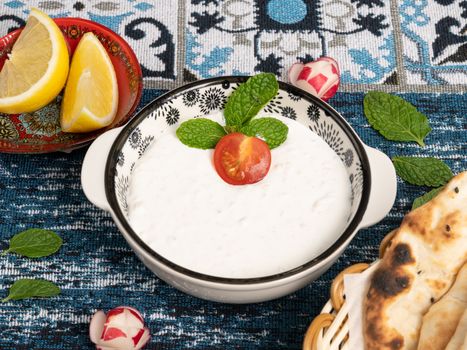
Photo: Shameel mukkath / Pexels
The diets react (see scores below)
Common Ingredients
- yogurt
- cucumber
- garlic
- dried mint
- dill
- olive oil
- water
Specific recipes may vary.
Incompatible with 5 of 11 diets
Diet Ratings
Cacik is a Turkish yogurt-based condiment similar to tzatziki. The primary concern is the yogurt base, which contains lactose (milk sugar) contributing meaningful carbs — full-fat plain yogurt typically has around 4-6g net carbs per 100g. A standard serving of cacik (100-150ml) could contribute 5-9g net carbs, which is manageable within a strict keto budget but requires portion control. The remaining ingredients — cucumber (low carb), garlic (small amounts), dried mint, dill, olive oil, and water — are keto-friendly. Olive oil actually improves the fat profile. The dish is not inherently incompatible with keto but must be consumed in small portions and tracked carefully, especially if other carb sources are consumed throughout the day. Diluted with water (as traditional cacik is), portions may be larger but carb density per serving decreases.
Strict keto and clinical ketogenic protocol adherents often flag all dairy, including yogurt, due to its insulin-stimulating properties and lactose content, arguing that even full-fat yogurt should be avoided entirely in favor of zero-carb condiments. Some also note that yogurt's carb count accumulates quickly if used as a side dish rather than a small condiment.
Cacik is a traditional Turkish yogurt-based condiment. The primary ingredient is dairy yogurt, which is an animal product (derived from cow, sheep, or goat milk). All other ingredients — cucumber, garlic, dried mint, dill, olive oil, and water — are fully plant-based, but the yogurt makes this dish incompatible with a vegan diet. A vegan version can be made by substituting the dairy yogurt with a plant-based alternative such as coconut, soy, or almond yogurt, which would render the dish fully vegan-compliant.
Cacik is a Turkish yogurt-based condiment that is fundamentally incompatible with the paleo diet. The primary ingredient is yogurt, which is a dairy product — explicitly excluded from paleo. While the remaining ingredients (cucumber, garlic, dried mint, dill, olive oil, water) are all paleo-approved, the yogurt base makes this dish a clear avoid. There is no paleo-compliant substitution that would preserve the dish's identity.
Cacik is a traditional Turkish yogurt-based condiment closely related to Greek tzatziki. It combines dairy (yogurt) with highly Mediterranean-compatible ingredients: fresh cucumber, garlic, herbs (mint, dill), and extra virgin olive oil. The dish is largely plant-forward and uses olive oil as a fat, which aligns well with Mediterranean principles. However, yogurt as the primary base places it in the 'moderate' dairy category rather than a fully plant-based staple. Overall it is a healthy, minimally processed condiment with strong Mediterranean character, but the dairy foundation prevents a full 'approve' at the top end.
Some Mediterranean diet practitioners, particularly those drawing on traditional Turkish and Greek dietary patterns, would argue this deserves a strong approve, as fermented dairy like yogurt is a well-established part of Eastern Mediterranean cuisine and provides beneficial probiotics. Modern clinical Mediterranean diet guidelines (e.g., PREDIMED framework) do include moderate dairy, supporting a higher rating for this lightly dressed, whole-ingredient dish.
Cacik is a Turkish yogurt-based condiment that is fundamentally incompatible with the carnivore diet. While yogurt is an animal-derived dairy product, the dish is dominated by plant ingredients: cucumber (a vegetable), garlic (a plant allium), dried mint and dill (plant-based herbs/spices), and olive oil (a plant-derived oil). Even setting aside the dairy debate, the overwhelming presence of plant foods makes this dish a clear 'avoid.' Cucumber and olive oil alone are strict exclusions under all carnivore frameworks, and the herbs and garlic compound the violations further. The yogurt base provides the only animal-derived component, but it is minor relative to the plant content and itself subject to dairy debate.
Cacik is a Turkish yogurt-based condiment made with yogurt as its primary base. Yogurt is dairy, and dairy is explicitly excluded on the Whole30 program. There are no exceptions for yogurt — only ghee and clarified butter are permitted dairy products. All other ingredients (cucumber, garlic, dried mint, dill, olive oil, water) are fully compliant, but the yogurt disqualifies this dish entirely.
Cacik contains two high-FODMAP ingredients that make it unsuitable during the elimination phase. First, yogurt is high in lactose and is a well-established high-FODMAP food at standard serving sizes (lactose-free yogurt is the approved substitute). Second, garlic contains fructans and is one of the highest-FODMAP foods tested by Monash University — even small amounts are problematic. Together, these two ingredients make Cacik clearly off-limits during FODMAP elimination regardless of portion size. Cucumber, dried mint, dill, olive oil, and water are all low-FODMAP and pose no concern.
Cacik is a Turkish yogurt-based condiment made with cucumber, garlic, herbs (dried mint, dill), olive oil, and water. Its core ingredients align well with DASH principles: yogurt provides calcium and protein (a DASH-emphasized low-fat dairy source), cucumber is a low-calorie vegetable, herbs add flavor without sodium, and olive oil is a DASH-approved unsaturated fat. The dish is naturally low in sodium, saturated fat, and added sugar, while contributing calcium, potassium, and magnesium. The main consideration is whether full-fat vs. low-fat yogurt is used — full-fat yogurt contains more saturated fat, which DASH traditionally limits. As commonly prepared in Turkish cuisine, it may use whole-milk yogurt, which slightly lowers the score. With low-fat or non-fat yogurt, this would score 9-10.
NIH DASH guidelines specify low-fat or fat-free dairy; traditional cacik made with full-fat yogurt technically falls outside the strict DASH dairy recommendation. However, updated clinical interpretations note that full-fat yogurt's saturated fat content is modest per serving and recent research (including meta-analyses) has not consistently linked full-fat dairy consumption to worse cardiovascular outcomes, leading some DASH-oriented clinicians to permit it in moderation.
Cacik is an excellent Zone-compatible condiment. Yogurt provides lean protein and some carbohydrates with a low glycemic index. Cucumber is a quintessential Zone-favorable vegetable — very low glycemic, high in water content, and contributes minimal net carbs. Olive oil is the gold standard Zone fat source, providing monounsaturated fat. Garlic, mint, and dill are polyphenol-rich herbs that align with Sears' anti-inflammatory emphasis. The dilution with water reduces caloric density further. As a condiment, it pairs naturally with lean proteins like grilled chicken or fish, helping complete a Zone-balanced meal. The macro profile — modest protein and carbs from yogurt, low-GI carbs from cucumber, and quality monounsaturated fat from olive oil — maps cleanly onto Zone block proportions. The only minor consideration is that full-fat yogurt would add saturated fat, but even so, the overall profile remains highly favorable. Using low-fat or non-fat yogurt makes this nearly ideal.
Cacik is a Turkish yogurt-based condiment with a strongly favorable anti-inflammatory profile overall. Garlic contains allicin and organosulfur compounds with well-documented anti-inflammatory and immune-modulating properties. Cucumber provides hydration, quercetin, and anti-inflammatory flavonoids. Dill and dried mint are herbs with antioxidant polyphenols. Olive oil — especially extra virgin — contains oleocanthal, a COX-inhibiting compound comparable in mechanism to ibuprofen, and is a cornerstone of the anti-inflammatory diet. Water dilutes the dish without adding anything problematic. The main complexity is the yogurt: full-fat dairy is categorized as 'limit' in anti-inflammatory frameworks due to saturated fat content, but yogurt is often treated more favorably than butter or cheese because of its probiotic content, which supports gut microbiome health and can reduce systemic inflammation via the gut-immune axis. Low-fat or Greek yogurt would push the score higher. As traditionally made, cacik is a light, herb-forward condiment with a generally modest serving size, which further limits any saturated fat concern.
Some anti-inflammatory practitioners, particularly those following stricter dairy-free or AIP-adjacent protocols, would caution against yogurt entirely due to casein and saturated fat content, arguing that dairy — even fermented — can promote inflammatory cytokine activity in sensitive individuals. However, Dr. Weil's framework and mainstream anti-inflammatory nutrition generally permit low-fat fermented dairy like yogurt, recognizing its probiotic benefit as a net anti-inflammatory contribution.
Cacik is a Turkish yogurt-cucumber condiment that aligns well with GLP-1 dietary priorities. The yogurt base provides a meaningful protein contribution (roughly 5-8g per half-cup serving depending on yogurt type) and probiotics that support gut health. Cucumber adds hydration and a small amount of fiber with very low calories. Olive oil is present but typically in small drizzle quantities, keeping fat modest and in the preferred unsaturated category. Garlic, mint, and dill add flavor without caloric burden. The dish is diluted with water, making it light and easy to digest — well-suited for slowed gastric emptying. It is nutrient-dense per calorie, small-portion friendly, and works well as a condiment alongside lean proteins or vegetables. No fried, spicy, high-sugar, or carbonated elements are present. The primary limitation is that, as a condiment, it contributes relatively little protein on its own and should accompany a protein-forward main dish rather than serve as a standalone protein source.
If made with regular full-fat yogurt rather than low-fat or Greek yogurt, saturated fat content rises and protein density per calorie drops — some GLP-1-focused dietitians would recommend specifying low-fat or Greek yogurt to optimize the protein-to-fat ratio. Individual tolerance to dairy is also variable among GLP-1 patients, as the medication can temporarily heighten lactose sensitivity in some individuals.
*See how scores were generated at our methodology page.
Nutritional profile
Six traits that cut across every diet.
Fiber & Plants
How much whole-plant food and fiber it delivers.
Healthy Fats
The quality of its fats (unsaturated, omega-3).
Whole / Unprocessed
How close it is to its natural, unprocessed form.
Gut Gentle
How easy it is on digestion (low FODMAP, few irritants).
Low Glycemic
How little it spikes your blood sugar.
Protein Density
How much protein it packs per calorie.
Controversy Index
Higher controversy = more disagreement between diets.
Diet-Specific Tips
 Keto — 5/10
View tips
- Yogurt contains lactose adding 4-6g net carbs per 100g — requires strict portion control
- Olive oil improves fat macro profile
- Cucumber, garlic, herbs are all very low carb
- Traditional dilution with water reduces carb density per serving
- Dairy sensitivity and insulin response debated within keto community
- Safe only as a small condiment; problematic as a large side dish
 Mediterranean — 6/10
View tips
- Yogurt is a moderate-consumption dairy item, not a daily staple in strict Mediterranean guidelines
- Extra virgin olive oil is prominently included as the fat source — a core Mediterranean principle
- Cucumber, garlic, and fresh herbs are whole plant foods strongly encouraged in Mediterranean eating
- No processed ingredients, added sugars, or refined grains
- Traditional Eastern Mediterranean dish with deep roots in Turkish and Greek culinary heritage
- Condiment-sized portions limit dairy intake, making overconsumption unlikely
 DASH — 8/10
View tips
- Yogurt is a DASH-approved dairy source; low-fat version strongly preferred per strict DASH guidelines
- Cucumber is a low-sodium, potassium-containing vegetable consistent with DASH
- Olive oil is a DASH-approved unsaturated fat
- Herbs (mint, dill, garlic) add flavor and allow reduced salt use, supporting sodium restriction
- Naturally low in sodium — no added salt in the base recipe
- No added sugar, no processed ingredients, no tropical oils or red meat
- Calcium and magnesium content from yogurt supports DASH micronutrient goals
 Zone — 8/10
View tips
- Yogurt provides low-GI carbohydrates and lean protein — a Zone-favorable pairing
- Cucumber is a top-tier Zone vegetable: very low net carbs, high water content
- Olive oil is the preferred Zone fat source (monounsaturated)
- Herbs (garlic, mint, dill) contribute polyphenols aligned with Sears' anti-inflammatory focus
- Low-fat yogurt version is nearly ideal; full-fat yogurt adds some saturated fat but remains manageable
- As a condiment, complements lean proteins well without disrupting Zone ratios
 Anti-Inflammatory — 8/10
View tips
- Garlic: potent anti-inflammatory allicin and organosulfur compounds
- Olive oil: oleocanthal with COX-inhibiting anti-inflammatory activity
- Mint and dill: polyphenol-rich herbs with antioxidant properties
- Cucumber: flavonoids including quercetin; hydrating and low-glycemic
- Yogurt: probiotic benefit supports gut-immune axis, but saturated fat content warrants mild caution — low-fat versions preferred
- No added sugars, refined carbohydrates, or pro-inflammatory additives
- Light condiment use means overall inflammatory load is minimal
 GLP-1 Friendly — 8/10
View tips
- Yogurt base provides moderate protein and probiotics
- Cucumber contributes hydration and light fiber
- Olive oil is unsaturated fat in typically small quantity
- Easy to digest; suits slowed gastric emptying
- Low calorie, nutrient-dense condiment
- No fried, high-sugar, spicy, or carbonated components
- Protein contribution depends heavily on yogurt type used
- Best paired with a high-protein main dish, not standalone