Photo: Mateusz Feliksik / Pexels
Turkish
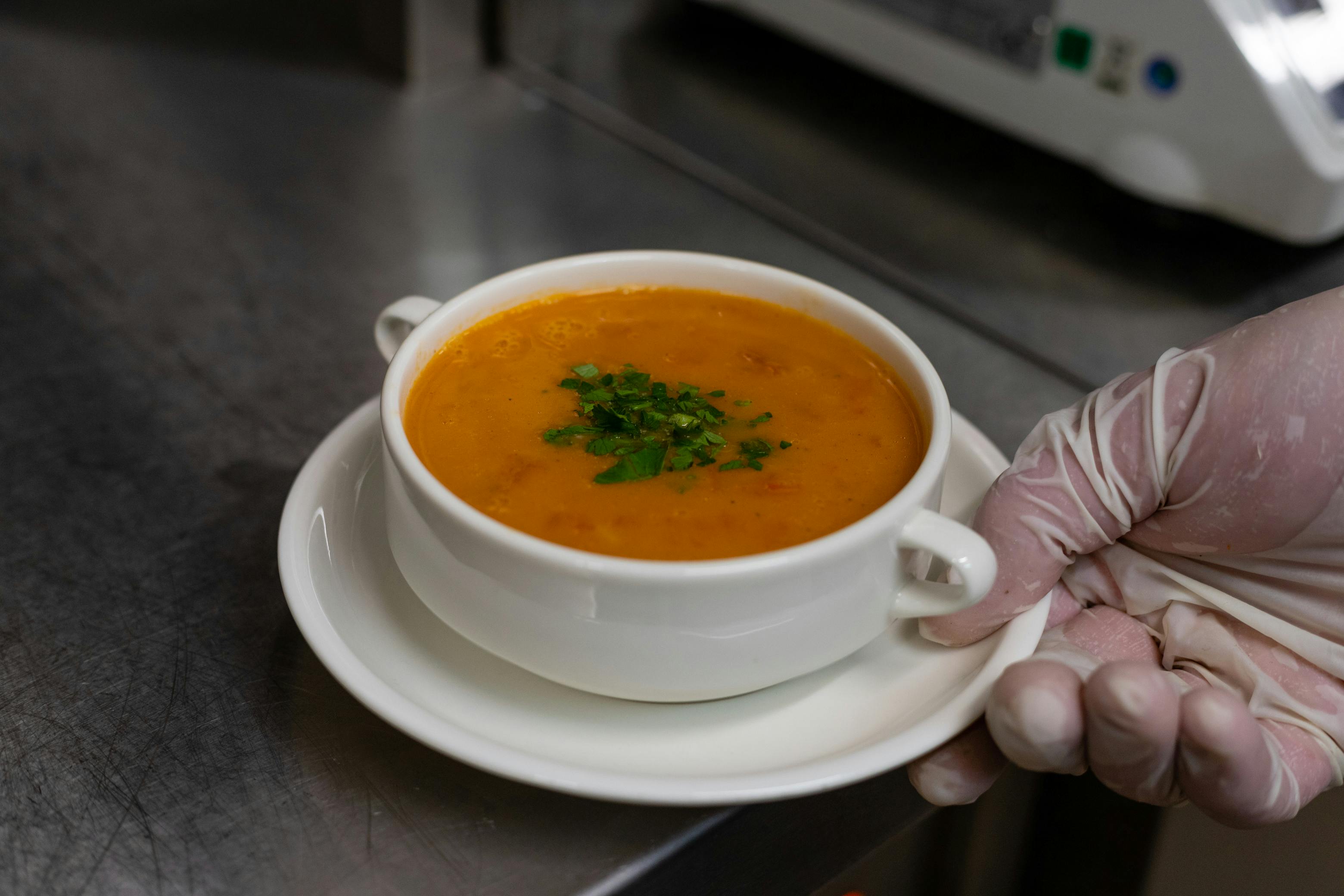
Ezogelin Corbasi
The diets react (see scores below)
Common Ingredients
- red lentils
- bulgur
- rice
- tomato paste
- pepper paste
- dried mint
- onion
- paprika
Specific recipes may vary.
Incompatible with 5 of 11 diets
Diet Ratings
Ezogelin Corbasi is fundamentally incompatible with a ketogenic diet. It contains three high-carbohydrate ingredients as its base: red lentils (~40g net carbs per 100g cooked), bulgur (a cracked wheat grain, ~25g net carbs per 100g cooked), and rice (~28g net carbs per 100g cooked). A standard serving of this soup would easily deliver 40-60g of net carbs, exceeding the entire daily keto carb allowance in a single bowl. Bulgur and rice are grains explicitly excluded from keto. Red lentils, while containing some fiber and protein, are legumes with far too many net carbs for keto compliance. There is no portion size that makes this dish keto-friendly.
Ezogelin Corbasi is a traditional Turkish red lentil soup made entirely from plant-based whole foods. Every listed ingredient — red lentils, bulgur, rice, tomato paste, pepper paste, dried mint, onion, and paprika — is unambiguously plant-derived. The dish is naturally vegan with no animal products or animal-derived additives present. It is also nutritionally robust, featuring high-protein red lentils as the primary ingredient alongside whole grains (bulgur, rice) and vegetables, making it an excellent whole-food plant-based meal. The only caveat is that restaurant versions may occasionally be made with butter or chicken stock, but the dish as described with these ingredients is fully vegan.
Ezogelin Corbasi is fundamentally incompatible with the paleo diet. It contains three major paleo-excluded ingredient categories simultaneously: red lentils (a legume), bulgur (a wheat-derived grain), and rice (a grain). These are not incidental or minor ingredients — they are the primary structural components of the dish. Lentils are explicitly excluded from paleo due to their lectin and phytate content, while bulgur and rice are grains categorically rejected under all mainstream paleo frameworks. Tomato paste and pepper paste may also contain added salt or preservatives depending on preparation, and paprika, dried mint, and onion are the only clearly paleo-compliant ingredients in the entire recipe. There is no meaningful paleo modification possible without completely deconstructing the dish into something unrecognizable.
Ezogelin Corbasi is a wholesome Turkish lentil and bulgur soup that aligns well with Mediterranean diet principles. Red lentils are an excellent plant-based protein and fiber source, highly encouraged in the Mediterranean pattern. Bulgur is a whole grain staple of the Eastern Mediterranean. Tomato paste, onion, and spices like paprika, dried mint, and pepper paste are all traditional Mediterranean flavor builders. The dish is minimally processed, plant-forward, and contains no red meat, added sugars, or refined fats. The small amount of rice is a minor concern under stricter modern guidelines that prefer whole grains, but in traditional Eastern Mediterranean and Middle Eastern cuisines, white rice used in modest quantities within a legume-dominant dish is acceptable.
Modern clinical Mediterranean diet guidelines (e.g., PREDIMED protocol) favor whole grains over white rice and would prefer the rice component be replaced with more bulgur or omitted. However, traditional Turkish and broader Eastern Mediterranean culinary practice commonly combines rice with legumes and whole grains in soups without conflict with the diet's core principles.
Ezogelin Corbasi is entirely plant-based and contains no animal products whatsoever. Every single ingredient — red lentils, bulgur, rice, tomato paste, pepper paste, dried mint, onion, and paprika — is explicitly excluded on the carnivore diet. Lentils are legumes (a major anti-nutrient concern), bulgur and rice are grains, and the remaining ingredients are vegetables, plant-derived pastes, and plant spices. This dish is fundamentally incompatible with carnivore principles at every level.
Ezogelin Corbasi contains multiple excluded ingredients that make it clearly non-compliant with Whole30. Red lentils are legumes, which are explicitly excluded. Bulgur is a wheat-based grain, which is excluded. Rice is also an excluded grain. Any one of these three ingredients alone would disqualify the dish; together they make it definitively off-limits. The remaining ingredients (tomato paste, pepper paste, dried mint, onion, paprika) are generally Whole30-compliant, but they cannot salvage a dish with three separate excluded components.
Ezogelin Corbasi contains multiple high-FODMAP ingredients that make it unsuitable during the elimination phase. The primary issues are: (1) Red lentils are high in GOS (galacto-oligosaccharides) — while canned lentils have some GOS leaching, dried/cooked red lentils used in this soup are high-FODMAP at any standard serving. (2) Bulgur is made from wheat and is high in fructans — a standard soup portion would far exceed safe thresholds. (3) Onion is one of the highest-FODMAP foods, rich in fructans, and even small amounts cooked into a broth are problematic as FODMAPs leach into the liquid. These three ingredients alone make this dish a clear avoid during elimination. Rice is low-FODMAP, tomato paste is low-FODMAP at small serves (caution at larger amounts), dried mint is low-FODMAP, and paprika is low-FODMAP. Pepper paste (biber salcasi) is generally low-FODMAP if made from capsicum only. However, the combination of lentils, bulgur, and onion creates an unavoidable high-FODMAP load with no realistic portion reduction that would make this dish safe.
Ezogelin Corbasi is a Turkish red lentil soup with a strong nutritional foundation well-aligned with DASH principles: red lentils provide plant-based protein, fiber, potassium, and magnesium; bulgur is a whole grain; onion and tomato paste contribute antioxidants and potassium. These core ingredients are excellent DASH foods. However, the inclusion of tomato paste and especially pepper paste (biber salçası) raises significant sodium concerns — commercially prepared pepper paste in particular is often very high in sodium, and restaurant or home preparations of this soup can easily exceed 600–900mg sodium per serving, which is problematic on both the standard (<2,300mg/day) and low-sodium (<1,500mg/day) DASH targets. The soup contains no saturated fat concerns and no added sugar, so the primary DASH issue is sodium from the pastes and any added salt. As commonly prepared, this dish earns a cautious approval — the base ingredients are excellent, but sodium management through low-sodium tomato paste, reduced pepper paste, and minimal added salt is necessary to make it fully DASH-compliant.
NIH DASH guidelines would flag the typical sodium load from tomato and pepper pastes as a caution, particularly for the low-sodium DASH variant. However, updated clinical interpretations note that when prepared with low-sodium pastes and no added table salt, Ezogelin Corbasi becomes a near-ideal DASH dish given its high fiber, legume-based protein, and absence of saturated fat or cholesterol.
Ezogelin Corbasi is a traditional Turkish red lentil soup that presents a mixed Zone Diet profile. On the positive side, red lentils are a reasonable vegetarian protein source with a moderate glycemic index and meaningful fiber content, and the soup contains anti-inflammatory polyphenol-rich ingredients like tomato paste, pepper paste, onion, and dried mint. However, the dish has several Zone challenges: (1) The protein is plant-based (lentils), meaning fat blocks would need to be 3g each rather than 1.5g, making the fat ratio harder to manage without added monounsaturated fats like olive oil. (2) The combination of red lentils, bulgur, AND rice stacks multiple starchy carbohydrate sources, pushing the carb load significantly higher than Zone targets and elevating the glycemic load beyond what any single ingredient alone would. (3) Rice in particular is an 'unfavorable' Zone carb. (4) The dish lacks lean animal protein to bring protein blocks up to Zone standards, and the lentils alone at typical soup concentrations may not deliver the ~25g protein target per meal. To Zone-ify this soup, one would ideally eliminate the rice, reduce the bulgur, add a drizzle of olive oil, and serve in a controlled portion alongside a lean protein source. As served traditionally, this soup is carbohydrate-dominant and macro-imbalanced for Zone purposes.
Some Zone practitioners and Sears' later writings on the Mediterranean Zone acknowledge that legume-based soups with polyphenol-rich vegetables represent a favorable anti-inflammatory food pattern, even if the macronutrient ratios are imperfect. The fiber in red lentils significantly lowers net carbs and blunts the glycemic response, and the tomato and pepper paste contribute valuable polyphenols. A moderate bowl treated as a carb-heavy component paired with lean protein on the side could be considered an acceptable Zone meal strategy in the Mediterranean Zone framework.
Ezogelin Corbasi is a traditional Turkish red lentil soup with a strongly favorable anti-inflammatory profile. Red lentils are an excellent plant-based protein and fiber source, associated with reduced CRP and improved gut microbiome health. Bulgur is a minimally processed whole grain with a low glycemic index and meaningful fiber content. Rice is the most refined carbohydrate in the dish but appears in small quantity relative to the lentils and bulgur. Tomato paste is a concentrated source of lycopene, a potent carotenoid antioxidant with well-documented anti-inflammatory effects. Pepper paste (biber salçası) contributes capsaicin, which has demonstrated anti-inflammatory activity. Dried mint, paprika, and onion all contribute polyphenols and flavonoids. The combination of legumes, whole grain, and multiple antioxidant-rich spices and vegetables places this dish firmly in anti-inflammatory territory. Assuming preparation with olive oil (common in Turkish cuisine) rather than butter or seed oils, the fat profile would further support an anti-inflammatory verdict. The dish is low in saturated fat, contains no refined sugar or processed additives, and is predominantly plant-based — all consistent with the anti-inflammatory dietary pattern.
Ezogelin Corbasi is a well-suited dish for GLP-1 patients. Red lentils are the primary protein source, providing roughly 9g protein and 8g fiber per 100g cooked — excellent nutrient density per calorie. Bulgur adds additional fiber and some protein, while being easier to digest than whole intact grains. The broth-based format supports hydration and easy digestibility, both critical for GLP-1 patients dealing with slowed gastric emptying. Tomato paste and pepper paste add micronutrients and flavor without significant fat. Dried mint and paprika are GLP-1-safe spices. Onion provides prebiotic fiber. The dish is naturally low in fat, high in fiber, and works well in small portions — a meaningful advantage given reduced appetite. The combination of bulgur and rice alongside lentils does add refined starch, which slightly dilutes protein density per calorie and raises the glycemic load compared to a lentil-only preparation, but the overall profile remains strongly positive. One serving of this soup can realistically deliver 12-15g protein and 8-10g fiber, contributing meaningfully to daily targets.
Some GLP-1-focused dietitians flag lentil-based soups with added grains (bulgur + rice together) as carbohydrate-heavy relative to protein yield, and may recommend reducing or omitting the rice to improve the protein-to-carb ratio. Others note that the legume-grain combination is well-tolerated and provides complementary amino acids, making it a net positive for patients who struggle to meet protein targets through animal sources.
*See how scores were generated at our methodology page.
Nutritional profile
Six traits that cut across every diet.
Fiber & Plants
How much whole-plant food and fiber it delivers.
Healthy Fats
The quality of its fats (unsaturated, omega-3).
Whole / Unprocessed
How close it is to its natural, unprocessed form.
Gut Gentle
How easy it is on digestion (low FODMAP, few irritants).
Low Glycemic
How little it spikes your blood sugar.
Protein Density
How much protein it packs per calorie.
Controversy Index
Higher controversy = more disagreement between diets.
Diet-Specific Tips
 Vegan — 9/10
View tips
- Red lentils are a complete plant-based protein source
- All ingredients are whole plant foods with no processing concerns
- Bulgur and rice provide complementary complex carbohydrates
- No animal-derived ingredients in any listed component
- Restaurant preparations may substitute butter or meat broth — home preparation as listed is fully vegan
- Paprika and pepper paste add flavor without any animal derivatives
 Mediterranean — 8/10
View tips
- Red lentils are a cornerstone legume of the Mediterranean diet
- Bulgur is a traditional whole grain staple of the Eastern Mediterranean
- No meat, saturated fats, or added sugars
- White rice is a minor refined grain concern under strict guidelines
- Tomato paste and spices are healthy Mediterranean flavor bases
- Dish is minimally processed and plant-forward
 DASH — 6/10
View tips
- Red lentils are an excellent DASH food — high in fiber, plant protein, potassium, and magnesium
- Bulgur is a whole grain, fully aligned with DASH whole-grain recommendations
- Pepper paste (biber salçası) is typically high in sodium and is the primary DASH concern
- Tomato paste adds moderate sodium and should be used in low-sodium form when possible
- No saturated fat, cholesterol, or added sugar — favorable DASH profile outside of sodium
- Sodium content highly preparation-dependent; homemade with low-sodium pastes scores much higher (8-9)
- Portion control matters — a single serving should stay within daily sodium budget allocation
 Zone — 5/10
View tips
- Triple starch load (red lentils + bulgur + rice) creates a carbohydrate-dominant profile unfavorable for Zone balance
- Rice is an 'unfavorable' Zone carbohydrate with a higher glycemic index
- Red lentils provide plant-based protein but at lower density than animal sources, making 25g/meal targets harder to hit
- Vegetarian protein source requires larger fat blocks (3g vs 1.5g per block) to meet Zone fat ratio
- No added fat in traditional recipe — missing monounsaturated fat component (olive oil, avocado) needed for Zone balance
- Anti-inflammatory positives: tomato paste, pepper paste, onion, and dried mint contribute polyphenols
- Lentil fiber meaningfully reduces net carbs and glycemic impact compared to refined carb equivalents
- Portion control and pairing with lean protein could make this workable as a Zone meal component
 Anti-Inflammatory — 8/10
View tips
- Red lentils: high-fiber legume, reduces CRP, plant-based protein — strongly anti-inflammatory
- Bulgur: whole grain with low glycemic index and fiber — anti-inflammatory
- Tomato paste: concentrated lycopene, a carotenoid antioxidant — anti-inflammatory
- Pepper paste: capsaicin content with demonstrated anti-inflammatory activity
- Dried mint and paprika: polyphenol and flavonoid contributors
- Onion: quercetin-rich, a well-studied anti-inflammatory flavonoid
- Rice: more refined carbohydrate, minor concern but small quantity limits impact
- No red meat, trans fats, added sugar, or processed additives
 GLP-1 Friendly — 8/10
View tips
- Red lentils provide solid plant protein and high fiber — excellent for GLP-1 patients
- Broth-based format supports hydration and easy digestibility
- Low fat profile minimizes nausea and reflux risk
- Bulgur contributes additional fiber and nutrients
- Dual grain addition (bulgur + rice) slightly dilutes protein density per calorie
- Works well in small portions — portion-friendly format
- Tomato and pepper paste add micronutrient value without problematic fat
- Naturally free of fried, sugary, or ultra-processed ingredients