The diets react (see scores below)
Common Ingredients
- strained yogurt
- garlic
- dill
- mint
- walnuts
- olive oil
- feta
Specific recipes may vary.
Incompatible with 5 of 11 diets
Diet Ratings
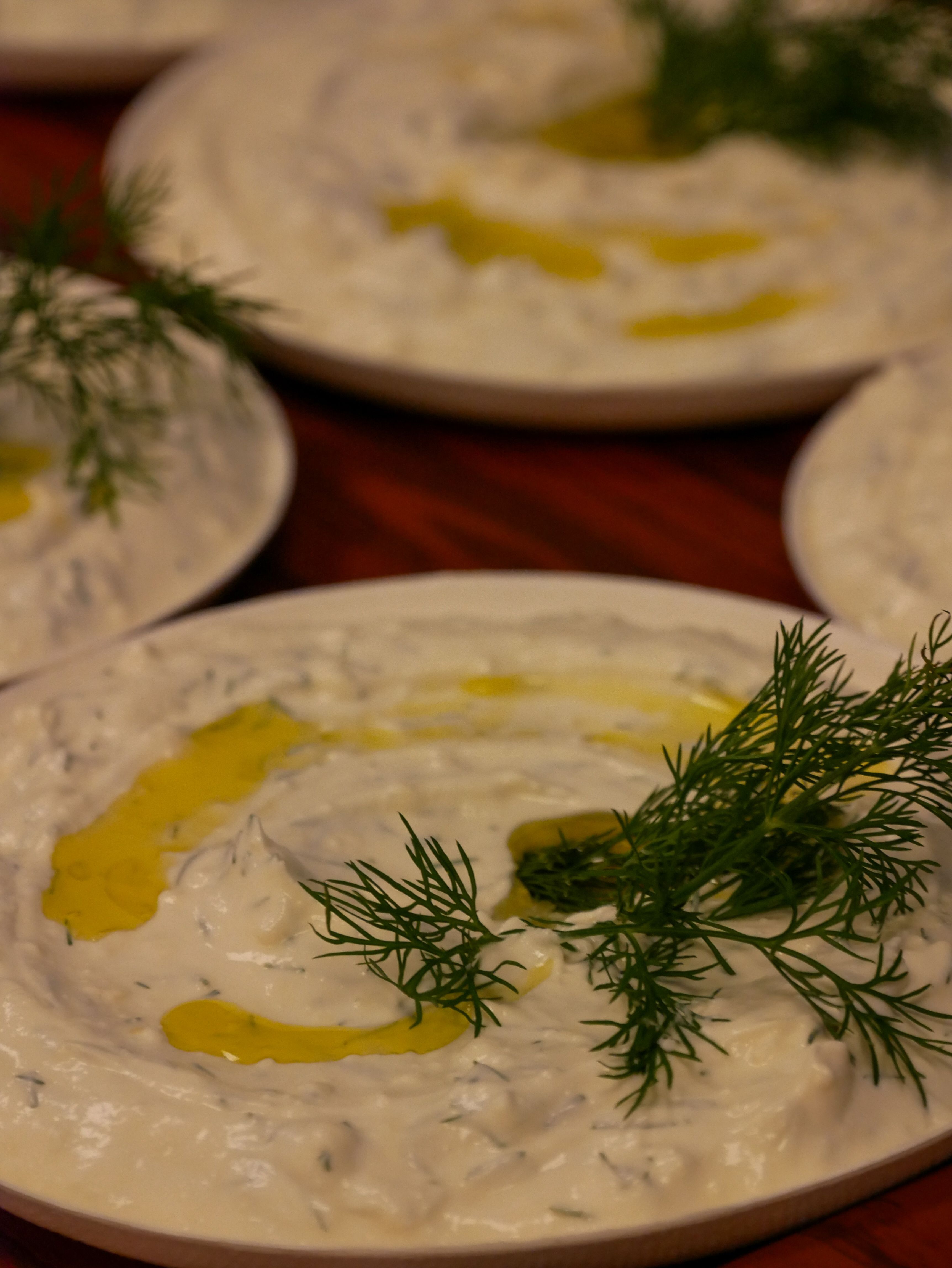
Haydari is a Turkish yogurt-based condiment made with strained yogurt (labneh-style), garlic, fresh herbs, walnuts, olive oil, and feta. The primary concern is the strained yogurt base: even strained, yogurt contains lactose (milk sugars), contributing roughly 6-8g net carbs per 100g serving. As a condiment used in small amounts (2-3 tablespoons), net carbs are manageable, but portions must be controlled carefully. The remaining ingredients are keto-favorable — walnuts add healthy fats and fiber, olive oil and feta contribute fat, and the herbs are negligible in carbs. The dish leans toward approval in strict portion control but warrants caution because yogurt's carb load can accumulate quickly if used liberally as a dip.
Some strict keto and clinical ketogenic protocol practitioners exclude all dairy-based yogurt products entirely due to their lactose content and potential insulin-stimulating properties, even when strained, preferring full-fat sour cream or cream cheese as substitutes. Conversely, more flexible 'lazy keto' practitioners may approve Haydari freely given the straining process removes significant whey and reduces carbs compared to regular yogurt.
Haydari contains two clear animal-derived dairy ingredients: strained yogurt (made from animal milk) and feta cheese (a dairy product made from sheep's or goat's milk). Both are firmly excluded under all vegan definitions. The remaining ingredients — garlic, dill, mint, walnuts, and olive oil — are fully plant-based, but the dish as traditionally prepared is incompatible with a vegan diet. A vegan version could be made by substituting plant-based strained yogurt (e.g., coconut or cashew-based) and vegan feta alternative, but the traditional dish does not qualify.
Haydari is a Turkish yogurt-based dip that is fundamentally incompatible with the paleo diet. The two primary ingredients — strained yogurt and feta cheese — are both dairy products, which are excluded under paleo rules. While the supporting ingredients (garlic, dill, mint, walnuts, olive oil) are all paleo-approved, they cannot redeem a dish whose base is entirely dairy. There is no meaningful paleo modification that would preserve the identity of this dish.
Haydari is a traditional Turkish mezze made from strained yogurt enriched with garlic, fresh herbs (dill, mint), walnuts, olive oil, and feta. The dish has several strongly Mediterranean-aligned components: extra virgin olive oil is present as the fat source, walnuts add beneficial plant-based fats and nutrients, and fresh herbs contribute antioxidants. However, the base is dairy (strained yogurt plus feta cheese), which places this firmly in the 'moderate' category under Mediterranean diet guidelines — dairy is acceptable but not a core staple. The combination of two dairy ingredients (yogurt and feta) means this dish is dairy-forward, warranting a caution rating rather than a full approve. Used as a condiment in small-to-moderate portions alongside vegetables, whole grain bread, or fish, it fits well within Mediterranean eating patterns.
Some Mediterranean diet authorities, particularly those referencing traditional Greek and Turkish dietary patterns, would view fermented dairy like strained yogurt as a genuinely beneficial probiotic food eaten daily, and feta as a traditional low-fat cheese central to Aegean cuisine — pushing this closer to an approve rating. The Oldways Mediterranean Diet Pyramid, for instance, includes cheese and yogurt as daily foods in moderate amounts.
Haydari is fundamentally incompatible with the carnivore diet. While it does contain some animal-derived ingredients (strained yogurt, feta), the dish is dominated by plant-based components: dill, mint, walnuts, garlic, and olive oil are all strictly excluded on carnivore. Walnuts and olive oil are plant foods with no place in any tier of carnivore eating. The herbs and garlic are plant-derived seasonings. Even setting aside the plant ingredients, the yogurt and feta are debated dairy items that would only earn a 'caution' at best. The overall composition of this dish — a plant-herb-and-nut-laden condiment — makes it clearly off-limits across all carnivore approaches, from the lenient 'animal-based' camp to the strict Lion Diet.
Haydari contains two excluded dairy ingredients: strained yogurt and feta cheese. Both are explicitly prohibited on the Whole30 program. Dairy (with the sole exception of ghee and clarified butter) is entirely excluded, and yogurt and cheese are specifically called out as examples of excluded dairy. The remaining ingredients — garlic, dill, mint, walnuts, and olive oil — are all Whole30-compliant, but the presence of two dairy components makes this dish incompatible with the program.
Haydari contains multiple high-FODMAP ingredients that make it unsuitable during the elimination phase. Strained yogurt (Greek-style) contains lactose — while lower than regular yogurt, it is still high-FODMAP at typical serving sizes (Monash rates plain Greek yogurt as low-FODMAP only at 23g, a very small amount, and strained yogurt similarly). Garlic is one of the most concentrated sources of fructans and is high-FODMAP at any culinary amount. Feta cheese contains lactose and is rated by Monash as low-FODMAP only at very small servings (40g), but in a dip like haydari it is a primary ingredient used in larger quantities. The combination of these three problematic ingredients — strained yogurt, garlic, and feta — stacks FODMAP loads significantly, making this dish high-FODMAP even at a modest condiment serving. Dill, mint, walnuts, and olive oil are individually low-FODMAP and do not contribute to the concern.
Haydari is a Turkish yogurt-based condiment with several DASH-friendly ingredients (strained yogurt, garlic, dill, mint, walnuts, olive oil) but is pulled into caution territory primarily by feta cheese. Strained yogurt aligns well with DASH's low-fat dairy emphasis, walnuts provide heart-healthy unsaturated fats and magnesium, olive oil is an approved vegetable oil, and herbs add flavor without sodium. However, feta cheese is notably high in sodium (roughly 300-400mg per ounce) and saturated fat, which conflicts with DASH's sodium and saturated fat limits. As a condiment, portion sizes are typically small (2-3 tablespoons), which mitigates but does not eliminate the sodium concern. Whether the yogurt is full-fat or low-fat also matters — traditionally strained yogurt in Turkey can be full-fat. The dish is not inherently problematic but requires portion control and ideally lower-sodium feta or reduced feta quantity.
NIH DASH guidelines explicitly limit sodium and high-sodium cheeses like feta, placing this dish in caution. However, some updated clinical interpretations note that when consumed in typical small condiment portions alongside a vegetable-rich meal (as is traditional), the overall sodium contribution is modest and the beneficial components (walnuts, olive oil, cultured dairy) may outweigh concerns for non-hypertensive individuals following standard rather than low-sodium DASH.
Haydari is a Turkish strained yogurt-based condiment with garlic, fresh herbs (dill, mint), walnuts, olive oil, and feta. It has several Zone-favorable elements: strained yogurt provides lean protein and some carbs at a manageable glycemic load; olive oil contributes monounsaturated fat; walnuts add omega-3s and healthy fats; and fresh herbs bring polyphenols with negligible macros. However, feta adds saturated fat, and the fat profile becomes somewhat mixed (walnuts + olive oil + feta together push fat content up and complicate block counting). The yogurt and feta together also contribute meaningful saturated fat, which Zone cautions against in excess. As a condiment, portion size is key — a small serving (2-3 tablespoons) alongside lean protein and vegetables can integrate reasonably into a Zone meal, but it is not a standalone block-balanced food. The absence of a primary protein source means it must complement a broader Zone-structured meal. The combination of dairy protein (yogurt + feta) and mixed fats makes precise block calculation moderately complex. It earns a cautious approval — usable in Zone eating with portion awareness, but not an ideal building block.
Some Zone practitioners, particularly those following Sears' later anti-inflammatory refinements, would view the walnut and olive oil fat sources more favorably and might score this higher (7), arguing that the saturated fat from yogurt and feta is modest in typical condiment servings and that the polyphenol content from herbs and the omega-3 contribution from walnuts align well with Sears' anti-inflammatory Zone 2.0 framework. Conversely, strict early-Zone followers tracking fat blocks would flag the dual fat sources (oil + walnuts + feta) as making block accounting imprecise.
Haydari is a Turkish yogurt-based condiment with a generally favorable anti-inflammatory profile. Garlic delivers allicin and organosulfur compounds with well-documented anti-inflammatory and immunomodulatory effects. Dill and mint contribute flavonoids and antioxidant compounds. Walnuts are one of the best plant sources of omega-3 ALA and also provide polyphenols that reduce inflammatory markers. Olive oil (ideally extra virgin) provides oleocanthal and oleic acid, core anti-inflammatory pillars. Strained yogurt (labneh-style) supports gut microbiome diversity through probiotics, which is increasingly linked to reduced systemic inflammation. The primary concern is feta, a full-fat dairy and moderately high-sodium cheese — Dr. Weil's framework places full-fat dairy in the 'limit' category due to saturated fat content, though the amounts in haydari as a condiment are modest. Strained yogurt itself is lower-fat than many dairy products and generally considered acceptable. Overall, the beneficial ingredients substantially outweigh the minor concerns, especially given the condiment-level serving size.
Some anti-inflammatory practitioners, particularly those following dairy-free or autoimmune protocols (AIP, Wahls Protocol), would flag both yogurt and feta as pro-inflammatory due to casein and saturated fat content, and would rate this dish more cautiously. Mainstream anti-inflammatory guidance (Dr. Weil) allows low-fat dairy in moderation, which aligns with the yogurt base, but the feta addition nudges this toward the limit threshold for full-fat dairy.
Haydari is a Turkish strained yogurt-based condiment made with garlic, fresh herbs (dill, mint), walnuts, olive oil, and feta. As a condiment served in small amounts, it offers meaningful nutritional value from the strained yogurt base — high protein density, probiotics, and easy digestibility — plus herbs that are essentially calorie-free. However, the combination of walnuts, olive oil, and feta adds a moderate-to-high fat load per serving, and feta contributes saturated fat and sodium. The fat content from three concurrent sources (walnuts, olive oil, feta) could worsen nausea or reflux in GLP-1 patients, especially given slowed gastric emptying. On the positive side, walnuts provide omega-3 fats and olive oil provides unsaturated fats, so the fat quality is relatively good. Portion size is the key variable here: a small dollop (2-3 tablespoons) alongside vegetables or lean protein is a reasonable use, but larger servings as a dip with bread would reduce its GLP-1 friendliness significantly. The strained yogurt base provides a meaningful protein contribution even in a condiment context.
Some GLP-1-focused dietitians would approve haydari in small portions given the high-quality protein from strained yogurt and the beneficial fat profile from walnuts and olive oil, arguing the nutrient density justifies it as a condiment. Others would flag the triple fat sources (walnuts plus olive oil plus feta) as a consistent nausea and bloating risk for GLP-1 patients, particularly in the early weeks of treatment when GI sensitivity is highest.
*See how scores were generated at our methodology page.
Nutritional profile
Six traits that cut across every diet.
Fiber & Plants
How much whole-plant food and fiber it delivers.
Healthy Fats
The quality of its fats (unsaturated, omega-3).
Whole / Unprocessed
How close it is to its natural, unprocessed form.
Gut Gentle
How easy it is on digestion (low FODMAP, few irritants).
Low Glycemic
How little it spikes your blood sugar.
Protein Density
How much protein it packs per calorie.
Controversy Index
Higher controversy = more disagreement between diets.
Diet-Specific Tips
 Keto — 5/10
View tips
- Strained yogurt base contains lactose — net carbs approx 6-8g per 100g, portion-sensitive
- Walnuts add healthy omega-3 fats and fiber, reducing net carb impact
- Olive oil and feta cheese are strongly keto-favorable, high-fat ingredients
- Fresh herbs (dill, mint) contribute negligible carbs
- Garlic adds minimal carbs — fine in small condiment quantities
- Best consumed as a small condiment (2-3 tbsp) rather than a large dip to stay within daily carb limits
 Mediterranean — 6/10
View tips
- Dairy-forward base (strained yogurt + feta) places it in the moderate/caution category
- Olive oil present as primary added fat — strongly Mediterranean
- Walnuts add beneficial plant-based omega-3 fats
- Fresh herbs (dill, mint) and garlic provide antioxidants with no dietary concern
- No processed ingredients, added sugars, or refined grains
- Intended as a condiment — portion size context matters; small servings are compatible
 DASH — 5/10
View tips
- Feta cheese is high in sodium (~300-400mg/oz), conflicting with DASH sodium limits
- Strained yogurt supports DASH low-fat dairy recommendation if low-fat version is used
- Walnuts provide DASH-aligned magnesium and healthy unsaturated fats
- Olive oil is a DASH-approved vegetable oil
- Small condiment portion size reduces overall sodium impact
- Traditional full-fat strained yogurt adds saturated fat concerns
- No added sugars or processed ingredients
- Herbs (dill, mint) and garlic add flavor, reducing need for salt
 Zone — 6/10
View tips
- Strained yogurt provides lean protein and low-glycemic carbs — Zone favorable
- Olive oil is an ideal Zone monounsaturated fat source
- Walnuts contribute omega-3s and polyphenols — align with anti-inflammatory Zone focus
- Feta adds saturated fat, which Zone limits
- Combined fat sources (walnuts + olive oil + feta) complicate block tracking
- No primary protein — must be paired with lean protein to complete a Zone meal
- Fresh herbs (dill, mint) add polyphenols with negligible macro impact
- As a condiment, portion control makes this workable in a Zone meal
 Anti-Inflammatory — 7/10
View tips
- Walnuts: rich in omega-3 ALA and polyphenols — strong anti-inflammatory contributor
- Garlic: allicin and organosulfur compounds reduce CRP and NF-κB signaling
- Olive oil: oleocanthal and oleic acid are core anti-inflammatory compounds
- Dill and mint: flavonoid and antioxidant content adds modest benefit
- Strained yogurt: probiotic content supports gut health and may reduce systemic inflammation
- Feta: full-fat dairy is in the 'limit' category; moderate saturated fat and high sodium are mild concerns
- Condiment portions mitigate concerns about feta and dairy quantity
 GLP-1 Friendly — 5/10
View tips
- Strained yogurt base provides good protein density even in condiment portions
- Three concurrent fat sources (walnuts, olive oil, feta) increase risk of nausea and bloating on GLP-1s
- Olive oil and walnut fats are unsaturated and omega-3 — fat quality is favorable
- Feta adds saturated fat and high sodium, both worth monitoring
- Portion-sensitive: small amounts alongside vegetables or lean protein is the appropriate use case
- Herbs (dill, mint, garlic) are nutritionally benign and well-tolerated
- Not a primary protein source — should accompany a protein-rich main, not replace one