Turkish
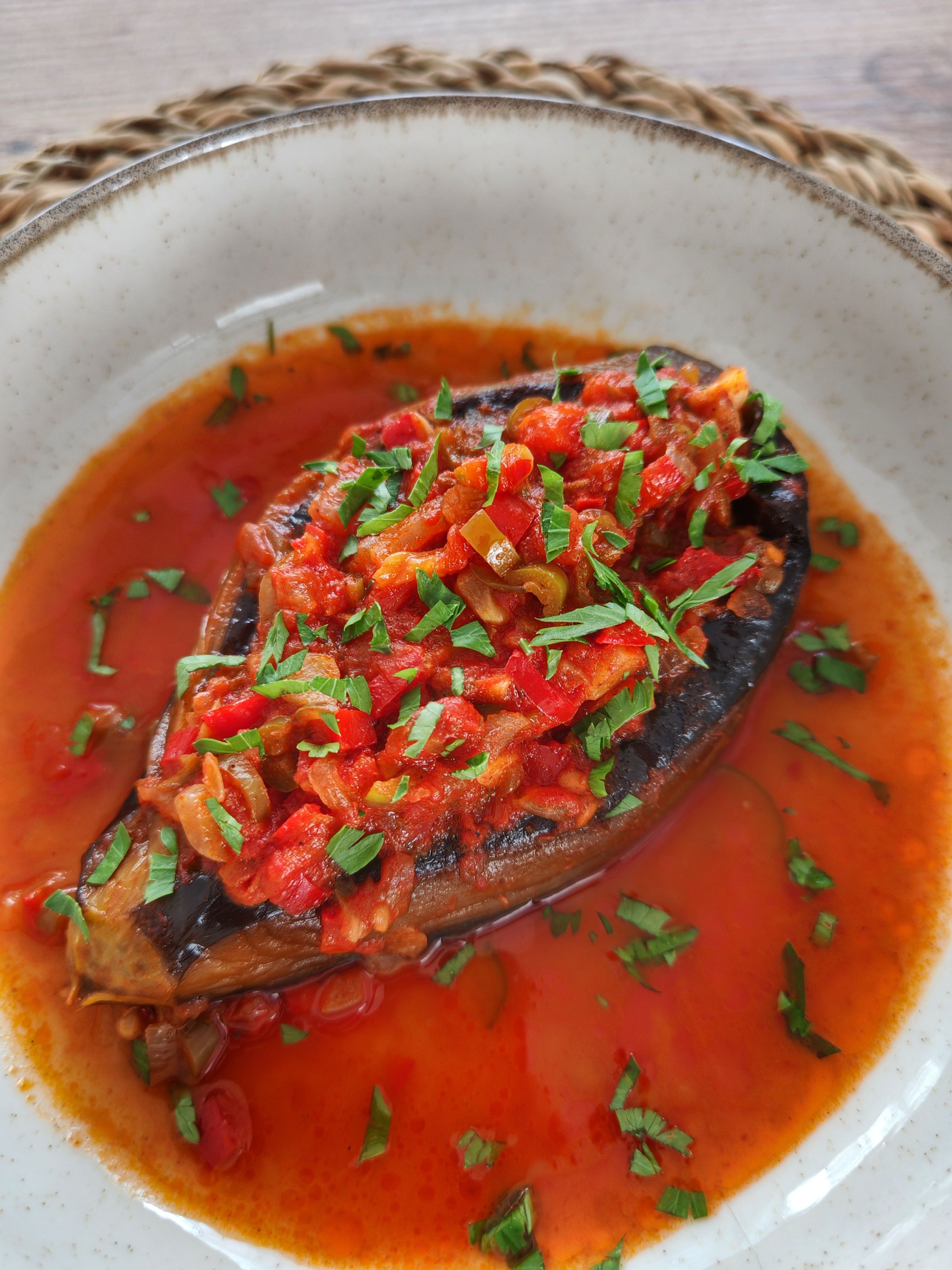
Imam Bayildi
The diets react (see scores below)
Common Ingredients
- eggplant
- tomatoes
- onion
- garlic
- parsley
- olive oil
- sugar
- lemon juice
Specific recipes may vary.
Incompatible with 3 of 11 diets
Diet Ratings
Imam Bayildi is a braised eggplant dish that has several keto-friendly components — eggplant is relatively low in net carbs (~3g per 100g), olive oil is an ideal keto fat, and garlic/parsley are fine in small amounts. However, the dish includes added sugar (a direct keto violation) and tomatoes and onions contribute additional net carbs. The cumulative carb load from tomatoes, onions, and sugar in a standard serving pushes this into cautious territory. Without the sugar and with moderate portions, a modified version could work, but as traditionally prepared it is borderline. The lack of any protein source also makes it a poor standalone keto meal.
Some lazy keto practitioners argue that the sugar quantity in a single serving is small enough to remain within daily limits and would approve a small portion, while strict keto advocates contend that any added sugar is categorically off-limits regardless of quantity and would move this to avoid.
Imam Bayildi is a classic Turkish braised eggplant dish consisting entirely of whole plant foods. Every ingredient — eggplant, tomatoes, onion, garlic, parsley, olive oil, sugar, and lemon juice — is fully plant-derived with no animal products or animal-derived additives. It is naturally vegan and has been so throughout its culinary history. The dish is also predominantly whole food, with olive oil being the only notably processed component, and it is used in moderation as a cooking fat. This earns a high score close to the top of the approval range.
Imam Bayildi is largely paleo-friendly — eggplant, tomatoes, onion, garlic, parsley, olive oil, and lemon juice are all whole, unprocessed ingredients well within paleo guidelines. The problematic ingredient is sugar, which is a refined sweetener excluded from strict paleo. The dish lands in caution territory because of this single non-compliant ingredient, though the amount used is typically small and some paleo practitioners would accept it in moderation or substitute with a natural sweetener like honey or dates.
Strict paleo authorities such as Loren Cordain would exclude any refined sugar outright regardless of quantity. However, many modern paleo practitioners (e.g., Mark Sisson's Primal Blueprint approach) apply an 80/20 rule, allowing trace amounts of sugar in otherwise whole-food dishes without disqualifying the meal entirely.
Imam Bayildi is a classic Turkish dish that exemplifies Mediterranean diet principles. The base is eggplant — a nutrient-dense vegetable — braised generously in extra virgin olive oil with tomatoes, onion, garlic, and parsley. All core ingredients are whole, plant-based foods strongly encouraged by the Mediterranean diet. Olive oil is used liberally as the primary cooking fat, which is canonical to the diet. The small amount of sugar (typically a pinch used to balance acidity) and lemon juice are minor additions that do not meaningfully undermine the dish's nutritional profile. This is a traditional, minimally processed, plant-forward dish with no animal products, making it an excellent Mediterranean staple.
Some strict modern clinical interpretations of the Mediterranean diet flag added sugar in any amount as a concern, and the dish's traditionally generous use of olive oil (which is calorie-dense) could be moderated in low-calorie therapeutic versions. However, traditional and most mainstream Mediterranean diet authorities would have no issue with the small sugar quantity or the olive oil quantity used in this preparation.
Imam Bayildi is a fully plant-based Turkish dish with zero animal-derived ingredients. Every single component — eggplant, tomatoes, onion, garlic, parsley, olive oil, sugar, and lemon juice — is explicitly excluded from the carnivore diet. There is no meat, fish, seafood, eggs, or animal fat present. This dish is incompatible with carnivore at even the most lenient interpretation.
Imam Bayildi is a classic Turkish stuffed eggplant dish whose ingredients are largely Whole30-compliant — eggplant, tomatoes, onion, garlic, parsley, olive oil, and lemon juice are all approved. However, the recipe explicitly includes sugar, which is a prohibited added sugar under Whole30 rules. Added sugar (real or artificial) is one of the core excluded ingredients for the full 30 days. This single ingredient disqualifies the dish as written. A compliant version could be made by simply omitting the sugar, as the natural sweetness of the tomatoes and onions can often carry the dish.
Imam Bayildi is a traditional Turkish dish that contains multiple high-FODMAP ingredients in significant quantities. Onion is one of the highest-FODMAP foods tested by Monash University, containing large amounts of fructans, and it is a core structural ingredient in this dish — not a garnish. Garlic is similarly high in fructans and is used in meaningful quantities. Eggplant (aubergine) is moderate-FODMAP: Monash rates it as low-FODMAP at 75g but high-FODMAP at larger servings, and a main-course serving of stuffed/braised eggplant will typically far exceed this threshold. The combination of onion, garlic, and a substantial eggplant serving makes this dish high-FODMAP at any realistic portion. Tomatoes, parsley, olive oil, sugar (small amount), and lemon juice are generally low-FODMAP and do not offset the problematic ingredients. This dish should be avoided during the elimination phase.
Imam Bayildi is a traditional Turkish dish of eggplant stuffed or braised with tomatoes, onions, garlic, parsley, and olive oil — ingredients that are broadly aligned with DASH principles. Eggplant, tomatoes, onion, and garlic are all DASH-encouraged vegetables rich in potassium, fiber, and antioxidants. Olive oil is a DASH-approved unsaturated fat. Lemon juice and parsley add micronutrients without concern. However, the dish is traditionally prepared with a notably generous amount of olive oil — often enough to raise total fat intake substantially in a single serving, and the name itself ('the imam fainted') references the lavish use of oil. While olive oil is unsaturated and preferred over saturated fats in DASH, DASH still recommends limiting total fat and controlling oil portions (2-3 teaspoons/day of added fats). A small amount of added sugar is also present, which DASH advises limiting. The dish contains no sodium-heavy ingredients inherently, but restaurant or packaged versions may add salt. As a home-prepared dish with moderate olive oil, it fits DASH reasonably well; as traditionally prepared with abundant oil, it warrants portion caution.
NIH DASH guidelines emphasize limiting total fat and added sugars, which gives this oil-heavy dish a cautious rating. However, updated Mediterranean-DASH hybrid perspectives (such as the MIND diet) actively encourage olive oil as a primary fat source and would view this vegetable-forward dish more favorably, potentially rating it as approved when prepared with moderate oil quantities.
Imam Bayildi is a traditional Turkish dish of eggplant stuffed or braised with tomatoes, onions, garlic, parsley, and a generous amount of olive oil. From a Zone perspective, the vegetable base (eggplant, tomatoes, onion, garlic, parsley) is favorable — these are low-glycemic carbohydrates rich in polyphenols, fitting Zone's emphasis on colorful vegetables. Olive oil is the ideal Zone fat source (monounsaturated). However, the dish has two notable issues: (1) It contains added sugar, which is an unfavorable carb in Zone terminology and raises the glycemic load unnecessarily. (2) Traditional recipes use a very large quantity of olive oil — the dish's name ('the imam fainted') is attributed to the lavish oil use — which can easily push fat macros well beyond Zone's 10-15g per meal target, disrupting the 40/30/30 ratio. Most critically, the dish has no protein source, making it impossible to serve as a complete Zone meal without adding lean protein alongside it. As a side dish component paired with lean protein, it can work if oil is moderated and sugar is minimized or omitted. The sugar addition, while small, is a Zone-unfavorable ingredient that prevents a higher score.
Some Zone practitioners might score this higher, noting that the sugar quantity is typically small (a teaspoon or less) and barely affects the glycemic load of an otherwise vegetable-forward dish. In Sears' later writings emphasizing polyphenols and omega-3/omega-6 balance, a dish this rich in polyphenol-dense vegetables (eggplant skin, tomatoes, garlic) and olive oil could be viewed quite favorably as a side. The key concern — oil quantity — is simply a portioning issue, not a categorical problem.
Imam Bayildi is a classic Turkish dish built almost entirely from anti-inflammatory ingredients. Extra virgin olive oil is the cornerstone fat, rich in oleocanthal and oleic acid with well-documented anti-inflammatory effects. Eggplant provides nasunin (a potent anthocyanin antioxidant in the skin), chlorogenic acid, and fiber. Tomatoes deliver lycopene and vitamin C, with lycopene bioavailability actually enhanced by cooking and the presence of olive oil. Garlic and onion are rich in organosulfur compounds (allicin, quercetin) that measurably reduce inflammatory markers. Parsley contributes apigenin and vitamin K. Lemon juice adds vitamin C and supports polyphenol absorption. The only minor concern is added sugar, which in traditional recipes is typically a small amount (1–2 tsp) used to balance acidity — negligible at a dish-level dose. The generous use of olive oil is a strong net positive. Eggplant is a nightshade, which introduces the primary source of controversy and lowers confidence to 'low' despite the otherwise strong anti-inflammatory profile.
Eggplant is a nightshade vegetable, and while mainstream anti-inflammatory nutrition (including Dr. Weil's framework) considers it beneficial due to its antioxidant content, the Autoimmune Protocol (AIP) and practitioners like Dr. Tom O'Bryan exclude all nightshades, arguing that solanine alkaloids and lectins can trigger gut permeability and inflammatory responses in genetically susceptible individuals. For the general population this concern is considered minimal, but those with autoimmune conditions may be advised to avoid this dish.
Imam Bayildi is a traditional Turkish braised eggplant dish featuring vegetables cooked in olive oil. Its strengths are meaningful: eggplant, tomatoes, and onions provide fiber and micronutrients, and the ingredients are whole and minimally processed. However, it falls short for GLP-1 patients in two key areas. First, it contains no meaningful protein source — categorized explicitly as 'none' — making it a poor standalone main dish when 15–30g protein per meal is a primary target. Second, traditional Imam Bayildi is notably oil-heavy; eggplant absorbs olive oil aggressively during cooking, and a standard serving can contain 15–25g of fat, which is moderate-to-high for GLP-1 patients where fat load worsens nausea, bloating, and reflux. The small amount of added sugar is a minor concern but not disqualifying. The dish is easy to digest, nutrient-dense relative to its vegetable base, and portion-friendly in small servings. As a side dish paired with a lean protein (grilled chicken, fish, or legumes), it becomes considerably more appropriate. As a standalone main, it fails the protein requirement decisively and the fat load warrants caution.
Some GLP-1-focused dietitians would rate this more favorably as a vegetable-forward side, arguing that olive oil's unsaturated fat profile is preferable to saturated fat sources and that the fiber content supports the constipation side effect management that many patients struggle with. Others would rate it lower, noting that the high oil absorption in eggplant makes fat content unpredictable and that GLP-1 patients with active nausea or delayed gastric emptying symptoms should avoid oil-heavy preparations regardless of fat quality.
*See how scores were generated at our methodology page.
Nutritional profile
Six traits that cut across every diet.
Fiber & Plants
How much whole-plant food and fiber it delivers.
Healthy Fats
The quality of its fats (unsaturated, omega-3).
Whole / Unprocessed
How close it is to its natural, unprocessed form.
Gut Gentle
How easy it is on digestion (low FODMAP, few irritants).
Low Glycemic
How little it spikes your blood sugar.
Protein Density
How much protein it packs per calorie.
Controversy Index
Higher controversy = more disagreement between diets.
Diet-Specific Tips
 Keto — 4/10
View tips
- Added sugar is a direct keto violation regardless of amount
- Tomatoes and onions add meaningful net carbs on top of the sugar
- Eggplant itself is moderate-carb and acceptable in small portions
- Olive oil is a keto-ideal fat and used generously in this dish
- No protein source makes this inadequate as a standalone keto main
- Standard serving size likely pushes net carbs too high for strict keto
- Modified version omitting sugar could be cautiously acceptable in small portions
 Vegan — 9/10
View tips
- All ingredients are whole plant foods
- No animal products or animal-derived ingredients present
- Olive oil is the only processed component and is unambiguously plant-based
- Naturally vegan without any substitution or modification required
- High nutritional value from eggplant, tomatoes, alliums, and fresh herbs
 Paleo — 5/10
View tips
- Eggplant, tomatoes, onion, garlic, parsley, and lemon juice are all paleo-approved whole foods
- Olive oil is a preferred paleo fat — fully compliant
- Sugar is a refined sweetener excluded from strict paleo guidelines
- Small quantity of sugar used typically as a flavor balance, not a primary ingredient
- No grains, legumes, dairy, or seed oils present
- Dish could be made fully paleo by substituting sugar with honey or omitting it
 Mediterranean — 9/10
View tips
- Primary ingredient is eggplant, a Mediterranean staple vegetable
- Abundant extra virgin olive oil as primary fat — core Mediterranean principle
- All ingredients are whole and plant-based with no processed components
- Rich in tomatoes, garlic, onion, and parsley — all encouraged daily foods
- Small amount of added sugar is the only minor concern
- Traditional Turkish dish with deep roots in Mediterranean culinary heritage
- No animal products, suitable for plant-forward eating patterns
 DASH — 6/10
View tips
- All main ingredients (eggplant, tomatoes, onion, garlic) are DASH-approved vegetables
- Olive oil is DASH-preferred unsaturated fat but total quantity is traditionally high
- No sodium-heavy processed ingredients; sodium content depends on added salt at preparation
- Small amount of added sugar present — DASH advises limiting added sugars
- Naturally low in saturated fat, cholesterol, and sodium
- No lean protein source, making it an incomplete main dish nutritionally
- Rich in fiber, potassium, and antioxidants from the vegetable base
 Zone — 5/10
View tips
- No protein source — cannot function as a standalone Zone meal without added lean protein
- Olive oil is an ideal Zone monounsaturated fat, but traditional recipes use excessive quantities that skew fat ratio
- Eggplant, tomatoes, onion, garlic, and parsley are favorable low-glycemic, polyphenol-rich Zone carbohydrates
- Added sugar is a Zone-unfavorable ingredient, raising glycemic index unnecessarily
- As a side dish with careful oil portioning and sugar reduction or elimination, it can fit Zone principles
 Anti-Inflammatory — 8/10
View tips
- Extra virgin olive oil: primary fat, rich in oleocanthal and monounsaturated fats — strongly anti-inflammatory
- Eggplant: high in nasunin and chlorogenic acid but is a nightshade — debated in autoimmune contexts
- Tomatoes: lycopene enhanced by cooking and olive oil — anti-inflammatory for general population, nightshade caveat applies
- Garlic and onion: organosulfur compounds and quercetin reduce CRP and IL-6
- Parsley: apigenin flavonoid with anti-inflammatory activity
- Small amount of added sugar: minimal at typical serving doses, not a meaningful concern
- No animal products, saturated fat, refined grains, or processed additives
 GLP-1 Friendly — 5/10
View tips
- No protein content — fails the 15–30g per meal protein target as a standalone main
- High olive oil absorption in eggplant results in moderate-to-high fat per serving (estimated 15–25g)
- Good fiber content from eggplant, tomatoes, and onion supports GI regularity
- Whole, minimally processed ingredients — no fried components, no refined grains
- Unsaturated fat source (olive oil) preferred over saturated fat, but volume is a concern for GLP-1 GI tolerance
- Small added sugar is a minor negative but not clinically significant at typical serving size
- Best suited as a side dish paired with lean protein rather than as a primary meal