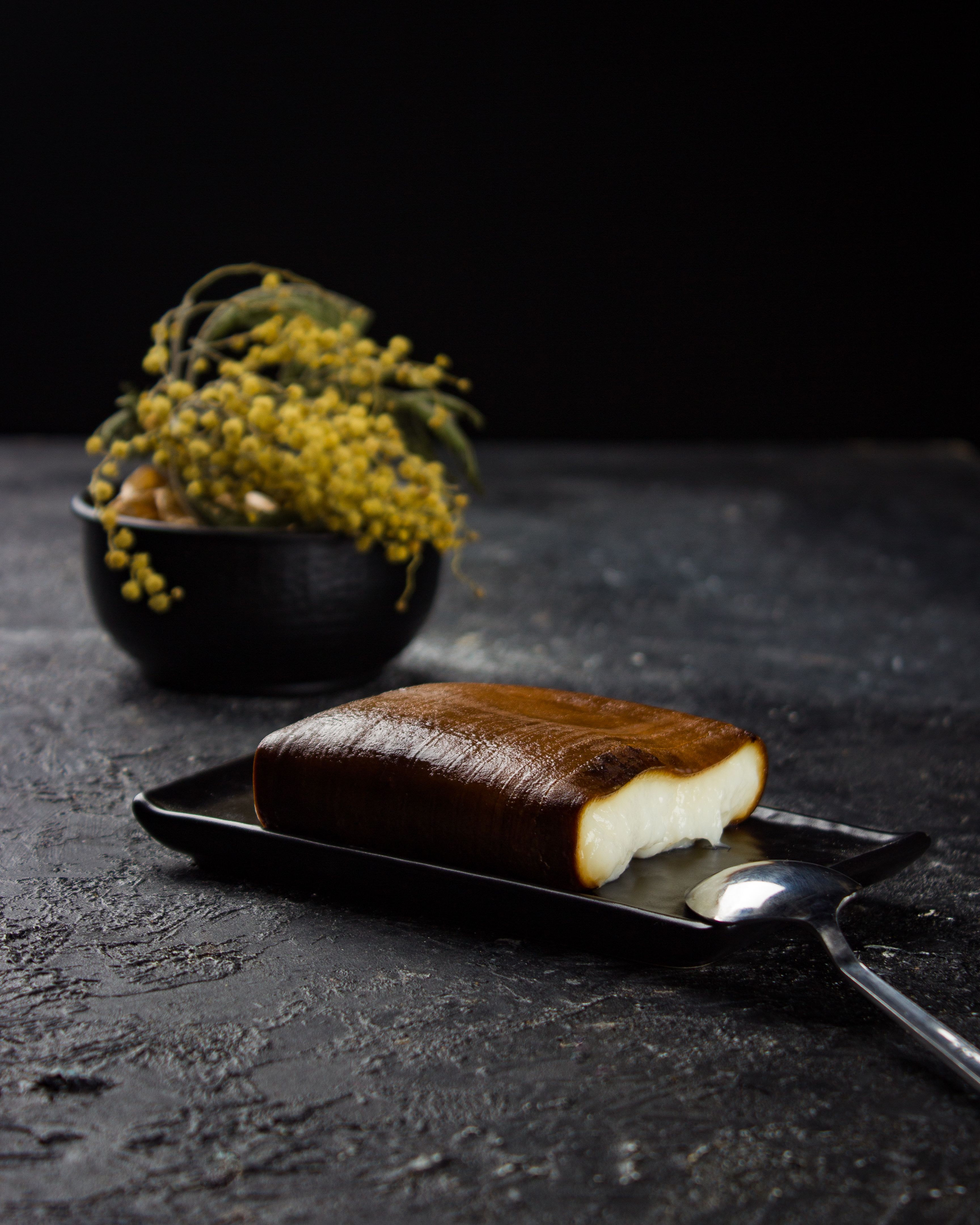
Photo: Beyza Yıldız / Pexels
The diets react (see scores below)
Common Ingredients
- milk
- sugar
- rice flour
- cornstarch
- butter
- vanilla
- chicken breast
Specific recipes may vary.
Incompatible with 9 of 11 diets
Diet Ratings
Kazandibi is a traditional Turkish milk pudding that is fundamentally incompatible with ketogenic diets. It is loaded with high-carb ingredients: sugar is a primary sweetener, rice flour and cornstarch are both grain/starch-based thickeners with extremely high net carb counts, and milk contributes additional lactose (sugar). A single standard serving would easily contain 40-60g of net carbs, blowing through the entire daily keto carb budget. The butter adds fat and the chicken breast adds protein, but these minimal keto-friendly components are entirely overwhelmed by the dominant carbohydrate sources. There is no meaningful portion size that would make this dish compatible with ketosis.
Kazandibi is a traditional Turkish milk pudding that contains multiple animal-derived ingredients, making it entirely incompatible with a vegan diet. The dish includes milk (dairy), butter (dairy), and most distinctively, chicken breast — a defining characteristic of authentic kazandibi that distinguishes it from similar puddings like muhallebi. All three of these ingredients are direct animal products excluded under vegan rules. There is no ambiguity here.
Kazandibi is a Turkish milk pudding that contains multiple non-paleo ingredients. Milk is a dairy product excluded from paleo. Sugar is refined and excluded. Rice flour and cornstarch are both grain/starch derivatives explicitly excluded from paleo. Butter, while a dairy fat, is also excluded under strict paleo guidelines. Although chicken breast is paleo-approved, it cannot redeem a dish where virtually every other ingredient violates paleo principles. This dessert is fundamentally incompatible with the paleo diet.
Kazandibi is a traditional Turkish milk pudding characterized by a caramelized bottom, made primarily from milk, sugar, rice flour, cornstarch, butter, and vanilla — with the unusual addition of shredded chicken breast (a classical Ottoman technique). While it contains some dairy and a lean protein, the dish is fundamentally a sugar-forward dessert/snack with refined starches (rice flour, cornstarch), added sugars as a central ingredient, and butter rather than olive oil as the fat. This profile directly contradicts Mediterranean diet principles: it is high in added sugar, relies on refined grains, and uses saturated fat from butter. The chicken breast inclusion is insufficient to redeem the overall nutritional profile. As a sweet snack built around sugar and refined starch, it falls into the 'avoid' category alongside other confections and desserts.
Some Mediterranean diet interpretations allow for small, occasional portions of traditional dairy-based desserts, particularly those with cultural heritage in Mediterranean-adjacent cuisines (Ottoman/Turkish traditions). A small serving enjoyed infrequently as part of an otherwise plant-forward diet might be considered an acceptable cultural indulgence, similar to how Greek or Lebanese sweets are sometimes viewed with leniency in traditional Mediterranean eating patterns.
Kazandibi is a Turkish milk pudding that is fundamentally incompatible with the carnivore diet. While it contains some animal-derived ingredients (milk, butter, chicken breast), the dish is dominated by plant-based and processed components: rice flour, cornstarch, sugar, and vanilla. Rice flour and cornstarch are grain/starch derivatives explicitly excluded from carnivore. Sugar is a processed carbohydrate with zero place in any tier of carnivore eating. The inclusion of chicken breast is a carnivore-compatible ingredient, but it does not redeem a dish that is structurally a dessert pudding built on grains and sugar. The overall macronutrient and ingredient profile is that of a high-carbohydrate sweet dessert, which is the antithesis of carnivore principles.
Kazandibi is a Turkish milk pudding that contains multiple Whole30-excluded ingredients. Milk is a dairy product (excluded), sugar is an added sweetener (excluded), rice flour is a grain (excluded), cornstarch is explicitly excluded per Whole30 rules, and butter (regular, not ghee) is a dairy product (excluded). The dish is also a dessert/pudding by nature, which conflicts with the spirit of the Whole30 program even if individual ingredients could theoretically be swapped. With at least five clearly excluded ingredients, this dish cannot be made Whole30-compliant without fundamentally changing its nature.
Kazandibi is a traditional Turkish milk pudding whose FODMAP status hinges primarily on its milk content and serving size. The thickeners — rice flour and cornstarch — are both low-FODMAP and safe. Sugar, butter, vanilla, and chicken breast are all low-FODMAP. The critical concern is regular cow's milk, which contains lactose (a disaccharide FODMAP). Monash University rates cow's milk as high-FODMAP at standard serving sizes (>30ml). A typical serving of Kazandibi uses a substantial amount of milk as its base — commonly 500ml–1L per recipe yielding 6–8 servings — meaning each portion likely contains 60–125ml of milk. Monash considers lactose in milk problematic above approximately 30–40ml per serve, so a standard portion of Kazandibi likely exceeds the low-FODMAP threshold for lactose. The dish could be made low-FODMAP by substituting lactose-free milk, which is a common adaptation. As traditionally prepared with regular milk, caution is warranted during elimination phase.
Some FODMAP practitioners note that the lactose content per serving depends heavily on recipe proportions and portion size — a small tasting portion might fall below the lactose threshold. However, Monash University's guidance during strict elimination phase recommends avoiding regular milk at typical serving quantities, and most clinical dietitians would advise substituting lactose-free milk for this dish during elimination to ensure compliance.
Kazandibi is a traditional Turkish milk pudding made primarily from milk, sugar, rice flour, cornstarch, butter, and vanilla, with a small amount of shredded chicken breast as a traditional binder/thickener. The dish has both DASH-compatible and problematic elements. On the positive side, milk provides calcium and potassium (DASH-friendly nutrients), chicken breast is a lean protein source, and sodium content is naturally low. However, the dish is high in added sugar, contains butter (a source of saturated fat), and is essentially a dessert/sweet snack — a category DASH explicitly recommends limiting. The refined starches (rice flour, cornstarch) offer minimal fiber. DASH guidelines restrict sweets to ≤5 servings per week, so occasional consumption could fit within the plan, but the added sugar and saturated fat from butter prevent a full approval. The milk base is a positive factor, though full-fat milk would be less ideal than low-fat under strict DASH guidance.
NIH DASH guidelines categorically limit sweets and added sugars, which would place this dessert firmly in the 'limit' category. However, some updated DASH-oriented clinical interpretations note that small portions of traditional milk-based desserts with lean protein (chicken breast) and moderate sugar — particularly when made with low-fat milk — can fit within the weekly sweets allowance without meaningfully undermining DASH goals, especially compared to ultra-processed commercial sweets.
Kazandibi is a traditional Turkish milk pudding that is fundamentally incompatible with Zone Diet principles. Its macro profile is almost entirely carbohydrate and fat, with negligible protein contribution despite the unusual inclusion of chicken breast (which is present in very small amounts as a traditional texturizing agent, not as a meaningful protein source). The primary carbohydrate sources — sugar, rice flour, and cornstarch — are all high-glycemic and among the most 'unfavorable' carbs in Zone terminology. Sugar is a direct insulin trigger, and refined starches (rice flour, cornstarch) spike blood glucose rapidly. The fat comes primarily from butter (saturated), not monounsaturated sources preferred by Zone. As a snack, it provides essentially no lean protein block, no low-glycemic carb block, and no favorable fat block — it fails all three Zone macro pillars simultaneously. The dish cannot be portioned into Zone balance because its ingredient ratios are structurally misaligned with 40/30/30.
Kazandibi is a traditional Turkish milk pudding with a distinctive caramelized (scorched) bottom. Its ingredient profile is largely pro-inflammatory from an anti-inflammatory diet standpoint. The dish is built around refined sugar as a primary ingredient, which directly promotes inflammatory markers like CRP and IL-6. Cornstarch and rice flour are refined carbohydrates with high glycemic index, offering no fiber or micronutrient benefit. Butter contributes saturated fat, which anti-inflammatory frameworks recommend limiting. Milk (full-fat assumed in traditional preparation) adds additional saturated fat. The caramelization process that gives kazandibi its signature scorched top creates advanced glycation end-products (AGEs), which are themselves pro-inflammatory. The chicken breast is the only nominally neutral-to-positive ingredient, but it is used in such small quantity as a textural binder that it provides negligible benefit. Vanilla is a mild positive (contains vanillin with modest antioxidant activity) but insufficient to offset the overall profile. This dessert is essentially a high-sugar, refined-carb, saturated-fat dish with no meaningful anti-inflammatory components.
Kazandibi is a traditional Turkish milk pudding made primarily from milk, sugar, rice flour, cornstarch, and butter, with a characteristic caramelized bottom. The inclusion of finely shredded chicken breast is traditional and adds a modest protein contribution, but the dish is fundamentally dessert-forward: high in simple sugars and refined starches, with limited fiber, moderate fat from butter and whole milk, and relatively low protein density per calorie despite the chicken. The caramelized sugar layer raises the glycemic load further. For GLP-1 patients, the high sugar and refined carbohydrate content is problematic — empty calories compete with nutrient-dense foods in an already reduced appetite context, and the sweetness combined with dairy fat may trigger nausea or reflux in sensitive patients. The chicken breast component is genuinely unusual from a Western perspective but is authentic and does nudge protein content upward slightly. Portion size is critical: a small serving as an occasional treat is more defensible than a standard dessert portion. It does not qualify as a snack optimized for GLP-1 patients.
Some GLP-1-focused dietitians may give this slightly more credit than a typical dessert because the chicken breast inclusion provides real protein in a culturally significant dish, and the milk base contributes calcium and some protein — making it marginally more nutrient-dense than pure sugar-based sweets. However, most clinical guidance would still flag the high sugar and refined starch content as counterproductive for patients with reduced caloric budgets.
*See how scores were generated at our methodology page.
Nutritional profile
Six traits that cut across every diet.
Fiber & Plants
How much whole-plant food and fiber it delivers.
Healthy Fats
The quality of its fats (unsaturated, omega-3).
Whole / Unprocessed
How close it is to its natural, unprocessed form.
Gut Gentle
How easy it is on digestion (low FODMAP, few irritants).
Low Glycemic
How little it spikes your blood sugar.
Protein Density
How much protein it packs per calorie.
Controversy Index
Higher controversy = more disagreement between diets.
Diet-Specific Tips
 DASH — 4/10
View tips
- High added sugar content — DASH limits sweets to ≤5 servings/week
- Butter contributes saturated fat, which DASH recommends limiting
- Milk provides DASH-beneficial calcium and potassium
- Chicken breast is a lean protein, a DASH-approved ingredient
- Refined starches (rice flour, cornstarch) contribute minimal fiber
- Naturally low sodium — a positive DASH attribute
- Acceptable only in small, infrequent portions within DASH framework
- Low-fat milk substitution would improve DASH compatibility
 GLP-1 Friendly — 4/10
View tips
- High sugar content from added sugar and caramelization raises glycemic load — problematic for GLP-1 patients with limited caloric budget
- Refined starches (rice flour, cornstarch) offer minimal fiber and low nutrient density per calorie
- Chicken breast inclusion adds modest protein but does not make this a protein-forward food
- Butter and whole milk contribute saturated fat, which may worsen nausea or reflux
- No meaningful fiber content — does not support GLP-1 digestion goals
- Dairy base may trigger lactose sensitivity, which is elevated in some GLP-1 patients
- Small portions reduce harm but the food profile remains suboptimal for this medication context
- Culturally significant dish — complete avoidance may not be realistic; occasional small serving is more appropriate guidance than outright elimination