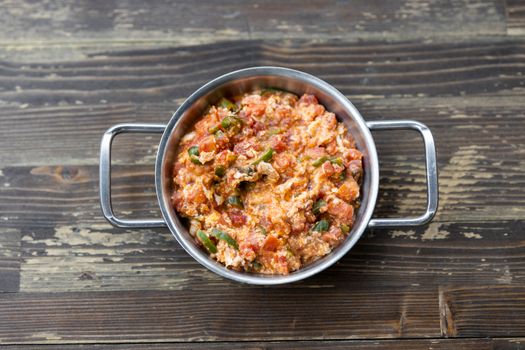
Photo: Engin Akyurt / Pexels
The diets react (see scores below)
Common Ingredients
- eggs
- tomatoes
- green peppers
- onion
- olive oil
- red pepper flakes
- salt
Specific recipes may vary.
Incompatible with 3 of 11 diets
Diet Ratings
Menemen is an egg-based dish cooked in olive oil, which aligns well with keto principles — eggs and olive oil are ideal keto foods. The concern lies in the combination of tomatoes, green peppers, and onion. A standard serving of menemen (2-3 eggs) with typical vegetable amounts can contribute roughly 8-12g net carbs, primarily from tomatoes (4-5g per medium tomato) and onion (3-4g per quarter onion). This is manageable within daily keto limits if the rest of the day's meals are very low carb, but portion control is essential. Using less onion and tomato, and keeping servings moderate, keeps this dish keto-compatible. The dish is unprocessed and contains no grains or added sugar, which is a strong positive.
Some stricter keto practitioners argue that tomatoes and onions should be minimized or eliminated due to their natural sugars contributing meaningfully to daily carb limits, and would recommend replacing tomatoes with small amounts of roasted red pepper or simply omitting them. Others in the lazy keto camp consider a standard menemen serving fully acceptable given the high egg and fat content.
Menemen is a traditional Turkish egg dish where eggs are the primary protein and a core, non-optional ingredient. Eggs are an animal product and are unambiguously excluded from a vegan diet. While the remaining ingredients — tomatoes, green peppers, onion, olive oil, red pepper flakes, and salt — are all fully plant-based, the presence of eggs makes this dish incompatible with veganism. A vegan version could theoretically be made by substituting eggs with tofu or a chickpea flour scramble, but the traditional dish as listed cannot be approved.
Menemen is largely paleo-friendly: eggs, tomatoes, green peppers, onion, olive oil, and red pepper flakes are all whole, unprocessed foods well within paleo guidelines. However, the dish includes added salt, which is excluded under strict paleo rules as a processed/refined additive unavailable in its purified form to Paleolithic humans. Olive oil is an approved paleo fat. Without the salt, this dish would score a solid 8-9 and earn a clear approval. The salt alone drops it into caution territory under strict interpretations, though many modern paleo practitioners routinely use small amounts of unrefined salt (e.g., sea salt or Himalayan salt) and would approve this dish without hesitation.
Many prominent paleo practitioners — including Mark Sisson and the Whole30 protocol — permit unrefined salt (sea salt, Himalayan pink salt) in moderation, arguing that sodium itself is not the issue and that ancestral humans obtained sodium from animal foods and mineral-rich water. Under this view, Menemen with a modest pinch of salt would be fully approved.
Menemen is a traditional Turkish breakfast dish that aligns very well with Mediterranean diet principles. The base is a rich combination of tomatoes, green peppers, and onion — all whole vegetables eaten frequently in Mediterranean cuisines — cooked in extra virgin olive oil, the canonical fat of the diet. Eggs are the primary protein source, which is acceptable in moderate daily amounts under Mediterranean guidelines. The dish is minimally processed, uses no refined grains, added sugars, or saturated fats, and relies on simple spices for flavor. This is essentially a plant-forward egg dish, with vegetables making up the bulk of the meal and eggs playing a supporting role. It closely resembles shakshuka and other Mediterranean egg-and-vegetable preparations celebrated in the diet.
Some stricter Mediterranean diet frameworks classify eggs as a 'moderate' food (a few servings per week rather than daily), which could push a daily Menemen habit toward 'caution.' However, most modern clinical interpretations, including those aligned with the PREDIMED study parameters, consider one egg per day acceptable, keeping Menemen solidly in approve territory.
Menemen is fundamentally incompatible with the carnivore diet. While it does contain eggs — which are accepted by most carnivore practitioners — the dish is overwhelmingly plant-based in composition. Tomatoes, green peppers, and onion are all vegetables excluded from any tier of carnivore eating. Olive oil is a plant-derived oil, strictly forbidden. Red pepper flakes are a plant-based spice. The eggs are the only carnivore-compatible ingredient, but they are entirely subordinate to and cooked with disqualifying plant foods. This is not a dish that can be 'modified' — removing the plant ingredients would leave nothing resembling menemen. The dish scores a 2 rather than 1 solely because eggs are present as a protein source.
Menemen is a traditional Turkish scrambled egg dish made entirely from Whole30-compliant ingredients. Eggs are explicitly allowed, tomatoes and green peppers are vegetables, onion is a vegetable, olive oil is a natural fat, and red pepper flakes and salt are compliant seasonings. There are no excluded ingredients present — no grains, legumes, dairy, added sugars, or alcohol. This is a whole, unprocessed meal that aligns perfectly with the spirit and letter of the Whole30 program.
Menemen contains onion as a primary ingredient, which is high-FODMAP due to fructans at any meaningful cooking quantity. Onion is one of the most problematic FODMAP foods and remains high-FODMAP even when cooked, as fructans are heat-stable (though water-soluble — they leach into broths but not into oil-based cooking). The remaining ingredients are largely low-FODMAP: eggs are low-FODMAP, tomatoes are low-FODMAP at standard servings (up to 1 medium tomato per Monash), green peppers (capsicum) are low-FODMAP at up to 52g per Monash, olive oil is low-FODMAP, red pepper flakes are low-FODMAP at small amounts, and salt is FODMAP-free. However, the onion alone disqualifies this dish during the elimination phase. A low-FODMAP adaptation would require completely omitting onion and using the green tops of scallions (spring onions) instead, or using garlic-infused oil rather than onion for flavor.
Menemen is a Turkish egg dish cooked with tomatoes, green peppers, onion, and olive oil — a largely DASH-friendly combination. Tomatoes, peppers, and onion are excellent DASH vegetables rich in potassium, magnesium, and fiber. Olive oil is an approved heart-healthy fat consistent with DASH principles. The primary concern is eggs: DASH guidelines historically limited dietary cholesterol, and eggs are not a core DASH protein (legumes, fish, and poultry are preferred). However, updated 2020-2025 Dietary Guidelines removed the strict 300mg/day cholesterol cap, and most current DASH-oriented clinicians accept eggs in moderation. A secondary concern is added salt — home preparation often adds a meaningful amount of sodium, and portion control is required. Overall, Menemen is a reasonable DASH breakfast choice when prepared with minimal added salt (targeting <300mg sodium per serving) and consumed in moderation (2 eggs per serving fits within updated guidance).
Traditional NIH DASH guidelines deprioritize whole eggs due to dietary cholesterol and historically favored egg whites or egg substitutes; conservative cardiologists may still recommend limiting whole eggs to 3-4 per week. Updated clinical interpretations based on the 2020-2025 Dietary Guidelines and recent meta-analyses suggest dietary cholesterol from eggs has minimal impact on cardiovascular outcomes for most individuals, making moderate egg consumption acceptable within a DASH pattern.
Menemen is a naturally Zone-friendly Turkish breakfast dish. Eggs provide lean protein (whole eggs include some fat, so portions should be calibrated — 1 whole egg counts as roughly 1 protein block plus 1 fat block). Tomatoes, green peppers, and onion are all favorable low-glycemic vegetables that contribute net carb blocks with significant fiber, polyphenols, and anti-inflammatory compounds — exactly what Sears emphasizes. Olive oil is the ideal Zone fat source: monounsaturated and anti-inflammatory. Red pepper flakes and spices add polyphenol benefit with no macro impact. The dish naturally assembles close to a 40/30/30 ratio: eggs supply protein and some fat, olive oil tops up monounsaturated fat, and the vegetables cover the carbohydrate block requirement. A typical 2-egg serving with one teaspoon of olive oil and a generous vegetable base would approximate a 2-3 block Zone meal. The main calibration needed is controlling olive oil quantity (easy) and ensuring egg count is appropriate for the individual's protein block target. No high-glycemic carbs, no refined sugar, no processed ingredients, no seed oils — this dish hits nearly every Zone favorable marker.
Menemen is a Turkish egg scramble featuring a strong lineup of anti-inflammatory ingredients. Olive oil is a cornerstone of anti-inflammatory eating, rich in oleocanthal and monounsaturated fats. Tomatoes provide lycopene and vitamin C — carotenoids shown to reduce oxidative stress. Green peppers supply vitamin C and flavonoids. Onions are rich in quercetin, a well-documented anti-inflammatory flavonoid. Red pepper flakes contribute capsaicin, which has demonstrated anti-inflammatory effects in research. Eggs are the most nutritionally contested ingredient here: they contribute choline, selenium, and lutein on the anti-inflammatory side, but also arachidonic acid, a precursor to pro-inflammatory eicosanoids. For a generally healthy individual eating eggs in normal culinary portions, the net effect is considered neutral to mildly beneficial in most mainstream anti-inflammatory frameworks. Overall, this dish is predominantly plant-forward with a strong antioxidant and polyphenol profile, making it a solid anti-inflammatory breakfast choice — particularly compared to processed or refined breakfast options.
Eggs are rated approvingly by most mainstream anti-inflammatory sources including Dr. Weil, who includes them in moderation; however, some anti-inflammatory practitioners and the AIP (Autoimmune Protocol) flag egg whites as potential triggers for gut permeability and immune reactivity in sensitive individuals, and the arachidonic acid in yolks is noted as a concern in stricter protocols. Additionally, while tomatoes and peppers are valued for their antioxidants in mainstream anti-inflammatory guidance, AIP and nightshade-sensitive frameworks exclude them as potential triggers in autoimmune conditions.
Menemen is a strong GLP-1-friendly breakfast. Eggs provide high-quality, bioavailable protein (roughly 6g per egg) in a small, easily digestible package — ideal for reduced-appetite patients. Tomatoes and green peppers add meaningful fiber, micronutrients (vitamin C, lycopene), and water content, supporting hydration and digestion. Olive oil is the preferred fat source in GLP-1 nutrition guidance — unsaturated and anti-inflammatory — and a typical preparation uses a modest 1-2 tablespoons, keeping fat load reasonable. The dish is soft-textured and easy on a slowed digestive system. The primary concern is red pepper flakes, which may worsen reflux or nausea in GLP-1 patients with GI sensitivity, particularly in the first weeks of treatment or at dose escalation. This is easily mitigated by reducing or omitting the spice. Overall nutrient density per calorie is excellent: high water content vegetables, quality protein, healthy fat, no refined carbohydrates, no added sugar, and no empty calories.
The red pepper flakes introduce individual tolerance variability — some GLP-1 clinicians and dietitians advise patients to eliminate all spicy ingredients during the first 8-12 weeks of treatment due to heightened reflux and nausea risk from slowed gastric emptying, which would push this dish to a caution rating until GI side effects stabilize. Portion size also matters: a two-egg serving is well-tolerated for most, but a three-to-four-egg preparation increases fat and caloric load in a single sitting, which some practitioners flag as problematic for patients with delayed gastric emptying.
*See how scores were generated at our methodology page.
Nutritional profile
Six traits that cut across every diet.
Fiber & Plants
How much whole-plant food and fiber it delivers.
Healthy Fats
The quality of its fats (unsaturated, omega-3).
Whole / Unprocessed
How close it is to its natural, unprocessed form.
Gut Gentle
How easy it is on digestion (low FODMAP, few irritants).
Low Glycemic
How little it spikes your blood sugar.
Protein Density
How much protein it packs per calorie.
Controversy Index
Higher controversy = more disagreement between diets.
Diet-Specific Tips
 Keto — 5/10
View tips
- Eggs and olive oil are excellent keto staples — high fat, zero carbs
- Tomatoes add ~4-5g net carbs per medium tomato; portion size matters
- Onion contributes 3-4g net carbs; should be used sparingly
- Green peppers are relatively low carb (~2-3g net carbs per pepper)
- No grains, added sugars, or processed ingredients — whole food dish
- Combined net carbs per serving estimate: 8-12g, manageable but notable
- Dish fits keto better when tomato and onion quantities are reduced
 Paleo — 6/10
View tips
- Eggs are a core paleo-approved protein
- Tomatoes, green peppers, and onion are whole paleo vegetables
- Olive oil is a preferred paleo fat
- Red pepper flakes are a natural paleo-compliant spice
- Added salt is excluded under strict paleo rules as a refined/processed additive
- Salt is widely accepted by many modern paleo authorities in unrefined forms, making this a gray area
 Mediterranean — 8/10
View tips
- Abundant whole vegetables: tomatoes, green peppers, onion form the bulk of the dish
- Extra virgin olive oil is the sole fat source — ideal Mediterranean fat
- Eggs are an accepted moderate protein in Mediterranean guidelines
- No processed ingredients, refined grains, or added sugars
- Traditional Turkish dish with clear Mediterranean culinary heritage
- Plant-to-protein ratio strongly favors vegetables
 Whole30 — 9/10
View tips
- Eggs are a core Whole30-approved protein
- All vegetables (tomatoes, green peppers, onion) are fully compliant
- Olive oil is an approved natural fat
- Red pepper flakes and salt are compliant seasonings
- No excluded ingredients of any kind
- Dish is a whole-food preparation, not a recreation of junk food or baked goods
 DASH — 6/10
View tips
- Tomatoes, green peppers, and onion are DASH-approved vegetables rich in potassium and fiber
- Olive oil is a heart-healthy unsaturated fat consistent with DASH
- Eggs are a moderate concern — not a DASH-preferred protein, though updated guidelines allow moderate consumption
- Added salt is the primary sodium risk; preparation should minimize added salt to keep sodium under 300-400mg per serving
- No saturated fat, processed ingredients, added sugar, or high-sodium sauces
- Red pepper flakes add flavor without sodium, supporting a lower-salt preparation
 Zone — 8/10
View tips
- Eggs provide lean Zone protein blocks (with yolks contributing fat blocks — portion accordingly)
- Tomatoes, green peppers, and onion are favorable low-glycemic Zone carbohydrate sources rich in polyphenols
- Olive oil is the ideal Zone monounsaturated fat — portion to 1 tsp per meal to hit fat block targets without excess
- No high-glycemic carbohydrates, refined sugars, or processed ingredients
- Red pepper flakes and vegetables contribute anti-inflammatory polyphenols aligned with Sears' later Zone writings
- Naturally close to 40/30/30 ratio with minimal adjustment needed
 Anti-Inflammatory — 8/10
View tips
- Extra virgin olive oil: rich in oleocanthal and MUFAs, a cornerstone anti-inflammatory fat
- Tomatoes: lycopene and vitamin C provide antioxidant and anti-inflammatory benefits
- Green peppers: vitamin C and flavonoids support anti-inflammatory activity
- Onion: high in quercetin, a potent anti-inflammatory flavonoid
- Red pepper flakes: capsaicin shown to modulate inflammatory pathways
- Eggs: mixed profile — beneficial micronutrients (choline, selenium) offset by arachidonic acid considerations; neutral to mildly positive in normal portions
- No refined carbohydrates, processed ingredients, or seed oils — clean ingredient list
 GLP-1 Friendly — 8/10
View tips
- High-quality egg protein supports muscle preservation during weight loss
- Tomatoes and peppers add fiber, water content, and micronutrients
- Olive oil is the preferred fat — unsaturated, used in moderate quantity
- Soft texture supports easy digestibility with slowed gastric emptying
- Red pepper flakes are a GI risk factor — reducible or omittable
- No refined carbohydrates, added sugar, or empty calories
- Portion-scalable: two-egg serving keeps protein and fat in ideal range