Turkish
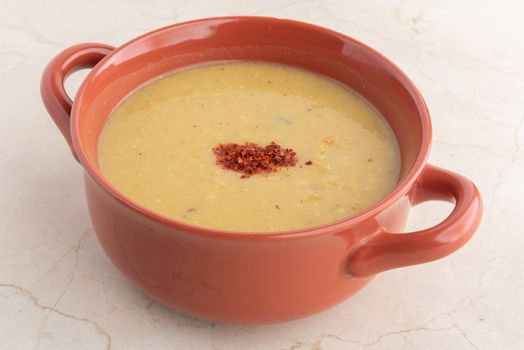
Mercimek Corbasi
The diets react (see scores below)
Common Ingredients
- red lentils
- onion
- carrots
- potato
- butter
- paprika
- cumin
- lemon juice
Specific recipes may vary.
Incompatible with 6 of 11 diets
Diet Ratings
Mercimek Corbasi (Turkish red lentil soup) is fundamentally incompatible with a ketogenic diet. Red lentils are a legume with very high net carbs — approximately 30-35g net carbs per 100g cooked, meaning even a modest bowl (250-300ml) delivers 25-40g net carbs, nearly or entirely exhausting the daily keto limit in one serving. The addition of potato compounds the problem significantly, as potatoes are a starchy vegetable with ~15-17g net carbs per 100g. Carrots add further net carbs (~6-7g per 100g). Together, these three ingredients make a single serving of this soup nearly certain to break ketosis. The butter is keto-friendly, and spices are fine, but they cannot offset the carbohydrate load of the core ingredients. This dish is a legume- and starch-based food by design, and no reasonable portion size makes it keto-compatible.
Mercimek Çorbası as listed contains butter, which is a dairy product and therefore not vegan. All other ingredients — red lentils, onion, carrots, potato, paprika, cumin, and lemon juice — are fully plant-based and would score highly on their own. The soup is easily made vegan by substituting butter with olive oil or a plant-based alternative, which is a common adaptation. The verdict applies to this specific ingredient list.
Mercimek Corbasi is fundamentally incompatible with the paleo diet. The primary protein source — red lentils — is a legume, which is one of the clearest 'avoid' categories in paleo due to its lectin and phytate content and its absence from hunter-gatherer diets. Butter is a dairy product excluded under strict paleo guidelines. While onion, carrots, paprika, cumin, and lemon juice are all paleo-approved, and potato occupies a gray area, the dish's foundation is built on a non-paleo legume. No preparation method or substitution can make lentils paleo-compliant — this is not a gray area. The dish cannot be rehabilitated without replacing its defining ingredient.
Mercimek Corbasi is a classic Turkish red lentil soup that aligns strongly with Mediterranean diet principles. Red lentils are an excellent plant-based protein and fiber source, strongly encouraged in the Mediterranean pattern. Onion, carrots, and potato are whole vegetables, and lemon juice adds brightness while contributing antioxidants. Spices like cumin and paprika are traditional and health-positive. The one nuance is the use of butter as the fat rather than extra virgin olive oil, which is the canonical Mediterranean fat. Butter is used in some Turkish and Levantine regional traditions, but modern Mediterranean diet guidelines would prefer olive oil as the primary fat. Overall, the dish is overwhelmingly plant-forward, legume-based, minimally processed, and nutritionally dense, earning a strong approval with a slight deduction for the butter.
Some Mediterranean diet purists would lower this rating due to the use of butter instead of extra virgin olive oil, as butter is an animal-derived saturated fat not emphasized in the Mediterranean pattern. However, traditional Turkish cuisine does incorporate butter in cooking, and many practitioners consider a small amount acceptable when the overall dish is this plant-forward and wholesome.
Mercimek Corbasi is entirely plant-based and directly violates every principle of the carnivore diet. The primary protein source is red lentils, a legume that is strictly excluded from all tiers of carnivore eating. Every single ingredient — red lentils, onion, carrots, potato, paprika, cumin, and lemon juice — is plant-derived. The only animal-derived ingredient is butter, which is a minor component and insufficient to redeem the dish. There is no meaningful animal protein, no animal fat as a primary component, and the dish is loaded with plant compounds, antinutrients (lectins and phytates from lentils), and carbohydrates from legumes, root vegetables, and starchy potato. This dish represents the antithesis of carnivore eating.
Mercimek Corbasi (Turkish red lentil soup) contains two disqualifying ingredients under Whole30 rules. First, red lentils are legumes — a fully excluded food category with no exception (only green beans, sugar snap peas, and snow peas are excepted from the legume ban). Second, butter is excluded dairy; only ghee or clarified butter is permitted. The remaining ingredients — onion, carrots, potato, paprika, cumin, and lemon juice — are all Whole30-compliant. However, the two core disqualifying ingredients (lentils as the primary protein and regular butter) make this dish incompatible with the program.
Mercimek Çorbası contains multiple high-FODMAP ingredients that make it unsuitable during the elimination phase. Red lentils are high in GOS (galacto-oligosaccharides) and are high-FODMAP except in very small portions (Monash rates ¼ cup/50g cooked as a cautious serving, but soup typically contains far more). Onion is one of the highest-FODMAP foods due to fructans and is problematic at virtually any culinary amount. Potato is moderate — Monash rates it as low-FODMAP at ½ medium (75g), so it depends on quantity used. Carrots, butter, paprika, cumin, and lemon juice are all low-FODMAP and not a concern. However, the combination of red lentils AND onion together in a soup — where lentils are used as the primary, bulk ingredient — makes this dish clearly high-FODMAP. A standard serving of this soup would contain enough lentils and onion to trigger symptoms in most people sensitive to GOS and fructans.
Mercimek Corbasi (Turkish red lentil soup) is highly compatible with the DASH diet. Red lentils are a DASH-encouraged legume, rich in potassium, magnesium, fiber, and plant-based protein. Onion, carrots, and potato add vegetables, potassium, and fiber. Cumin, paprika, and lemon juice contribute flavor without sodium, reducing the need for added salt. The main concern is butter, which contains saturated fat that DASH limits — however, the quantity used in this soup is typically modest (1-2 tablespoons for a large batch), keeping saturated fat impact low. The soup's overall nutritional profile — high fiber, low saturated fat, rich in DASH-targeted micronutrients, and naturally low in sodium when home-prepared — aligns strongly with DASH principles. Sodium content depends on preparation; if no added salt or low-sodium broth is used, this scores very well.
NIH DASH guidelines emphasize limiting saturated fat and specifically recommend vegetable oils over butter; a strict DASH interpretation would substitute olive oil for butter. However, updated clinical interpretations note that a small amount of butter in an otherwise nutrient-dense, high-fiber dish is unlikely to meaningfully impact cardiovascular risk, and many DASH-oriented dietitians would accept this substitution as acceptable in practice.
Mercimek Corbasi is a nutritious Turkish red lentil soup with a mixed Zone profile. Red lentils are a vegetarian protein source that also carries significant carbohydrate load — they function as both protein and carb blocks simultaneously, which complicates Zone balance. A typical serving provides meaningful protein (Zone-favorable as a plant protein) but also a substantial glycemic carbohydrate load. The vegetables (onion, carrots) are generally Zone-favorable low-glycemic carbs, but the potato is an 'unfavorable' high-glycemic carbohydrate that Sears specifically cautions against. Butter is a saturated fat source rather than the preferred monounsaturated fat (olive oil, avocado, almonds), which conflicts with Zone fat guidelines. The fat content from butter is modest in soup, which helps. Cumin, paprika, and lemon juice are Zone-neutral or mildly beneficial as polyphenol contributors. The dish is not inherently unbalanced but requires portion control: a smaller serving (1 cup) paired with a lean protein source and a monounsaturated fat could be worked into a Zone meal, as the lentils contribute both protein and carb blocks. The potato and butter push the rating down from what would otherwise be a reasonable plant-based Zone component.
Some Zone practitioners following Sears' later anti-inflammatory writing (The Anti-Inflammation Zone) would view this soup more favorably, noting that lentils are high in fiber (reducing net carb impact), rich in polyphenols, and a traditional Mediterranean/Middle Eastern food consistent with anti-inflammatory eating patterns. The potato portion in soup is small enough that some practitioners would not penalize it heavily. Swapping butter for olive oil would easily bring this closer to a Zone-approve rating.
Mercimek Corbasi (Turkish red lentil soup) is a predominantly anti-inflammatory dish. Red lentils are an excellent source of plant-based protein, soluble fiber, and polyphenols that support gut health and reduce inflammatory markers. Onions and carrots contribute quercetin, beta-carotene, and other antioxidants. Cumin and paprika add anti-inflammatory phytochemicals, and lemon juice provides vitamin C which enhances iron absorption and offers antioxidant activity. The main concern is butter, a saturated fat that anti-inflammatory frameworks recommend limiting. However, the quantity of butter in a typical serving of this soup is modest — used primarily for a finishing drizzle or sautéing — which mitigates its impact considerably. Potato is a nutritionally neutral starch in this context. Overall, the dish's strong legume base, fiber content, and spice profile place it firmly in the 'approve' category, with the butter being the only meaningful anti-inflammatory concern.
The butter inclusion gives some anti-inflammatory practitioners pause — strict adherents to Dr. Weil's pyramid or Mediterranean-style anti-inflammatory eating would recommend substituting extra virgin olive oil to shift the fatty acid profile more favorably. However, given the small amount typically used and the otherwise strong anti-inflammatory profile of the dish, most authorities would still consider this an acceptable and beneficial choice.
Mercimek Corbasi (Turkish red lentil soup) is a strong GLP-1-friendly choice. Red lentils provide a solid plant-based protein base (~18g per cup cooked) alongside excellent fiber (~15g per cup), directly addressing the top two nutritional priorities for GLP-1 patients. The soup format is ideal — easy to digest, high in water content supporting hydration, and naturally portion-friendly in small servings. Carrots, onion, and potato add micronutrients and additional fiber. Cumin, paprika, and lemon juice are mild, well-tolerated spices that should not aggravate GLP-1 GI side effects for most patients. The primary concern is butter: traditional recipes use a butter-and-paprika drizzle as a finishing step, which adds saturated fat and may worsen nausea or reflux in sensitive patients. Swapping butter for a small amount of olive oil significantly improves the profile. Potato adds starchy carbohydrates with moderate glycemic impact, which is acceptable given the high fiber and protein context but worth noting for patients managing blood sugar closely. Overall, this dish is nutrient-dense per calorie, easy on the stomach, and works well in the small portions typical of GLP-1-reduced appetite.
Some GLP-1-focused dietitians flag the butter-based finishing drizzle as a meaningful saturated fat source that can trigger nausea in patients with slowed gastric emptying, and may recommend omitting or substituting it; others consider the small quantity used in a standard serving clinically insignificant and acceptable. A minority of practitioners also caution that the starchy potato component may blunt blood sugar benefits for patients who are also managing type 2 diabetes, though the high fiber content of lentils substantially mitigates this concern.
*See how scores were generated at our methodology page.
Nutritional profile
Six traits that cut across every diet.
Fiber & Plants
How much whole-plant food and fiber it delivers.
Healthy Fats
The quality of its fats (unsaturated, omega-3).
Whole / Unprocessed
How close it is to its natural, unprocessed form.
Gut Gentle
How easy it is on digestion (low FODMAP, few irritants).
Low Glycemic
How little it spikes your blood sugar.
Protein Density
How much protein it packs per calorie.
Controversy Index
Higher controversy = more disagreement between diets.
Diet-Specific Tips
 Mediterranean — 8/10
View tips
- Red lentils are a core Mediterranean legume — excellent plant protein and fiber source
- Onion, carrots, and potato are whole, unprocessed vegetables fully aligned with Mediterranean principles
- Butter used instead of extra virgin olive oil — the primary point of dietary tension
- Lemon juice, cumin, and paprika are traditional, health-positive flavor enhancers
- No refined grains, added sugars, or highly processed ingredients
- Dish is naturally low in saturated fat overall despite the butter inclusion
- Strong legume-forward profile makes this a staple-worthy Mediterranean meal
 DASH — 8/10
View tips
- Red lentils are a DASH-encouraged legume high in fiber, potassium, and magnesium
- Vegetables (onion, carrots, potato) contribute potassium and fiber aligned with DASH
- Spices and lemon juice add flavor, reducing reliance on sodium
- Butter adds saturated fat — substituting olive oil would improve DASH compliance
- Naturally low sodium when home-prepared without added salt or broth
- High plant-based protein content supports DASH protein goals
 Zone — 5/10
View tips
- Red lentils serve dual role as both protein and carb blocks — requires careful portion sizing to maintain 40/30/30 ratio
- Potato is an 'unfavorable' high-glycemic carbohydrate specifically cautioned against in Zone methodology
- Butter is a saturated fat, conflicting with Zone preference for monounsaturated fats like olive oil
- Carrots and onion are Zone-favorable low-glycemic vegetables
- Lentils are high in fiber, reducing net carb load and improving glycemic impact
- As a vegetarian protein, fat block calculation doubles (3g fat per block vs 1.5g for animal protein)
- Soup format makes portion control straightforward — a 1-cup serving is Zone-workable
- Spices (cumin, paprika, lemon) contribute polyphenols consistent with Sears' anti-inflammatory focus
 Anti-Inflammatory — 8/10
View tips
- Red lentils: high in fiber, plant protein, and polyphenols — strongly anti-inflammatory
- Onion and carrots: rich in quercetin and beta-carotene with antioxidant properties
- Cumin and paprika: anti-inflammatory spices with bioactive compounds
- Lemon juice: vitamin C boosts antioxidant activity and iron bioavailability
- Butter: saturated fat, flagged under anti-inflammatory guidelines; modest quantity limits impact
- No refined carbohydrates, added sugars, trans fats, or processed additives
 GLP-1 Friendly — 8/10
View tips
- High plant-based protein from red lentils (~18g per cup cooked)
- Excellent dietary fiber content (~15g per cup) supports GI regularity and satiety
- Soup format is highly digestible and hydrating — well-suited for GLP-1 patients
- Mild spices (cumin, paprika, lemon) are generally well-tolerated and do not worsen GI side effects
- Butter in the finishing drizzle adds saturated fat — substituting olive oil improves the profile
- Potato contributes starchy carbohydrates; acceptable in context of high fiber but monitor for blood sugar-sensitive patients
- Small-portion friendly — nutritionally complete even in a half-cup to one-cup serving
- Nutrient-dense per calorie — aligns with the critical need to maximize nutrition on reduced intake