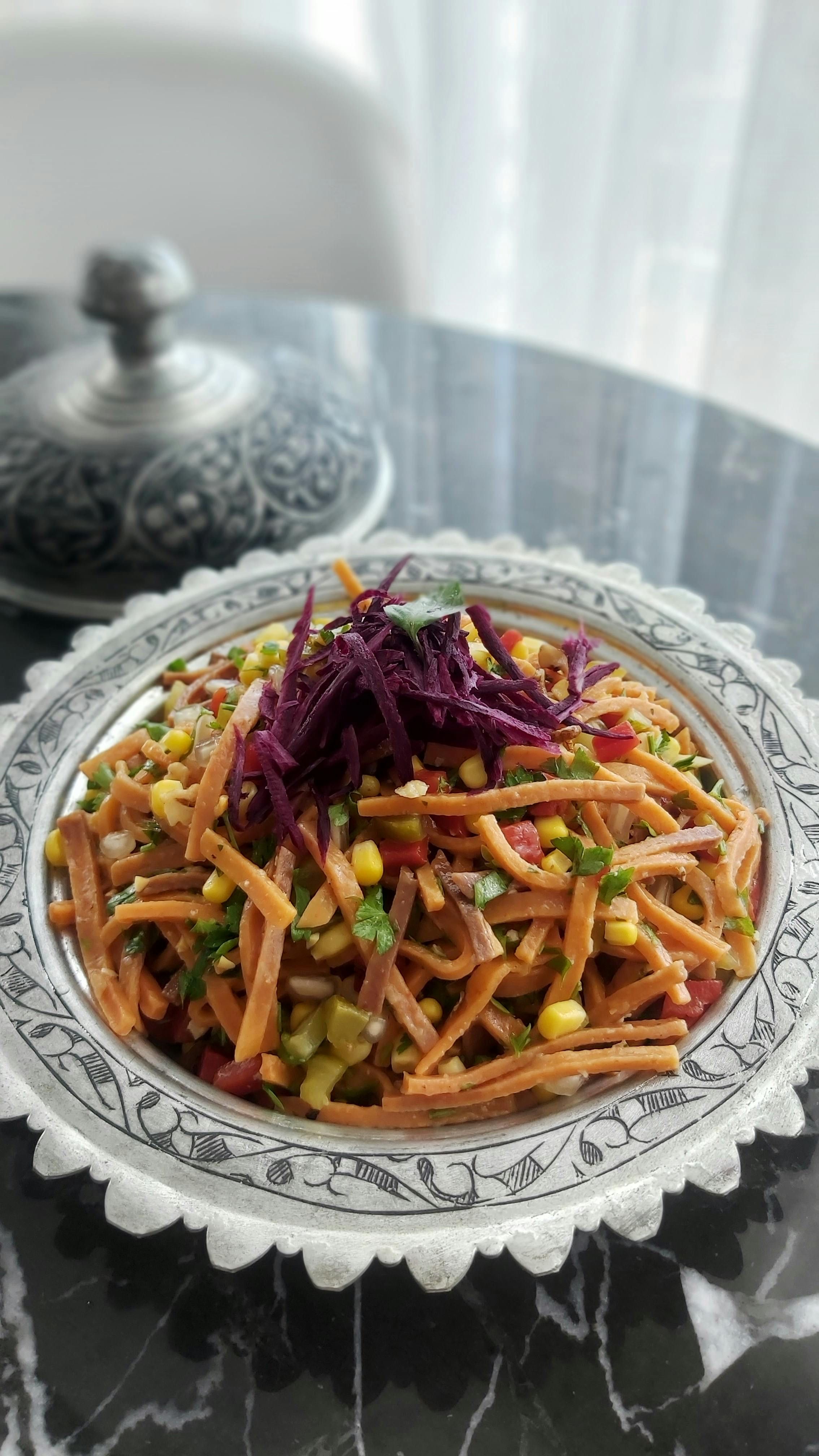
The diets react (see scores below)
Common Ingredients
- white beans
- onion
- parsley
- tomatoes
- sumac
- olive oil
- vinegar
- lemon juice
Specific recipes may vary.
Incompatible with 5 of 11 diets
Diet Ratings
Piyaz is built on white beans as its primary ingredient, which are a high-carbohydrate legume fundamentally incompatible with ketogenic eating. A standard serving (100g) of white beans contains roughly 17-20g net carbs, and a typical Piyaz portion (150-200g of beans) would easily consume 25-40g of net carbs in the beans alone — potentially exceeding or maxing out the entire daily keto carb allowance in one dish. The remaining ingredients (olive oil, parsley, onion, tomatoes, sumac, lemon juice, vinegar) are largely keto-friendly or benign in the quantities used, but they cannot offset the massive carbohydrate load from white beans. White beans also lack significant fat content, making the macronutrient profile doubly misaligned with keto ratios. This dish cannot be modified into a keto-compatible version without fundamentally changing its identity.
Piyaz is a traditional Turkish white bean salad composed entirely of whole plant foods. Every ingredient — white beans, onion, parsley, tomatoes, sumac, olive oil, vinegar, and lemon juice — is unambiguously plant-derived. There are no animal products, animal-derived additives, or ethically contested ingredients. The dish is also minimally processed and nutritionally strong, featuring legumes as the primary protein source alongside fresh vegetables and a bright, herb-forward dressing. Note that some regional Turkish versions of piyaz include hard-boiled eggs, but the ingredient list provided here contains none, making this version fully vegan-compliant.
Piyaz is a Turkish white bean salad, and its primary ingredient — white beans — is a legume, which is explicitly excluded from the paleo diet. Legumes contain lectins, phytic acid, and other antinutrients that paleo authorities like Loren Cordain and Robb Wolf consistently flag as problematic. While the remaining ingredients (onion, parsley, tomatoes, sumac, olive oil, lemon juice) are largely paleo-compatible, the foundation of the dish is a non-paleo ingredient. Vinegar in small amounts is a gray area but generally tolerated; however, it is moot here given the disqualifying legume base.
Piyaz is an exemplary Mediterranean dish. White beans are a staple legume providing plant-based protein and fiber. The salad is dressed with extra virgin olive oil and brightened with lemon juice and vinegar, exactly aligning with Mediterranean fat and flavor principles. Fresh vegetables (tomatoes, onion, parsley) and the spice sumac are all whole, plant-based ingredients. There are no processed foods, refined grains, added sugars, or animal products. This dish could be eaten daily and fits perfectly within the Mediterranean dietary pattern.
Piyaz is a Turkish white bean salad composed entirely of plant-derived ingredients. White beans are a legume — explicitly excluded from the carnivore diet as a plant food and carbohydrate source. Every other ingredient (onion, parsley, tomatoes, sumac, olive oil, vinegar, lemon juice) is also plant-derived and prohibited. There is not a single animal product in this dish. This is one of the clearest possible 'avoid' cases on the carnivore diet.
Piyaz contains white beans, which are legumes. Legumes are explicitly excluded from the Whole30 program. Unlike green beans, sugar snap peas, and snow peas — which are specifically excepted despite being legumes — white beans (and legumes generally) are a core exclusion with no exception. All other ingredients (onion, parsley, tomatoes, sumac, olive oil, vinegar, lemon juice) are fully Whole30-compliant, but the white beans alone disqualify this dish.
Piyaz is a Turkish white bean salad that contains two major high-FODMAP ingredients that make it unsuitable during the elimination phase. White beans (haricot/cannellini) are high in GOS (galacto-oligosaccharides) and are high-FODMAP even in moderate servings — Monash rates canned white beans as high-FODMAP at a standard serving size. Onion is one of the highest-FODMAP foods in existence due to fructans and must be avoided entirely during elimination at any serving size. The remaining ingredients — parsley, tomatoes (up to ~65g), sumac, olive oil, vinegar, and lemon juice — are all low-FODMAP. However, the two core structural ingredients of the dish (beans and onion) are both significant FODMAP sources, making the dish as traditionally prepared a clear avoid.
Piyaz is an excellent DASH diet dish. White beans are a DASH-emphasized food — high in fiber, potassium, magnesium, and plant-based protein while being naturally low in sodium and saturated fat. The remaining ingredients reinforce DASH principles: tomatoes and parsley add potassium, vitamin C, and antioxidants; olive oil provides heart-healthy monounsaturated fat (a DASH-compatible vegetable oil); lemon juice and vinegar add flavor without sodium; onion and sumac contribute phytonutrients with negligible caloric or sodium impact. The dish is plant-forward, low in saturated fat, sodium-controlled by preparation, and rich in the key DASH nutrients (potassium, magnesium, fiber). No problematic ingredients are present — no added salt listed, no high-sodium components, no tropical oils, no full-fat dairy, no red meat.
Piyaz is a Turkish white bean salad that has several Zone-friendly elements but requires careful portioning due to its macronutrient profile. White beans serve as both protein and carbohydrate simultaneously, which is a classic Zone challenge — they are a vegetarian protein source but bring significant carbohydrate load (net carbs ~25g per 100g cooked). The fat source is olive oil, which is ideal monounsaturated fat in Zone terms. Vegetables (tomatoes, onion, parsley) are low-glycemic and favorable. The dressing ingredients (sumac, vinegar, lemon juice) are essentially calorie-neutral and Zone-friendly. The main challenge is the dual carb+protein nature of white beans: using the vegetarian protein fat block rule (3g fat per fat block), the olive oil portion needs to be measured carefully. A typical Piyaz serving may skew carbohydrate-heavy relative to protein, making it hard to hit the 40/30/30 target without supplementing with additional lean protein (e.g., a few egg whites or tuna on the side, as is actually traditional in some versions). As a standalone dish, the protein content relative to carbs is likely imbalanced for Zone purposes. However, with portion control and possible protein augmentation, it can fit.
Some Zone practitioners treat legumes like white beans quite favorably because they are low-glycemic despite their carb load, and Sears' later anti-inflammatory writings emphasize polyphenol-rich foods — parsley, sumac, and olive oil all contribute here. A more favorable view holds that Piyaz, served in a controlled portion (roughly half cup beans) with adequate olive oil, represents a reasonable Zone-compatible vegetarian meal component. The dish's traditional simplicity and whole-food ingredients align well with Zone principles beyond pure macros.
Piyaz is a Turkish white bean salad that aligns exceptionally well with anti-inflammatory dietary principles. White beans are an excellent source of plant-based protein, soluble fiber, and resistant starch, all of which support gut microbiome health and reduce systemic inflammation — legumes are specifically emphasized in Dr. Weil's Anti-Inflammatory Food Pyramid. Olive oil provides oleocanthal and oleic acid, both well-documented anti-inflammatory compounds. Tomatoes contribute lycopene and vitamin C; parsley is rich in flavonoids (apigenin, luteolin) and vitamin K. Sumac is a standout anti-inflammatory spice, exceptionally high in polyphenols and anthocyanins with demonstrated antioxidant activity. Onions provide quercetin, a potent anti-inflammatory flavonoid. Lemon juice and vinegar add acidity without inflammatory concern and may support glycemic response. The dish contains no refined carbohydrates, no added sugars, no processed ingredients, no saturated fat, and no omega-6-heavy oils. It is entirely plant-based and built from whole, minimally processed foods with complementary anti-inflammatory mechanisms.
Piyaz is a strong GLP-1 companion dish. White beans provide a meaningful combination of plant protein (roughly 15g per cup) and high fiber (13-15g per cup), directly addressing the two top dietary priorities. The dressing is olive oil-based — an unsaturated fat used in modest amounts — keeping overall fat low and of high quality. Tomatoes, parsley, onion, and lemon juice add micronutrient density, antioxidants, and hydration support with negligible calories. Sumac and vinegar add flavor without fat, sugar, or GI irritants. The dish is served at room temperature or cold, requires no heavy cooking, and is easy to digest. Portions work well small, making it suitable for the reduced appetite common on GLP-1 medications. The acidic dressing (vinegar, lemon) is mild and unlikely to worsen reflux at normal serving sizes. The primary limitation is that white beans alone are incomplete as a protein source and moderately lower in protein density per calorie compared to animal proteins, so pairing with an additional lean protein (e.g., grilled chicken or a boiled egg, the latter being a traditional Piyaz addition) would strengthen the meal significantly.
Some GLP-1-focused dietitians flag legume-heavy meals for patients who experience significant GI side effects, as beans can cause gas and bloating that compound GLP-1-related digestive discomfort — particularly early in treatment or after dose escalation. Others consider this a minor and temporary concern and recommend beans precisely for their fiber content to counter GLP-1-related constipation, making individual tolerance the deciding factor.
*See how scores were generated at our methodology page.
Nutritional profile
Six traits that cut across every diet.
Fiber & Plants
How much whole-plant food and fiber it delivers.
Healthy Fats
The quality of its fats (unsaturated, omega-3).
Whole / Unprocessed
How close it is to its natural, unprocessed form.
Gut Gentle
How easy it is on digestion (low FODMAP, few irritants).
Low Glycemic
How little it spikes your blood sugar.
Protein Density
How much protein it packs per calorie.
Controversy Index
Higher controversy = more disagreement between diets.
Diet-Specific Tips
 Vegan — 9/10
View tips
- White beans provide plant-based protein and fiber — a whole-food legume
- All dressing components (olive oil, vinegar, lemon juice, sumac) are entirely plant-derived
- No animal products, dairy, eggs, or animal-derived additives present
- Whole-food, minimally processed dish — scores near the top of the approve range
- Traditional versions can include eggs; this version does not
 Mediterranean — 9/10
View tips
- White beans are a core Mediterranean legume, high in protein and fiber
- Extra virgin olive oil is the primary fat — textbook Mediterranean
- All ingredients are whole, unprocessed plant foods
- Sumac, lemon juice, and vinegar provide flavor without added sugars or unhealthy fats
- No red meat, processed ingredients, or refined carbohydrates
- Traditional Turkish cuisine shares strong overlap with broader Mediterranean dietary principles
 DASH — 9/10
View tips
- White beans are a DASH-emphasized legume high in fiber, potassium, and magnesium
- Olive oil is a DASH-approved heart-healthy vegetable oil
- No high-sodium ingredients; lemon juice and vinegar replace salt for flavor
- Tomatoes, parsley, and onion contribute potassium and micronutrients aligned with DASH
- No saturated fat, tropical oils, added sugar, or processed components
- Plant-based protein source consistent with DASH lean protein guidance
- Sumac adds antioxidant flavor with no adverse nutritional profile
 Zone — 6/10
View tips
- White beans are a dual carb+protein source, making Zone block calculation complex and requiring careful portioning
- Olive oil dressing is ideal monounsaturated fat — a Zone-perfect fat source
- Tomatoes, onion, and parsley are low-glycemic, Zone-favorable vegetables
- Sumac adds polyphenols consistent with Sears' anti-inflammatory emphasis
- As a standalone meal, carbohydrate load from beans likely exceeds protein content, disrupting 40/30/30 ratio
- Traditional versions with hard-boiled eggs improve protein balance and Zone compatibility
- Vegetarian fat block rule applies: each fat block = 3g fat, so olive oil portion should be ~1-2 teaspoons per serving
 Anti-Inflammatory — 9/10
View tips
- White beans: legumes emphasized in anti-inflammatory frameworks for fiber, plant protein, and gut health benefits
- Extra virgin olive oil: oleocanthal and oleic acid with strong anti-inflammatory evidence
- Sumac: exceptionally high in polyphenols and anthocyanins with antioxidant and anti-inflammatory properties
- Onion: rich in quercetin, a well-studied anti-inflammatory flavonoid
- Tomatoes: lycopene and vitamin C support antioxidant defense
- Parsley: flavonoids (apigenin, luteolin) and vitamin K with anti-inflammatory activity
- No refined carbohydrates, added sugars, trans fats, or pro-inflammatory seed oils
- Entirely whole-food, plant-based dish with no inflammatory red flags
 GLP-1 Friendly — 8/10
View tips
- High plant protein from white beans (~15g per cup, supporting daily protein targets)
- High fiber content (~13-15g per cup) directly addresses GLP-1 constipation risk
- Olive oil dressing provides unsaturated fat in moderate, controllable amounts
- Tomatoes and parsley add hydration support and micronutrient density
- Mild acidity from lemon and vinegar unlikely to worsen reflux at normal portions
- Small-portion friendly — satisfying in modest servings due to fiber and protein density
- Incomplete protein profile as a standalone meal — benefits from pairing with a lean animal protein
- Legume-related gas/bloating may compound GLP-1 GI side effects in sensitive patients