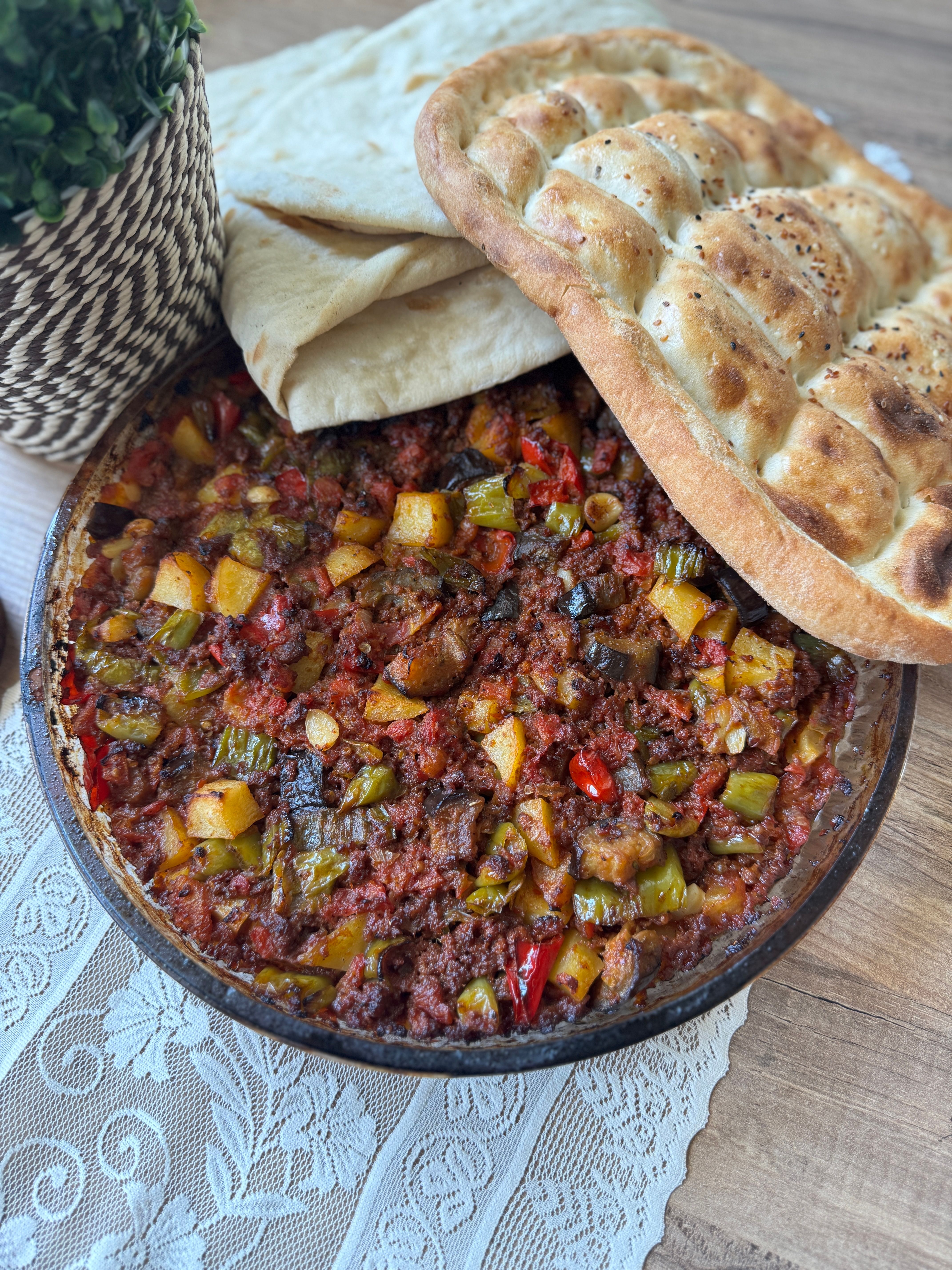
Photo: minik_tatli_sunumlarr / Pexels
Turkish
Testi Kebabi
The diets react (see scores below)
Common Ingredients
- beef
- tomatoes
- green peppers
- onion
- garlic
- mushrooms
- butter
- tomato paste
Specific recipes may vary.
Incompatible with 5 of 11 diets
Diet Ratings
Testi Kebabi is a slow-cooked Turkish clay pot dish with a generally keto-friendly profile. Beef is an excellent high-fat protein source, and butter adds healthy fats. The vegetables — tomatoes, green peppers, onion, garlic, and mushrooms — contribute moderate net carbs. The main concern is the cumulative carb load: onions (~4-5g net carbs per half cup), tomatoes (~3-4g per medium tomato), tomato paste (~4-5g per tablespoon), and green peppers (~2-3g per half cup) add up quickly. A standard serving could easily reach 10-18g of net carbs depending on portion size and the amount of tomato paste used. This leaves limited room for other carbs during the day. With mindful portioning — particularly limiting tomato paste and onions — it can fit within a 20-50g daily net carb budget. The dish contains no grains, added sugars, or starchy vegetables, which is a strong positive.
Stricter keto practitioners (particularly those targeting 20g net carbs/day) would flag tomato paste and onions as meaningful carb contributors and argue this dish risks consuming half or more of the daily carb allowance in one serving. They would recommend eliminating or drastically reducing the tomato paste and onions to make the dish reliably keto-safe.
Testi Kebabi contains multiple animal-derived ingredients that make it entirely incompatible with a vegan diet. Beef is a direct animal product (meat), and butter is a dairy derivative. Both are explicitly excluded under vegan dietary rules. The remaining ingredients — tomatoes, green peppers, onion, garlic, mushrooms, and tomato paste — are all plant-based, but the presence of beef and butter disqualifies this dish unambiguously.
Testi Kebabi is largely paleo-compatible: beef, tomatoes, green peppers, onion, garlic, and mushrooms are all unprocessed, hunter-gatherer-available foods. The primary issue is butter, a dairy product excluded under strict paleo guidelines. Tomato paste is minimally processed and generally accepted if free of added sugar, salt, or preservatives, though commercial versions often contain both — making it a mild concern. The dish would score higher if butter were replaced with ghee, tallow, or olive oil.
Strict Cordain-school paleo excludes all dairy derivatives including butter, pushing this dish firmly into 'avoid' territory for that camp. Conversely, many modern paleo practitioners (Mark Sisson, Whole30-adjacent approaches) treat grass-fed butter as an acceptable fat source, which would elevate this dish to a solid 'approve.'
Testi Kebabi is a traditional Turkish clay pot dish where beef is the primary and dominant protein, slow-cooked with vegetables. While the vegetables (tomatoes, peppers, onion, garlic, mushrooms) and tomato paste are Mediterranean-friendly, the dish is fundamentally centered on red meat, which the Mediterranean diet limits to only a few times per month. Compounding this, butter is used as the cooking fat rather than extra virgin olive oil, directly contradicting one of the most fundamental principles of the Mediterranean diet. The combination of red meat as the star ingredient plus butter as the primary fat places this dish firmly in the 'avoid' category.
Some Mediterranean diet researchers acknowledge that traditional Anatolian and Eastern Mediterranean cuisines do include slow-cooked meat dishes, and the abundance of vegetables in this preparation provides nutritional value. A moderate interpretation might classify this as an occasional dish (few times per month) if olive oil were substituted for butter, nudging it toward 'caution' territory.
Testi Kebabi is a traditional Turkish clay pot stew that combines beef with multiple plant-based ingredients: tomatoes, green peppers, onion, garlic, mushrooms, and tomato paste. While beef and butter are carnivore-compliant, the dish is fundamentally built around vegetables and plant aromatics that are explicitly excluded from the carnivore diet. The plant foods are not minor trace additives — they are structural, load-bearing components of the dish that cannot be separated from the meat. Tomato paste in particular is a concentrated plant product. This dish fails carnivore compatibility at the recipe level, regardless of the quality of the beef used.
Testi Kebabi contains butter, which is a dairy product explicitly excluded on Whole30. The only dairy exception permitted by the program is ghee or clarified butter — regular butter is not allowed. All other ingredients (beef, tomatoes, green peppers, onion, garlic, mushrooms, tomato paste) are Whole30-compliant whole foods. The dish could easily be made compliant by substituting ghee for the butter.
Testi Kebabi contains multiple high-FODMAP ingredients that make it unsuitable during the elimination phase. Onion and garlic are among the highest-fructan foods identified by Monash University and are avoid-level at any culinary amount. Mushrooms (depending on variety, but most common types like button mushrooms) are high in polyols (mannitol) at standard serving sizes. These three ingredients alone disqualify the dish. Tomato paste is also high-FODMAP at amounts typically used in cooking (>2 tablespoons contains significant fructans/fructose). Beef and butter are low-FODMAP, and tomatoes and green peppers are low-FODMAP at standard servings, but the problematic ingredients are core to the dish's flavor profile and cannot simply be omitted while still calling it Testi Kebabi.
Testi Kebabi is a Turkish clay pot stew combining beef with vegetables (tomatoes, green peppers, onion, garlic, mushrooms) and butter with tomato paste. The dish has both DASH-friendly and DASH-problematic elements. On the positive side, the vegetable base (tomatoes, peppers, onion, garlic, mushrooms) provides potassium, magnesium, and fiber consistent with DASH principles. On the negative side, beef is a red meat that DASH limits due to saturated fat and cholesterol concerns — DASH recommends no more than 6 oz of lean meat per day and favors poultry and fish. Butter adds saturated fat, which DASH explicitly limits. Tomato paste can contribute moderate sodium. The overall dish is not as problematic as processed or heavily salted meats, but the combination of red meat and butter places it in cautionary territory. If prepared with lean beef cuts, minimal butter (or substituted with olive oil), and low-sodium tomato paste, the score improves. As commonly prepared in Turkish cuisine, it typically uses fattier cuts slow-cooked in butter, which pushes it toward caution.
NIH DASH guidelines clearly limit red meat and saturated fats like butter; however, some updated clinical interpretations note that unprocessed red meat in moderate portions (lean cuts, ~3 oz serving) within an otherwise DASH-compliant meal pattern may be acceptable, and the vegetable-rich base of this dish partially offsets concerns.
Testi Kebabi is a traditional Turkish clay pot dish that has a mixed Zone Diet profile. On the positive side, it contains excellent Zone-friendly ingredients: tomatoes, green peppers, onion, garlic, and mushrooms are all low-glycemic, polyphenol-rich vegetables that align well with Zone carbohydrate guidelines. The beef provides a solid protein base, though the cut matters significantly — leaner cuts like sirloin or round score higher than fatty cuts like chuck or ribs. The primary concern is butter as the cooking fat: Zone Diet guidelines favor monounsaturated fats (olive oil, avocado) over saturated fats like butter. Butter isn't categorically excluded but is considered less favorable. Tomato paste is concentrated and can add glycemic load, though in typical recipe quantities it's manageable. The overall macro balance of this dish leans protein-and-vegetable-forward, which is Zone-compatible, but the butter fat source and unknown beef fat content create friction. With lean beef and modest butter portions, this dish can be worked into a Zone meal — ideally paired with a salad rather than bread or rice to complete the carbohydrate block without overshooting. Portion control on the beef is necessary to hit the ~25g protein target per meal.
Some Zone practitioners following Dr. Sears' later work (Toxic Fat, The OmegaRx Zone) would note that butter from grass-fed sources contains conjugated linoleic acid (CLA) and a more favorable fatty acid profile, making it less problematic than conventional seed oils. In this context, the butter concern is somewhat diminished, and the dish's strong vegetable base and lean protein could push the score toward the low-approve range (6-7) if grass-fed beef and modest butter quantities are assumed.
Testi Kebabi is a traditional Turkish clay pot dish with a mixed anti-inflammatory profile. On the positive side, it contains tomatoes (lycopene, antioxidants), green peppers (vitamin C, flavonoids), onion and garlic (quercetin, allicin — both well-documented anti-inflammatory compounds), and mushrooms (beta-glucans, immune-modulating polysaccharides). These vegetables are genuinely beneficial from an anti-inflammatory standpoint. However, the dish has two notable concerns: (1) Beef is the primary protein — red meat is categorized as 'limit' in anti-inflammatory frameworks due to saturated fat content and arachidonic acid, which can promote inflammatory eicosanoids; and (2) Butter is used as the cooking fat, which is a saturated fat flagged under the 'limit/avoid' category. If olive oil were substituted for butter and the beef were replaced with lamb neck or poultry, the dish's profile would improve considerably. As prepared, the vegetables partially offset the inflammatory burden of the beef and butter, landing this dish in 'caution' territory — acceptable occasionally but not a dish to consume regularly on an anti-inflammatory diet.
Some anti-inflammatory practitioners, particularly those following a Mediterranean or ancestral framework, would argue that traditionally raised beef in modest portions and butter from grass-fed cows provide conjugated linoleic acid (CLA) and fat-soluble vitamins (A, K2) with some anti-inflammatory benefit. Dr. Weil's framework places red meat in 'limit' rather than 'avoid,' suggesting occasional consumption is acceptable, especially when paired with the rich vegetable and allium content seen here.
Testi Kebabi is a Turkish clay pot dish that slow-cooks beef with vegetables (tomatoes, peppers, onion, garlic, mushrooms) and butter. The vegetable base is genuinely positive — tomatoes, peppers, onion, garlic, and mushrooms contribute fiber, micronutrients, water content, and are easy to digest. However, the dish has two notable GLP-1 concerns: (1) Beef as the primary protein is a fatty red meat — depending on the cut (typically shoulder or shank), fat content can be substantial, and saturated fat is a concern for GLP-1 patients prone to nausea and reflux. (2) Butter adds saturated fat on top of the meat fat, pushing the overall fat load higher, which can worsen GLP-1 gastrointestinal side effects. The slow-cooked, stewed format is actually favorable — tender, soft food is easier to digest than grilled or fried preparations, and the liquid environment helps with gastric emptying. Protein content is meaningful but the fat-to-protein ratio is less favorable than lean alternatives. Moderate portions of the vegetable-rich broth and smaller amounts of the beef could make this acceptable.
Some GLP-1-focused dietitians accept slow-cooked beef dishes in moderation because the cooking method renders fat partially out of the meat and the soft texture improves digestibility — making it more tolerable than other red meat preparations. Others caution that any butter-cooked fatty beef combination consistently triggers nausea and reflux in GLP-1 patients and recommend substituting chicken or lamb loin with olive oil instead.
*See how scores were generated at our methodology page.
Nutritional profile
Six traits that cut across every diet.
Fiber & Plants
How much whole-plant food and fiber it delivers.
Healthy Fats
The quality of its fats (unsaturated, omega-3).
Whole / Unprocessed
How close it is to its natural, unprocessed form.
Gut Gentle
How easy it is on digestion (low FODMAP, few irritants).
Low Glycemic
How little it spikes your blood sugar.
Protein Density
How much protein it packs per calorie.
Controversy Index
Higher controversy = more disagreement between diets.
Diet-Specific Tips
 Keto — 6/10
View tips
- Beef is a high-quality, keto-ideal protein and fat source
- Butter adds beneficial saturated fat, aligning with keto macros
- Tomato paste is a concentrated carb source (~4-5g net carbs per tablespoon) — quantity is critical
- Onions contribute moderate net carbs and should be used sparingly
- Tomatoes add ~3-4g net carbs per medium tomato
- Green peppers and mushrooms are relatively low-carb vegetables
- No grains, added sugars, or starchy vegetables present
- Cumulative net carbs from vegetables may reach 10-18g per serving — portion control essential
 Paleo — 6/10
View tips
- Beef is a core paleo protein — fully approved
- Vegetables (tomatoes, peppers, onion, garlic, mushrooms) are all paleo-compliant
- Butter is a dairy fat — excluded under strict Cordain paleo, debated in broader paleo community
- Tomato paste may contain added salt or sugar in commercial form — check label
- No grains, legumes, seed oils, or refined sugars present
- Swapping butter for tallow, ghee, or olive oil would make this dish more clearly paleo-compliant
 DASH — 5/10
View tips
- Red meat (beef) is limited on DASH — max 6 oz/day lean cuts, with preference for poultry/fish
- Butter contributes saturated fat, which DASH explicitly restricts
- Vegetable ingredients (tomatoes, peppers, onion, garlic, mushrooms) are DASH-positive and provide potassium and fiber
- Tomato paste may add moderate sodium — low-sodium versions preferred
- Substituting olive oil for butter and using lean beef cuts would significantly improve DASH compatibility
- No added sugars, highly processed ingredients, or excessive sodium sources beyond tomato paste
 Zone — 5/10
View tips
- Beef is Zone-appropriate lean protein but fat content varies by cut — lean cuts preferred
- Tomatoes, green peppers, onion, garlic, and mushrooms are excellent low-glycemic Zone carbohydrates
- Butter is a saturated fat source, less favored than olive oil in Zone guidelines
- Tomato paste adds concentrated carbohydrates but is manageable in small quantities
- No high-glycemic fillers (bread, rice, potatoes) — favorable structure
- Dish is naturally portion-controllable for Zone block targeting
- Strong anti-inflammatory polyphenol content from vegetable base supports Zone's anti-inflammatory focus
 Anti-Inflammatory — 4/10
View tips
- Beef (red meat) is pro-inflammatory at high intake — high in saturated fat and arachidonic acid
- Butter is a saturated fat flagged for limitation in anti-inflammatory frameworks
- Garlic and onion provide quercetin and allicin with strong anti-inflammatory evidence
- Tomatoes contribute lycopene and antioxidants; cooking increases lycopene bioavailability
- Green peppers are a good source of vitamin C and flavonoids
- Mushrooms provide beta-glucans with immune-modulating and anti-inflammatory properties
- No omega-3 sources, no whole grains, no legumes — overall nutritional density is moderate
- Clay pot slow cooking preserves nutrients but does not change the fat profile of the dish
 GLP-1 Friendly — 5/10
View tips
- Fatty red meat as primary protein raises saturated fat load — a known GLP-1 side effect trigger
- Butter addition compounds saturated fat concern
- Slow-cooked clay pot format improves digestibility compared to grilled or fried beef
- Rich vegetable base (tomatoes, peppers, mushrooms, onion, garlic) adds fiber, micronutrients, and water content
- Protein content is meaningful but fat-to-protein ratio is less favorable than lean proteins
- Small portions focusing on vegetables and broth over large meat portions improve the profile significantly