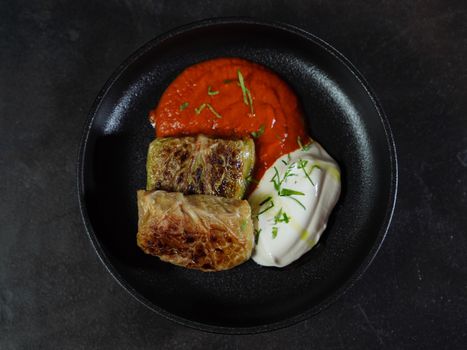
The diets react (see scores below)
Common Ingredients
- cabbage
- ground pork
- rice
- onion
- carrots
- tomatoes
- garlic
- sour cream
Specific recipes may vary.
Incompatible with 7 of 11 diets
Diet Ratings
Holubtsi (Ukrainian stuffed cabbage rolls) are fundamentally incompatible with ketogenic diets due to rice as a core filling ingredient. Rice is a high-glycemic grain that can contain 25-30g of net carbs per half-cup cooked serving, easily blowing the entire daily keto carb budget in a single dish. A typical serving of 2-3 holubtsi would deliver 40-60g+ of net carbs from rice alone. While several ingredients are keto-friendly — ground pork provides fat and protein, cabbage is low-carb, sour cream and garlic are acceptable — the rice is a disqualifying ingredient with no workaround in the traditional recipe. The tomato-based sauce also adds modest carbs. This dish cannot be consumed in any reasonable portion size without breaking ketosis.
Holubtsi (Ukrainian stuffed cabbage rolls) contains multiple animal-derived ingredients that are strictly excluded from a vegan diet. Ground pork is the primary protein — a direct animal flesh product. Sour cream is a dairy product derived from cow's milk. Both ingredients are unambiguous animal products with no debate within the vegan community. The dish is fundamentally incompatible with vegan dietary standards. Note that a vegan version of holubtsi can be made by substituting ground pork with lentils, mushrooms, or buckwheat, and omitting sour cream in favor of a plant-based alternative.
Holubtsi (Ukrainian stuffed cabbage rolls) contains two clear paleo violations: rice (a grain, strictly excluded from the paleo diet) and sour cream (a dairy product, excluded under all mainstream paleo frameworks). Rice is a staple grain that Paleolithic humans did not cultivate or consume, and sour cream is a processed dairy product. While the base ingredients — cabbage, ground pork, onion, carrots, tomatoes, and garlic — are all paleo-approved, the rice and sour cream are non-negotiable disqualifiers. The dish as traditionally prepared cannot be considered paleo-compatible.
Holubtsi (Ukrainian stuffed cabbage rolls) centers on ground pork as the primary protein, which classifies as red meat — limited to only a few times per month in Mediterranean diet guidelines. The dish also uses white rice (a refined grain) rather than a whole grain, and sour cream adds saturated fat from dairy beyond moderate levels. While the vegetable components (cabbage, tomatoes, carrots, onion, garlic) are strongly Mediterranean-aligned and the overall structure resembles stuffed vegetable dishes found in Greek and Turkish cuisines (e.g., lahanodolmades), the dominant pork filling and dairy sauce push this dish outside Mediterranean dietary norms for regular consumption.
Some Mediterranean diet interpreters note that stuffed cabbage-style dishes are present in Eastern Mediterranean and Levantine traditions using lamb or beef; a version substituting the pork with legumes or a small amount of lean poultry, swapping sour cream for a tomato-herb sauce, and using brown rice could be considered a cautious moderate choice.
Holubtsi (Ukrainian stuffed cabbage rolls) is fundamentally incompatible with the carnivore diet. While ground pork is the primary protein and carnivore-approved, the dish is built around multiple plant-based ingredients that dominate the recipe. Cabbage serves as the wrapper (a vegetable), rice is a grain used as filler in the stuffing, onion and carrots are vegetables mixed into the filling, tomatoes form the braising sauce, and garlic is a plant-based flavoring. Sour cream, while dairy-derived, is secondary and cannot redeem a dish that is structurally dependent on plant foods. The overall composition is overwhelmingly plant-based, making this a clear avoid with no meaningful modification possible short of completely deconstructing the dish.
Holubtsi (Ukrainian stuffed cabbage rolls) contains two excluded ingredients: rice (a grain, explicitly banned on Whole30) and sour cream (dairy, explicitly banned on Whole30). Both are core components of the dish — rice is mixed into the filling and sour cream is used in the sauce — making this dish non-compliant without significant modification.
Holubtsi (Ukrainian stuffed cabbage rolls) contains multiple high-FODMAP ingredients that make it unsuitable during the elimination phase. Onion and garlic are among the highest-FODMAP foods tested by Monash University, both being very high in fructans at any culinary quantity. These two ingredients alone disqualify the dish. Sour cream contributes lactose (high-FODMAP above ~2 tablespoons), adding a second FODMAP category (disaccharides). Cabbage in larger servings (savoy cabbage is high-FODMAP; common green/white cabbage is low-FODMAP at ~75g but can accumulate FODMAPs in a full stuffed roll serving). The ground pork and rice are low-FODMAP, and carrots and tomatoes are generally safe at standard servings, but the combination of onion, garlic, and sour cream makes this dish clearly high-FODMAP as traditionally prepared.
Holubtsi (Ukrainian stuffed cabbage rolls) contains many DASH-friendly ingredients: cabbage, tomatoes, onion, carrots, and garlic are excellent DASH vegetables rich in potassium, magnesium, and fiber. Rice (ideally whole grain) is acceptable. However, ground pork is a red meat with moderate-to-high saturated fat content, which DASH limits. Sour cream is full-fat dairy, which DASH discourages in favor of low-fat alternatives. The dish's overall sodium level depends heavily on preparation — added salt, canned tomatoes, and seasoning can push sodium well above DASH targets. The combination of red meat and full-fat dairy pulls this dish away from core DASH principles, though the vegetable-heavy base and typical portion size (2-3 rolls) prevent a full 'avoid' rating. Substituting lean ground turkey or chicken, using brown rice, replacing sour cream with low-fat plain yogurt, and minimizing added salt would substantially improve the DASH compatibility.
NIH DASH guidelines clearly limit red meat and full-fat dairy; however, updated clinical interpretations note that a modest portion of lean ground pork combined with an abundance of vegetables and a tomato-based sauce can fit within DASH's weekly red meat allowance (≤6 oz lean meat/day), and some DASH-aligned dietitians accept full-fat sour cream as a small condiment rather than a primary dairy source, especially when overall saturated fat remains within limits.
Holubtsi (Ukrainian stuffed cabbage rolls) present a mixed Zone profile. The dish has several Zone-friendly elements: cabbage is an excellent low-glycemic vegetable, tomatoes and carrots add polyphenols and low-GI carbohydrates, and onion/garlic are Zone-favorable. However, the combination of ground pork (moderate saturated fat, not a lean protein) and white rice (high-glycemic, 'unfavorable' carb in Zone terminology) creates challenges. White rice will spike insulin and is listed by Sears as an unfavorable carbohydrate. Ground pork, depending on fat content, can push saturated fat higher than Zone recommends. Sour cream adds additional saturated fat. The macro ratio will likely skew toward higher carbs (from rice) and higher saturated fat, pulling away from the ideal 40/30/30. That said, this dish CAN be portioned into Zone blocks — a smaller serving (1-2 rolls) with adjustments like leaner ground pork, cauliflower rice substitution, and reduced sour cream could bring it closer to Zone ratios. As traditionally prepared, it requires significant mindfulness about portion size.
Some Zone practitioners argue that in traditional preparations with modest rice amounts (rice is a filler, not the bulk of the dish), the overall glycemic load per serving is moderate enough to be workable as an occasional meal. Sears' later writings also acknowledge that context and total meal balance matter more than excluding any single ingredient. If pork is lean (93%+ lean ground pork) and sour cream is used sparingly, this dish can approach Zone ratios more closely.
Holubtsi (stuffed cabbage rolls) presents a mixed anti-inflammatory profile. On the positive side, cabbage is a cruciferous vegetable rich in glucosinolates and vitamin C with documented anti-inflammatory properties. Tomatoes, garlic, onion, and carrots contribute antioxidants, polyphenols, lycopene (especially when cooked), and allicin — all beneficial. The vegetable-forward wrapping and tomato-based sauce align well with anti-inflammatory principles. However, ground pork is a red meat and falls into the 'limit' category under anti-inflammatory guidelines due to its saturated fat content and association with elevated inflammatory markers (CRP, IL-6) in research. Sour cream is a full-fat dairy product, also flagged for limitation due to saturated fat. White rice is a refined carbohydrate that offers minimal anti-inflammatory benefit, though its glycemic impact is somewhat buffered by the surrounding vegetables and protein. The dish is not inherently processed or reliant on trans fats or additives, and the generous vegetable content partially offsets the pro-inflammatory components. Overall, this is a traditional comfort dish that occupies neutral-to-mixed territory — acceptable occasionally but not a cornerstone anti-inflammatory meal.
Some anti-inflammatory practitioners, particularly those following Dr. Weil's broader Mediterranean-influenced approach, would view this dish more favorably given its substantial vegetable content, garlic, and tomato sauce — arguing the overall dietary pattern matters more than any single ingredient. Conversely, stricter anti-inflammatory protocols (e.g., AIP or functional medicine approaches) would flag both pork and full-fat dairy more aggressively, potentially rating this dish lower.
Holubtsi (Ukrainian stuffed cabbage rolls) are a mixed picture for GLP-1 patients. On the positive side, cabbage is a high-fiber, easy-to-digest, high-water-content vegetable that is excellent for GLP-1 patients. The tomato-based sauce with carrots, onion, and garlic adds micronutrients and fiber. Rice contributes digestible carbohydrates and helps with portion structure. The primary concern is ground pork, which is a moderate-to-high saturated fat protein source depending on the fat percentage used (80/20 ground pork is problematic; 93/7 or leaner would improve the rating significantly). Sour cream adds additional saturated fat and is a known GI irritant for GLP-1 patients who develop temporary lactose sensitivity. The dish does provide meaningful protein, but the fat content from standard ground pork and sour cream works against GLP-1 tolerability. Protein yield per serving is moderate but not high-density relative to calorie load. The dish is slow-braised and soft, which supports digestibility — a genuine positive. Overall: acceptable in moderation if made with lean ground pork (93/7 or turkey substitution) and sour cream is minimized or replaced with a low-fat yogurt. Standard restaurant or home preparation with regular ground pork and full sour cream tips this toward the lower end of caution.
Some GLP-1-focused dietitians would rate stuffed cabbage more favorably, noting that the braised preparation, vegetable volume, and whole-food ingredients make it nutritionally superior to most mixed dishes of similar calorie density. The disagreement centers on fat tolerance — individual GLP-1 patients vary significantly in how they respond to moderate saturated fat, and some clinicians prioritize the protein and fiber contribution over the fat concern when the dish is home-prepared with lean meat.
*See how scores were generated at our methodology page.
Nutritional profile
Six traits that cut across every diet.
Fiber & Plants
How much whole-plant food and fiber it delivers.
Healthy Fats
The quality of its fats (unsaturated, omega-3).
Whole / Unprocessed
How close it is to its natural, unprocessed form.
Gut Gentle
How easy it is on digestion (low FODMAP, few irritants).
Low Glycemic
How little it spikes your blood sugar.
Protein Density
How much protein it packs per calorie.
Controversy Index
Higher controversy = more disagreement between diets.
Diet-Specific Tips
 DASH — 5/10
View tips
- Ground pork is red meat with saturated fat — DASH limits red meat consumption
- Sour cream is full-fat dairy — DASH emphasizes low-fat or fat-free dairy
- Cabbage, tomatoes, carrots, onion, and garlic are excellent DASH-friendly vegetables
- Sodium content is highly preparation-dependent; added salt and canned tomatoes can be problematic
- Rice is acceptable but brown rice preferred for fiber and magnesium
- Portion control (2-3 rolls) can keep saturated fat and sodium in check
- Lean protein substitution (turkey, chicken) and low-fat dairy swap would significantly improve DASH score
 Zone — 5/10
View tips
- White rice is a high-glycemic 'unfavorable' carbohydrate in Zone terminology — raises the carb glycemic load significantly
- Ground pork is higher in saturated fat than Zone's preferred lean proteins (chicken breast, fish, egg whites)
- Cabbage is an excellent Zone vegetable — low-GI, high fiber, polyphenol-rich
- Tomatoes and carrots provide additional favorable Zone carbohydrates with anti-inflammatory properties
- Sour cream contributes saturated fat, pushing fat profile away from preferred monounsaturated sources
- Portion control is critical — 1-2 rolls as part of a balanced meal is more Zone-compatible than a large serving
- Substituting cauliflower rice and leaner protein would significantly improve Zone compatibility
 Anti-Inflammatory — 5/10
View tips
- Ground pork is a red meat — limited/avoided in anti-inflammatory diets due to saturated fat and association with elevated inflammatory markers
- Sour cream is full-fat dairy — flagged for limitation in anti-inflammatory frameworks
- Cabbage is a cruciferous vegetable with strong anti-inflammatory and antioxidant properties
- Garlic, onion, and tomatoes provide allicin, quercetin, and lycopene — beneficial polyphenols and antioxidants
- Carrots contribute beta-carotene, a beneficial carotenoid
- White rice is a refined carbohydrate with limited anti-inflammatory value
- No trans fats, artificial additives, or high-fructose corn syrup — a significant positive
- Cooking tomatoes increases lycopene bioavailability, enhancing the anti-inflammatory benefit of the sauce
 GLP-1 Friendly — 5/10
View tips
- Ground pork fat content is the primary variable — lean ground pork or turkey substitution significantly improves the rating
- Sour cream adds saturated fat and lactose, both problematic for many GLP-1 patients
- Cabbage is an excellent GLP-1-friendly vegetable: high fiber, high water content, easy to digest when cooked
- Tomato-based braising sauce supports nutrient density and hydration
- Rice adds digestible carbohydrates but reduces protein density per calorie
- Soft braised texture supports easy digestibility, a genuine advantage
- Protein per serving is moderate but not optimized — lean protein swaps would improve this meaningfully
- Portion sensitivity: one to two rolls is appropriate; the dish does not require large volume to feel satisfying