Ukrainian
Kholodets
The diets react (see scores below)
Common Ingredients
- pork hock
- garlic
- carrots
- onion
- bay leaf
- black peppercorns
- gelatin
- parsley
Specific recipes may vary.
Incompatible with 5 of 11 diets
Diet Ratings
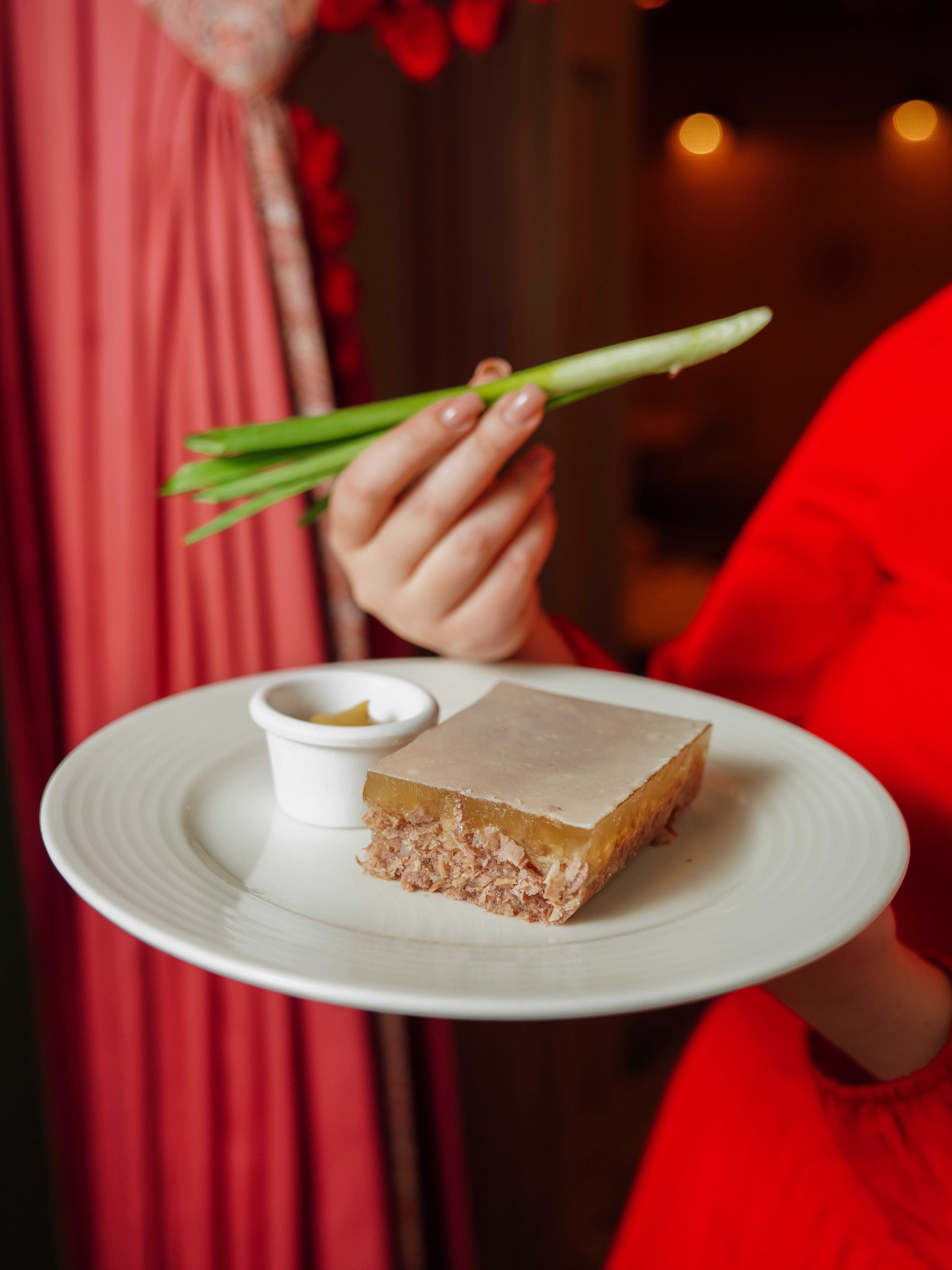
Kholodets is a traditional meat aspic made primarily from pork hock slow-cooked in broth, then set with natural gelatin. The dish is predominantly protein and fat from the pork, with very low net carbs overall. The vegetables used — carrots, onion, parsley — are present in small amounts as aromatics and garnish, contributing minimal net carbs per serving. Garlic, bay leaf, and peppercorns are used in negligible quantities. Natural gelatin is carb-free. A typical serving of kholodets would fall well within keto carb limits, making it a solid keto-compatible dish. The main consideration is that carrots and onions do contain some carbs, but given their role as aromatics in a large batch rather than primary ingredients, the per-serving carb contribution is minimal.
Some stricter keto practitioners flag any inclusion of carrots and onions — even as aromatics — due to their higher glycemic index, and may recommend omitting or strictly limiting them. Clinical keto protocols focused on precise macro tracking may advise caution until exact per-serving carb content is calculated.
Kholodets is a traditional Ukrainian meat jelly that is fundamentally incompatible with a vegan diet. It contains multiple animal-derived ingredients: pork hock (a pig's leg cut, clearly animal flesh), and gelatin (derived from boiled animal bones, skin, and connective tissue — typically porcine or bovine). Both are unambiguous animal products. There is no plant-based version of this dish implied by its traditional recipe; it is entirely defined by its animal ingredients.
Kholodets is a traditional Ukrainian meat aspic made by slow-simmering pork hock until the collagen naturally releases and sets the broth into a gel. All core ingredients — pork hock, garlic, carrots, onion, bay leaf, black peppercorns, and parsley — are unambiguously paleo-compliant. The dish is essentially nose-to-tail cooking, rich in natural collagen and gelatin, which aligns well with Paleolithic eating patterns. The one debated element is the added commercial gelatin: if the dish relies on supplemental powdered gelatin beyond what the hock naturally produces, strict paleo purists may flag it as a processed additive, though most paleo authorities accept pure gelatin (e.g., Great Lakes, Vital Proteins) as a whole-food-derived supplement. No grains, legumes, dairy, seed oils, or refined sugars are present. The dish scores high as a nutrient-dense, minimally processed ancestral food.
Strict Cordain-school paleo may question commercially processed gelatin powder as a refined/extracted additive rather than a whole food, preferring that the dish rely solely on collagen naturally rendered from the bone and connective tissue during cooking.
Kholodets is a traditional Ukrainian pork aspic made primarily from pork hock, which is a fatty, collagen-rich cut of red meat. The Mediterranean diet strictly limits red meat to a few times per month, and pork hock in particular is high in saturated fat. While the dish contains some Mediterranean-friendly ingredients (garlic, carrots, onion, parsley, peppercorns), the dominant protein source is a fatty pork cut that contradicts core Mediterranean principles. The dish is also entirely absent of olive oil, whole grains, legumes, or other plant-forward components that would make it compatible. As a side dish built around pork hock gelatin, it offers little redeeming nutritional alignment with the Mediterranean pattern.
Kholodets (Ukrainian pork aspic) is built on a carnivore-friendly base — pork hock and gelatin are excellent animal-derived ingredients — but the dish as described contains multiple plant-derived components that disqualify it under carnivore rules. Carrots, onion, garlic, bay leaf, black peppercorns, and parsley are all plant foods explicitly excluded from the carnivore diet. Even when used primarily as flavoring agents or aromatics during cooking, these ingredients violate the core principle of consuming exclusively animal-derived foods. The dish cannot be approved in its traditional form.
Kholodets is a traditional Ukrainian aspic made by slow-cooking pork hock until the natural collagen creates a gelatinous broth, then setting it with the meat and vegetables. Every ingredient in this dish — pork hock, garlic, carrots, onion, bay leaf, black peppercorns, gelatin, and parsley — is fully Whole30 compliant. Pork is an allowed protein, all vegetables and aromatics listed are permitted, and plain unflavored gelatin (such as from grass-fed beef or pork) is a whole, unprocessed food with no excluded ingredients. This is a nutrient-dense, whole-food dish that aligns perfectly with the spirit of the Whole30 program. The only practical caveat is to verify that any packaged gelatin used contains no additives or sweeteners, though plain gelatin is almost universally pure.
Kholodets contains two high-FODMAP ingredients that are significant concerns during elimination phase: garlic (high in fructans, avoid at any amount) and onion (high in fructans, one of the most potent FODMAP sources). These are typically cooked into the broth during the long simmering process, meaning fructans leach into the gelatinous liquid that forms the base of the entire dish. Even if the solids are removed, water-soluble FODMAPs remain dissolved in the broth/gelatin. Pork hock (plain meat) is low-FODMAP, carrots are low-FODMAP at standard servings, bay leaf and black peppercorns are used in negligible amounts, gelatin is low-FODMAP, and parsley is low-FODMAP. However, garlic and onion in the broth are disqualifying for the elimination phase. The dish cannot be made compliant without fundamentally altering the recipe by omitting both garlic and onion.
Some clinical FODMAP practitioners note that very prolonged boiling of onion and garlic, followed by removal of the solids and skimming, may reduce (but not eliminate) fructan content in the resulting broth — however, Monash University's guidance is clear that FODMAPs are water-soluble and leach into cooking liquid, making the broth itself high-FODMAP. There is no reliable way to quantify fructan reduction in home cooking, so most FODMAP dietitians advise avoiding this dish entirely during the elimination phase unless prepared with garlic-infused oil and green onion tops only.
Kholodets is a Ukrainian pork aspic made by slow-cooking pork hock, which is a high-fat, high-collagen cut of pork. Pork hock is classified as red meat and is high in saturated fat and cholesterol — both of which DASH explicitly limits. The dish is also typically high in sodium from the long-simmered broth and any added salt used in preparation. While the recipe includes DASH-friendly vegetables (carrots, onion, garlic, parsley) and spices, these are minor components relative to the dominant protein and gelatin base derived from a fatty pork cut. The primary protein source (pork hock) is not a lean meat, making this dish fundamentally incompatible with core DASH principles. DASH guidelines specifically recommend limiting red meat, fatty cuts, and high saturated-fat animal products. The gelatin base, while low in calories, is derived from collagen-rich connective tissue of fatty pork and does not contribute meaningful micronutrients emphasized by DASH (potassium, calcium, magnesium, fiber).
Kholodets (Ukrainian meat aspic) is a traditional dish made from pork hock slow-cooked until the natural collagen gels the broth, sometimes supplemented with added gelatin. The carbohydrate component is favorable — garlic, carrots, onion, and parsley are all low-glycemic vegetables that fit Zone carb blocks well. However, the protein source is problematic for Zone purposes: pork hock is a high-fat cut with significant saturated fat and skin, far from the lean protein ideal (skinless chicken, fish, egg whites). The gelatin itself is pure protein but lacks essential amino acid completeness. As a side dish, Kholodets provides meaningful protein but with an unfavorable fat profile — saturated fat rather than the preferred monounsaturated fat. Portioning is feasible: a small serving can contribute protein blocks, with the vegetable aromatics adding minimal carb blocks, but the meal would need lean protein elsewhere and monounsaturated fat sources (like olive oil or avocado) to balance the 40/30/30 ratio. The high collagen/gelatin content aligns with Sears' later anti-inflammatory writing on gut health, adding a nuance to the assessment.
In Dr. Sears' later works emphasizing anti-inflammatory eating (The OmegaRx Zone, The Mediterranean Zone), collagen-rich bone broth and gelatin are viewed more favorably for gut integrity and inflammation reduction. Some Zone practitioners would argue that if the fat from pork hock is skimmed off the broth after chilling — which is standard practice — the resulting dish is leaner than it appears and the gelatin/collagen content is a net positive. In that preparation, the saturated fat concern is substantially reduced, potentially pushing the score closer to a 5-6.
Kholodets is a traditional Ukrainian meat aspic made primarily from pork hock, which is a high-fat, collagen-rich cut. The dish has a mixed inflammatory profile. On the pro-inflammatory side, pork hock is high in saturated fat and arachidonic acid — both associated with increased inflammatory markers — placing it in the 'limit' category of anti-inflammatory frameworks. However, there are meaningful anti-inflammatory contributors: garlic contains allicin with well-documented anti-inflammatory and antimicrobial properties; carrots provide carotenoids and antioxidants; parsley is rich in flavonoids (apigenin, luteolin) and vitamin C; bay leaf and black peppercorns contain bioactive compounds (eugenol, piperine) that modestly reduce inflammation. Notably, the collagen-derived gelatin from the pork hock is a nuanced element — while derived from a fatty red meat source, collagen peptides themselves have some emerging support for anti-inflammatory effects on joints and gut lining, though this area of research is not yet conclusive. The dish is not processed, contains no trans fats or artificial additives, and the aromatic vegetables and spices partially offset the saturated fat load. Overall, Kholodets is not an anti-inflammatory staple, but occasional consumption fits the 'caution' zone for a generally healthy person who is not limiting red/fatty meat intake strictly.
Some anti-inflammatory practitioners (following Dr. Weil's general framework) might rate this slightly more favorably, citing the whole-food nature of the dish, absence of processed ingredients, and the benefits of collagen/gelatin for gut and joint health — a view supported by practitioners like Dr. Kellyann Petrucci who emphasize bone broth-adjacent foods. Conversely, stricter anti-inflammatory and autoimmune protocol advocates (AIP) would rate this more harshly, flagging the high saturated fat and arachidonic acid content of pork hock as definitively pro-inflammatory and recommending avoidance or rare-occasion consumption.
Kholodets is a traditional Ukrainian aspic made by slow-cooking pork hock until collagen dissolves into a gelatinous broth, which sets cold. The protein content is meaningful — a typical serving delivers 10–15g of protein from pork and gelatin — but the protein quality picture is complicated: pork hock is a fatty, collagen-heavy cut, so a significant portion of the protein comes from gelatin, which is an incomplete protein (lacks tryptophan) and does not contribute meaningfully to muscle preservation goals. The fat content is a primary concern: pork hock is a high-fat, high-saturated-fat cut, and while much of the cooking fat can be skimmed from the surface before setting, residual intramuscular fat and saturated fat remain in the finished dish. High saturated fat intake worsens GLP-1 side effects including nausea, bloating, and reflux. On the positive side, the dish is slow-cooked and gelatinous — it is easy to digest, served cold in small portions, contains vegetables (carrots, onion, parsley, garlic) contributing modest fiber and micronutrients, and is free from added sugar, frying, spice, or carbonation. It is not an empty-calorie food. However, it is not protein-dense per calorie in the way lean proteins are, it does not support the 15–30g complete protein per meal target effectively, and its saturated fat load makes it a poor primary protein source for GLP-1 patients. As a small side dish alongside a lean protein main, it is acceptable in moderation.
Some GLP-1-informed dietitians may rate traditional aspic dishes more favorably when fat is carefully skimmed, noting that gelatin and collagen peptides may support joint health and gut lining integrity — areas of secondary interest in patients undergoing rapid weight loss. Others maintain that incomplete protein sources with high saturated fat have no meaningful role when patients have limited caloric capacity and must prioritize high-quality complete proteins at every eating occasion.
*See how scores were generated at our methodology page.
Nutritional profile
Six traits that cut across every diet.
Fiber & Plants
How much whole-plant food and fiber it delivers.
Healthy Fats
The quality of its fats (unsaturated, omega-3).
Whole / Unprocessed
How close it is to its natural, unprocessed form.
Gut Gentle
How easy it is on digestion (low FODMAP, few irritants).
Low Glycemic
How little it spikes your blood sugar.
Protein Density
How much protein it packs per calorie.
Controversy Index
Higher controversy = more disagreement between diets.
Diet-Specific Tips
 Keto — 8/10
View tips
- Pork hock is high in protein and fat, naturally keto-friendly
- Natural gelatin contains zero carbohydrates
- Carrots and onions contribute minimal carbs per serving when used only as aromatics
- No added sugars, grains, or high-carb ingredients
- Whole, unprocessed ingredients align with keto food quality standards
- Per-serving net carbs likely remain well under 5g
 Paleo — 8/10
View tips
- Pork hock is an unprocessed, collagen-rich whole cut — fully paleo approved
- Garlic, carrots, onion, parsley, bay leaf, and black peppercorns are all paleo-compliant vegetables and herbs
- Commercial powdered gelatin is a minor gray area — accepted by most modern paleo practitioners but questioned by strict interpretations
- No grains, legumes, dairy, seed oils, refined sugar, or artificial additives present
- Slow-simmered nose-to-tail preparation is highly consistent with ancestral cooking philosophy
- No added salt listed — a paleo plus, though traditional recipes typically include it
 Whole30 — 9/10
View tips
- Pork hock is a compliant whole-food protein
- All aromatics (garlic, onion, bay leaf, peppercorns, parsley) are Whole30 approved
- Carrots are a compliant vegetable
- Plain unflavored gelatin contains no excluded ingredients
- No grains, dairy, legumes, or added sugars present
- Whole, minimally processed traditional dish — honors the spirit of Whole30
- Label-check packaged gelatin to confirm no additives
 Zone — 4/10
View tips
- Pork hock is a fatty, high-saturated-fat cut — not a lean Zone protein source
- Natural gelatin/collagen from hock may align with Sears' later anti-inflammatory focus
- Vegetable ingredients (carrot, onion, garlic, parsley) are favorable low-glycemic Zone carbs
- No high-glycemic carbohydrates present — carb profile is clean
- Fat skimming after chilling can significantly reduce saturated fat content
- No monounsaturated fat sources present; would need to be added externally for Zone balance
- As a side dish, it can contribute protein blocks but requires careful portion control given fat content
 Anti-Inflammatory — 4/10
View tips
- Pork hock is high in saturated fat and arachidonic acid — pro-inflammatory
- Red/fatty meat falls in the 'limit' category of anti-inflammatory frameworks
- Garlic provides allicin with anti-inflammatory and antimicrobial properties
- Carrots contribute carotenoids and antioxidants
- Parsley is rich in anti-inflammatory flavonoids (apigenin, luteolin)
- Black pepper (piperine) has modest anti-inflammatory activity
- Gelatin/collagen from hock has emerging (inconclusive) anti-inflammatory support
- No processed ingredients, trans fats, refined sugars, or artificial additives
- Occasional consumption acceptable; not suitable as a dietary staple on an anti-inflammatory plan
 GLP-1 Friendly — 4/10
View tips
- High saturated fat from pork hock worsens GLP-1 GI side effects
- Gelatin-dominant protein is incomplete — lacks tryptophan, does not support muscle preservation as effectively as complete proteins
- Moderate protein per serving (10–15g) but low protein density per calorie
- Easy to digest — gelatinous texture, soft, cold-served, no frying or heavy spice
- Small portion format is GLP-1-friendly
- Vegetables (carrot, parsley, onion, garlic) add micronutrients and minimal fiber
- No added sugar, not fried, not carbonated — avoids several key GLP-1 pitfalls
- Fat skimming during preparation significantly improves the fat profile but does not eliminate saturated fat concern
- Should not serve as primary protein source for GLP-1 patients